
Ujigami Shrine: Japan's Oldest Shrine in Uji (2026 Guide)
Visit Ujigami Shrine in Uji — Japan's oldest extant Shinto shrine building (c. 1060), free entry, UNESCO World Heritage. Practical hours, access tips, and what to see in 2026.
On this page
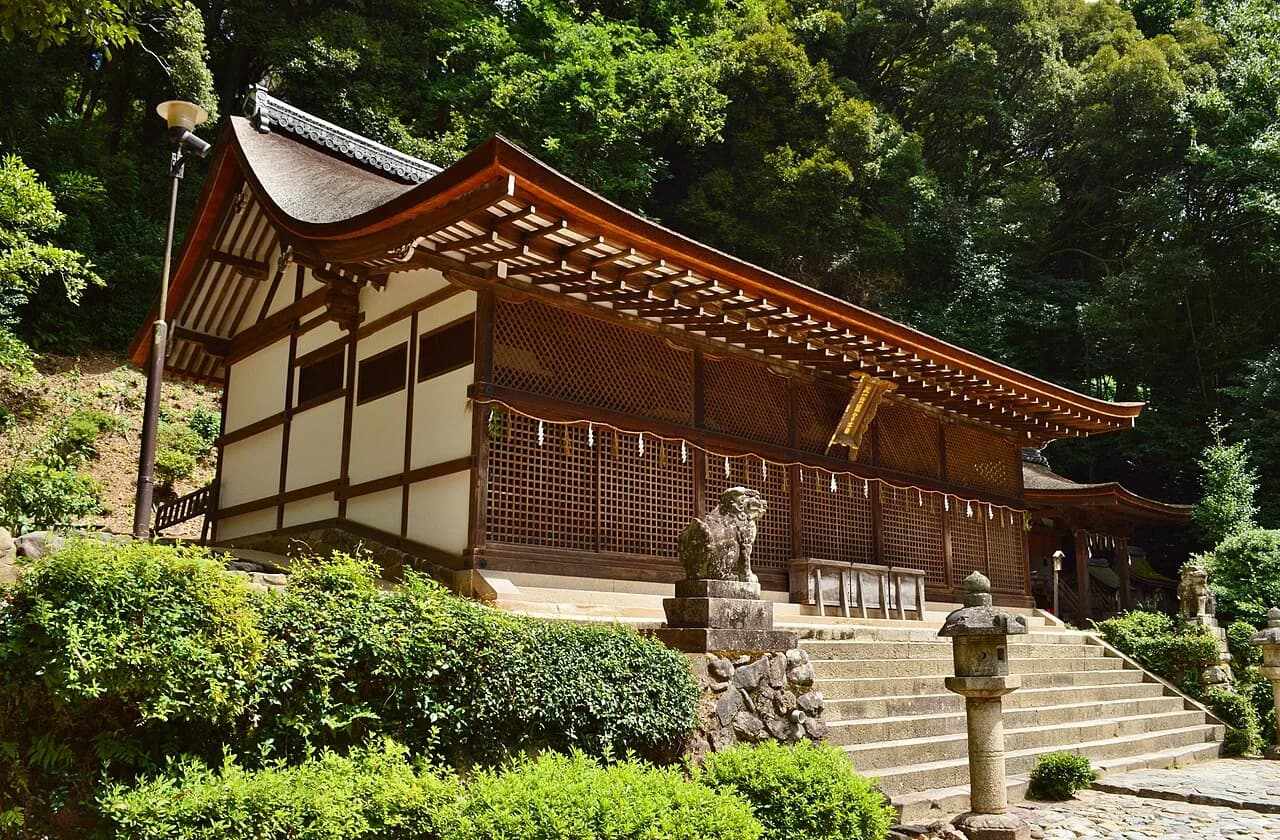
Standing quietly on the forested east bank of the Uji River, Ujigami Shrine holds a distinction no other site in Japan can claim: its honden (main hall) is the oldest extant Shinto shrine building in the country, constructed around 1060 during the late Heian period. Listed under the UNESCO World Heritage designation "Historic Monuments of Ancient Kyoto," it charges no admission and takes just 15 to 20 minutes to explore — making it one of the most historically significant free visits in all of Japan. For current seasonal notes and access details, see the Ujigami Shrine visitor details page.
Most travellers passing through Uji focus on the glittering Byodo-in Phoenix Hall across the river, and understandably so. But Ujigami Shrine rewards the five-minute detour with an atmosphere that Byodo-in — rebuilt and restored over the centuries — cannot quite replicate. The grounds stay unhurried even on busy weekends, and quiet touches like the rabbit-themed omikuji fortune slips and the Kirihara-mizu sacred spring give the visit a feel that is genuinely its own.
This 2026 guide covers what to see, how to reach the shrine via the Sawarabi-no-michi path, and how to fit Ujigami into a well-paced Uji half-day.
Ujigami Shrine is free, compact, and pairs seamlessly with Byodo-in. Arrive at Byodo-in when it opens (8:30 AM), cross the river afterwards, and reach Ujigami before tour groups arrive mid-morning. The whole east-bank loop — including the lower shrine Uji-jinja — takes under 30 minutes.
Key Takeaways
- The honden dates to around 1060 — the oldest surviving Shinto shrine building in Japan, confirmed by dendrochronology.
- Free admission, no tickets, no queue — one of Uji's most underrated and historically significant stops.
- The rabbit (usagi) omikuji fortune slips are unique to Ujigami Shrine.
- The Kirihara-mizu spring is one of Uji's seven celebrated sacred waters (nana-meisui).
- Accessed via the Sawarabi-no-michi heritage path, roughly five minutes from Byodo-in on foot.
A Thousand Years of Heian History
Ujigami Shrine's honden was built around 1060, placing its construction in the same cultural era that produced The Tale of Genji and the zenith of Heian court refinement. The structure uses the nagare-zukuri style — identifiable by an asymmetrical, forward-sweeping roof that extends over the front bay like a deep eave — and shelters three small inner sanctuaries aligned side by side beneath a single roof. The three sanctuaries enshrine Uji-no-Wakiiratsuko (a Heian-era prince and the shrine's primary deity) alongside the emperors Ojin and Nintoku.
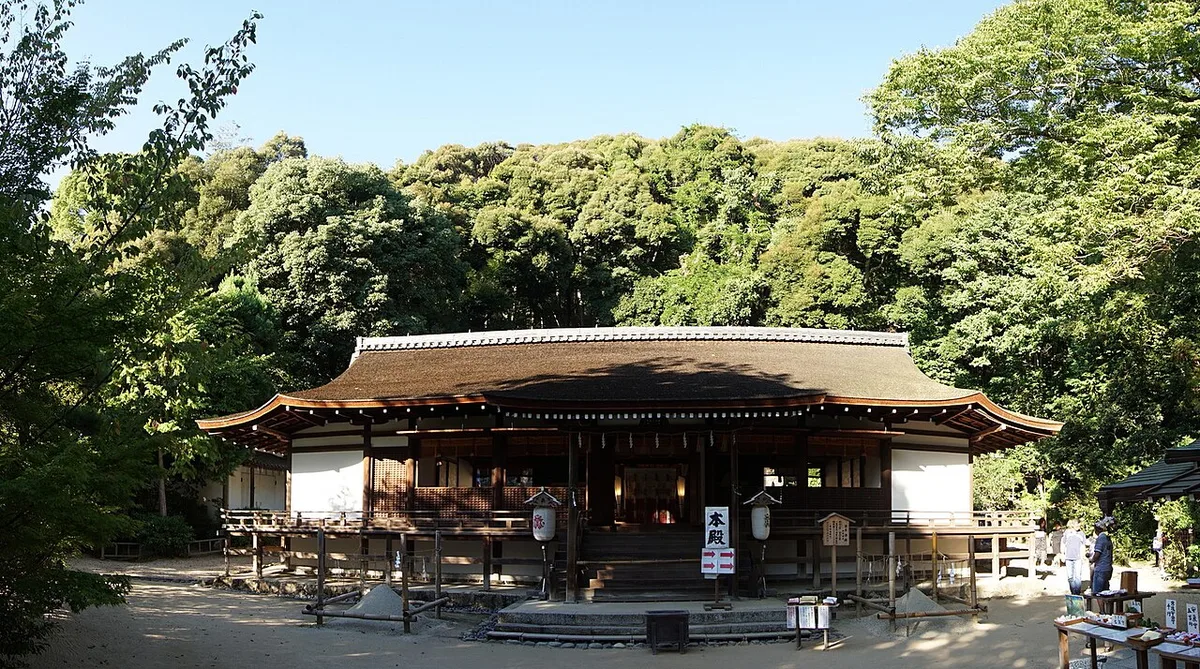
Because most Japanese wooden structures from the Heian period were rebuilt, modified, or lost to fire, the survival of Ujigami's honden in its original form is genuinely extraordinary. Dendrochronology — tree-ring dating of the timbers — confirmed the building's age in the 1990s, eliminating earlier uncertainty about its construction date. The haiden (worship or offering hall), positioned directly in front of the honden, was built during the Kamakura period (roughly 12th–14th century) and is also a designated National Treasure. Very few sites in Japan can claim two separately dated National Treasure buildings on a single property.
Historically, Ujigami was known as the "upper shrine" (kami-sha) of Uji, with the smaller Uji-jinja a few minutes' walk down the hill serving as the complementary "lower shrine" (shimo-sha). The two were administered together for centuries before Meiji-era religious policies reorganised many mixed shrine-temple complexes. Visiting both in sequence adds under ten minutes to any east-bank itinerary and gives a complete picture of how Uji's ancient cultic geography was laid out.
What to See at Ujigami Shrine
The grounds are deliberately understated. There is no grand torii avenue, no souvenir corridor — just a short forested path leading to structures that have stood here for roughly a thousand years. That restraint is part of the appeal. Below is what you should not miss.
- Honden (main hall): The centrepiece and reason most historically minded visitors make the detour. You cannot enter the structure itself, but you can approach closely enough to appreciate the ancient timber framing, the forward-sweeping roof, and the three sealed inner sanctuaries. Our editors found the best angle is from the front-left, where the roof line reads most clearly.
- Haiden (worship hall): The large thatched structure immediately in front of the honden. This is where visitors make offerings and bow in prayer. The wide veranda and heavy horizontal beams are characteristic of Kamakura-period shrine architecture, and the contrast with the older honden behind it is instructive for anyone interested in how Japanese timber styles evolved across two centuries.
- Kirihara-mizu sacred spring: Located beside the honden, this small natural spring is one of Uji's nana-meisui — the seven famous waters long praised for their purity. It flows year-round and has been associated with purification rituals at the shrine for centuries. Easy to miss if you head straight for the honden, so look for the stone-lined enclosure to one side as you approach.
- Rabbit (usagi) omikuji: Ujigami Shrine's messenger deity is the rabbit, and the omikuji fortune slips here come wrapped in small ceramic rabbit figures. They make an unusual and lightweight souvenir; pricing is around ¥500–¥700 (2026 planning estimate — confirm at the shrine on the day). Ujigami's rabbit motif also links to the broader Tale of Genji heritage network along the east bank, where the Genji heritage trail weaves together the literary and cultic history of the Uji riverside.
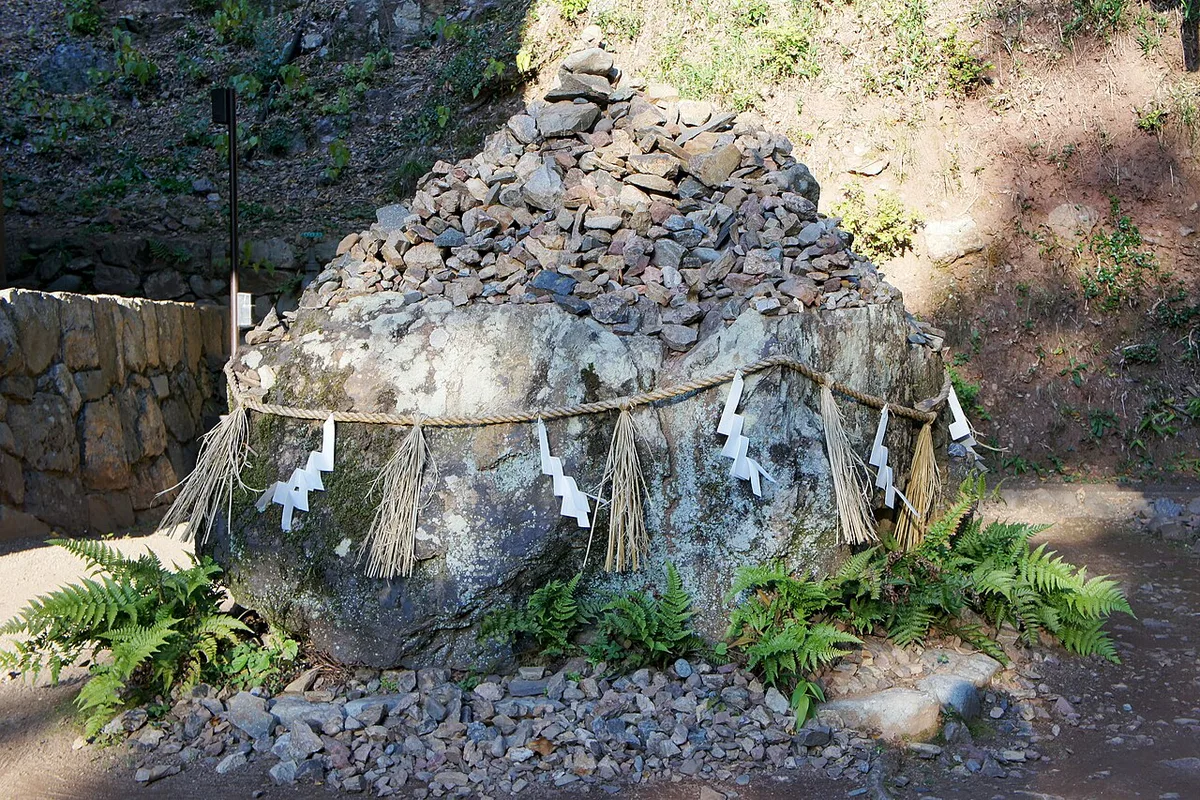
- Subsidiary stones and smaller shrines: The grounds hold a scattering of stone monuments and a small subsidiary structure. None are individually spectacular, but together they reinforce the sense that this place has been in continuous, quiet use for almost a millennium.
Visiting Practicalities and Key Details
Ujigami Shrine is one of the most visitor-friendly ancient sites in the Kyoto region — free to enter, uncrowded by Japanese heritage standards, and with no ticketing infrastructure to navigate. The table below covers everything you need to know before crossing the river.
| Detail | Information (2026 — confirm official sources) |
|---|---|
| Admission | Free |
| Grounds access | Dawn to dusk; no set closing time for the exterior |
| Regular closure days | None — open year-round |
| Omikuji and charms | Available during staffed hours (roughly 9:00 AM – 5:00 PM) |
| Nearest bus stop | Ujigami-jinja-mae (Keihan Bus from Uji Station) |
| From JR Uji Station | ~10 minutes on foot (cross Uji Bridge, follow east-bank path) |
| From Kintetsu Uji Station | ~15 minutes on foot |
| Address | 1 Ujiyama, Uji City, Kyoto 611-0021 |
| Accessibility | Gravel paths and uneven stone steps; not fully wheelchair-accessible |
| Toilets on site | None — use facilities at Byodo-in or the Uji tourist information centre |
No dress code applies, but standard shrine etiquette is appreciated: bow briefly at the torii before entering, rinse hands at the temizuya (water basin) if one is available, and keep your voice low during active worship. Photography of the exterior is generally permitted. There is no café or vending machine within the shrine grounds, so carry water if you are visiting in summer — Uji can be humid in July and August.
The Sawarabi-no-michi Path: Walking From Byodo-in
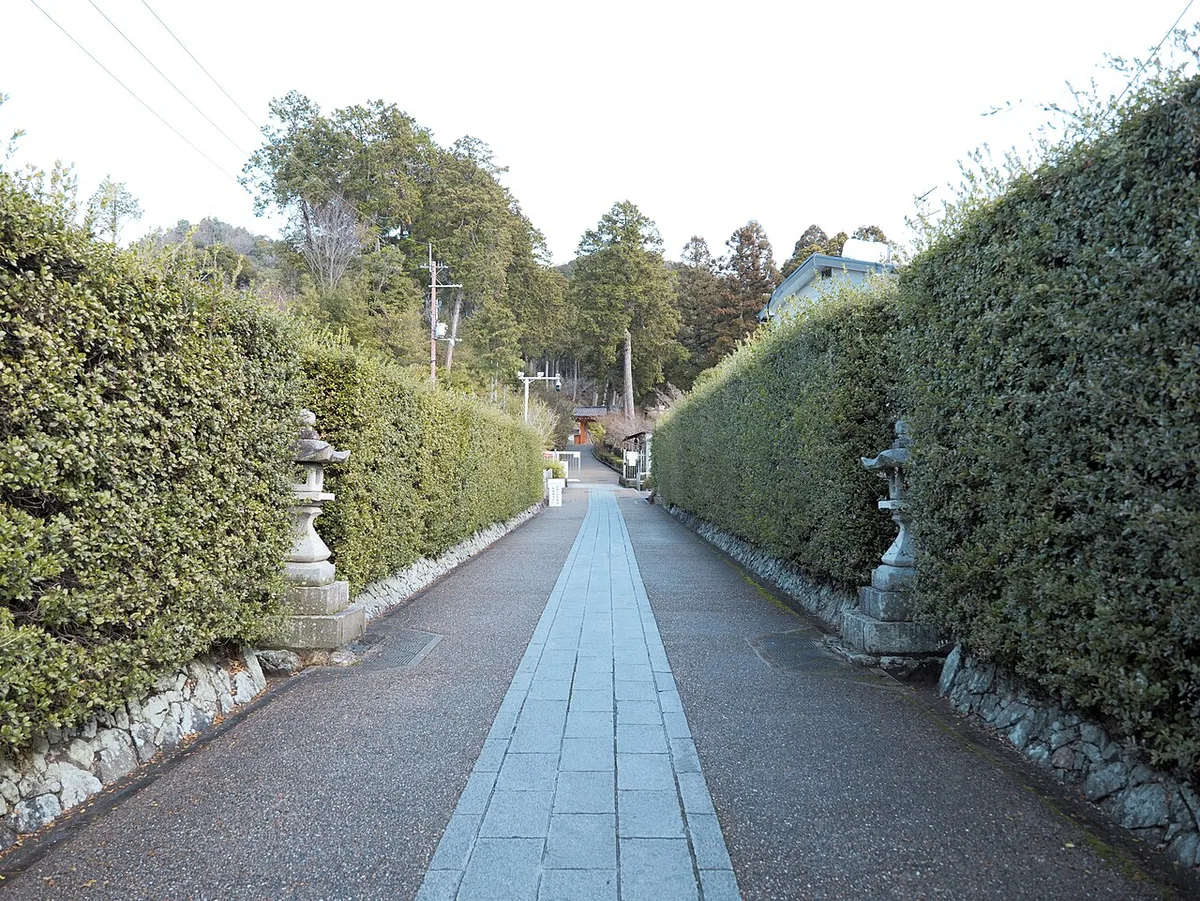
Ujigami Shrine sits on the east bank of the Uji River, separated from the main tourist precinct by the width of the river and a short forested climb. The most natural approach from Byodo-in is via the Sawarabi-no-michi (Bracken Shoot Path) — a signposted heritage walking trail that leads from the main Uji Bridge across the river and along the east bank through a quiet residential-and-forest corridor.
From Byodo-in's east exit, cross the Uji-bashi bridge and turn left (north) along the riverbank. Sawarabi-no-michi signage appears almost immediately. Follow the path uphill past Uji-jinja — the historic lower shrine, worth pausing at for five minutes — and continue another two or three minutes to reach Ujigami Shrine's torii. The total walk from Byodo-in's gate to Ujigami is around five to eight minutes at a relaxed pace.
Coming directly from Kyoto rather than from Byodo-in? The Uji day-trip guide from Kyoto covers all train options and arrival logistics from both JR and Kintetsu lines. For those planning a timed morning in Uji, the Uji half-day itinerary sequences the east and west bank attractions efficiently so you can hit Byodo-in, Ujigami, and the main tea house strip without backtracking.
The Sawarabi-no-michi path itself forms part of the broader Genji heritage network on the east bank. Early on a weekday, the forested stretch between Uji-jinja and Ujigami can feel almost private — a striking contrast with the tour-group-dense Byodo-in plaza you left behind just minutes earlier.
Fitting Ujigami Shrine Into Your Uji Day
Because Ujigami Shrine is free and takes under 20 minutes, it never needs to be the centrepiece of an itinerary — it fits naturally as a short add-on to Byodo-in or to the east-bank heritage walk. That said, for anyone interested in Heian-period architecture or the long span of Japanese shrine history, it is arguably the most historically significant structure in Uji, and we would not skip it in favour of another matcha shop.
Our suggested sequence for a half-day starting from Kyoto:
- 8:30 AM — Enter Byodo-in when it opens, before tour groups arrive. Allow 45–60 minutes for the garden and Phoenix Hall interior (tickets required for the hall).
- 9:30 AM — Cross the Uji Bridge to the east bank. Pause at Uji-jinja for five minutes.
- 9:40 AM — Ujigami Shrine: honden, haiden, Kirihara-mizu spring, rabbit omikuji. Allow 20 minutes.
- 10:05 AM — Walk back across the bridge to the west bank for matcha soft-serve or a seat at one of the riverside tea houses. The Uji matcha and tea-house guide covers the best spots along the west bank for everything from a quick cone to a full tea ceremony experience.
- 11:00 AM–noon — Return to Kyoto, or extend by exploring additional Uji sites. The complete Uji attractions guide covers Manpukuji Temple, the Uji City Source of Uji Tea monument, and other highlights further afield.
This sequence keeps the most historically significant stops in the early morning before crowds build, and leaves the rest of the day flexible. If time allows, a forested walking trail continues up the hillside above Ujigami Shrine toward the Uji hills — quieter than anything on the west bank, and free.
Frequently Asked Questions
Is Ujigami Shrine free to enter?
Yes, Ujigami Shrine has no admission charge for the grounds or the structures. A small donation at the offering box is customary at Shinto shrines but is entirely voluntary. Omikuji fortune slips and protective talismans are available for purchase during staffed hours, typically around ¥500–¥700 each (2026 estimate).
What makes Ujigami Shrine historically significant?
The shrine's honden is the oldest extant Shinto shrine building in Japan, dated by dendrochronology to around 1060 in the late Heian period. The haiden, built during the Kamakura period, is also a designated National Treasure. Together they form part of the UNESCO World Heritage "Historic Monuments of Ancient Kyoto."
How long does a visit to Ujigami Shrine take?
Most visitors spend 15 to 20 minutes at Ujigami Shrine. The grounds are compact and the key structures — the honden, haiden, and Kirihara-mizu spring — are all within a short walk of each other. Allow a few extra minutes if you plan to draw a rabbit omikuji fortune slip.
How do I walk from Byodo-in to Ujigami Shrine?
From Byodo-in's east exit, cross the Uji-bashi bridge and follow the Sawarabi-no-michi heritage path north along the east bank. Pass Uji-jinja and continue uphill for two or three minutes — the total walk from Byodo-in's gate to Ujigami's torii is around five to eight minutes. The path is signposted and easy to follow.
Ujigami Shrine earns its UNESCO recognition without crowds, entrance fees, or the restored-for-tourism polish that surrounds many of Japan's most visited heritage sites. Its honden has stood on this forested hillside for nearly a thousand years, and the compact grounds — sacred spring, rabbit omikuji, National Treasure haiden — offer an atmosphere that is contemplative rather than spectacular. In a Uji itinerary already anchored by Byodo-in's visual drama, Ujigami provides the counterweight: ancient, quiet, and free.
For a broader look at what Uji has to offer beyond the east bank, our guide to all of Uji's top attractions covers the full range of sites from Manpukuji Temple to the historic Uji Bridge. The shrine pairs best with a morning start from Kyoto — the east bank is at its quietest before 10:00 AM, and the five-minute walk from Byodo-in costs nothing but a pleasant stroll along the river.
For trip-planning details, see Ujigami Shrine on Wikipedia.
Free guide: Japan's Hidden Gems
12 under-the-radar places beyond Tokyo & Kyoto — with the best season to visit each and a local tip you won't find in the guidebooks.
You might also like


Continue reading
More guides you'll find useful


