

How to Get to Uji from Kyoto & Osaka: 17 Min by Train (2026)
Kyoto to Uji takes 17 minutes by JR rapid. Compare JR Nara and Keihan Uji Line fares and times from Kyoto, Osaka, Nara, and pick your station.
On this page
Uji sits just 17 minutes south of Kyoto by rapid train, making it one of the most painless accessible day trips from Kyoto on the Kansai rail network. Two independent lines serve the town, each depositing you on a different bank of the Uji River — and the bank you arrive on shapes the entire first half of your visit, since the main sights are split between east and west.
This guide covers every practical route from Kyoto, Osaka, and Nara: head-to-head time and fare comparisons, a clear breakdown of which station serves which sight, and IC card tips so you can tap in and tap out without hunting for a ticket machine. For the full picture of what to do once you arrive, our complete guide to what to see in Uji covers the highlights on both banks. All fares are 2026 planning estimates — confirm on the relevant operator's app before travel.
Last updated June 2026.
JR Uji (west bank) is closest to Byodo-in and the Byobugaura tea street; Keihan Uji (east bank) is closest to Ujigami Shrine, the Tale of Genji Museum and Uji Bridge. The two stations are a 10-minute walk apart, so you can enter by one and leave by the other.
Key Takeaways
- The JR Nara Line rapid from Kyoto Station is the fastest and simplest route — roughly 17 minutes for around ¥240.
- The Keihan Uji Line deposits you on the east bank, steps from Ujigami Shrine and the Tale of Genji Museum.
- JR Uji Station is the better arrival point if Byodo-in Phoenix Hall or the Byobugaura tea street is your first stop.
- Both stations are only about 10 minutes apart on foot across the Uji Bridge — enter via one, exit via the other.
- IC cards (ICOCA, Suica, PASMO) work seamlessly on every route; no advance seat reservation is needed.
Getting to Uji from Kyoto by Train
Two independent rail operators connect central Kyoto to Uji. The JR Nara Line is faster and simpler for most visitors; the Keihan Uji Line takes a few minutes longer but arrives on the opposite bank of the river, which can work strongly in your favour depending on where you want to go first.
| From | Line | Journey time | Approx. fare (2026 estimate) |
|---|---|---|---|
| Kyoto Station | JR Nara Line rapid → JR Uji | ~17 min | ~¥240 |
| Kyoto Station | JR Nara Line local → JR Uji | ~27–30 min | ~¥240 |
| Gion-Shijo / Sanjo / Demachiyanagi | Keihan Main Line → Chushojima transfer → Keihan Uji Line → Keihan Uji | ~30–40 min | ~¥430 |
On the JR side, look for "Nara Line" services on the departure boards at Kyoto Station. Rapid trains — marked as 快速 (kaisoku) — skip minor stops and reach JR Uji in about 17 minutes. Local trains take 27 to 30 minutes on the same track and run more frequently, making them a solid backup if you arrive between rapids. The fare is identical either way: around ¥240 by IC card or paper ticket.
The Keihan route requires one transfer. From Gion-Shijo, Sanjo, or Demachiyanagi, board a Keihan Main Line train toward Yodoyabashi and ride to Chushojima Station. At Chushojima, cross to the Keihan Uji Line platform for the final leg into Keihan Uji Station. Total journey time is typically 30 to 40 minutes depending on your starting point in central Kyoto. The Keihan route is best chosen for its arrival location — the east bank — rather than on cost or speed, since it is both slower and slightly more expensive than JR.

Getting to Uji from Osaka
From Osaka, both the JR and Keihan networks reach Uji with a single transfer and no premium express surcharge. Journey times are similar on both networks; the choice again comes down to which bank you want to arrive on.
| From | Line | Journey time | Approx. fare (2026 estimate) |
|---|---|---|---|
| Osaka Station (JR) | JR Kyoto Line → Kyoto Station → JR Nara Line rapid → JR Uji | ~55–65 min | ~¥810 |
| Yodoyabashi (Keihan) | Keihan Main Line → Chushojima → Keihan Uji Line → Keihan Uji | ~55–70 min | ~¥640 |
JR travellers board the Kyoto Line from Osaka Station (or Shin-Osaka) for the roughly 30-minute ride to Kyoto Station, then transfer directly to the JR Nara Line rapid toward Nara or Kizu. Total door-to-door time is around 55 to 65 minutes. The combined fare is approximately ¥810 on an IC card — confirm on the JR West fare calculator before travel, as fares occasionally adjust.
Keihan riders start from Yodoyabashi Station, directly accessible from the Midosuji subway line in central Osaka. Keihan Main Line express services reach Chushojima in around 35 minutes; from there the Keihan Uji Line adds roughly 15 more minutes. The Keihan option tends to be cheaper from Osaka and also makes sense if Ujigami Shrine or the east-bank walking paths are your priority.
Getting to Uji from Nara
Uji and Nara both sit on the JR Nara Line, making travel between them unusually direct. Board any Kyoto-bound JR Nara Line service from Nara Station and ride straight through to JR Uji — the journey takes around 30 minutes and costs roughly ¥400 (2026 estimate; confirm on the JR West site). No transfer is needed at any point.
Pairing Nara and Uji in a single day is a popular strategy among visitors already staying in Kyoto: deer park and great temples in the morning, then Uji's riverside shrines and matcha in the afternoon, with a direct train back to Kyoto for dinner. If you want to make the most of a short Uji window, our tight Uji afternoon plan lays out a walkable sequence that covers the west and east banks without backtracking.
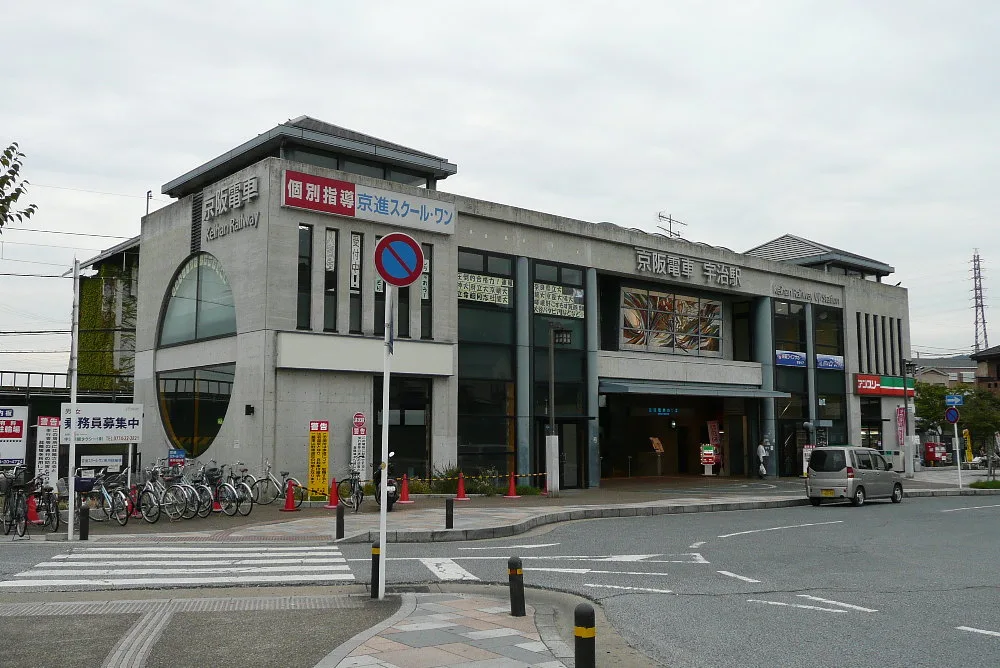
JR Uji vs Keihan Uji: Which Station for Which Sight?
This is the question that catches most first-time visitors off guard. The two stations are on opposite banks of the Uji River and serve genuinely different halves of the town. Picking the right arrival station — or knowing you can split your entry and exit — saves a surprising amount of doubling back on the narrow riverside paths.
JR Uji Station (west bank) is the better arrival point for visitors heading first to the iconic Byodo-in Phoenix Hall or the Byobugaura tea street. Both sit on the west bank within a five-minute walk of the JR exit. Most day-trippers taking the standard fastest-route-from-Kyoto approach arrive here by default.
Keihan Uji Station (east bank) places you immediately alongside the ancient Ujigami Shrine complex, the Tale of Genji Museum, and the Sawarabi walking path that follows the river's quieter eastern edge. If your schedule leans toward the Genji literary trail or the east-bank shrines, arriving on the Keihan Uji Line saves significant walking time and keeps the logic of your route clean.
The practical upside: both stations are only about 10 minutes apart on foot, connected by the Uji Bridge spanning the river at the centre of town. Our recommended approach is to arrive at one station and depart from the other, covering both banks in a single sweep without retracing your steps. This means you can use the fastest line (JR) to arrive and the Keihan line to leave, or vice versa, without any extra planning overhead.
IC Cards and Practical Tips for Uji
Every route into Uji — JR and Keihan alike — accepts IC cards. ICOCA, Suica, and PASMO all work at every gate on every leg of the journey. If your card is topped up, you can tap in at departure and tap out at Uji without touching a ticket machine at any stage. This is strongly recommended over paper tickets, which require exact-fare machines and can slow you down at busy Kyoto Station during peak season.
A few additional points worth knowing before you travel in 2026:
- No reserved seating needed. All JR Nara Line and Keihan Uji Line services are standard local or rapid trains — no shinkansen, no limited-express surcharge, no advance seat booking required.
- Peak crowds on autumn weekends. The JR Nara Line out of Kyoto fills quickly during autumn foliage season (typically mid-November). Arriving before 10:00 AM on weekends avoids the worst platform congestion at Kyoto Station.
- Coin lockers at JR Uji Station. If you want to drop a bag before walking the riverside path, the lockers at JR Uji accept IC card payment and are conveniently located near the ticket gates.
- No useful bus route from central Kyoto. There is no direct express bus connecting Kyoto city centre to Uji — the train is the only practical option for most visitors.
Uji itself is entirely walkable from either station. There are no intra-city buses you need to factor into a standard day-trip plan — every major sight in the historic core sits within 15 minutes on foot of JR Uji or Keihan Uji. That simplicity is one of the reasons Uji makes such a low-stress excursion compared with many other Kansai day-trip destinations covered in our Kyoto-area travel guide.
Frequently Asked Questions
What is the fastest way to get to Uji from Kyoto?
The fastest route is the JR Nara Line rapid from Kyoto Station, reaching JR Uji in approximately 17 minutes for around ¥240. Rapid services run throughout the day; local trains on the same line take 27 to 30 minutes at the same fare. No advance booking is needed — tap your IC card at the gate and board.
Which station is closer to Byodo-in — JR Uji or Keihan Uji?
JR Uji Station is closer to Byodo-in Phoenix Hall. Both sit on the west bank of the Uji River, and Byodo-in's main gate is a five-minute walk from the JR exit. Keihan Uji Station serves the east bank and is better positioned for Ujigami Shrine and the Tale of Genji Museum. The two stations are roughly 10 minutes apart on foot across the Uji Bridge.
Can I use my IC card (Suica, PASMO, or ICOCA) to travel to Uji?
Yes — ICOCA, Suica, and PASMO are accepted on both the JR Nara Line and the Keihan Uji Line. Simply tap in at your departure station and tap out at JR Uji or Keihan Uji. No separate paper ticket is needed, and the IC card fare matches the standard ticket price.
How long does it take to get to Uji from Osaka?
Allow around 55 to 65 minutes by JR — roughly 30 minutes on the Kyoto Line from Osaka Station to Kyoto, then about 17 minutes on the JR Nara Line rapid to JR Uji. The Keihan route from Yodoyabashi via Chushojima takes a similar 55 to 70 minutes. Combined fares are roughly ¥640–¥810 depending on route (2026 estimates — confirm before travel).
Getting to Uji is one of the more painless logistics puzzles in Kansai. The JR Nara Line rapid makes the journey from Kyoto barely longer than a cross-town subway ride, and the Keihan option gives you a meaningful choice of which bank to tackle first. Arriving at JR Uji and departing from Keihan Uji — or the reverse — is the approach we recommend for anyone planning a full sweep of both sides of the river without wasted steps.
Once you cross into Uji, the town rewards a slow pace. Use the station breakdown and fare table above to plan your entry point, tap your IC card, and let the riverside paths do the rest. The sights are compact enough that even a half-day here feels genuinely unhurried — and if you want to see everything worth seeing, our full Uji attractions guide maps the highlights in one walkable sequence from river to shrine to tea house.
Free guide: Japan's Hidden Gems
12 under-the-radar places beyond Tokyo & Kyoto — with the best season to visit each and a local tip you won't find in the guidebooks.
You might also like


Continue reading
More guides you'll find useful


