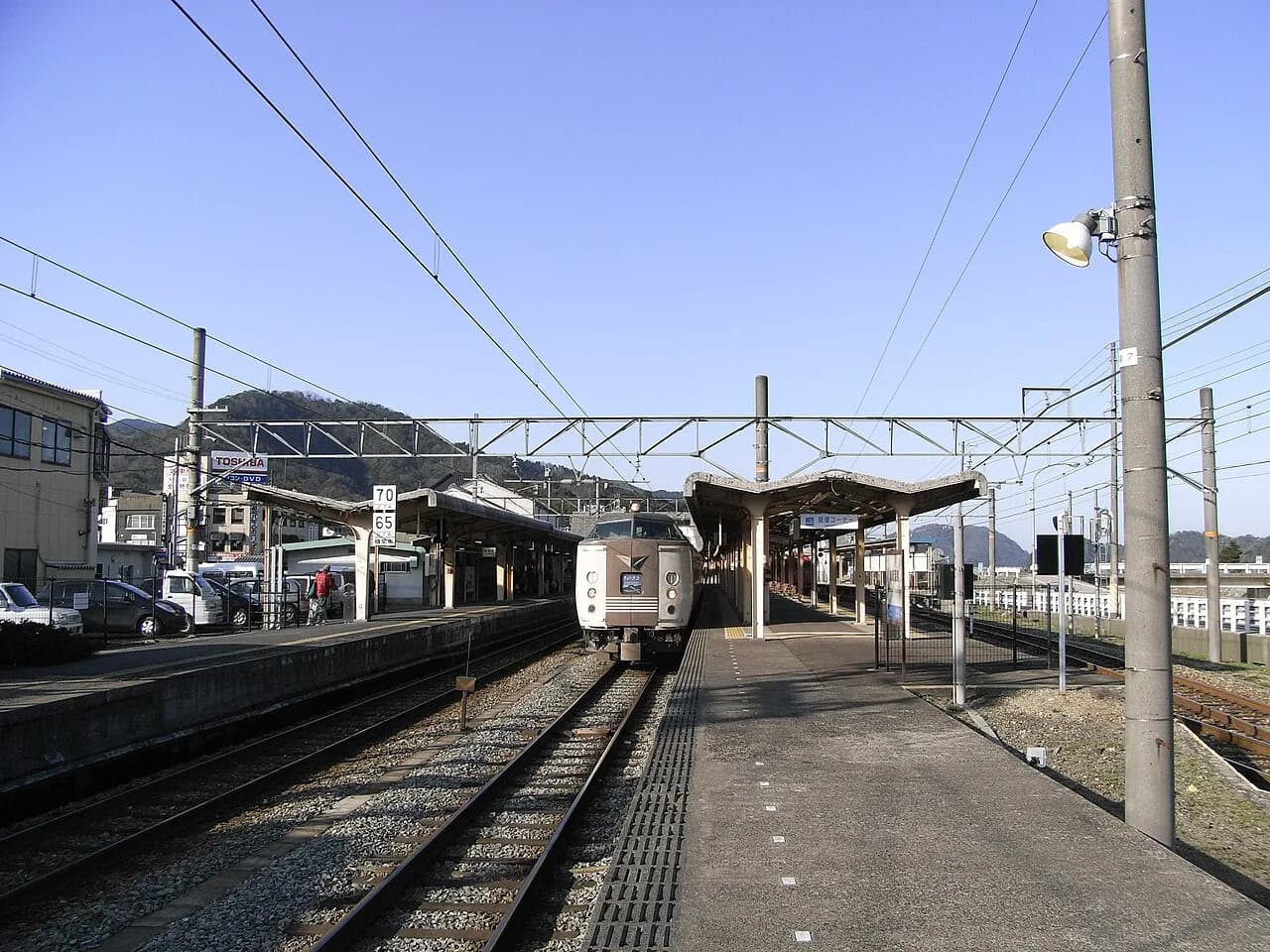
Yukata, Geta and the Onsen Stroll in Kinosaki (2026)
Wearing yukata in Kinosaki Onsen in 2026: how to dress correctly, the seven-bath onsen stroll, the Yumepa pass, evening atmosphere, and etiquette tips for first-time visitors.
On this page
There is a local saying about Kinosaki Onsen that frames everything you will do here: the station is the entrance hall, the willow-lined road is the corridor, your ryokan room is your private chamber, and the seven public bathhouses are the communal baths that all guests share. Everyone sleeping in Kinosaki is, in this sense, a guest of one enormous ryokan — and the yukata is its uniform. Pulling on the cotton robe and stepping out into the lane is not a cultural performance put on for visitors; it is simply how the evenings work here, and have worked for centuries.
The experience centres on the onsen-meguri: the leisurely bath-hopping circuit that follows the Otani River as it runs through the heart of town, crossed at intervals by stone and arched bridges, flanked by weeping willows. You move between baths in yukata and wooden geta clogs, stopping for soft-serve ice cream or an onsen-tamago between soaks, the clip-clop of your footwear providing the town's evening soundtrack. It is one of the most complete immersive travel experiences in Japan — unhurried, social, and quietly spectacular.
This 2026 guide covers what your ryokan provides, how to wear a yukata correctly, what to expect on the stroll itself, why the evenings are particularly special, and the etiquette rules that apply inside the bathhouses.
The one rule you must not get wrong when putting on a yukata: left side over right. Right over left is the funeral convention for dressing the deceased, and making the error will prompt a swift, gentle correction from your ryokan host. Your inn staff will happily show you how to dress — first-timers asking for help is entirely routine, and no-one expects you to arrive knowing.
Key Takeaways
- Your ryokan provides a yukata, obi belt, and geta clogs at check-in; a haori jacket is added in winter — wearing them out into the streets is expected and is the whole point of staying in Kinosaki.
- Each ryokan uses a slightly different yukata pattern, so you can identify fellow guests from different inns at a glance — part of the communal texture of the town.
- The onsen-meguri follows the willow-lined Otani River for roughly two kilometres, connecting all seven bathhouses; ryokan guests travel it freely with the Yumepa pass issued at check-in.
- Kinosaki is most atmospheric after dark, when the bridges and willows are lit by lanterns and the clip-clop of geta carries across the quiet lanes — a winter evening with snow is widely considered the town's most magical form.
- The bathhouses here are unusually tattoo-friendly by Japanese standards — confirm current policy with your accommodation when booking, but this is generally the most inclusive onsen town in Japan for tattooed visitors.
The Whole Town as One Ryokan
The concept of Kinosaki as a single shared ryokan is not merely poetic. It describes an actual social arrangement. Guests from different inns mingle at the same baths, queue at the same food stalls, and cross the same bridges in the same flowing cotton robes. The yukata makes this visible — dressed alike, strangers become something closer to co-residents than tourists, and the distinction shapes how the town feels in a way that is hard to account for until you experience it.
Kinosaki Onsen has been drawing pilgrims and travellers since the eighth century, when the hot springs were reportedly discovered by the Buddhist monk Dochi Shonin after a thousand days of prayer. The author Naoya Shiga immortalised the town in his 1917 short story "At Kinosaki," still widely read in Japanese schools as a model of spare, observed prose. A millennium of culture distils itself, on your first evening here, into the very practical question of which way to fold your lapels.
What you will notice almost immediately is that the town is designed for slowness. The stroll is at most two kilometres end to end. The pace between baths is not brisk — you are wearing wooden clogs on stone paths. That enforced unhurriedness is the mechanism by which Kinosaki works its particular effect on people who are used to moving faster through the world.
What Your Ryokan Provides
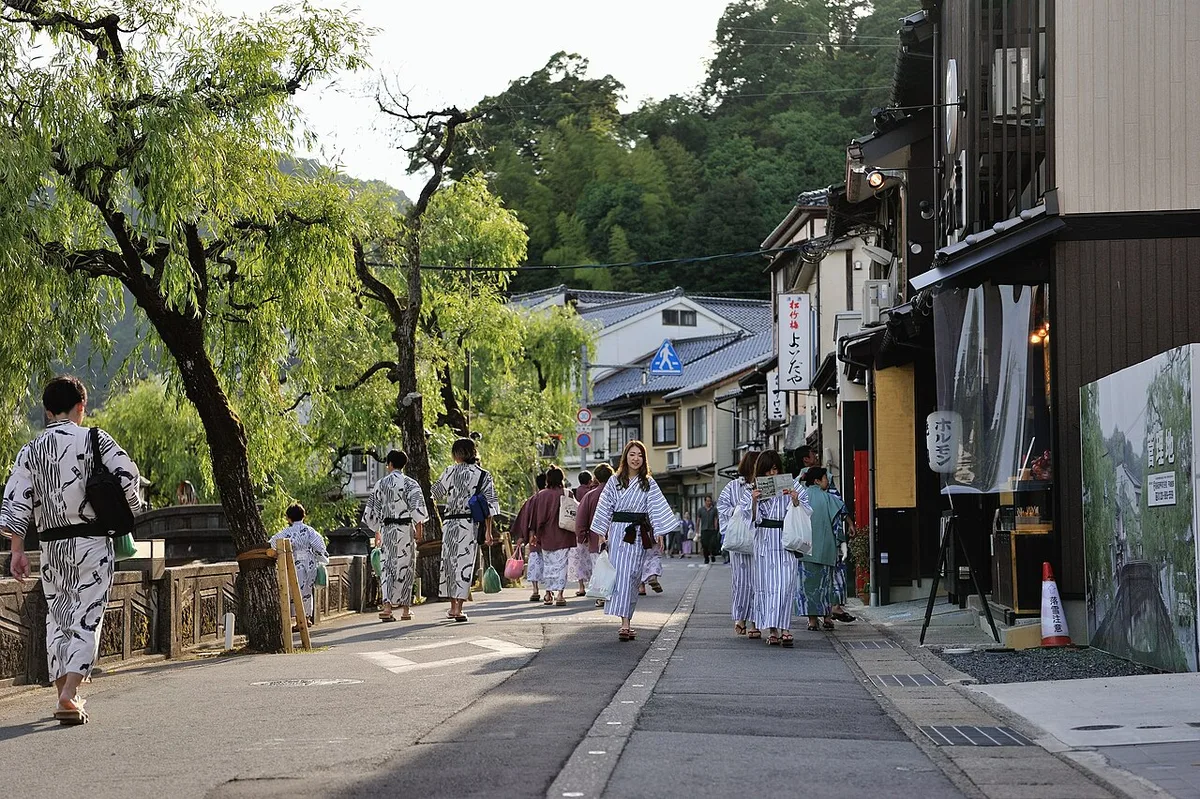
Shortly after check-in — or waiting for you when you are shown to your room — your ryokan will have set out the evening's kit. The standard ensemble comprises the yukata itself, an obi belt to secure it around the waist, and a pair of geta: wooden clogs raised on two horizontal blocks called ha. From late autumn through early spring, a haori — a short hip-length jacket — is added over the top to keep out the cold. Most inns provide several yukata sizes; if yours does not fit well, ask at the front desk.
The obi is tied at the back or side, not at the front, which is reserved for formal kimono. The geta are traditionally worn slightly loose, with a small slip of the heel at each step — the resulting clip-clop on stone is the town's most distinctive sound and the thing many visitors report remembering most vividly. If yours are genuinely uncomfortable after a few minutes, your ryokan likely has alternatives.
Each inn's yukata carries its own distinctive pattern, and this is socially functional rather than merely decorative. The prints are distinct enough that you can identify which ryokan a fellow bather is staying at from across a lantern-lit bridge. It is one of the small social pleasures of Kinosaki that turns strangers into co-residents. For guidance on finding the right inn, our Kinosaki Onsen accommodation guide covers the range from historic grand ryokan to smaller, more affordable options that still provide the full yukata-and-Yumepa experience.
How to Wear a Yukata: Left Over Right
The single non-negotiable rule: the left lapel lies on top of the right. Left over right is the living-person convention for every Japanese robe; right over left is reserved for dressing the deceased for burial. Making the error is not catastrophic — your ryokan host will correct you immediately and with good humour — but knowing the rule in advance is worth the two seconds it takes to internalise it. A useful mnemonic: "left goes last," because the left side is the one placed on top as the final step.
For the obi belt: wrap it once or twice around your waist and tie it at the back or side. A knot at the front is for formal kimono, not yukata. Your ryokan staff will almost always offer to help first-time wearers, and accepting is worth it — a loosely tied obi has a tendency to unravel somewhere between the second and third bathhouse, generally at the least convenient moment.
For the geta: expect a brief adjustment period. The thong strap sits between the big toe and the second toe, and the heel traditionally half-falls off the back with each step rather than being held firmly in place. If yours are genuinely causing discomfort rather than mere unfamiliarity, try a different pair — most ryokan keep several sizes.
The Onsen Stroll: Bath-Hopping Along the Otani River
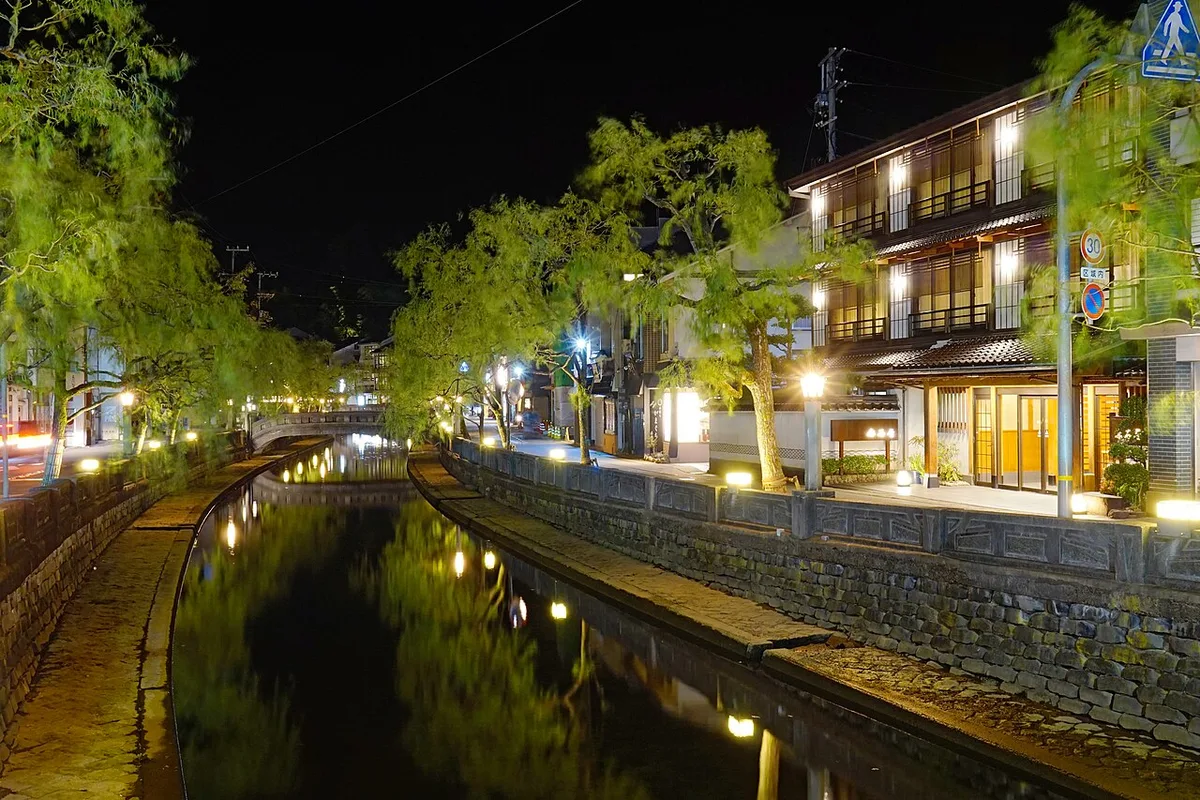
The Otani River runs north-south through the centre of Kinosaki, and the onsen-meguri circuit runs with it. Weeping willows line both banks; stone and arched bridges cross at intervals, each a modest piece of engineering that has appeared on postcards and photographs of Kinosaki for decades. The seven bathhouses — the soto-yu, or exterior baths — are distributed along this route, each with its own architectural character, legend, and water temperature.
The spaces between baths are part of the experience. Along the riverbanks and in the lanes behind them, small stalls and shops offer the unhurried visitor a range of minor pleasures: soft-serve ice cream in regional flavours, cold beer from vending machines, and onsen-tamago — eggs slow-cooked in the hot-spring water until just set, eaten warm with a small sachet of dashi. Further along, the shooting-gallery arcades — smartball tables and ya-nage ring-toss — seem to belong to a Japan several decades earlier, and they are genuinely fun in a raucous, low-stakes way. The cumulative pace is meditative rather than purposeful.
The full breakdown of what awaits inside each of the seven bathhouses — histories, water temperatures, architectural details, and recommended visit order — is in our guide to the seven soto-yu baths of Kinosaki.
Evening Kinosaki: Lanterns, Willows, and Snow
The canonical image of Kinosaki Onsen is an evening one, and it is earned rather than manufactured. After roughly 6 PM, lanterns come on along the river and the willow branches catch the light from below. Yukata-clad figures cross the stone bridges in a slow, drifting procession. Steam rises from the bathhouse entrances. The streets are quiet enough that you can hear individual sets of geta from a distance. The photograph everyone takes of Kinosaki is taken at this hour, and the reality lives up to it.
Winter intensifies everything. Kinosaki receives enough snowfall — typically December through February — that a light dusting on the bridges and rooftops is a realistic prospect rather than a photographic fantasy. The combination of lantern-lit snow, steam, and geta on wet stone has been described more than once as the closest Japan comes to a thermal spa town from a fairytale. Winter also opens the matsuba crab season, and the two pleasures — long hot baths followed by a multi-course crab dinner at your ryokan — are as complementary as any combination of experiences the country offers. Our the Kinosaki winter crab guide covers the seasonal overlap and what to order.
Spring and autumn are beautiful in their own right — cherry blossoms along the Otani River in late March to early April, maples colouring across the surrounding hillsides in November. Summer is busier and warmer; the haori stays in the ryokan but the onsen stroll runs year-round.
The Yumepa Pass and Bathhouse Etiquette
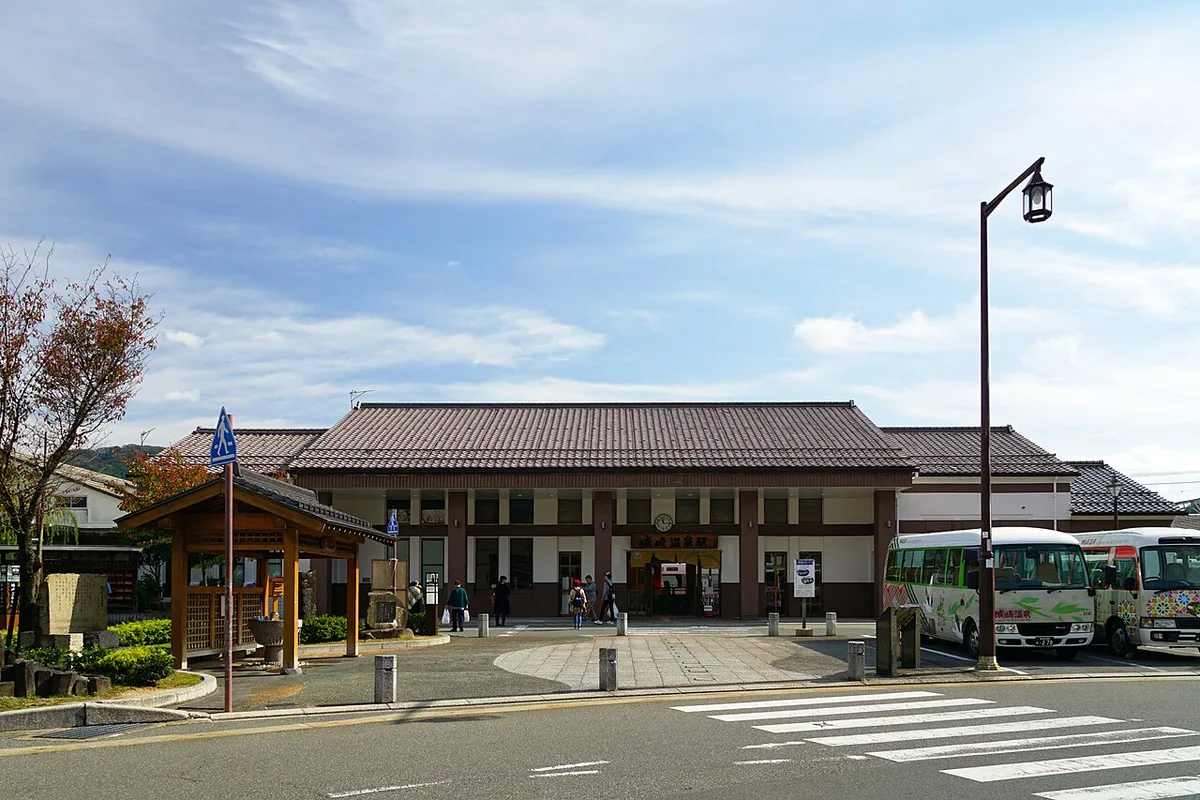
Ryokan guests in Kinosaki receive the Yumepa pass at check-in — a digital card or smartphone application, depending on your inn — that grants free admission to all seven public bathhouses for the duration of the stay. It is the practical mechanism by which the whole-town-as-one-ryokan concept works financially. Day visitors can purchase an equivalent day-pass from the tourist information office near Kinosaki Onsen Station, though the price is higher and validity is time-limited.
Etiquette inside the soto-yu baths follows Japanese onsen conventions with one significant and welcome departure. The standard rules apply everywhere: wash thoroughly at the shower station before entering the bath, do not bring your towel into the water (fold it on your head or leave it at the side), remove jewellery, keep noise low, and tie up long hair. Swimwear is not worn.
The departure from national norms is tattoo policy. Kinosaki's bathhouses are unusually open by Japanese standards — the town has a long history of welcoming diverse visitors and has broadly maintained an inclusive approach. Individual bathhouses occasionally revise their rules, so confirm current policy with your accommodation when booking; but if tattoos have kept you away from onsen elsewhere in Japan, Kinosaki is the most reliable domestic alternative. For a broader overview of how to spend your time in the town beyond the baths, see things to do in Kinosaki Onsen.
Frequently Asked Questions
Do I have to wear a yukata outside in Kinosaki Onsen?
No rule compels it, but wearing your ryokan yukata into the streets is the whole spirit of Kinosaki. The town's defining experience is the evening bath-hop in yukata and geta, and most guests embrace it enthusiastically — arriving at a bathhouse in ordinary clothes feels slightly like wearing a coat to a swimming pool. Your inn provides everything you need; there is no cost beyond what you have already paid for the room.
How do I put on a yukata correctly?
Left side over right — always. Right over left is the convention for dressing the deceased, and making the error will be gently corrected by your ryokan host. A useful mnemonic is "left goes last": the left lapel is the one placed on top as the final step. Tie the obi belt at the back or side, not the front. Your ryokan staff will offer to help, and accepting is recommended — a loosely tied obi tends to unravel on the stroll.
What does the Yumepa pass include?
The Yumepa pass gives ryokan guests free entry to all seven public soto-yu bathhouses in Kinosaki Onsen for the duration of their stay. It is issued by your inn at check-in as a physical card or smartphone application. Day visitors can purchase an equivalent pass from the tourist information office near Kinosaki Onsen Station, though day-pass pricing is higher and the validity window is shorter.
Are tattoos allowed in Kinosaki Onsen's bathhouses?
Kinosaki's bathhouses are unusually tattoo-friendly by Japanese onsen standards. The town has a long history of welcoming diverse visitors and has broadly maintained an inclusive policy. Individual bathhouses may update their rules, so confirm current policy with your accommodation when booking. If tattoos have prevented you from using onsen elsewhere in Japan, Kinosaki is widely considered the most practical domestic alternative.
When is the best time to do the onsen stroll in Kinosaki?
After 6 PM, when the lanterns come on along the Otani River and the town reaches its most atmospheric. Winter evenings — particularly with a light dusting of snow on the bridges — are considered the most magical, though spring cherry blossoms and autumn foliage are also beautiful. Avoid mid-morning, when day-trip crowds are at their peak and the evening character of the town has not yet emerged. An overnight stay is by far the best way to experience the stroll at its most rewarding.
The yukata is not a costume in Kinosaki — it is the mechanism by which a small hot-spring town transforms itself into a single shared experience for everyone sleeping the night. Wearing it out into the lantern-lit lanes, hearing geta on stone, ordering an onsen-tamago between baths: none of this is observed from a distance. It is participated in, and the distinction is the entire point of coming here.
An overnight stay is essential rather than optional — the evening is the day's crescendo, and most day visitors leave precisely as the town reaches its most beautiful form. For help choosing where to sleep, our Kinosaki Onsen accommodation guide covers everything from grand historic ryokan to compact but well-run inns that still provide the full yukata-and-Yumepa experience. If you are planning how to get here from the Kansai region, see our guide to getting to Kinosaki Onsen for the train options from Kyoto and Osaka.
For a factual overview of the town before you travel, see Kinosaki Onsen on Wikipedia.
Free guide: Japan's Hidden Gems
12 under-the-radar places beyond Tokyo & Kyoto — with the best season to visit each and a local tip you won't find in the guidebooks.
You might also like


Continue reading
More guides you'll find useful