

Yoshino Kuzu and Local Food Guide (2026)
A 2026 guide to Yoshino's local food: hand-processed kuzu arrowroot in kuzu-mochi and kuzu-yu, persimmon-leaf kakinoha-zushi, foraged sansai mountain vegetables, and where along the main street to find them.
On this page
Most visitors arrive in Yoshino thinking about cherry blossoms, but the mountain has an equally distinctive food identity that has nothing to do with the season of the trees. The pedestrian main street climbing from Yoshino Station toward Kinpusen-ji is lined with teahouses and small shops built around three things: kuzu, a prized arrowroot starch hand-processed with the region's clean mountain water; kakinoha-zushi, pressed fish sushi wrapped in persimmon leaves; and sansai, foraged mountain vegetables served as tempura and pickles. Together they form a food culture shaped by the mountain's history as a pilgrimage route, long before it became famous for its blossoms. For an overview of what else the mountain offers, the Yoshino attractions guide covers the temples, ropeway, and viewpoints that sit alongside these food stops.
This 2026 guide walks through each specialty, why it developed here, and where along the main street to find it, so a food stop can be folded naturally into a day of sightseeing rather than treated as a separate errand.
Yoshino kuzu is genuinely different from the cornstarch-based kuzu sold elsewhere in Japan — it is processed from wild kudzu-vine roots over the winter months using repeated washing in cold mountain water, a labour-intensive method that few producers still practise. Shops selling the traditional product will usually say so on the packaging or signage.
Key Takeaways
- Yoshino kuzu is a high-grade arrowroot starch traditionally hand-processed from kudzu-vine roots over winter, prized for its purity and used in both sweet and savoury preparations.
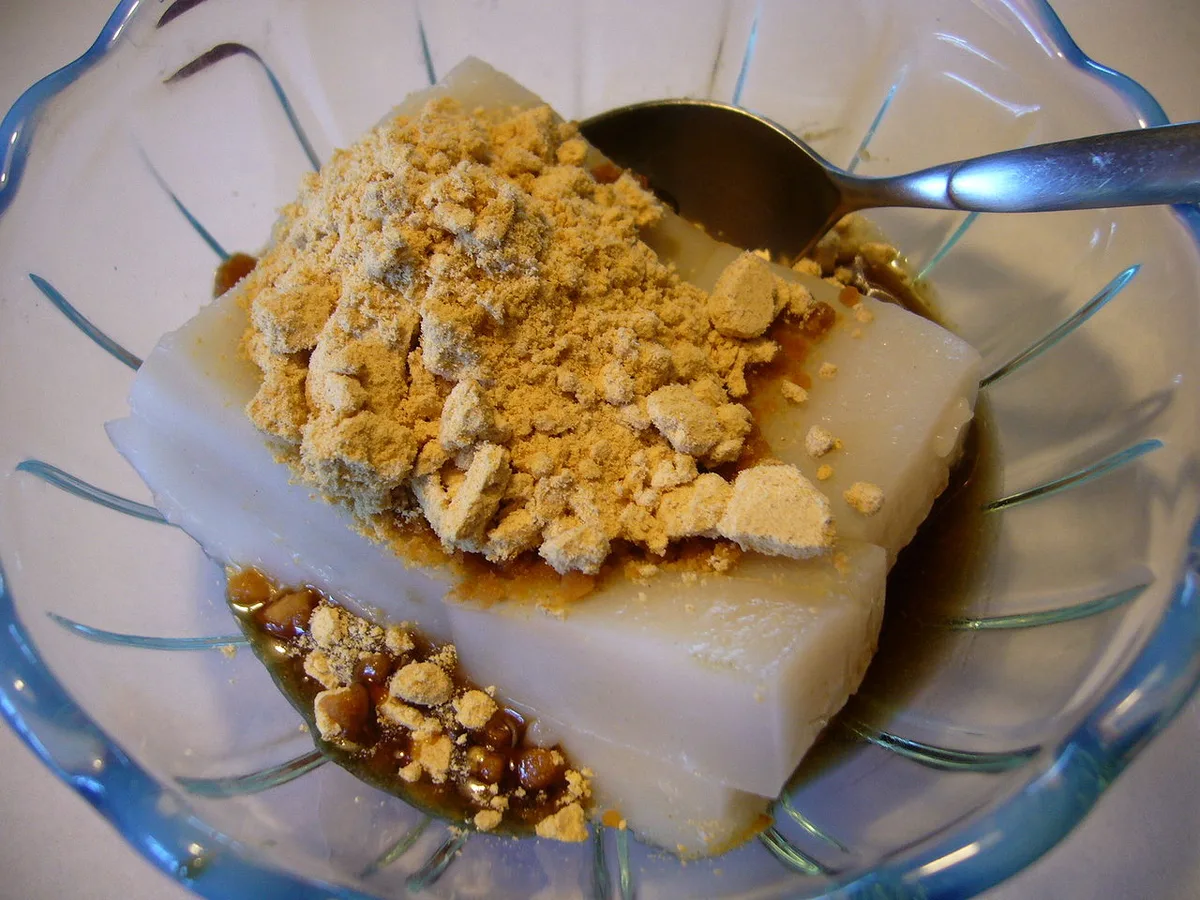
- Kuzu-mochi — chilled kuzu jelly served with kinako soybean powder and brown-sugar syrup — is the signature teahouse treat; kuzu-yu, a hot kuzu drink, is the winter counterpart.
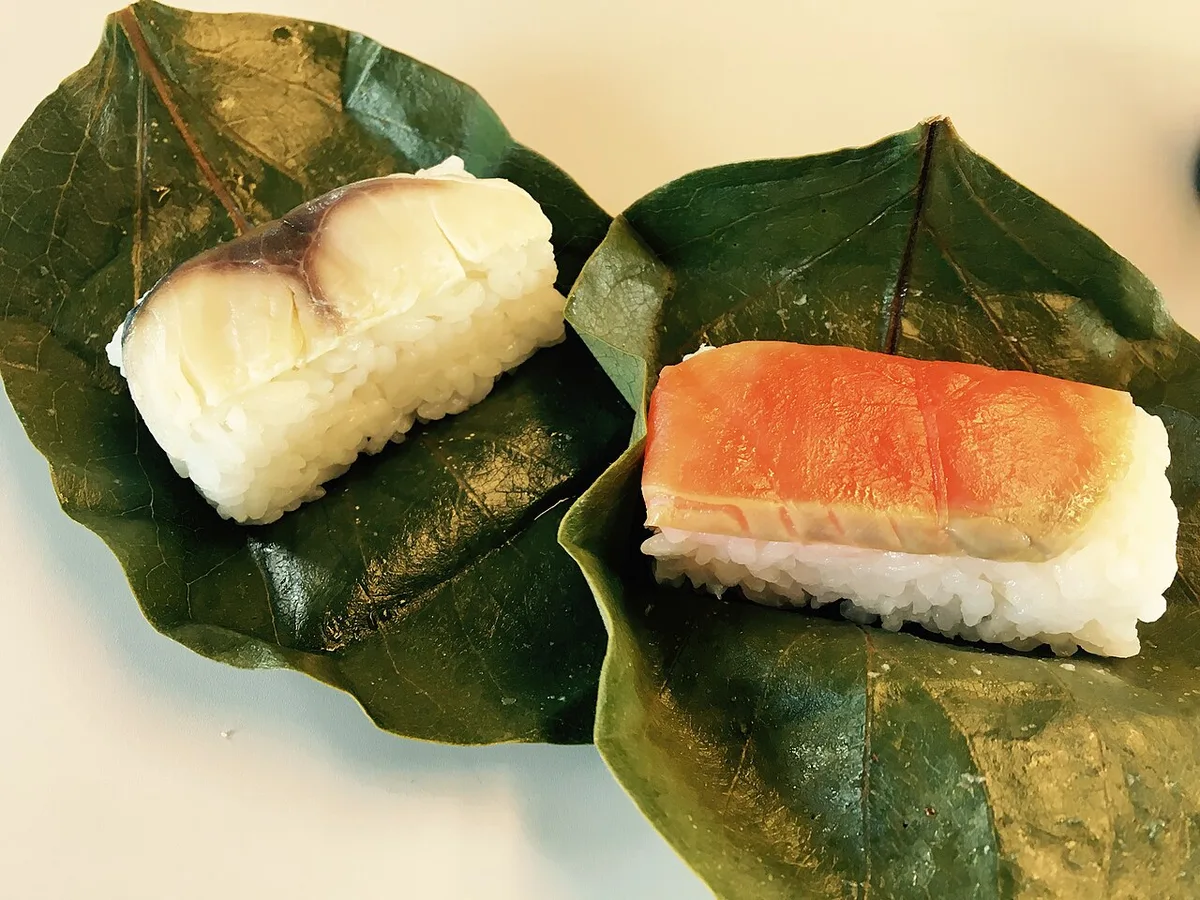
- Kakinoha-zushi, pressed mackerel or salmon sushi wrapped in a persimmon leaf, is a Nara Prefecture specialty that began as a preservation method before refrigeration.
- Sansai (foraged mountain vegetables) tempura and pickles appear on most temple-town teahouse menus, especially in spring and autumn.
- Nearly everything is concentrated along the main pedestrian street between Yoshino Station or the ropeway and Kinpusen-ji, making it easy to combine eating with sightseeing.
Yoshino Kuzu — The Mountain's Signature Starch
Kuzu is a starch extracted from the root of the kudzu vine, and Yoshino has been associated with the highest grade of it for centuries. What sets the traditional Yoshino product apart from the cornstarch-based "kuzu" sold in supermarkets nationwide is the process: the fibrous roots are pounded, then washed repeatedly in cold mountain water over the winter months, with the pure starch allowed to settle out between washes. It is slow, cold-weather work, and the number of producers still doing it by hand has shrunk over the decades, which is part of why genuine Yoshino kuzu commands a premium as a souvenir.
The finished starch shows up in two forms that visitors are likely to encounter. Kuzu-mochi is a chilled, jelly-like sweet made by heating kuzu starch with water until it turns translucent and sets into a soft, wobbling block — served in teahouses cut into cubes and dusted with kinako soybean powder, then finished with a dark brown-sugar syrup. Kuzu-yu is the opposite in temperature but shares the same base: kuzu starch mixed with hot water (sometimes ginger or plum) into a smooth, faintly sweet drink, traditionally taken as a warming winter tonic. Both are widely available along the walk up toward Kinpusen-ji, and small shops sell dried kuzu blocks to take home.
Kakinoha-zushi — Persimmon-Leaf Sushi
Kakinoha-zushi is a Nara Prefecture specialty rather than something unique to Yoshino alone, but the mountain's shops are among the most reliable places to try it in its original context. The dish is simple in construction: a slice of pressed, lightly cured mackerel or salmon set on vinegared rice, then wrapped tightly in a persimmon leaf. The wrapping was originally functional — persimmon leaves have mild antibacterial properties, and before refrigeration this was how fish caught on the coast could be carried inland to a mountain region and still be safe to eat days later. The leaf is not eaten; it is unwrapped at the table, and its faint astringent scent is meant to linger over the rice.
Because it travels well and needs no refrigeration, kakinoha-zushi has become the default portable lunch for a day of climbing between Yoshino's viewpoints and temples. Boxed sets are sold in shops the length of the main street, usually in mixed mackerel-and-salmon assortments, and make an easy pairing with a stop at Yoshimizu Shrine or a bench along the ropeway route.
Sansai — Foraged Mountain Vegetables
Alongside kuzu and kakinoha-zushi, Yoshino's teahouses lean heavily on sansai — a general term for wild greens and shoots foraged from the surrounding mountainside rather than farmed. Bracken, bamboo shoot, wild yam, and various mountain ferns are the most common varieties, usually served as tempura or as simple vinegar- or miso-based pickles alongside a set meal. Availability shifts with the season: spring brings the widest range of tender young shoots, while autumn sees a second smaller wave alongside mushrooms. A sansai tempura set is a common lunch option for visitors combining a food stop with a walk between temples, and it pairs naturally with a bowl of hot kuzu-yu on a cooler day.
Where to Find It — The Main Street Layout
Nearly all of Yoshino's food shops sit along the single pedestrian street that climbs from the area around Yoshino Station and the ropeway station toward Kinpusen-ji and beyond to the upper viewpoints. Kuzu-mochi teahouses and kakinoha-zushi shops are interspersed with the souvenir stores the whole way up, which means a food stop rarely requires a detour — it happens naturally between sightseeing stops. Visitors following the standard route described in the one-day Yoshino itinerary will pass several options without needing to plan around them specifically; the practical approach is simply to stop when appetite and opportunity line up, since queueing is rarely an issue outside the peak cherry-blossom weeks.
Frequently Asked Questions
What is Yoshino kuzu, and why is it considered special?
Yoshino kuzu is a high-grade arrowroot starch traditionally hand-processed from wild kudzu-vine roots over the winter months, using repeated washing in the region's cold, clean mountain water to separate out the pure starch. This slow, cold-weather method differs from the cornstarch-based "kuzu" sold widely elsewhere in Japan, and genuine Yoshino kuzu is prized as a premium souvenir because relatively few producers still make it this way.
What is the difference between kuzu-mochi and kuzu-yu?
Kuzu-mochi is a chilled, jelly-like sweet made by heating kuzu starch with water until it sets into a soft, translucent block, typically served with kinako soybean powder and brown-sugar syrup. Kuzu-yu is the hot counterpart — kuzu starch dissolved in hot water, sometimes with ginger or plum, and taken as a warming drink. Both use the same starch base but are served at opposite temperatures and in different seasons.
What is kakinoha-zushi and where did it come from?
Kakinoha-zushi is pressed mackerel or salmon sushi wrapped in a persimmon leaf, a specialty of Nara Prefecture that includes Yoshino. It began as a preservation method — persimmon leaves have mild antibacterial properties, which historically let cured fish caught on the coast be carried safely inland to mountain areas. The leaf is unwrapped before eating and is not itself part of the dish; it lends only its faint scent to the rice.
Where in Yoshino can these foods be found?
Almost everything is concentrated along the single pedestrian main street climbing from Yoshino Station and the ropeway station toward Kinpusen-ji. Kuzu-mochi teahouses and kakinoha-zushi shops sit alongside souvenir stores the whole way up, so a food stop can be combined with sightseeing rather than planned as a separate trip. Queues are generally light outside the peak cherry-blossom weeks in spring.
Yoshino's food identity long predates its reputation for cherry blossoms — kuzu-processing, persimmon-leaf preservation, and mountain foraging are all responses to the practical demands of living on this particular mountain, and each has turned into something worth seeking out on its own terms. A short stop for kuzu-mochi or a box of kakinoha-zushi adds very little time to a day of sightseeing and rounds it out considerably.
For the temples, viewpoints, and transport details that fill out the rest of a visit, see the Yoshino attractions guide and the practical notes on getting to Yoshino from Osaka and Kyoto.
For further background, see Kuzu on Wikipedia.
Free guide: Japan's Hidden Gems
12 under-the-radar places beyond Tokyo & Kyoto — with the best season to visit each and a local tip you won't find in the guidebooks.
You might also like


Continue reading
More guides you'll find useful


