

Yoshimizu Shrine: History and Best Cherry-Blossom View (2026)
Guide to Yoshimizu Shrine in Yoshino: Emperor Godaigo's imperial refuge, Yoshitsune and Shizuka Gozen's legendary hideout, Hideyoshi's 1594 hanami party, and why the Hanayagura platform is Yoshino's best cherry-blossom view. 2026 admission and hours estimates.
On this page
Few single sites in Japan carry as much layered history as Yoshimizu Shrine. Originally a temple, Yoshimizu-in, before the Meiji-era separation of Buddhist and Shinto institutions split it into the shrine that stands today, this modest wooden building tucked into the hillside above Yoshino's cherry-covered slopes has sheltered a fugitive emperor, hidden a legendary warrior from his own brother, and hosted one of the most extravagant parties in Japanese history — all within a footprint you can walk through in twenty minutes.
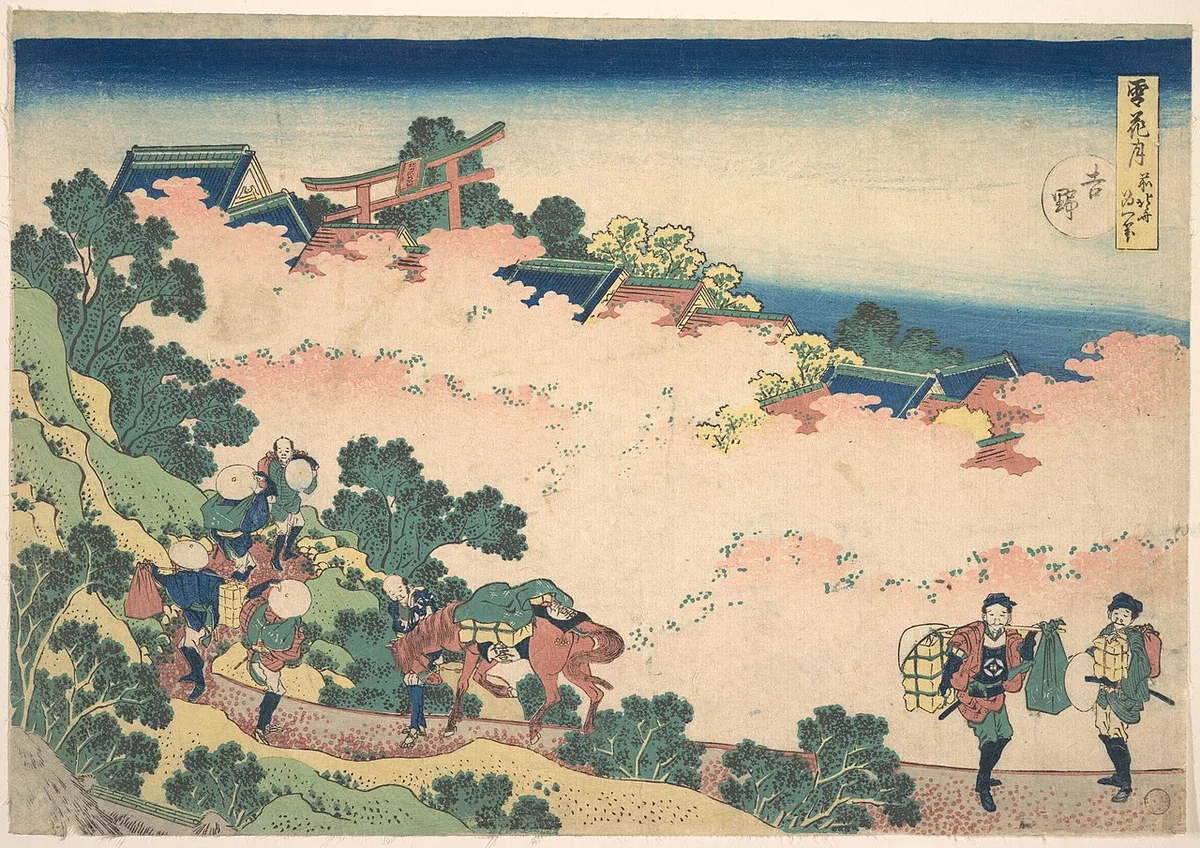
What makes Yoshimizu Shrine worth deliberately routing a visit around, rather than treating as a footnote on the way up to Kinpusen-ji, is the Hanayagura viewing platform at its edge. Positioned to look directly across the Naka Senbon and Kami Senbon tiers of Yoshino's mountainside, it is widely considered the single best vantage point over the thousands of cherry trees that make Yoshino Japan's most famous hanami destination.
This 2026 guide covers Yoshimizu Shrine's three defining historical episodes — imperial refuge, warrior hideout, and legendary hanami party — plus the practical details for visiting: admission, hours, and how to find the Hanayagura platform once you're on site.
The Hanayagura viewing platform is included with the shrine's building admission — it is not a separate paid attraction, but it's easy to miss if you only glance at the main hall and turn back. Ask staff to point you toward it if the signage isn't obvious.
Key Takeaways
- Yoshimizu Shrine served as Emperor Godaigo's temporary palace (angu) in the 1330s, when Yoshino briefly became the seat of Japan's Southern Imperial Court during the Nanboku-cho period.
- Minamoto no Yoshitsune and the shirabyoshi dancer Shizuka Gozen are said to have hidden here while fleeing Yoshitsune's brother, the shogun Minamoto no Yoritomo.
- In 1594, warlord Toyotomi Hideyoshi held a legendarily lavish five-day cherry-blossom viewing party at Yoshimizu with an entourage of roughly 5,000 people.
- The Hanayagura platform on site is widely regarded as the single best viewpoint over Yoshino's cherry-blossom slopes, looking across the Naka Senbon and Kami Senbon tiers.
- Building admission runs roughly 400 yen (2026 estimate); the exterior grounds and approach path are free to walk.
Imperial Refuge: Emperor Godaigo's Southern Court
Yoshimizu Shrine's most consequential historical role dates to the 1330s, during the Nanboku-cho ("Southern and Northern Courts") period — one of the more turbulent stretches in Japanese imperial history, when two rival emperors each claimed legitimacy from separate capitals. Emperor Godaigo, driven from Kyoto, established his Southern Court in Yoshino, and Yoshimizu-in — as the site was then known, before the Meiji-era separation of shrines and temples split it from its Buddhist origins — served as his temporary palace, or angu.
Walking through the modest wooden halls today, it's worth remembering that this building briefly functioned as the administrative and ceremonial center of one half of a divided imperial Japan. Few sites of this historical weight remain this unassuming in scale — Yoshimizu Shrine has none of the grandeur of a purpose-built palace, which is itself part of what makes the story land: an emperor in exile, running a court from a mountainside temple. The broader context of Yoshino's role in this period is covered alongside the shrine's other historic neighbors in the Yoshino attractions guide.

Yoshitsune and Shizuka Gozen's Legendary Hideout
A century and a half before Godaigo's exile, Yoshimizu is said to have sheltered an even more famous fugitive: Minamoto no Yoshitsune, the celebrated warrior whose military exploits helped his half-brother Minamoto no Yoritomo found the Kamakura shogunate — and who was then hunted down by that same brother out of political rivalry and suspicion. Yoshitsune and his companion, the shirabyoshi dancer Shizuka Gozen, are said to have taken refuge in Yoshino's mountains while fleeing Yoritomo's forces, and Yoshimizu is one of the sites local tradition associates with their hiding place.
The Yoshitsune–Shizuka Gozen story is one of the most retold tragic romances in Japanese literature and theater, appearing in noh and kabuki adaptations for centuries. Standing in Yoshimizu's quiet halls, it's a useful reminder that Yoshino's mountains have functioned as a refuge for the politically inconvenient more than once — first for a hunted general, later for an exiled emperor. Travelers piecing together Yoshino's broader Yoshitsune and Nanboku-cho history alongside a visit to the four tiers of cherry trees will find the two threads of legend recur across several of the town's older buildings.
Hideyoshi's Legendary 1594 Hanami Party
The episode most travelers actually come to Yoshimizu for, however, is the third: in 1594, the powerful warlord Toyotomi Hideyoshi — by then the most powerful man in Japan — staged a cherry-blossom viewing party at Yoshimizu so lavish it remains one of the most-cited hanami events in Japanese history. Historical accounts describe an entourage of roughly 5,000 people, including tea masters, poets, and rival warlords, gathering for five days of blossom-viewing, poetry composition, and feasting.
The scale of the event is part of what cemented Yoshino's reputation as Japan's premier cherry-blossom destination centuries before mass tourism existed — Hideyoshi's party was, in effect, an early and extraordinarily well-funded advertisement for Yoshino's slopes. Modern visitors arriving during peak bloom season are, in a small way, continuing a tradition Hideyoshi helped popularize over four hundred years ago, even if today's crowds arrive by train and ropeway rather than palanquin.

The Hanayagura Platform: Yoshino's Best Cherry-Blossom View
Set at the edge of the shrine grounds, the Hanayagura ("flower turret") viewing platform looks directly out across Yoshino's Naka Senbon and Kami Senbon tiers — the middle and upper bands of the mountainside's roughly 30,000 cherry trees. Because of the angle and elevation, it's widely regarded by repeat visitors and local guides as the single best vantage point in Yoshino for taking in the scale of the blossom slopes in one frame, rather than the closer, more enclosed views available from paths lower down the mountain.
The platform is included with general building admission, so there's no separate fee to reach it, though it's easy to walk past if you don't know to look for it — the shrine's layout doesn't make it the obvious centerpiece the way a purpose-built observation deck would. Visitors combining Yoshimizu with a fuller day on the mountain often pair it with the Yoshino ropeway for the ascent and a walk through the lower tiers before or after.
Visiting Yoshimizu Shrine: Practical Notes
Yoshimizu Shrine sits partway up Yoshino's mountainside among the Naka Senbon cherry groves, a walkable distance from the town's main pedestrian route. Admission to enter the historic building's interior — including the rooms associated with Godaigo's residence and the Hanayagura platform — runs approximately 400 yen per adult as a 2026 estimate; the exterior grounds and approach path are free to walk, so budget travelers can still appreciate the setting without paying the building fee.
Opening hours run roughly 9:00 to 17:00 as a 2026 estimate, though hours can shorten outside the cherry-blossom and autumn-foliage seasons, when visitor numbers drop. Given how central Yoshimizu is to the town's overall historical narrative, most visitors fold it into a broader day covering the mountain's tiers and temples — the Yoshino one-day itinerary sequences it alongside the ropeway and Kinpusen-ji, and travelers coming from the Kansai region can check the guide to getting to Yoshino from Osaka and Kyoto for train and seasonal timetable notes before setting out.
Frequently Asked Questions
Why is Yoshimizu Shrine historically significant?
Yoshimizu Shrine served as Emperor Godaigo's temporary palace in the 1330s during the Nanboku-cho period, when Yoshino briefly became the seat of Japan's Southern Imperial Court. It's also linked by tradition to the warrior Minamoto no Yoshitsune and the dancer Shizuka Gozen, who are said to have hidden there while fleeing Yoshitsune's brother, and to warlord Toyotomi Hideyoshi, who held a famously lavish five-day hanami party there in 1594 with an entourage of roughly 5,000 people.
Is Yoshimizu Shrine the best place to view Yoshino's cherry blossoms?
Many repeat visitors and local guides consider the Hanayagura viewing platform, located within the shrine grounds, the single best vantage point over Yoshino's cherry-blossom slopes. It looks directly across the Naka Senbon and Kami Senbon tiers, giving a wider view of the mountainside than most paths lower down the mountain.
How much does it cost to enter Yoshimizu Shrine?
Entering the historic building's interior, including the rooms associated with Emperor Godaigo's residence and the Hanayagura platform, costs approximately 400 yen per adult as a 2026 estimate. The exterior grounds and approach path can be viewed for free without paying the building admission.
What are Yoshimizu Shrine's opening hours?
Yoshimizu Shrine is open roughly 9:00 to 17:00 as a 2026 planning estimate. Hours can shorten outside the cherry-blossom and autumn-foliage seasons, when visitor numbers are lower, so it's worth checking current hours if visiting outside peak season.
Yoshimizu Shrine packs an unusual amount of Japanese history into a single modest building: an emperor's court in exile, a legendary warrior's hideout, and one of history's most extravagant cherry-blossom parties, all before you even reach the Hanayagura platform's view over the mountainside. Few stops on a Yoshino itinerary reward a slow, deliberate visit as much as this one does.
Pair Yoshimizu with the wider mountain by continuing up to Kinpusen-ji or riding the Yoshino ropeway, and build it into a full day using the Yoshino one-day itinerary. For a sense of the broader site and its neighbors, the Yoshino attractions guide is the best starting point.
For reference information, see Yoshino on Wikipedia.
Free guide: Japan's Hidden Gems
12 under-the-radar places beyond Tokyo & Kyoto — with the best season to visit each and a local tip you won't find in the guidebooks.
You might also like


Continue reading
More guides you'll find useful


