
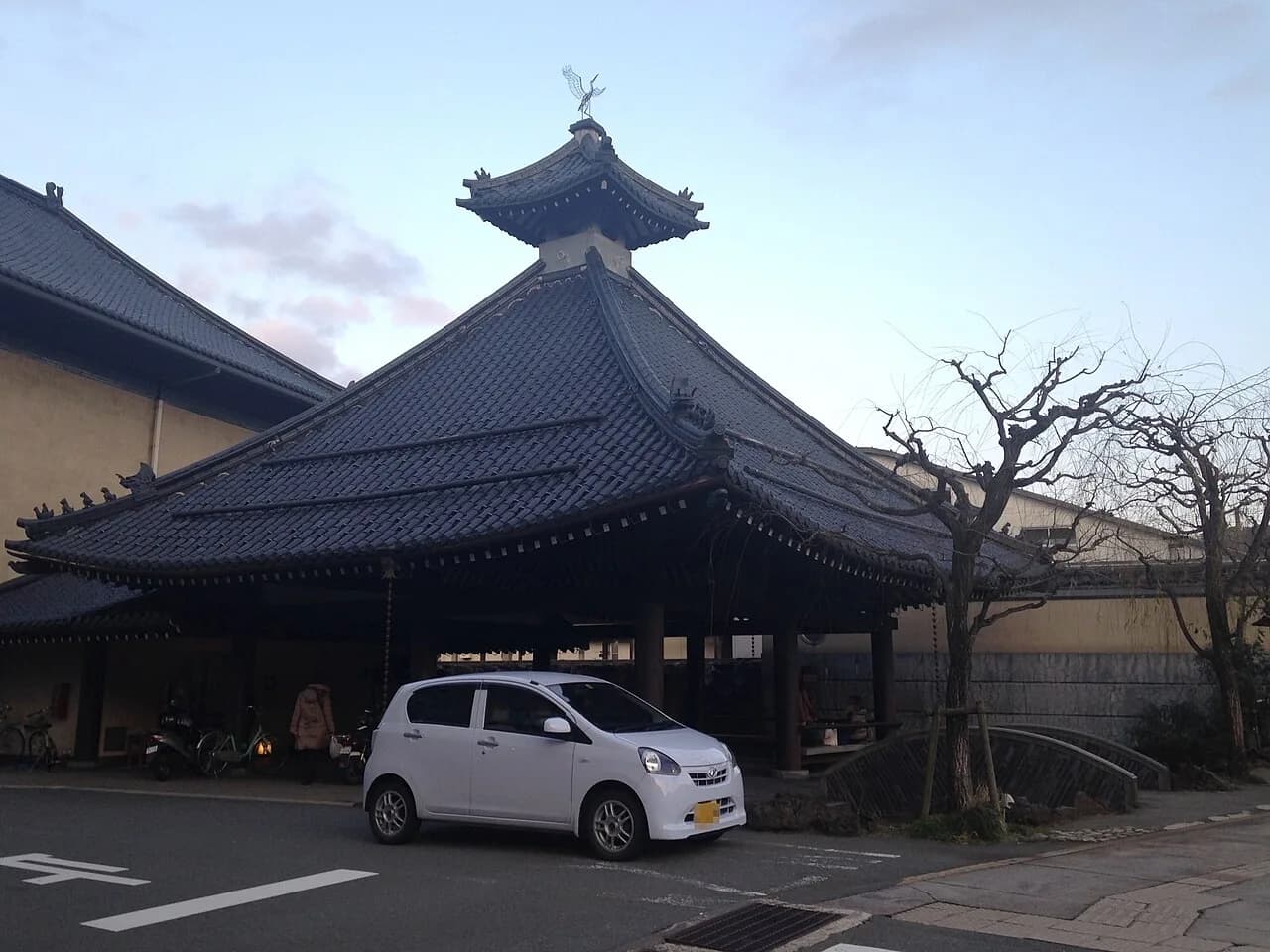
Satono-yu is the largest and most modern of Kinosaki Onsen's seven iconic public bathhouses, positioned just steps from Kinosaki Onsen Station — making it both the easiest to find and, for many visitors, the natural first or final soak of the day.
Spread across three floors, it offers the widest variety of bathing experiences in the town: a rooftop open-air bath with sweeping views, a range of themed indoor pools, a steam sauna, and dedicated relaxation areas. Its traditional blessing is health and longevity, fitting for a bathhouse that has welcomed weary travellers arriving straight off the train.
Ryokan guests enter free with the Yumepa pass issued by most local inns, while day-trippers can purchase a 1-day sotoyu pass at the entrance. Like all of Kinosaki's public baths, Satono-yu is also tattoo-friendly — a rarity in Japan that has made the town a popular destination for international visitors.
This 2026 guide covers everything you need to plan a visit: what makes Satono-yu unique among the seven sotoyu, how to get there, what to expect inside, and practical tips on hours, pricing, and access.
Why Visit Satono-yu? Kinosaki's Grandest Public Bath
Among Kinosaki Onsen's seven sotoyu, each bathhouse has its own character and blessings. Satono-yu stands apart simply through scale and variety. Where some sotoyu are intimate, historically atmospheric spaces with one or two pools, Satono-yu delivers a full spa experience across multiple floors — the closest thing in Kinosaki to a comprehensive wellness centre, while still operating under the same communal, yukata-clad bathing culture as its six siblings.
Its station-side location is both a convenience and a statement. Arriving by Kinosaki Onsen Station (which itself has hot-spring footbaths on the platform), the bathhouse is visible almost immediately — a welcoming beacon for visitors who have travelled from Kyoto or Osaka. For those finishing a multi-day stay, it offers a final soak before the train home, open into the evening when the other sotoyu have quieted down.
The rooftop露天風呂 (open-air bath) is the headline attraction. Sitting in the thermal waters while looking out over the rooftops of this compact, willow-lined spa town is one of those quietly exceptional Japanese travel moments. For things to do in Kinosaki Onsen beyond the standard bath-hopping circuit, Satono-yu's relaxation lounges also make it a comfortable place to simply rest between visits to the other bathhouses.
The blessing associated with Satono-yu is health and longevity — a theme that resonates with the Japanese onsen tradition of mizu no chikara, the healing power of water.
History and Significance of Satono-yu
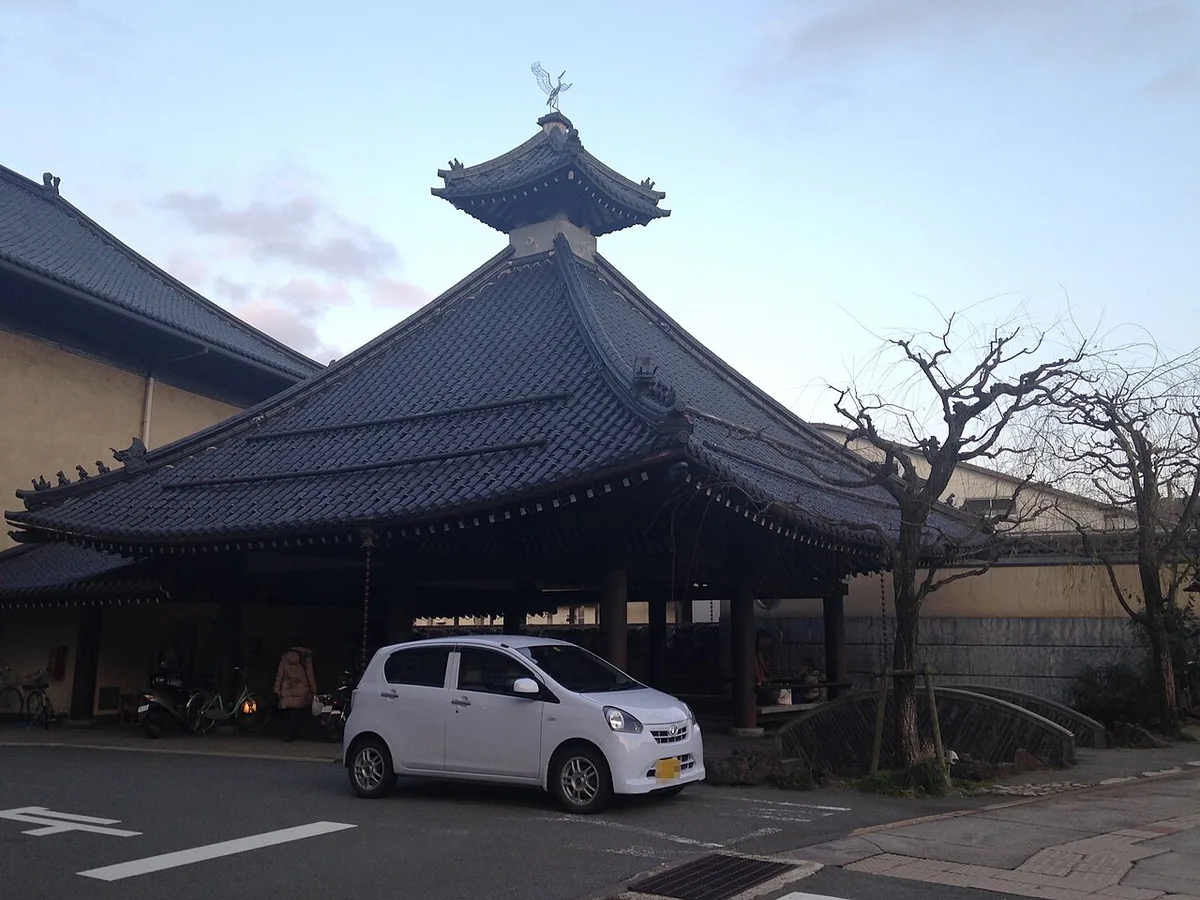
Kinosaki Onsen's hot-spring culture stretches back roughly 1,300 years, with early records linking the discovery of the springs to the monk Dochi Shonin and the deity Yakushi Nyorai. The system of seven public sotoyu — each with its own patron blessing — evolved over centuries as the town grew into one of the most beloved onsen resorts in the Kinki region.
Satono-yu, as the most modern of the seven, represents a later chapter in that history: a purpose-built multi-floor facility designed to serve the contemporary traveller while honouring the communal bathing tradition at the heart of Kinosaki's identity. Its name and blessing — health and longevity — align with the deepest roots of Japanese onsen culture, in which the therapeutic properties of naturally occurring hot springs were considered gifts from the divine.
The town's unique philosophy — that guests from different ryokan bathe together in shared public facilities, wandering between bathhouses in yukata and geta sandals — was championed by the writer Shiga Naoya, who convalesced in Kinosaki in 1907 and later immortalised the town in his 1917 short story "At Kinosaki." That literary legacy has made Kinosaki Onsen a pilgrimage of sorts for Japanese literature lovers, and Satono-yu, standing at the town's gateway, inherits a share of that cultural gravity.
Getting to Satono-yu: Access and Transport
Satono-yu's defining geographic advantage is its position immediately beside Kinosaki Onsen Station — you can see it from the platform. No map or complex directions are needed: exit the station and the bathhouse is in front of you.
Kinosaki Onsen Station is served by the JR Kyoto Line and JR Bantan Line. Direct limited-express Kinosaki trains (Thunderbird / Kounotori services) run from Kyoto in approximately 2 hours and 20 minutes, and from Osaka (Osaka Station) in roughly 2 hours and 40 minutes. From Tottori to the west, the Hamakaze limited express connects in around 1 hour and 20 minutes. For full rail options and day-trip logistics, see our guide on how to get to Kinosaki Onsen by train.
Visitors arriving by car will find coin car parks near the station. Note that the main willow-lined street (Ootani River promenade) is best explored on foot or by bicycle — the town is compact enough that Satono-yu serves as a logical starting or finishing point for a walking bath-hop circuit. Most ryokan guests receive a rental geta and yukata as part of their stay, which is the traditional way to walk between the sotoyu.
Highlights of Satono-yu: What to Expect Inside
The bathhouse spreads across three floors, with each level offering a distinct bathing environment. The ground floor houses changing facilities, reception, and the entry point for the day-pass and Yumepa systems. Towels and bathing essentials are available for hire or purchase at the counter.
The indoor baths on the upper floors include themed pools of varying temperatures — some drawing on traditional Japanese design with hinoki cypress accents, others more contemporary in finish. The variety means visitors can rotate between pools at their own pace, warming and cooling in sequence in the manner recommended by traditional onsen etiquette.
The rooftop open-air bath (rotenburo) is the centrepiece experience. Stepping out into the open air — whether under a blue summer sky or winter stars — while submerged in the naturally mineral-rich thermal waters is a quintessentially Kinosaki moment. The views across the compact town's tiled rooftops reinforce the sense of being genuinely embedded in a place rather than merely visiting it.
A steam sauna and relaxation areas complete the offering. These spaces make Satono-yu suitable for a longer, more restorative visit than a quick dip — particularly useful at the end of a day's bath-hopping through the full guide to the seven public baths, when the body appreciates time to cool and rest before the return journey.
As with all seven sotoyu, the water at Satono-yu is genuine onsen — naturally occurring thermal spring water, not heated tap water. The mineral composition is sodium chloride-based, characteristic of Kinosaki's springs, and is considered beneficial for skin conditions, fatigue, and general circulation.
Planning Your Visit: Hours, Prices, and Tips
Satono-yu operates on slightly different hours from the other six sotoyu — an afternoon-into-evening schedule that reflects its station-side role as the arrival and departure bath. As of 2026, opening hours are roughly 13:00–21:00. The bathhouse is typically closed on Mondays, though this may vary with public holidays. Confirm the current schedule at kinosaki-spa.gr.jp before your visit, as seasonal adjustments do occur.
Entry for the general public costs approximately ¥800 per person (2026 estimate; confirm at the door). Ryokan guests staying in Kinosaki Onsen receive a Yumepa pass from their inn, which grants free entry to all seven sotoyu — including Satono-yu — for the duration of their stay. Day visitors not staying at a ryokan can purchase a 1-day sotoyu pass, which covers all seven bathhouses for a single day; this offers significantly better value for those intending to visit more than two or three baths.
Satono-yu is tattoo-friendly. Kinosaki Onsen as a whole has adopted an inclusive policy on tattoos — unusual in Japan, where most public baths prohibit them — making it one of the most welcoming onsen towns for international travellers with body art.
Bring or hire a modesty towel for moving between pools; soap, shampoo, and conditioner are available in the changing rooms. Avoid submerging your towel in the communal pools. Rinse thoroughly at the shower stations before entering any bath. Long hair should be tied up. These standard onsen etiquette rules apply at all seven sotoyu and are appreciated by local bathers.
If planning a full bath-hop circuit, note that Satono-yu's afternoon opening makes it best placed as stop one (immediately on arrival) or stop seven (the final soak before catching the train home). Its relaxation areas make lingering comfortable, so allow 45–60 minutes rather than rushing through.
Frequently Asked Questions
What are Satono-yu's opening hours?
Satono-yu is open roughly 13:00–21:00 and is typically closed on Mondays (confirm before visiting as holidays may shift the closure). Its afternoon-into-evening schedule is slightly different from the other six sotoyu in Kinosaki Onsen, making it particularly well-suited as the first bath on arrival or the final soak before an evening train home. Always check the latest schedule at kinosaki-spa.gr.jp before your 2026 visit.
How much does it cost to enter Satono-yu?
Single entry is around ¥800 per person (2026 estimate — confirm at the door as prices may change). Ryokan guests receive a Yumepa pass from their inn that covers free entry to all seven sotoyu, including Satono-yu. Day visitors not staying overnight can purchase a 1-day sotoyu pass, which grants access to all seven bathhouses and represents good value if you plan to visit more than two or three.
Do ryokan guests get free entry to Satono-yu?
Yes. Guests staying at virtually any ryokan in Kinosaki Onsen receive a Yumepa pass upon check-in. This pass grants free entry to all seven public sotoyu — including Satono-yu — for the duration of your stay. It is one of the central reasons to book accommodation in the town rather than visiting on a day trip.
Is Satono-yu tattoo-friendly?
Yes. Satono-yu, like all seven of Kinosaki Onsen's public sotoyu, welcomes guests with tattoos. Kinosaki as a town has adopted a tattoo-inclusive policy, which is uncommon in Japan where most public baths prohibit tattoos. This policy has made Kinosaki Onsen one of the most accessible onsen destinations in Japan for international travellers.
What makes Satono-yu different from the other sotoyu in Kinosaki Onsen?
Satono-yu is the largest and most modern of the seven public bathhouses, and the only one positioned directly beside Kinosaki Onsen Station. It offers the widest variety of bathing environments: a rooftop open-air bath with town views, themed indoor pools, a steam sauna, and relaxation areas. Its afternoon-into-evening hours are also slightly different from the others, making it ideal as the first or last bath of a bath-hopping day.
What blessing is associated with Satono-yu?
Each of Kinosaki Onsen's seven sotoyu carries a traditional blessing. Satono-yu's blessing is health and longevity (kenko choju). This reflects the deep-rooted Japanese belief in the therapeutic and restorative power of naturally occurring hot-spring waters — a tradition that has drawn visitors to Kinosaki for over 1,300 years.
Satono-yu occupies a special place among Kinosaki Onsen's seven sotoyu — not because of history or architectural drama, but because of what it offers in the present: the town's broadest range of bathing environments, a rooftop rotenburo that earns its views, and a convenient station-side position that fits naturally into any itinerary, however brief the visit.
Whether you soak here first to shake off the train journey, or save it as a restorative finale before the ride home, the bathhouse delivers on the core promise of Kinosaki: unhurried, communal immersion in naturally sourced thermal waters, shared with fellow travellers in yukata and geta on the narrow streets outside.
For context on all seven public baths, see the full guide to the seven public baths, or explore the wider the Kinosaki Onsen attractions hub for day-trip planning, seasonal tips, and nearby sights beyond the sotoyu circuit.