
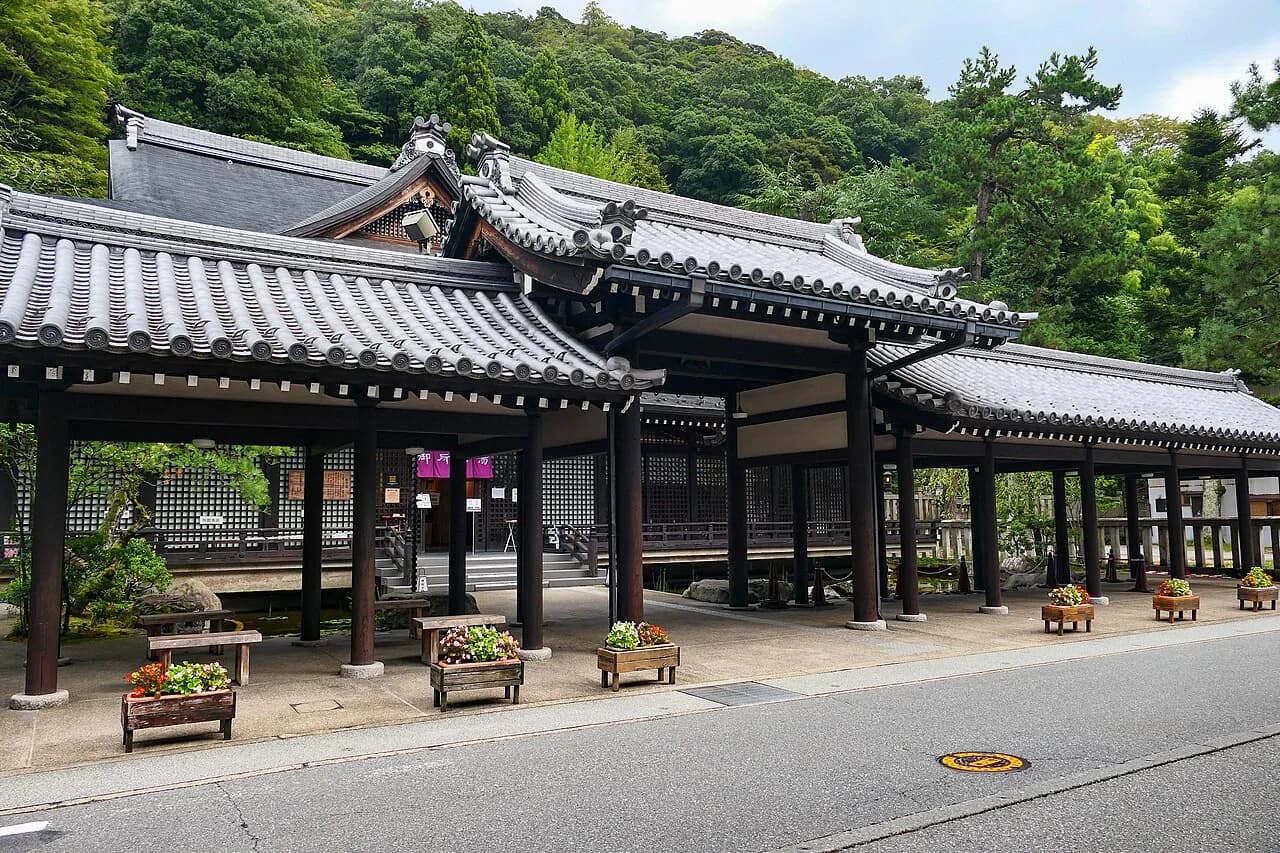
Goshono-yu stands apart from Kinosaki Onsen's other six public sotoyu by sheer architectural drama. Its sweeping gabled roof — modelled on the Kyoto Imperial Palace (Gosho) — commands the willow-lined canal street and makes it the most photographed building in this celebrated onsen town.
The bath carries a triple blessing of beauty, happy marriage, and fire prevention, lending a ritual dimension that draws couples and dedicated bathers in equal measure.
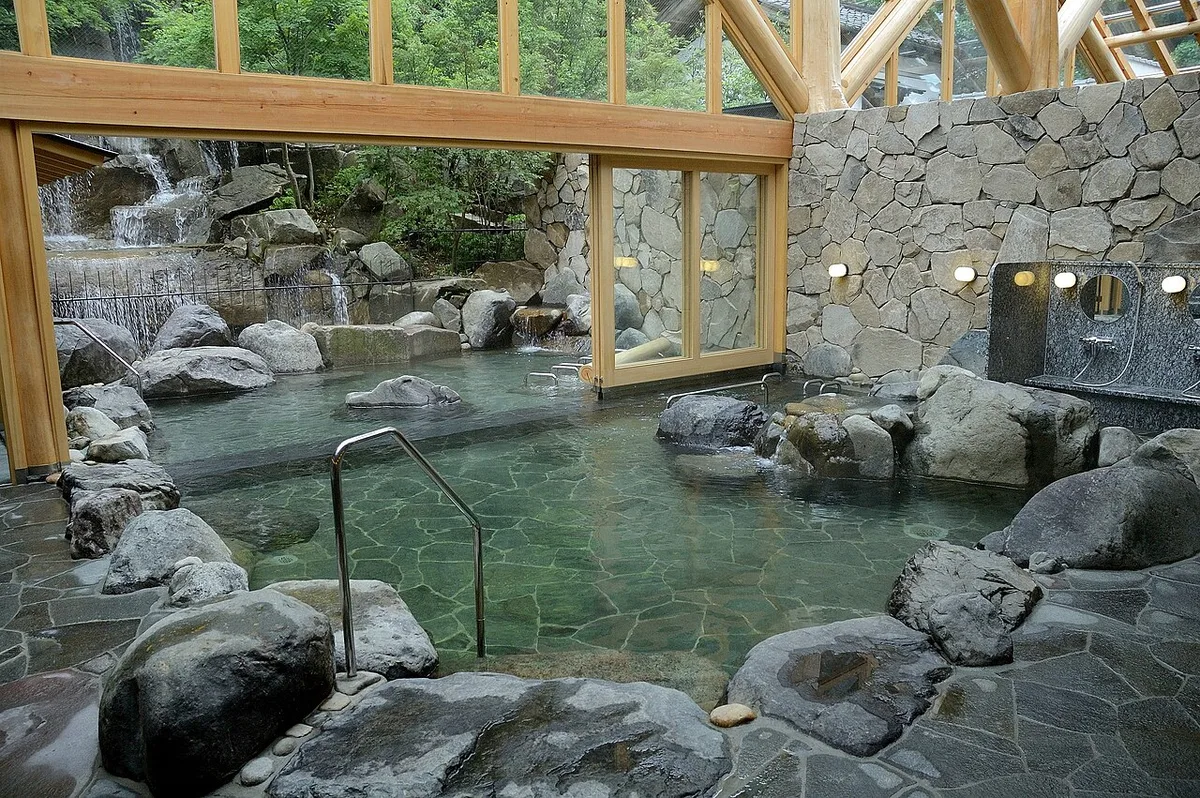
Inside, a landscaped courtyard holds a dramatic open-air waterfall rotenburo, complemented by cedar-scented indoor pools and the rare welcome of a tattoo-friendly policy Kinosaki extends to all seven of its public baths. This guide covers what to expect and how to plan a visit in 2026.
Why Visit Goshono-yu? Kinosaki's Most Photogenic Bath
Kinosaki Onsen's sotoyu circuit is one of Japan's great onsen traditions — ryokan guests don yukata and geta and stroll between seven public bathhouses, each carrying its own blessing and character. Of the seven, Goshono-yu is the one that stops visitors before they even step inside. The Imperial Palace gable gives it an air of aristocratic ceremony entirely its own, and at dusk, when lanterns glow against the willow-lined canal, the scene is genuinely unforgettable. Photography enthusiasts planning things to do in Kinosaki Onsen frequently list the facade as their most-anticipated shot in town.
The triple blessing — beauty, marriage, and fire prevention — adds a ritualistic resonance. Couples in matching yukata often pause at the entrance before bathing, and the open-air waterfall rotenburo in the landscaped courtyard makes the interior experience equally memorable. For the full guide to Kinosaki's seven public baths, including each bath's blessing and recommended order, see the dedicated circuit overview.
History and Significance of Goshono-yu
Kinosaki Onsen's hot-spring tradition stretches back over 1,300 years, with early records crediting the discovery of its healing waters to the wandering Buddhist monk Douchi Shonin, who is said to have prayed for a thousand days at the site. By the Edo period the town had evolved into a celebrated resort, and its communal sotoyu had become the heart of its social identity.
Goshono-yu takes its name directly from its architectural inspiration: "yu" (湯) means hot-spring bath, while "gosho" (御所) refers to the Kyoto Imperial Palace. The decision to model the building on the Gosho was a deliberate statement of prestige — a civic aspiration toward the highest earthly refinement. The association with fire prevention also carried real weight in a timber-built town where conflagrations were a persistent danger, even as the beauty and marriage blessings drew a steady stream of romantic pilgrims seeking personal fortune.
Getting to Goshono-yu: Access and Transport
Kinosaki Onsen is served by Kinosaki Onsen Station on the JR San'in Main Line. Limited express Kounotori services run from Kyoto in approximately 2 hours 30 minutes and from Osaka in approximately 2 hours 50 minutes. From Toyooka, the nearest city, the journey takes roughly 20 minutes by local train.
The town is entirely walkable from the station — the willow-lined canal street begins a short walk from the ticket gates, and Goshono-yu's gabled roofline is visible from a distance, roughly five to ten minutes on foot. Most visitors arrive as ryokan overnight guests, whose Yumepa pass covers all seven sotoyu at no extra cost. Day visitors can buy a single-entry ticket or a 1-day all-baths pass at the door.
Highlights of Goshono-yu: What to See and Experience
The facade is the opening act. Step back across the canal path before entering and take in the full sweep of the Imperial Palace gable — particularly striking at dusk, when warm interior light and stone lanterns illuminate the timber eaves. This is Kinosaki's most-reproduced image for good reason.
The centrepiece inside is the open-air rotenburo in the landscaped courtyard: a waterfall feeds directly into the pool, and the surrounding plantings shift from cherry blossom in spring to vivid foliage in autumn. The indoor pools use Kinosaki's characteristic sodium chloride spring, renowned for leaving skin noticeably soft — a fitting quality for a bath associated with the blessing of beauty. All seven Kinosaki sotoyu permit tattooed guests, making the circuit unusually accessible by Japanese public-bathing standards. For contrasting atmospheres, pair this visit with Ichino-yu's cave bath or the hillside Kono-yu, and follow the yukata-and-geta onsen stroll for etiquette and route tips.
Planning Your Visit: Hours, Access, and Tips
Goshono-yu is open roughly 07:00–23:00 (2026 estimate). Like all seven sotoyu, it closes one day each week — often the 1st and 3rd Thursday — though the schedule shifts and should always be confirmed at your ryokan reception or on the posted timetable at the bathhouse entrance. Entry costs approximately ¥800 per person for a single visit (2026 estimate). A 1-day pass valid for all seven baths costs approximately ¥1,300 (2026 estimate); ryokan guests use the complimentary Yumepa pass.
Standard onsen etiquette applies: shower before entering any pool, tie hair up, and keep phones out of the bathing areas. Yukata are for the street and changing rooms, not the water. Evening visits from around 18:00 are ideal — lanterns are lit and crowds thin after the afternoon peak. For broader context on the full circuit and seasonal tips, visit the Kinosaki Onsen attractions hub.
Frequently Asked Questions
What is Goshono-yu famous for?
Goshono-yu is the most photogenic of Kinosaki Onsen's seven public sotoyu bathhouses. Its grand gabled architecture is modelled on the Kyoto Imperial Palace (Gosho), and it is associated with blessings of beauty, marriage, and fire prevention. It also features the only open-air waterfall rotenburo among the seven baths, set in a landscaped courtyard.
How much does it cost to enter Goshono-yu?
Single entry costs approximately ¥800 (2026 estimate). Ryokan guests receive a complimentary Yumepa pass covering all seven sotoyu during their stay. A 1-day pass for all seven baths costs approximately ¥1,300 (2026 estimate) and is available at the bathhouses directly — good value if you plan to visit three or more baths in one day.
What are Goshono-yu's opening hours?
Roughly 07:00–23:00 (2026 estimate), with one weekly closed day — often the 1st and 3rd Thursday, though this varies. Always confirm the current schedule at your ryokan or on the timetable posted at the bathhouse entrance, as each of the seven sotoyu follows its own closure day.
Is Goshono-yu tattoo-friendly?
Yes. All seven of Kinosaki Onsen's public sotoyu, including Goshono-yu, welcome guests with tattoos — a notably open policy that distinguishes Kinosaki from most Japanese public bathing facilities. There are no restrictions by tattoo size or placement.
Do I need to stay overnight to visit Goshono-yu?
No. Day visitors are welcome and can pay single entry (approximately ¥800) or buy a 1-day pass (approximately ¥1,300) covering all seven sotoyu. That said, staying overnight at a Kinosaki ryokan — which includes the complimentary Yumepa pass — is the most rewarding way to experience the full sotoyu circuit, particularly the evening lantern-lit walks between baths.
Goshono-yu earns its reputation as the showpiece of Kinosaki Onsen's sotoyu circuit. The Imperial Palace gable is extraordinary in daylight and genuinely magical by lamplight; the waterfall rotenburo delivers on the promise of outdoor soaking at its finest; and the blessing of beauty and marriage gives a ritual dimension that elevates a simple bath into something ceremonious. Plan around the weekly closed day, arrive at dusk for the best atmosphere, and leave time to linger before returning to the willow-lit street outside.
For everything else Kinosaki Onsen has to offer — the other six sotoyu, seasonal festivals, and the full willow-street walk — start with our overview of things to do in Kinosaki Onsen.