
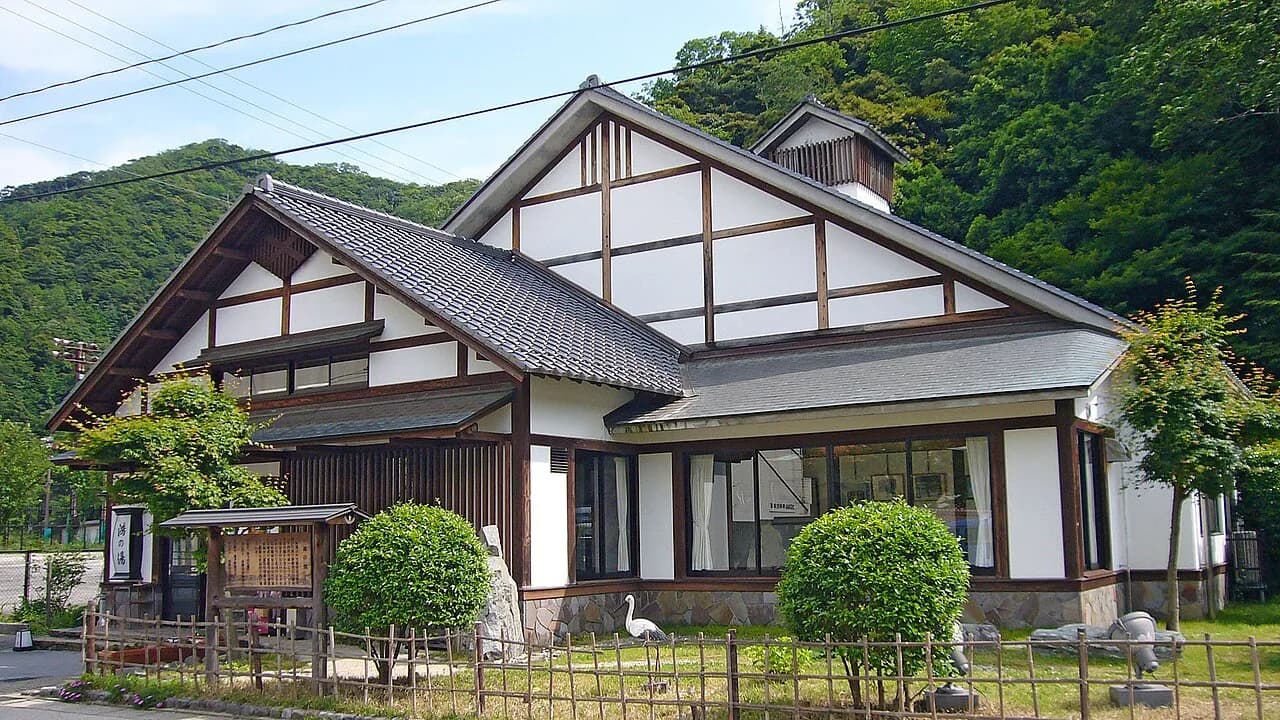
Kono-yu is the oldest of Kinosaki Onsen's celebrated seven public baths — a tranquil sotoyu tucked at the quiet north-west edge of town, within easy walking distance of the ropeway up Mt Daishi nearby.
Legend says that an oriental stork — kounotori in Japanese — was once spotted healing its wounded leg in the thermal spring here, revealing the hidden waters to the people of Kinosaki and giving the bath its name. That founding myth lives on in the blessing Kono-yu is said to bestow: luck in love and the prospect of a happy marriage.
Of the seven sotoyu that make Kinosaki's bath-hopping culture famous, Kono-yu is widely considered the most secluded and atmospheric. A pleasant garden-set open-air bath (rotenburo) sits alongside the indoor pool, and the location at the far end of the willow-lined canal gives the bath a sense of unhurried calm that the more central baths can rarely match.
This guide covers everything you need to plan a 2026 visit to Kono-yu, from its hours and entry costs to how it fits into a full day exploring things to do in Kinosaki Onsen.
Why Visit Kono-yu? Kinosaki's Most Secluded Bath
Among Kinosaki's seven public baths, Kono-yu occupies a category of its own. Its position at the north-west end of the resort — past the willow-lined canal and near the base of the ropeway — means it draws fewer visitors than the more centrally located sotoyu. That relative quietude is precisely its appeal: long, unhurried soaks in an atmosphere that feels genuinely removed from the bustle of the main strip.
The romantic blessing is a draw in itself. Couples travelling through Hyogo Prefecture often make Kono-yu their first or last bath of the day, treating the visit as something of a ritual. The legend of the healing stork gives the bath a mythic quality that the interior design — warm timber, traditional stone, a garden rotenburo — does much to support.
Kono-yu is also one of the tattoo-friendly sotoyu in Kinosaki Onsen, making it accessible to visitors who might be turned away at other facilities. Combined with its open-air garden bath and its proximity to the ropeway, this makes it one of the most rewarding stops on the full guide to the seven public baths.
Ryokan guests holding a Yumepa pass — the complimentary day pass issued by most traditional inns — may enter Kono-yu at no additional charge, as they may all seven sotoyu. For day visitors, a single-entry ticket or a 1-day sotoyu pass covers admission.
History and Significance of Kono-yu
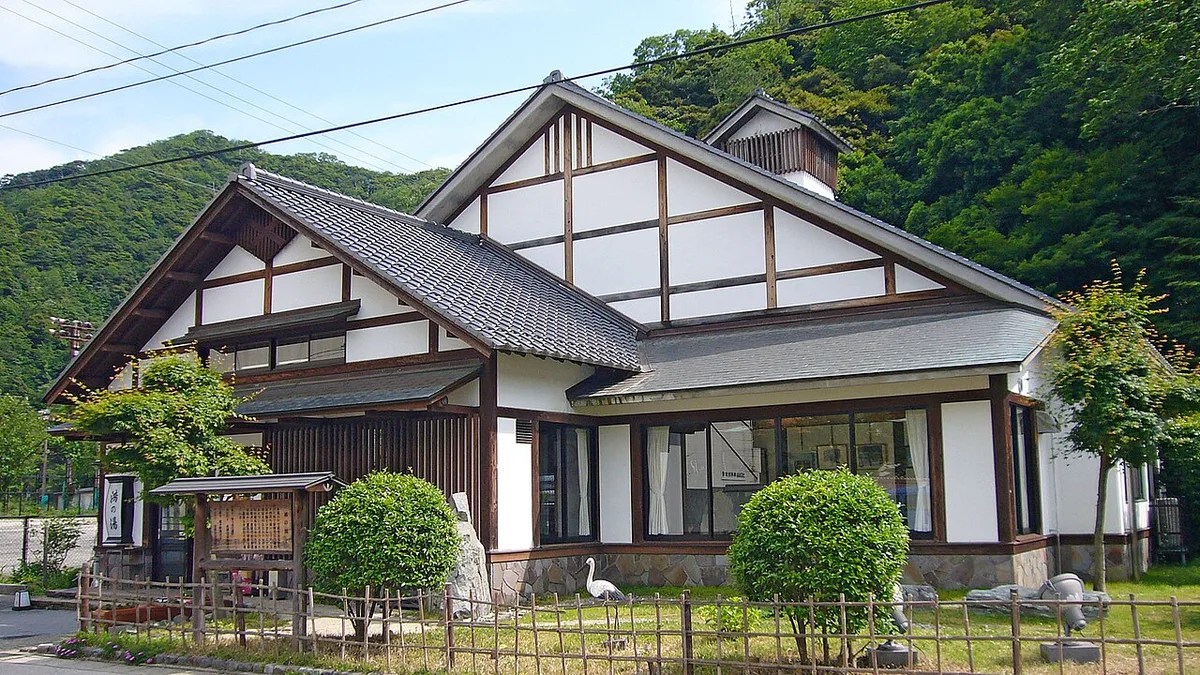
Kinosaki Onsen's thermal waters have been known since at least the 8th century, when the Buddhist monk Dochi Shonin is said to have prayed here for one thousand days to release the spring. Within that long history, Kono-yu holds a particular distinction: it is considered the oldest of the town's sotoyu, predating the formal bath-hopping system that modern visitors know.
The founding legend centres on the kounotori — the Oriental white stork — a bird so closely associated with Hyogo Prefecture that it appears on the region's emblems and remains an object of conservation today. According to tradition, a wounded stork was observed repeatedly bathing its injured leg in a warm spring at the north-west margin of the settlement. Villagers investigating the bird's behaviour discovered the thermal source, and the bath that grew up around it took the stork's name: Kono-yu, the stork's bath.
This origin story connects Kono-yu to a broader current of Japanese hot-spring folklore in which animals — cranes, deer, monkeys — discover healing waters before humans do. Such legends served both a practical function (marking real thermal springs) and a spiritual one, framing the onsen as a gift from the natural world rather than a human achievement.
Over the centuries, Kinosaki's seven sotoyu evolved from rough communal pools into the refined public bathhouses they are today, each with its own architectural character and tutelary blessing. Kono-yu's blessing — enmusubi, the tying of fortunate bonds in love and marriage — has made it a perennial favourite with couples and with visitors who arrive at Kinosaki partly for the romantic atmosphere its ryokan district cultivates.
Getting to Kono-yu: Access and Transport
Kinosaki Onsen is served by JR Kinosaki Onsen Station on the JR San'in Main Line. Direct limited-express trains (Kinosaki or Kounotori services) run from Osaka (Osaka Station, roughly 2 hours 20 minutes) and from Kyoto (approximately 2 hours 40 minutes). From Kyoto, the Konotori service via the Sanin Line is the most convenient option; check the JR timetable for the current 2026 schedule.
From the station, the entire hot-spring village is walkable. Kono-yu is located at the north-west end of the main canal street — approximately 10 to 15 minutes on foot from the station, heading away from the town centre towards the ropeway base station. Follow the willow-lined canal north-west; the bathhouse sits just before the ropeway entrance at Yushima 610, Kinosaki-cho, Toyooka.
There is no direct bus service within the compact resort, but the walking distance is short enough that most guests stroll between sotoyu as part of the bath-hopping experience. Rental bicycles are available near the station for those who prefer to cover the town more quickly, though the cobblestone stretches near Kono-yu call for a careful pace.
Parking is limited in Kinosaki Onsen; visitors arriving by car are advised to use the public car parks near the station and walk into the resort. The north-western end of town becomes a pedestrian zone during busy evenings, so arriving on foot from the station is the easiest approach.
Highlights of Kono-yu: What to See and Do
The rotenburo — the open-air garden bath — is the centrepiece of a visit to Kono-yu. Set within a small enclosed garden, it allows bathers to soak beneath the open sky while surrounded by seasonal plantings. On clear evenings, the garden takes on a particular quality: steam drifts across the stone surround and the sounds of the resort fade to near-silence. It is a markedly different experience from the more theatrical architectural statements of some of the other sotoyu.
The indoor bath is equally well-appointed, with traditional tiling and the soft mineral scent that characterises Kinosaki's sodium chloride waters. The thermal spring is said to be beneficial for skin and circulation — typical of Kinosaki's alkaline water type, which leaves a pleasant smoothness on the skin after soaking.
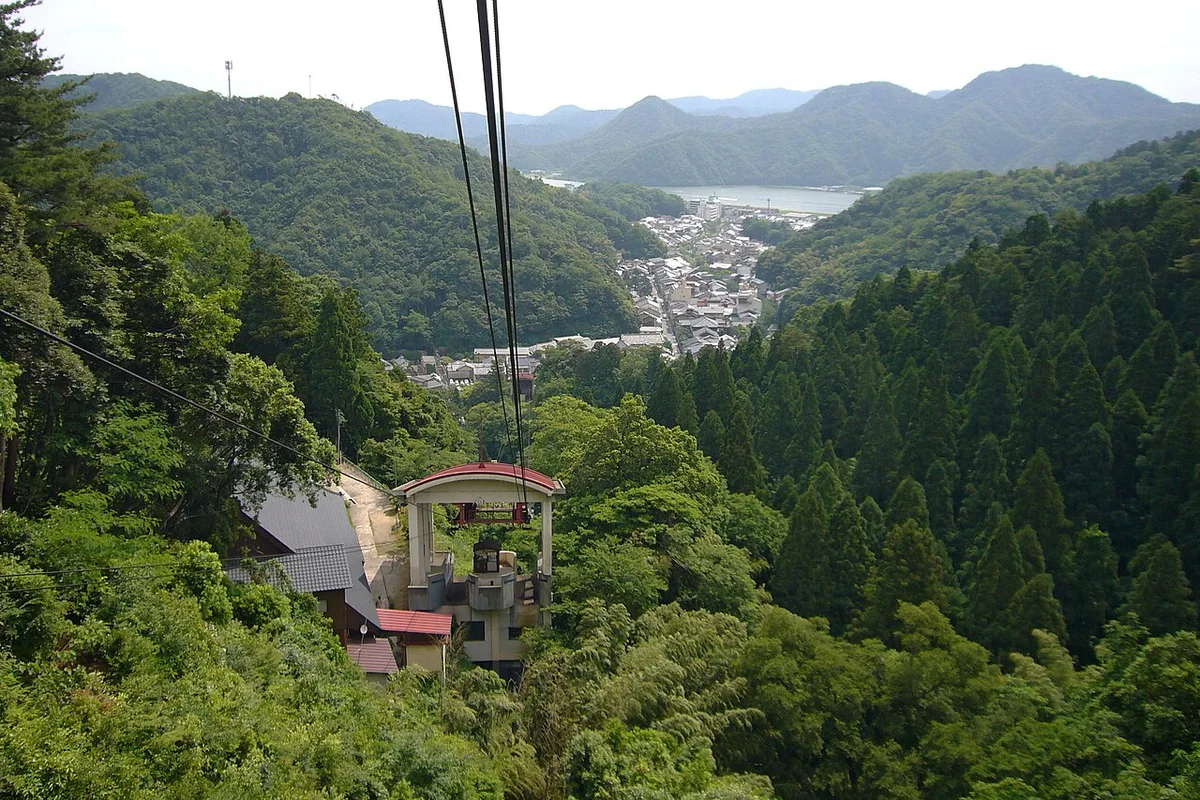
Kono-yu's proximity to the ropeway station makes it a natural pairing point. Many visitors soak at Kono-yu first, then ride the ropeway to the summit of Mt Daishi for views over the resort and the Sea of Japan — a sequence that works equally well in reverse if you prefer to descend to a warm bath after the viewpoint walk. The ropeway up Mt Daishi is just a short walk from the bathhouse entrance.
The stork motif appears throughout Kono-yu's decor and signage — a quiet reminder of the legend that established this spring. Visitors interested in the broader story of the kounotori may find it worthwhile to note that the Oriental white stork is the subject of an active reintroduction programme in Hyogo Prefecture, with a dedicated park in Toyooka City not far from Kinosaki. The connection between the bird and the bath adds a layer of regional meaning that repays a moment's reflection.
For a broader exploration of the resort, Ichino-yu and Goshono-yu are two other well-regarded sotoyu worth including in a bath-hopping day. Ichino-yu, with its dramatic cave bath, and Goshono-yu, known for its elegant traditional architecture, each offer a distinct character from Kono-yu's garden seclusion. Browse the Kinosaki Onsen attractions hub for the full run-down of what the resort has to offer beyond its bathhouses.
Planning Your Visit: Hours, Access, and Tips
Kono-yu is open roughly 07:00 to 23:00, making it accessible both for an early-morning soak before breakfast and a late-evening wind-down. Like all of Kinosaki's sotoyu, it closes one day each week — this is often Tuesday, though the schedule can vary, particularly around public holidays. Always confirm the current weekly closure before planning your visit, especially if you are combining Kono-yu with a tight bath-hopping itinerary.
Single-entry admission is around ¥700 (2026 estimate). A 1-day sotoyu pass, available from the Kinosaki Onsen Tourist Information Centre and from most ryokan, grants access to all seven public baths and typically offers better value if you plan to visit more than two or three sotoyu in a day. Ryokan guests staying within the resort are generally issued a Yumepa pass — the ryokan's complimentary day pass — which covers entry to all seven sotoyu at no additional cost.
Kono-yu is tattoo-friendly, which distinguishes it from some of the other sotoyu that maintain stricter policies. If you or a travel companion has visible tattoos, Kono-yu is a reliable choice and worth prioritising on your itinerary.
Bring your own bath towel or hire one at the entrance — the standard Japanese onsen protocol of bathing thoroughly before entering the communal pool applies here as at all Kinosaki sotoyu. Yukata (the cotton summer robe provided by most ryokan) may be worn between baths in the street, which adds considerably to the resort's atmosphere on evening visits. Leave valuables at your ryokan before heading out for a bath-hopping evening.
Frequently Asked Questions
What is the legend behind Kono-yu's name?
The name Kono-yu refers to the kounotori — the Oriental white stork. According to local legend, a wounded stork was observed repeatedly bathing its injured leg in a warm spring at this location, which led villagers to discover the thermal waters. The stork's healing and the bath that grew up around its discovery gave Kono-yu both its name and its enduring association with restorative and fortunate outcomes, including luck in love and a happy marriage.
What are Kono-yu's opening hours in 2026?
Kono-yu is open roughly 07:00 to 23:00 most days, making it one of the longer-operating sotoyu in Kinosaki Onsen. It closes one day each week — often Tuesday — though the exact closure day can shift around public holidays. Always confirm the current schedule with Kinosaki Onsen Tourist Information or your ryokan before visiting, particularly if you are planning a multi-bath day with tight timing.
How much does Kono-yu cost to enter?
Single-entry admission is around ¥700 (2026 estimate). Ryokan guests staying in Kinosaki Onsen usually receive a complimentary Yumepa pass, which covers entry to all seven sotoyu including Kono-yu at no extra charge. A 1-day sotoyu pass is also available from the Tourist Information Centre and offers access to all seven baths — good value if you plan to visit three or more in a single day.
Is Kono-yu tattoo-friendly?
Yes, Kono-yu is one of the tattoo-friendly sotoyu in Kinosaki Onsen. Visitors with visible tattoos are welcome to use both the indoor bath and the outdoor rotenburo. If you are uncertain about the policy at other Kinosaki baths during your visit, check with the Tourist Information Centre, as individual sotoyu policies can occasionally change.
Does Kono-yu have an outdoor bath?
Yes. Kono-yu features a garden-set rotenburo (open-air bath) alongside its indoor pool. The outdoor bath is set within an enclosed garden and is one of the most atmospheric in Kinosaki Onsen, particularly in the evening when steam drifts across the stone surrounds. It is one of the key reasons Kono-yu is considered the most secluded and appealing sotoyu for those seeking a quieter, more reflective soak.
Which other Kinosaki baths pair well with Kono-yu?
Kono-yu pairs naturally with a visit to the Kinosaki Onsen Ropeway, located just a short walk from the bathhouse. Among the other sotoyu, Ichino-yu (known for its dramatic cave bath) and Goshono-yu (noted for its elegant traditional architecture) offer contrasting characters. With a 1-day pass or a Yumepa pass, most guests manage three to five baths comfortably in a single evening. See the full guide to the seven public baths for a planned bath-hopping route.
Kono-yu earns its reputation as the most atmospheric of Kinosaki Onsen's seven sotoyu through a combination of history, legend, and location. The stork's founding myth gives the bath a depth of meaning that goes beyond the pleasures of the water itself, and the garden rotenburo — calm, plant-fringed, open to the evening sky — is as fine an outdoor bathing experience as the San'in Coast can offer.
Whether you soak here as the first bath of a long bath-hopping evening or save it for a final, quieter retreat at the end of the night, Kono-yu rewards the effort of walking to the far end of town. Its romance blessing is, of course, something you will need to judge for yourself.
For a full picture of the resort's highlights, see our overview of things to do in Kinosaki Onsen and our dedicated guide to all seven public baths, which covers routing, timings, and how to make the most of a single day in Kinosaki.