
Aoi Matsuri Kyoto 2026: Route, Tickets & Viewing Guide
Plan your Aoi Matsuri Kyoto visit with the 2026 procession schedule, paid seat prices, and the best free viewing spots for this Heian-period parade.
On this page
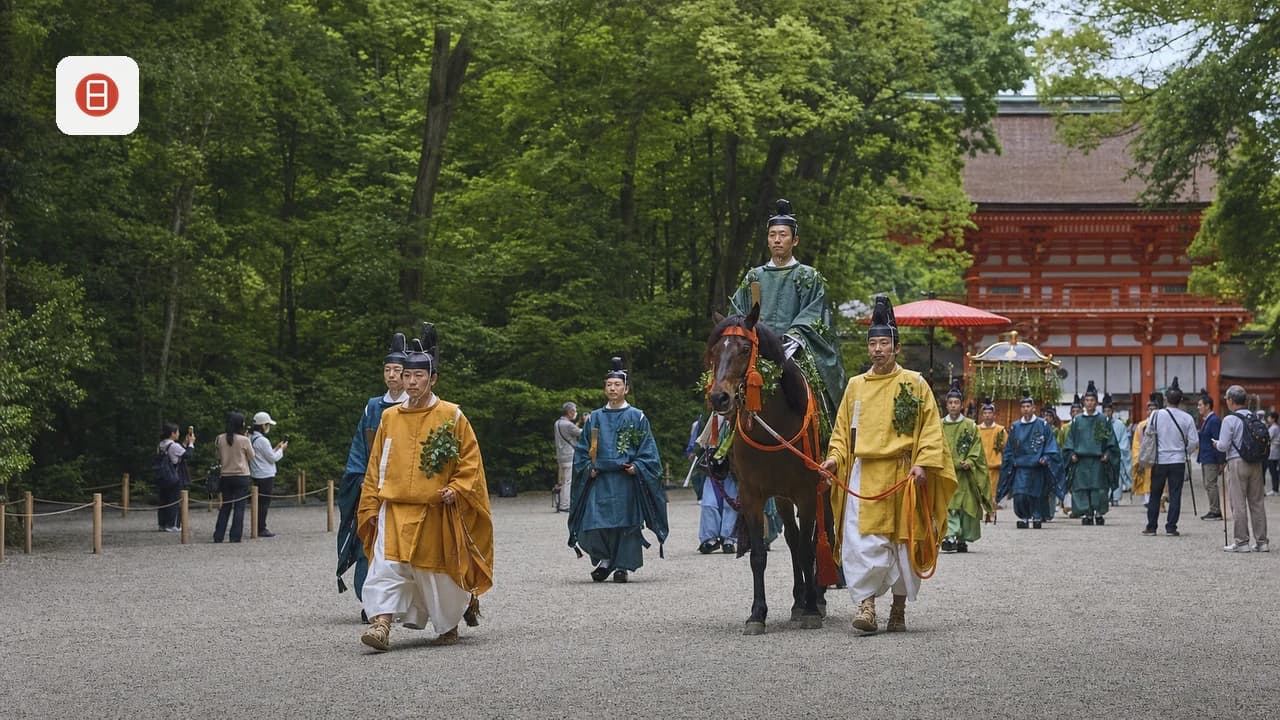
Last updated August 2026. Aoi Matsuri Kyoto centers on a May 15 procession of roughly 500 participants in Heian-period court dress, moving slowly between the Kyoto Imperial Palace, Shimogamo Shrine, and Kamigamo Shrine. Where Gion Matsuri fills summer streets with energy, this festival stays deliberate and ritual-bound. This guide breaks down the procession schedule, paid seating prices, and the best free spots along the route.
Aoi Matsuri in Kyoto: What to Expect on May 15
Aoi Matsuri ranks among Kyoto's three major annual festivals, alongside Gion Matsuri. The third is Jidai Matsuri, an autumn procession built around historical costume rather than Heian court dress. According to Kyoto's official tourism site, the festival's rites trace back roughly 1,500 years, well before Kyoto became the Heian-period capital in 794. Gion Matsuri runs loud and crowded through July, while Aoi Matsuri stays quiet, slow-paced, and tightly scripted around Shinto ritual rather than street performance. The slow walking pace common to Heian-style processions gives photographers more time to frame the costumes and carts than a faster-moving parade would allow.
- Date: May 15 every year, postponed to May 16 if rain forces a delay.
- Participants: about 500 people in the main procession, plus two ornately decorated ox carts and roughly three dozen horses.
- Distance: roughly 5 miles (8 km) from the Kyoto Imperial Palace to Kamigamo Shrine, via Shimogamo Shrine.
- Costume era: Heian-period (794-1185) aristocratic court dress.
- Status: one of Kyoto's three major annual festivals, alongside Gion Matsuri and Jidai Matsuri.
The Grand Procession: Route and Schedule
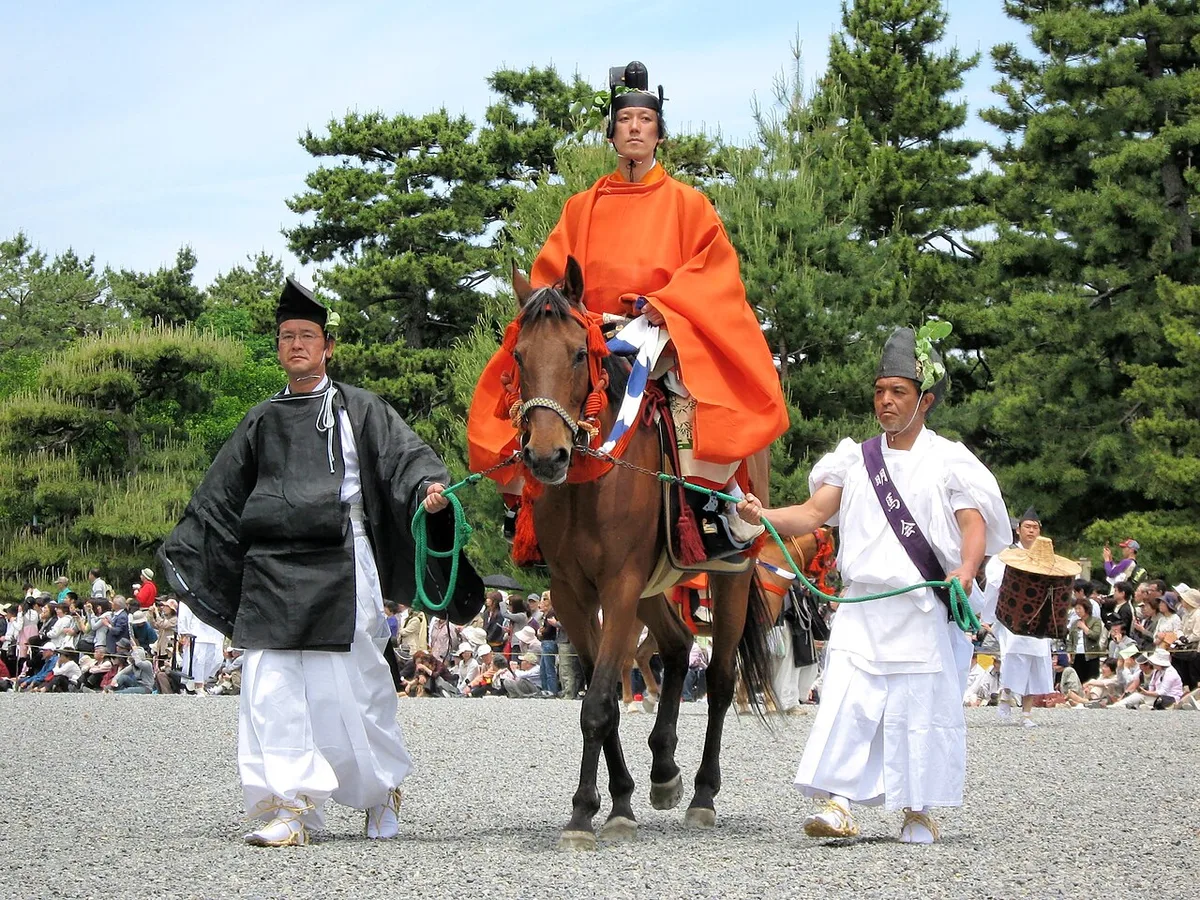
The procession covers about 5 miles (8 km) start to finish, and watching the full parade pass a single spot takes close to an hour. Confirm exact timing each year against the current Kyoto City Tourism Association schedule, since festival logistics can shift slightly year to year. Core stops and times stay consistent enough to plan around, and most viewers pick one location rather than following the whole route on foot. The parade actually splits into two linked processions along the way. The Imperial Messenger's procession leads first, accompanied by court nobles, soldiers, and ceremonial offerings. A second procession follows behind, built around the Saio-dai and her retinue of noble women, ladies-in-waiting, and shrine priestesses.
- 10:30 AM: the procession departs the Kyoto Imperial Palace near the Kenreimon Gate area.
- 11:15 AM: the parade arrives at Shimogamo Shrine.
- 11:40 AM to 1:30 PM: rituals take place at Shimogamo Shrine, and the procession pauses for close to two hours.
- 1:30 PM: the procession leaves Shimogamo Shrine for Kamigamo Shrine.
- 3:30 PM: the parade arrives at Kamigamo Shrine.
How to Watch: Paid Seats vs. Free Viewing Spots
Paid viewing seats line the route at the Kyoto Imperial Palace and along the approach to Shimogamo Shrine. As of the 2026 sales cycle, Kyoto's official tourism site lists general sales opening April 1 at 10 AM Japan time through Ticket Pia's website. Seats sell out quickly most years, so buying close to that opening window improves your odds. Kamigamo Shrine has also sold a limited number of same-day seats in past years, priced around ¥1,000 to ¥5,000 depending on location, though this allotment is never guaranteed. The official guidebook included with reserved seats runs 18 pages and illustrates the procession's court attire and ritual implements. The commemorative card features artwork of the festival's namesake plant, painted by an artist recognized in Kyoto with the title Master Craftsman. Free viewing remains possible along the Kamo River banks and the streets connecting the two shrines, and arriving one to two hours early still secures a workable curbside spot. For more no-cost options around the same trip, see other free Kyoto activities. Every paid tier requires your own internet-connected smartphone or tablet plus headphones, since neither is handed out on-site.
Although paid seating costs About ¥5,000 to ¥20,000 depending on tier, you'll need your own device and headphones for commentary, a compact rain jacket (parasols are prohibited), and sun protection for warm May afternoons.
| Factor | Paid Seats | Free Viewing |
|---|---|---|
| Cost | About ¥5,000 to ¥20,000 depending on tier | No cost |
| Booking | Reserved in advance via Ticket Pia from April 1 | First-come, first-served |
| View quality | Guaranteed sightline at the Palace or Shimogamo Shrine | Good along the Kamo River; can be blocked on narrow streets |
| Commentary | Live narration through your own smartphone and headphones | None |
- Regular seat, second row onward: about ¥5,000, including the official guidebook, a commemorative card, and live commentary.
- Regular seat, front row: about ¥6,500, with the same inclusions.
- Royal Seat, second row onward: about ¥18,000, adding a specialist narrator, a commemorative fan, and a hollyhock hat.
- Royal Seat, front row: about ¥20,000, the closest tiered seating to the Kenreimon Gate.
The Saio-dai and Other Cultural Highlights to Watch For
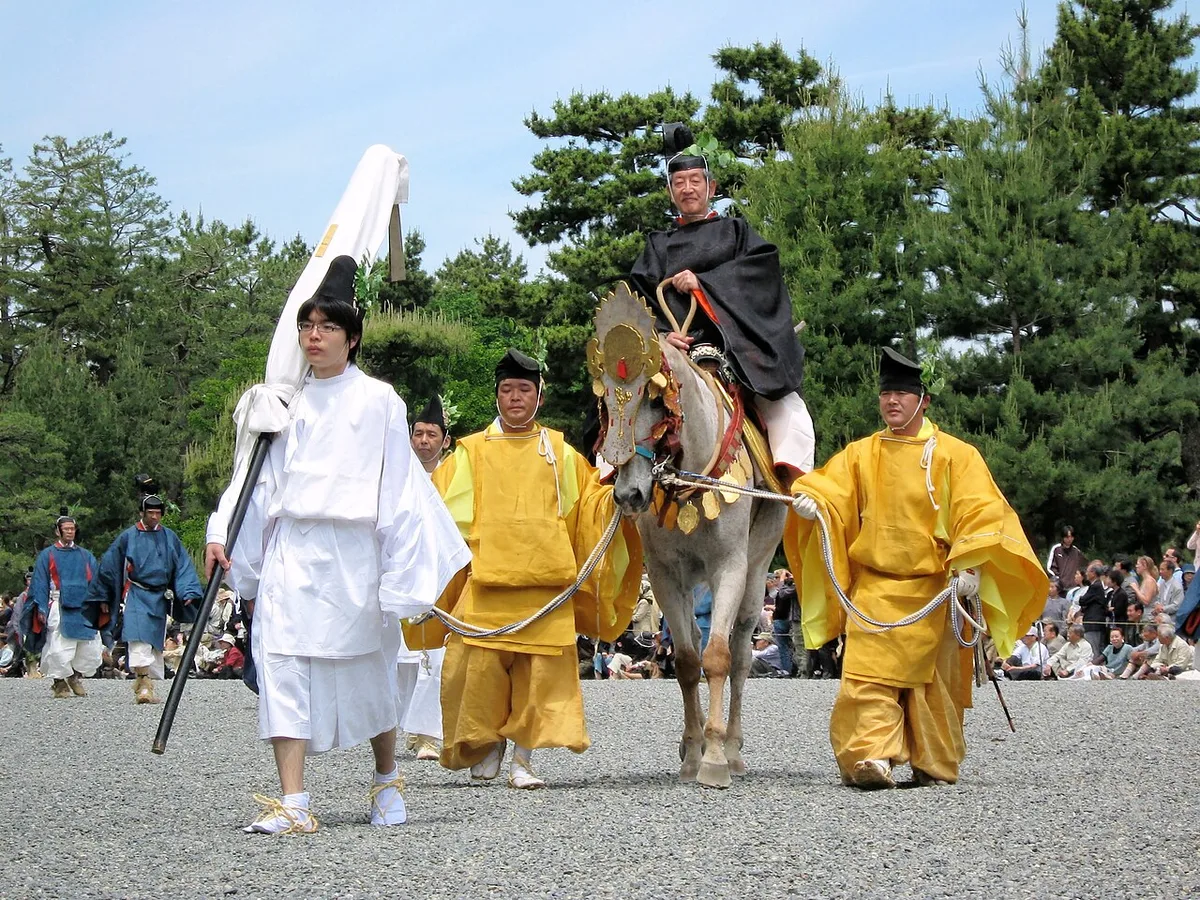
The Saio-dai is the festival's central figure, an unmarried woman from Kyoto chosen each year for her wisdom, grace, and social standing. She wears a jūnihitoe, a traditional twelve-layer silk kimono that weighs roughly 66 lb, according to Japan's official tourism site. Before the festival, the Saio-dai completes several purification ceremonies, then rides through the procession on a palanquin rather than walking the route. Its modern form dates to 1956, three years after the procession itself resumed in 1953 following a wartime pause. Leading the parade is the Imperial Messenger, historically a Fifth-Rank court official and today the highest-ranking role in the modern procession. Additional roles round out the lineup, including mounted guards known as kebiishi and various civil and military officials. A delegate representing the old Yamashiro province also takes part in the procession. Two ornately decorated ox carts, trimmed with artificial wisteria flowers, travel partway through the procession alongside roughly three dozen horses. Participants also wear sprigs of aoi, commonly translated as hollyhock, though the plant is more likely wild ginger from the birthwort family. That botanical mix-up gives the festival its popular nickname, even though its formal name, Kamo Matsuri, refers directly to the two shrines involved.
The Saio-dai's ceremonial jūnihitoe kimono weighs roughly 66 lb, making it impractical for her to walk the procession's 5-mile route despite the slow pace, so she rides through on a palanquin instead.
Getting There and Essential Logistics
Subway access works better than buses on festival day, since city buses reroute heavily along the parade route. For the start of the procession near the Imperial Palace, use the Karasuma Subway Line to Marutamachi or Imadegawa Station. Reaching Kamigamo Shrine works well from Kitayama Station on the same Karasuma Line, followed by about a 15-minute walk. Shimogamo Shrine sits roughly a 10-minute walk from Demachiyanagi Station on the Keihan Main Line. Both shrines also connect by City Bus Route 4, though expect slower going on the festival's own detoured schedule. Per Discover Kyoto's event listing, both shrine grounds keep free general admission outside the festival itself. Kamigamo Shrine's hours run 8:30 AM to 5 PM, and Shimogamo Shrine's run 6:30 AM to 5 PM. May afternoons in Kyoto run warmer than the season suggests, so bring a hat, sunscreen, and water regardless of viewing spot. Paid seating areas prohibit parasols, umbrellas, and tripods, so pack a compact rain jacket instead in case of a light shower. Flash photography and pets are barred near the horses and oxen, since sudden light or movement can spook the animals. If rain forces a full postponement, the event moves to May 16, and the decision is typically announced around 6 PM on May 14. Travelers staying beyond the festival often use Kyoto as a base for nearby day-trip options. It is worth cross-checking Kyoto's best time to visit guide before locking in flight dates.
Pre-Festival Events and How Aoi Matsuri Compares to Kyoto's Other Festivals
Several rituals lead up to the main procession, clustering in the days right before May 15. Kurabe-uma horse races and yabusame mounted archery both take place at the shrines beforehand, continuing a tradition tied to the festival's earliest recorded rites. On the night of May 12, Kamigamo Shrine holds the Miare shinji rite, in which the shrine's deity is ritually invoked before the main event. The Saio-dai also completes a separate purification ceremony, the Misogi-no-gi, in the days leading up to the parade. The festival appears in The Tale of Genji, the 11th-century work often called the world's oldest novel, underscoring how long these rites have run in something close to their current form. Aoi Matsuri's pace sets it apart from Kyoto's other two major festivals. Gion Matsuri runs through most of July around Yasaka Shrine, with a livelier, crowd-heavy atmosphere across downtown streets. Jidai Matsuri, by contrast, is an October procession recreating costume from multiple historical eras rather than focusing on a single period like Aoi Matsuri's Heian dress. Kyoto's festival calendar also includes autumn's Kurama Fire Festival, a torchlit night procession held north of the city center.
Mistakes to Avoid at Aoi Matsuri
A few planning mistakes come up often enough to flag directly.
- Waiting at the wrong end of the route: decide whether you want the Palace, Shimogamo, or Kamigamo before picking a spot.
- Skipping headphones: paid-seat commentary needs your own smartphone or tablet plus headphones, since none are handed out on-site.
- Expecting continuous movement: the parade pauses at Shimogamo Shrine for close to two hours while rituals take place.
- Relying on city buses: routes reroute heavily on May 15, so plan subway transit instead.
- Underestimating the sun: May afternoons run warmer than the mild spring weather implies, so pack shade and water.
Planning a Wider Kyoto and Japan Festival Trip
Aoi Matsuri opens Kyoto's spring festival season, and many travelers use it as an anchor for a broader trip built around Kyoto's festival calendar. Since it lands about a month after peak cherry blossom season, it works well as a distinct second act in a longer Kansai trip. Other Japanese cities keep entirely separate event calendars worth checking before adding extra stops.
- Nara runs its own spring and autumn events; Nara's event calendar covers timing separate from Kyoto's.
- Kanazawa keeps a distinct year-round schedule; check Kanazawa's festival calendar before adding it to a spring itinerary.
- Nikko's shrine festivals run on their own dates; see the Nikko's shrine festivals guide for current listings.
- Naha's festival calendar follows Okinawa's separate climate and holidays; Naha's Okinawa festival calendar has specifics.
- Niseko's events lean toward its ski season; Niseko's event calendar covers the rest of the year.
Following the Procession Along the Route
The route is useful to know before choosing a free viewing point. The morning procession leaves the Kyoto Imperial Palace, then follows Marutamachi Street east and Kawaramachi Street north toward Shimogamo Shrine. These central streets are convenient from subway stations, but crowds and buildings can limit clear photographs.
After the shrine rituals, the afternoon procession continues north toward Kamigamo Shrine. The route uses Shimogamo Hon-dori and streets around Kitayama before reaching the shrine area. The quieter northern section usually feels less compressed than the Palace departure.
- Choose the Palace area for the formal departure and early timing.
- Choose the Kamo River-side sections near Shimogamo for greenery behind the procession.
- Choose the northern route for a later viewing time and potentially lighter crowds.
Do not try to follow the parade from one shrine to the other. The pause at Shimogamo lasts nearly two hours, and road closures make buses unreliable. Pick one section, arrive early, and use the subway for the approach.
Frequently Asked Questions
When is Aoi Matsuri in 2026, and what happens if it rains?
Aoi Matsuri is scheduled for May 15, 2026, with the procession departing the Kyoto Imperial Palace at 10:30 AM. If rain forces a postponement, the parade typically shifts to May 16. Kyoto's city tourism association usually announces that decision around 6 PM on May 14, so confirm before finalizing plans.
How much do paid viewing seats cost for Aoi Matsuri?
Regular seats run about ¥5,000 for second-row-and-back seating and about ¥6,500 for the front row. Royal Seat tickets cost roughly ¥18,000 to ¥20,000 and add a specialist narrator, a commemorative fan, and a hollyhock hat. Every tier includes an official guidebook, a commemorative card, and live commentary through your own device.
Where can you watch Aoi Matsuri for free?
Free viewing works along the Kamo River banks and the streets connecting Shimogamo and Kamigamo shrines. Arrive one to two hours early for a workable curbside spot, since crowds thin out away from the Palace and shrine entrances. The riverbank stretch generally offers a better photography backdrop than the narrower city streets.
What is the difference between Aoi Matsuri, Gion Matsuri, and Jidai Matsuri?
Aoi Matsuri is a slow, ceremonial procession in Heian-period court dress, held every May 15. Gion Matsuri runs through most of July with a livelier, crowd-heavy atmosphere across downtown Kyoto. Jidai Matsuri takes place every October and recreates costume from multiple historical eras in a single parade.
How long does the Aoi Matsuri procession take to pass, and when does it pause?
Watching the full procession pass a single viewing spot takes close to an hour. The parade pauses for roughly two hours at Shimogamo Shrine, from about 11:40 AM to 1:30 PM, while ritual ceremonies take place. Plan a viewing window around that gap rather than expecting continuous movement.
Who is chosen as the Saio-dai each year?
The Saio-dai is an unmarried woman from Kyoto, selected for her wisdom, grace, and social standing. She wears a twelve-layer jūnihitoe kimono, completes several purification rites, and rides the procession route on a palanquin. The role has continued in its modern form since 1956.
Can you buy Aoi Matsuri tickets on the day of the event?
Kamigamo Shrine has sold a small allotment of same-day seats in past years, typically priced between ¥1,000 and ¥5,000 depending on location. Availability is not guaranteed, so treat it as a backup rather than a primary plan. Reserved seats through Ticket Pia remain the more reliable option.
Free: The Kyoto Essentials guide
Top things to do, where to stay, a perfect day plan, getting around, and the best time to go — a Kyoto mini-guide you can take offline.
You might also like

Continue reading
More guides you'll find useful


