Nishiki Market Kyoto Food Guide: What to Eat and How to Avoid the Crowds
Plan a Nishiki Market visit with 2026 opening hours, a stall-by-stall route, no-walking-while-eating etiquette, and tips to dodge the worst crowds.
On this page
Last updated August 2026, this Nishiki Market Kyoto food guide turns the 400-year-old market into a workable route instead of another must-eat list. Its corridor runs five blocks from Takakura Street to the Teramachi and Shinkyogoku arcades, past more than 100 shops selling everything from fresh uni to soy milk donuts. Expect narrow aisles, real crowds, and a strict no-walking-while-eating culture, so timing and route matter as much as what you order.
What Makes Nishiki Market Kyoto's Kitchen
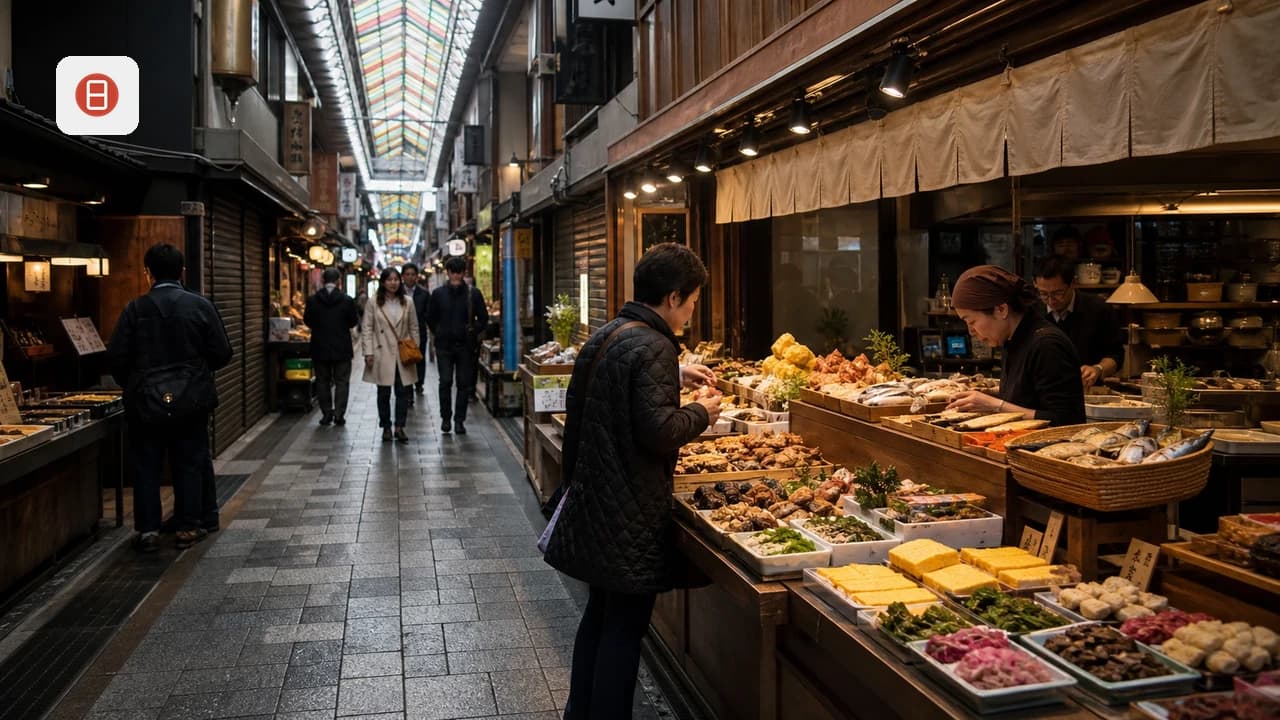
Nishiki Market earns its nickname, Kyoto's Kitchen, from two overlapping identities. Wholesale suppliers still sell fresh seafood and seasonal produce here to restaurants across Kyoto and as far as Tokyo, alongside tourist-facing stalls selling skewers, sweets, and souvenirs. That mix keeps the market from feeling purely staged, since deliveries and prep for professional kitchens happen in the same five-block corridor as visitors sampling street food. Local kitchen buyers still visit before the tourist-facing stalls open for the day. Shoppers moving through the covered arcade will notice the yellow, red, and green roofline that runs the market's full length. For a wider view of Kyoto dining beyond the market, see the 15 Best Food Experiences in Kyoto: A Local Dining Guide (2026).
Nishiki Market Kyoto Food Guide: Hours, Timing, and Getting There
Nishiki Market's official hours run 10:00 AM to 6:00 PM, though individual stalls set their own schedules. Some vendors open as early as 9:00 AM, and others close by 5:00 PM, so one shop's posted hours are not a guide to the whole market. Arriving right at opening, between 10:00 and 11:00 AM, hits the sweet spot. Stalls are freshly stocked, and the heaviest tour groups have not arrived yet. An evening taper after 5:00 PM works too, when day-trip crowds thin out and some vendors discount food that will not keep overnight. Both nearby stations put the market within easy reach.
Shopping after 5:00 PM delivers double savings: trending-item markups fade when crowds thin out, and vendors discount food unsuitable for overnight storage.
- Shijo Station, Subway Karasuma Line: about a 5-minute walk to the market's west entrance
- Karasuma Station, Hankyu Kyoto Line: about a 5-minute walk to the same entrance
- West entrance: near the intersection of Nishikikoji and Takakura Streets
The Luggage Problem, Solved Before You Arrive
Nishiki Market's covered corridor narrows to roughly 11 feet across in places, barely enough for three or four people walking side by side. Rolling suitcases turn that pinch point into a standstill, especially when a tour group stops to photograph a stall. Coin lockers at Shijo and Karasuma stations solve this before it becomes a problem. The Kyoto Station Food Guide: Where to Eat by Floor and Time (2026) covers locker locations for travelers connecting through the main station too. Dropping bags first also frees both hands for the market's real point: eating.
A Stall-by-Stall Route: What to Eat First
Start at the west entrance near Takakura Street and work east, snacking as stalls catch your eye rather than hunting for one specific shop. The market roughly sorts itself into three eating zones: fried and skewered bites near the west end, whole seafood and Kyoto vegetables in the middle stretch, and sweets toward the Nishiki Tenmangu Shrine end.
- Kushiage: breaded, deep-fried skewers of shrimp, sweet potato, fish, and unagi
- Tako tamago: a whole baby octopus stuffed with a quail egg
- Fishcake with quail egg: a simple, inexpensive bite worth trying once
- Otoro and uni: fresh cuts generally priced below Tokyo's Tsukiji Outer Market
- Fried conger fish: light and flaky rather than fishy
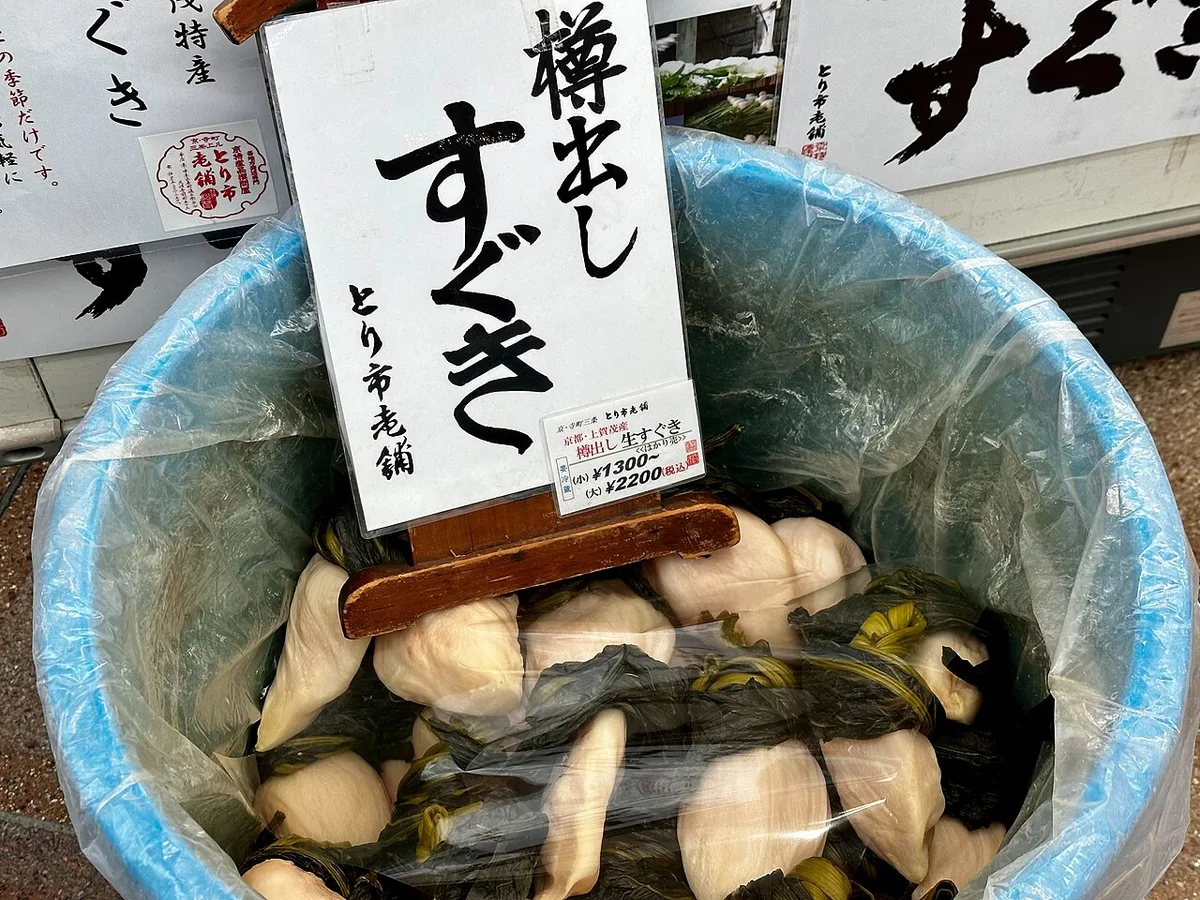
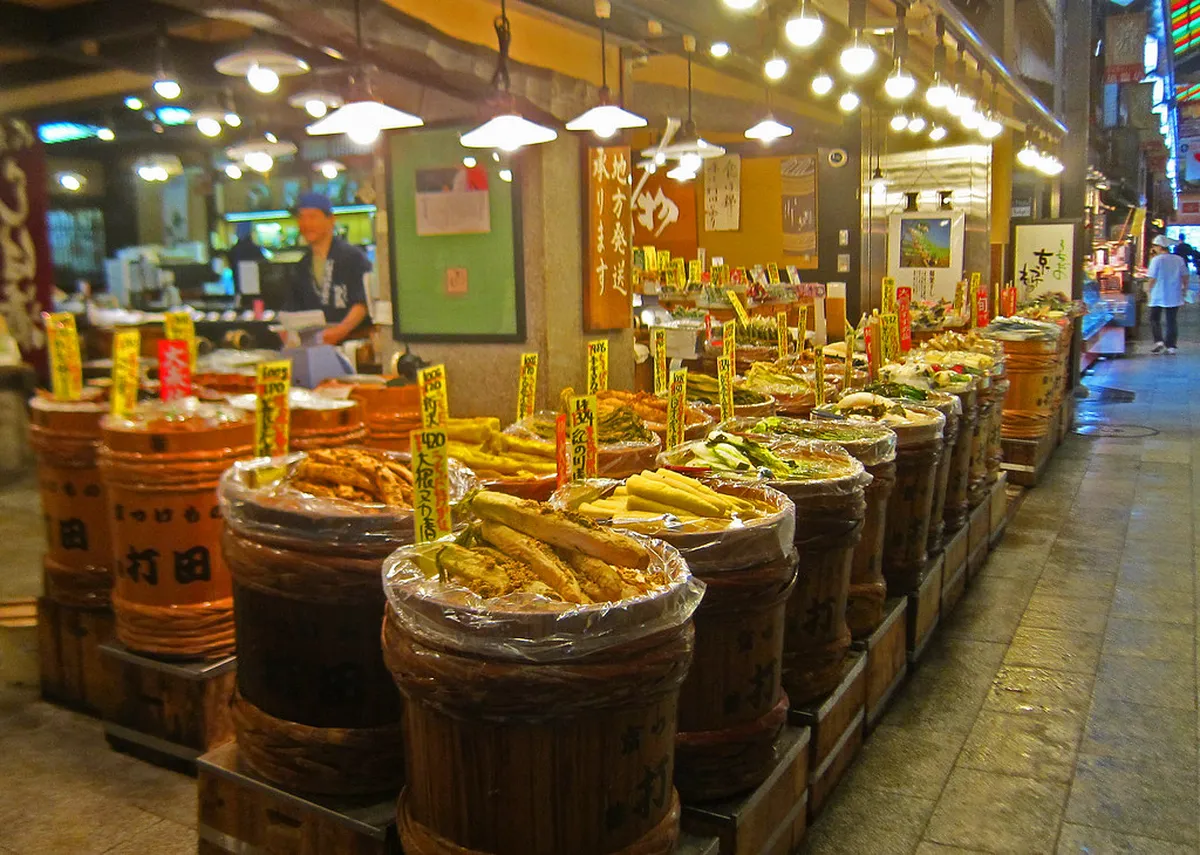
- Kyo-yasai and tsukemono: Kyoto's heirloom vegetables and pickled sides
- Yuba: Kyoto's silky tofu skin, sold fresh by the piece
Spend vs. Save: A Nishiki Market Budget Matrix
Nishiki Market rewards a mixed budget over an all-splurge or all-cheap walk. Reserve real spending for one or two standout items, then fill in the rest with low-cost bites that add up to a full meal. A few stalls price for the camera crowd, nudging costs up for whatever is trending on social video that week, so the split below helps you plan where that extra spend is worth it.
| Category | Splurge pick | Budget pick |
|---|---|---|
| Seafood | Fresh otoro or uni at a seafood counter | Tsukemono pickled vegetables |
| Protein | A wagyu skewer or a kushiage assortment | Fishcake with quail egg |
| Sweets | A Sugi Honey tasting flight | Soy milk donut or warabi mochi |
Sweets, Coffee Breaks, and What to Skip
Soy milk donuts are one of Nishiki's most recommended snacks, and freshness matters more than usual here. Eaten hot from the fryer, the donut is soft and warm. Left to cool for even an hour, it turns into a standard stale doughnut. Warabi mochi, a soft, jelly-like sweet, holds up far better and travels well if you want to save it for later. Sugi Honey's tasting counter lets you sample flavors like yuzu and blueberry before buying a jar. Gyoza stalls are common but skippable, since the dumplings here read as ordinary rather than a market highlight. When the sensory overload gets to be too much, a sit-down coffee break resets the pace. The 15 Best Cafes in Kyoto: Machiya Kissaten, Roasters, and Matcha Spots lists nearby spots outside the market's noise. Traditional sweets get fuller treatment in the Kyoto wagashi guide.
Beyond Food: Knives, Chopsticks, and a Shrine
Aritsugu has sold knives from the same stretch of Nishiki Market for more than 400 years and remains one of Japan's most respected knife makers. Personalized engraving historically takes around 45 minutes, so budget for a wait or plan to collect the knife later in the day. Ichihara Heibei Shōten specializes in chopsticks, many of them personalized to order. Kidoairaku sells traditional ceramics, including tea bowls worth a look even without buying. Ceramics shoppers eyeing tea bowls should also read the Kyoto Tea Ceremony Guide: 8 Essential Insights for Your Visit for how the pieces get used. Nishiki Tenmangu Shrine sits at the market's east end, a small Shinto shrine known for its lanterns and a bronze cow statue.
Etiquette: The No-Walking-and-Eating Rule and Other Norms
Walking through Nishiki while eating is considered rude, and most vendors expect you to stop at their stall to finish what you bought. Some stalls provide a small standing counter or shelf; others simply expect you to step aside, out of the main flow of foot traffic. Trash follows the same stall-based system, not a public bin. Photography is not universal here, and several traditional stalls post no-photo signs that are easy to miss in the crowd. Most of this comes down to one thing: an 11-foot aisle has no room for someone eating while blocking the person behind them.
Aisles narrowing to about 11 feet force the walking-and-eating rule—not just for manners, but to prevent gridlock when tour groups and rolling luggage also vie for space.

- Eat where you buy it, or step to a stall's counter or shelf
- Return trash and skewer sticks to the vendor, not a public bin
- Check for posted no-photo signs before photographing a specific stall
- Keep bags and elbows close in aisles that narrow to about 11 feet
Where to Go Next: Teramachi, Gion, and Beyond
Nishiki Market's east end feeds directly into the Teramachi and Shinkyogoku Shopping Arcades, two covered streets mixing souvenir shops with everyday retailers like Montbell and Daiso. Browse the full Kyoto attractions guide for what else sits within walking distance of this stretch of downtown Kyoto. Afternoon shopping here pairs naturally with an evening switch to Gion or Pontocho for dinner. A formal kaiseki dining guide covers multi-course options in that direction. Home-style alternatives appear in the Kyoto obanzai cooking guide. A sit-down list of citywide picks lives at 8 Best Dining Experiences in Kyoto 2026.
Frequently Asked Questions
Is Nishiki Market a tourist trap?
Nishiki Market leans touristy in the mid-afternoon, when tour groups, luggage, and photo-taking crowd the narrow aisles. Visit at opening, between 10:00 and 11:00 AM, or after 5:00 PM, and it feels closer to the working food market it still partly is. In our editorial assessment, it mostly earns the tourist-trap label around 1:00 PM on a Saturday, when tour groups peak and the aisles stall completely.
How much time should you plan for Nishiki Market?
Two to three hours covers a full walk from the west entrance to Nishiki Tenmangu Shrine, with stops to eat, browse Aritsugu, and pick up a few souvenirs. Add extra time if cherry blossom or fall foliage season overlaps with your visit, since both push crowds well above a typical weekday.
Do you need a JR Pass to visit Nishiki Market?
A national JR Rail Pass is built for long-distance travel between cities, not for getting around inside Kyoto. Nishiki Market sits a 5-minute walk from Shijo and Karasuma stations, served by local subway and Hankyu lines that a national pass does not cover. Compare the pass price against the regional or single-journey tickets you would actually use before buying one for a Kyoto-based trip.
Can you eat while walking through Nishiki Market?
No. Walking and eating is considered rude in Nishiki Market, and vendors expect you to finish food at or near the stall where you bought it. Return any trash or skewer sticks to that same vendor instead of carrying it to a public bin.
Where should you store luggage before visiting?
Coin lockers at Shijo Station and Karasuma Station handle bags before you enter the market's narrow aisles. The corridor narrows to about 11 feet in places, and a rolling suitcase turns that into a bottleneck fast.
Free: The Kyoto Essentials guide
Top things to do, where to stay, a perfect day plan, getting around, and the best time to go — a Kyoto mini-guide you can take offline.
You might also like

Continue reading
More guides you'll find useful