Kyoto Tea Ceremony Guide: 8 Essential Insights for Your Visit
Discover the best Kyoto tea ceremony experiences. Our guide covers Zen history, etiquette tips, top-rated venues like Camellia, and practical booking advice.
On this page
Kyoto is the birthplace of the Japanese tea ceremony and remains its undisputed spiritual center. Participating in a kyoto tea ceremony gives you direct access to a living tradition that has shaped Japanese culture for over five centuries. The ritual distills centuries of Zen philosophy, artistic discipline, and genuine hospitality into a single bowl of whisked matcha. Many visitors say it becomes the most memorable hour of their entire Japan trip.
This guide covers everything you need before you go: the history behind the ritual, the etiquette steps, which venues suit first-timers, how to handle the physical realities of floor seating, and what to budget. All prices and venue details reflect 2026 conditions. Use the things to do in Kyoto guide to plan what surrounds your tea experience on the same day.
The Origins and History of the Kyoto Tea Ceremony
Tea reached Japan from China around 815 CE, when the monk Eichu brought the practice back and prepared it for Emperor Saga. For several centuries it remained confined to monasteries and the imperial nobility. The Muromachi Period (1336–1573) changed that. Warlords and wealthy merchants began competing to host the most refined tea gatherings, turning a simple drink into a high-stakes cultural arena.
Sen no Rikyu (1522–1591) redirected that competitive energy entirely. Where his era's elites favored expensive ceramics and ornate rooms, Rikyu championed wabi-sabi — the beauty of imperfection, rusticity, and quiet simplicity. Learn more about Rikyu's revolutionary aesthetic philosophy in his biographical history. He defined the four governing principles of chanoyu (hot water for tea): harmony, respect, purity, and tranquility. These principles still shape every movement in a Kyoto tea room today.
After Rikyu's death, his descendants founded the three great schools — Urasenke, Omotesenke, and Mushakojisenke — all headquartered in Kyoto. That geographic concentration is why Kyoto remains the global center for tea education and practice. The city also supplies much of the ceremony's raw material: the tea-growing town of Uji sits just 20 minutes south by train.
| School | Whisking Style | Foam Texture | Philosophy |
|---|---|---|---|
| Urasenke | Vigorous | Thick, foamy matcha | Largest and most internationally known |
| Omotesenke | Gentle | Thin ring of foam, mostly clear surface | Closer to original Rikyu form |
| Mushakojisenke | Minimal and functional | Balanced approach | Most minimalist aesthetic |
Understanding Tea Ceremony Etiquette and Rituals
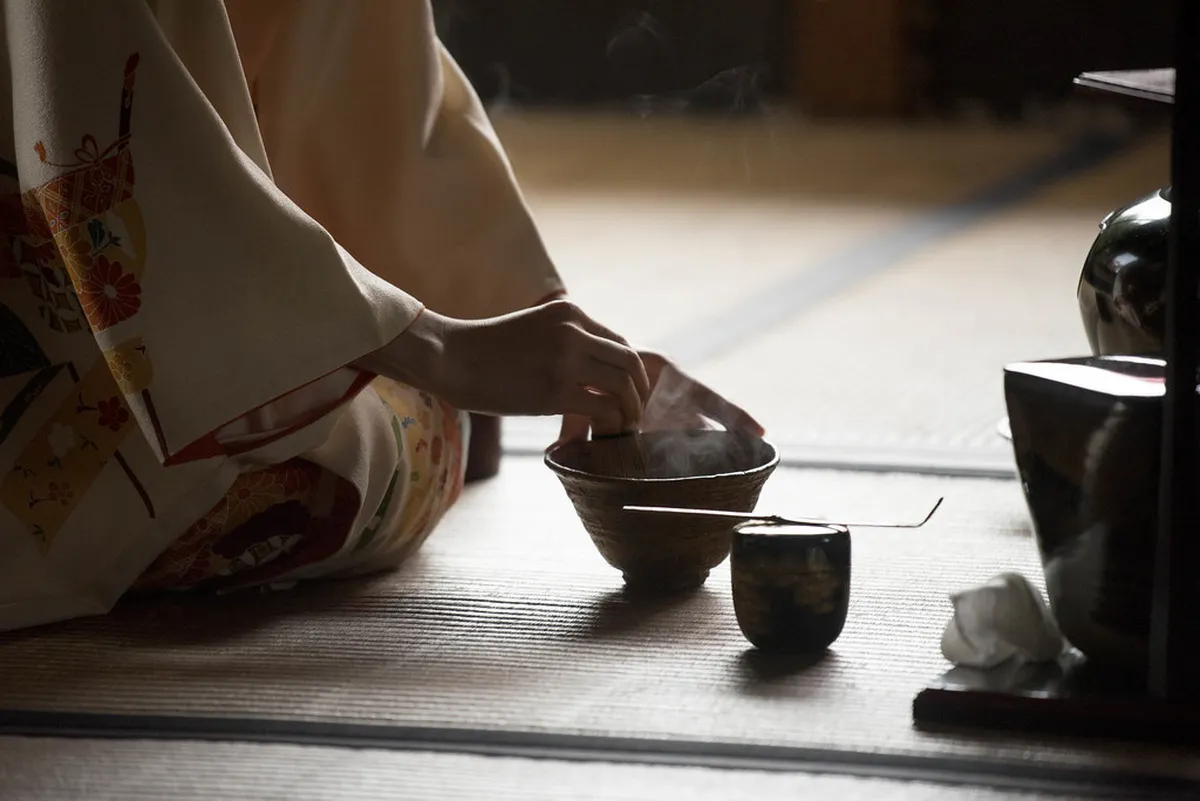
The ceremony's animating principle is omotenashi — wholehearted hospitality with no expectation of reward. The host prepares the matcha through a precise sequence of movements called otemae, each gesture calibrated to put the guest at ease. As a guest, your role is to receive that care with visible appreciation. Small, deliberate gestures carry more meaning here than words.
The typical tourist session runs about 45 minutes and follows a recognizable sequence. You remove your shoes at the entrance and are guided to a tatami room. Seasonal wagashi sweets arrive first — eat them before the tea, as the sugar primes your palate for the matcha's mild bitterness. Watch the host whisk the tea with a bamboo chasen until a light foam forms on the surface.
When the host presents your bowl, bow slightly, then rotate it two turns clockwise before drinking. This keeps your lips away from the decorated front face of the chawan (tea bowl) — a gesture of respect for the potter's craft. Finish in three or four sips. A small slurp on the last sip signals to the host that you enjoyed every drop. Wipe the rim with your thumb and forefinger, then turn the bowl back before returning it.
One honest note that most guides skip: tea ceremonies today are governed by kincho — a Japanese word for the kind of nervous tension that comes from performing precise etiquette in a formal setting. This is not a relaxed chat over coffee. The best tourist-focused venues consciously work against excessive kincho, balancing genuine form with enough warmth that first-timers feel welcomed rather than anxious. That distinction is worth keeping in mind when you choose a venue.
The formal atmosphere of a tea ceremony can feel intimidating if you are not expecting it. Venues like Camellia Flower and Tea Ceremony KOTO intentionally warm the environment for first-timers, but expect a degree of structured ritual and quiet focus. This is not casual — the kincho (nervous tension from formal etiquette) is part of the authentic experience.
Top Recommended Tea Ceremony Venues in Kyoto
Kyoto has dozens of tea ceremony options ranging from five-minute temple encounters to multi-hour formal sessions. The three below have strong track records with English-speaking visitors and each occupies a distinct niche.
Camellia Flower sits on Ninen-zaka, the cobblestone lane just below Kiyomizu-dera temple. It is run by Atsuko Mori, a fully bilingual host whose explanation of the ceremony strikes the right balance — informative without being academic, formal without being stiff. Sessions run on the hour from 10:00 to 17:00 daily and last 45 minutes. Adult admission is ¥2,000; children under 18 pay ¥1,000. It is consistently the top recommendation for first-time visitors. Consult the Inside Kyoto guide for updated booking details.
Tea Ceremony KOTO operates from a private house near Kinkaku-ji Temple in northwest Kyoto. This venue leans into the Zen and spiritual aspects of the practice and suits visitors who want depth over speed. Sessions are by reservation through the Tea Ceremony KOTO website. Tea Ceremony Kyugetsu, run by Western-trained masters Tyas Sosen and Stephen Soshun in a traditional Gion townhouse, is a strong option for small groups seeking organic matcha and an insightful cultural dialogue. They use the highest-grade ceremonial matcha and include traditional sweets; reserve by email through their website.
For a budget introduction, several Kyoto temples — including Nanzen-ji and Shoren-in — serve matcha with a Japanese sweet overlooking their gardens for around ¥500. This is not a full ceremony, but it is a peaceful way to taste the tea in an authentic setting without a booking.
How to Choose: Private vs. Group Tea Experiences
Group sessions (chakai) run most tourist venues and suit the majority of visitors. They cost less, create a social atmosphere that reduces nerves, and typically include a demonstration followed by a hands-on whisking portion. If you have a packed Kyoto itinerary, a 45-minute group session is the practical choice.
Private sessions (chaji) give you uninterrupted access to the host and allow much more time for questions and practice. They often take place in rooms not open to group tours, sometimes with views of private moss gardens. Private sessions are worth the premium for couples, families with children, or anyone who wants to explore the spiritual side of the practice without feeling rushed.
The three main schools also differ in aesthetic. Urasenke, the largest and most internationally known school, produces a thick, foamy matcha from a vigorous whisking motion. Omotesenke practitioners whisk more gently, leaving a mostly clear surface with just a thin ring of foam — a style considered closer to the original Rikyu form. Mushakojisenke follows the most minimal and functional approach of the three. Choosing between them comes down to whether you prefer a creamy, rich texture (Urasenke) or a thinner, more traditional appearance (Omotesenke). Most tourist venues use Urasenke technique, but it is worth asking when you book.
The Seiza Question: Floor Sitting and Accessible Options
No practical guide to Kyoto tea ceremonies mentions this often enough: sitting seiza — kneeling with your legs folded beneath you on a tatami mat — is genuinely uncomfortable for most Western visitors after ten minutes. The formal position cuts off circulation and can cause real pain in the lower back and knees. For a 45-minute session, this is worth planning around before you book.
A Z-shaped seiza bench (also called a seiza chair) is a wooden wedge that slides under your legs during floor seating and transfers your body weight off the ankles — a huge comfort upgrade for longer sessions. Most Kyoto tea houses provide one on request, and mentioning your need when you book is not considered rude. Camellia Flower charges ¥2,000 per person for group sessions and readily accommodates seiza bench requests.
The accessible alternative is ryurei style, a format developed in the 19th century that uses a raised table with chairs. Ryurei ceremonies are fully traditional in their etiquette and use of equipment — only the seating changes. Camellia Flower accommodates mobility requests; mention when booking if you need a chair. Tea Ceremony Kyugetsu in Gion also offers flexible seating for guests who cannot sit on the floor. If you have knee or hip problems, email the venue directly before reserving and confirm the ryurei option is available on your preferred date.
Even in seiza-style sessions, most hosts will quietly provide a small Z-shaped seiza bench (also called a seiza chair) if you ask. These wooden wedges slide under your legs and transfer your body weight off the ankles. Bringing up the need in advance is not rude — tea ceremony hospitality explicitly includes physical comfort for guests, and no respectful host will make you feel awkward for asking. Combining a Kyoto kimono rental with a ryurei-style session works well because kimono sleeves add authenticity to the photographs without requiring full floor seating.
Practical Planning: Booking, Costs, and What to Wear
Most Kyoto tea houses require advance reservations because fresh wagashi sweets and high-quality matcha must be prepared ahead of time. Book at least one to two weeks in advance for spring (late March to early May) and autumn (mid-October to late November), when demand from tour groups peaks. Camellia Flower is one of the few venues with walk-in slots, but availability disappears before noon on busy days.
Budget ¥2,000–¥5,000 per person for a standard group session that includes sweets and tea. Private sessions with a dedicated host and extended time run ¥8,000–¥15,000 per person. Kimono add-on packages that combine dressing, photos, and the ceremony itself typically start around ¥10,000. Many smaller venues do not accept credit cards — carry yen in cash. Consult the Japan Travel Official Guide for any national-level changes to pricing norms.
Wear clean socks — you will remove your shoes — and modest clothing that covers your shoulders and knees. Avoid strong perfume or heavily scented lotions, as they disrupt the subtle fragrance of the matcha and the room's seasonal flowers. Rings and bracelets that might scratch a ceramic chawan should come off before you sit. If you are wearing a kimono, the obi (sash) can make it difficult to kneel for extended periods — another reason to confirm seating options when booking.
Beyond the Cup: Zen Meditation and Related Cultural Activities
The tea ceremony shares its philosophical foundations with zazen (Zen sitting meditation). Several Kyoto temples offer combined packages — a 30- to 45-minute zazen session followed by a bowl of matcha — that make the connection between the two practices immediately tangible. The aesthetic philosophy underlying both practices reflects harmony between nature, spirit, and human craft. Daitoku-ji Temple in northern Kyoto is the best known of these, with an entire complex of sub-temples that have deep historical ties to tea masters including Rikyu himself. It is one of the most culturally rich Kyoto culture experiences available.
Uji, 20 minutes south of Kyoto by the Kintetsu or JR Nara line, is the city's tea-growing suburb and a separate day trip worth building into your itinerary. The fields produce some of the world's highest-grade matcha. Several family-run tea processors in Uji offer factory tours, grinding demonstrations on traditional stone mills, and tastings that cover the full spectrum from usucha (thin tea) to koicha (thick tea). The difference in flavor complexity between Uji-sourced matcha and standard ceremonial grade is immediately obvious.
Kodo (the way of incense) and kado (the art of flower arrangement, also called ikebana) are the two classical Japanese arts most closely intertwined with the tea ceremony. Kyoto tea rooms always display a seasonal flower arrangement in the tokonoma alcove, chosen according to the same aesthetic principles as the choice of tea bowl and scroll. If the tea ceremony sparks deeper interest in Japanese aesthetics, Kyoto's cultural calendar in 2026 includes ikebana workshops and kodo experiences at several downtown cultural centers year-round.
Where to Stay: Check Hotel Availability and Neighborhoods
Staying in Gion places you within walking distance of Tea Ceremony Kyugetsu and several machiya (traditional townhouse) accommodations where some hosts serve matcha to arriving guests. The neighborhood's narrow alleys, wooden facades, and occasional glimpse of a maiko heading to an evening appointment reinforce the cultural immersion you are seeking from the ceremony itself.
Higashiyama, just south of Gion, is equally well positioned and puts you minutes on foot from Camellia Flower on Ninen-zaka. The hotels and ryokan (traditional inns) in this district tend to be smaller and quieter than those in central Kyoto. Many ryokan include a brief morning matcha service as part of their welcome. Use a full where to stay in Kyoto guide to compare neighborhoods before committing.
Northern Kyoto near Daitoku-ji is the quietest option for travelers who want to build their trip around temple culture and tea. The sub-temples here are less visited than those in the south, opening hours are often early morning only, and the atmosphere is genuinely contemplative rather than touristic. If your priority is combining zazen, tea, and unhurried temple exploration, this area rewards an extra night.
Planning a Trip to Japan: Essential Logistics
Kyoto sits on the Tokaido Shinkansen corridor. The journey from Tokyo takes roughly 2 hours 15 minutes on a Hikari or Nozomi service; a non-reserved seat costs around ¥13,850 one way in 2026. Booking through Klook or purchasing a Japan Rail Pass before you depart home is significantly cheaper than buying at the station on the day. Most travelers heading directly from Tokyo to Kyoto for a tea ceremony benefit from an early departure — the first Nozomi leaves Tokyo around 06:00.
Within Kyoto, city buses reach almost all tea ceremony venues but run crowded during peak tourist seasons. The subway is faster for north-south travel (Karasuma Line) and east-west (Tozai Line). A one-day bus pass costs ¥700 and makes financial sense if you plan to move between Higashiyama, downtown, and northwest Kyoto in one afternoon. Many of the best tea houses are tucked inside small alleys not served by transit — download an offline map before you go.
Three to four days in Kyoto is enough to cover the main temples, one full tea ceremony session, and a half-day trip to Uji. The shoulder seasons — late April to mid-May and early October to mid-November — offer the best balance of comfortable weather and manageable crowds. Always carry cash; smaller tea houses, temple ticket offices, and most machiya restaurants operate cash-only. Kyoto is also a practical base for Osaka (15 minutes by Shinkansen) and Nara (45 minutes by Kintetsu). Check the best time to visit Kyoto for a full seasonal breakdown.
Frequently Asked Questions
Which Kyoto tea ceremony options fit first-time visitors?
Camellia Flower and Tea Ceremony KOTO are excellent for beginners. They offer clear English instructions and a relaxed atmosphere. These venues focus on both the history and the practical steps of the ritual. You can find more Kyoto activities that cater to international guests online.
How much does a traditional tea ceremony in Kyoto cost?
Standard group sessions typically cost between 3,000 and 5,000 yen per person. Private experiences or those including kimono rentals can range from 8,000 to 15,000 yen. Prices often include seasonal Japanese sweets and high-quality matcha. Always check the official venue website for the most current 2026 pricing.
What should travelers wear to a tea ceremony?
Modest clothing that covers your shoulders and knees is the most appropriate choice. You must wear clean white socks as you will be walking on traditional tatami straw mats. Avoid strong perfumes and large jewelry to maintain the calm environment. Many guests enjoy wearing a rented kimono to enhance the traditional feeling.
Can I participate in a tea ceremony if I cannot sit on the floor?
Yes, many modern tea houses offer 'ryurei' style ceremonies which use tables and chairs. You should mention your preference when booking to ensure the venue can accommodate your needs. Some hosts also provide small stools called seiza chairs to make floor sitting more comfortable. Never feel embarrassed to ask for assistance with seating.
Participating in a tea ritual is a powerful way to experience the soul of Japanese culture firsthand. The combination of history, art, and hospitality creates a memory that lasts long after you leave Kyoto. Whether you choose a group workshop or a private session, the focus on mindfulness remains the same. Take this opportunity to embrace the quiet beauty and ancient traditions of the city during your visit.
For more hands-on Kyoto traditions, see our Kyoto kimono rental guide and where to find the best food in Kyoto.
Free: The Kyoto Essentials guide
Top things to do, where to stay, a perfect day plan, getting around, and the best time to go — a Kyoto mini-guide you can take offline.
You might also like


Continue reading
More guides you'll find useful