Engakuji Temple: The Ultimate Visitor Guide to Kamakura’s Zen Landmark
Plan your visit to Engakuji Temple in Kamakura. Explore National Treasures, join Zen meditation sessions, and discover the best time for autumn colors.
On this page
Stepping off the train at Kita-Kamakura Station brings you directly to the threshold of a spiritual sanctuary. The engakuji temple stands as one of Japan's most important Zen Buddhist sites and ranks second among Kamakura's Five Mountains. Visitors often feel an immediate sense of peace as they enter the forested grounds. This sprawling complex offers a rare blend of 13th-century history, two National Treasures, and a still-active Rinzai Zen monastery.
Many travelers fold the temple into a kamakura day trip itinerary to experience authentic Rinzai Zen alongside the Great Buddha and Hase area. The grounds climb a wooded valley dotted with sub-temples, towering cedars, and meticulously maintained moss gardens. You will find National Treasures that have survived earthquakes, fires, and centuries of regime change. Exploring these stone paths gives a direct window into samurai-era spiritual practice.
This 2026 guide covers the founding by Hojo Tokimune, the architectural highlights you should not miss, how to join public Zazen meditation, and the practical details — fees, hours, the steep stairs, and how Engakuji compares with neighboring Kenchoji. Whether you come for autumn maples or quiet morning sitting, what follows tells you exactly how to plan a rewarding half-day in Kita-Kamakura.
The History and Significance of Engakuji Temple
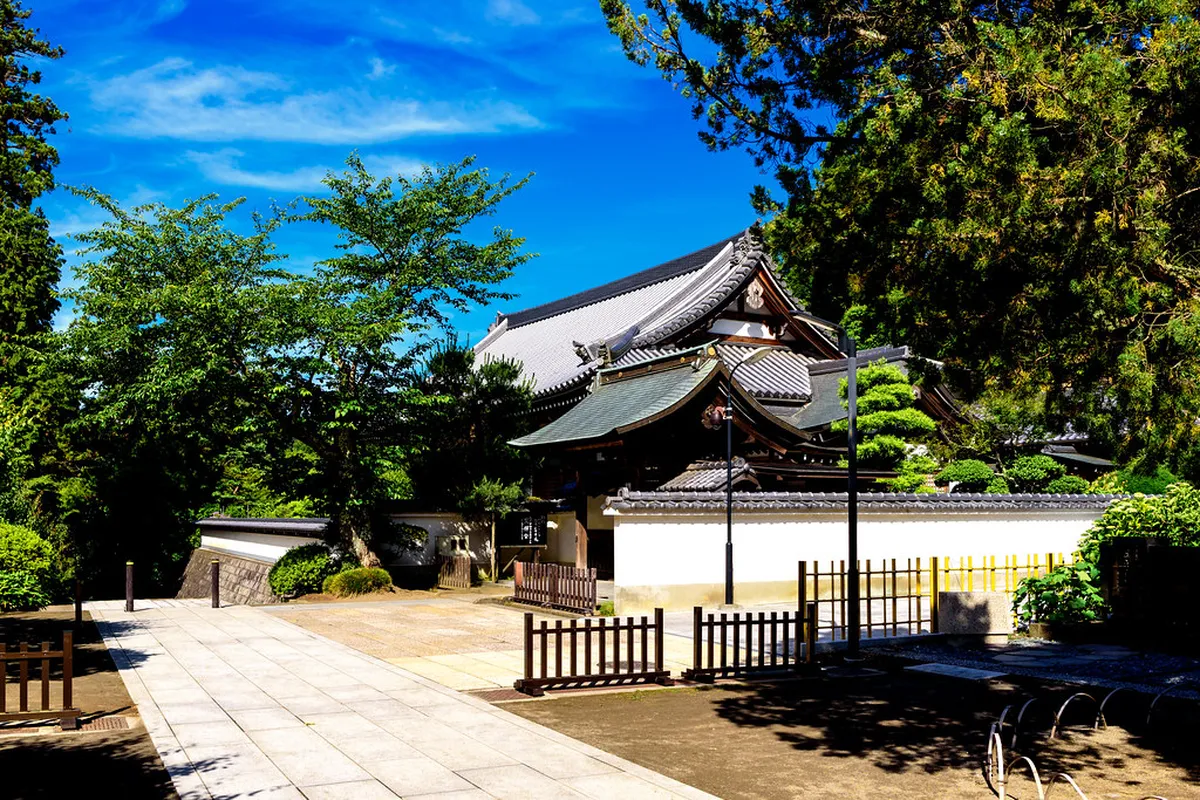
The founding of engakuji temple dates to 1282, in the closing years of the Kamakura Period. Hojo Tokimune, the regent who had directed Japan's defense against the Mongol invasions of 1274 and 1281, established the site to console the souls of fallen soldiers — both Japanese and Mongol. He invited the Chinese Chan master Mugaku Sogen (also known as Bukko Kokushi) from Song-dynasty China to serve as founding abbot, cementing the temple as a beachhead for orthodox Rinzai Zen on Japanese soil.
The temple is officially ranked second among the Gozan, the Five Mountains of Kamakura, after Kenchoji. This medieval ranking system gave the top temples direct shogunal patronage and made them centers of Zen scholarship, ink painting, and tea culture. For roughly 700 years, Engakuji has trained monks in koan study and zazen — the same lineage that later shaped Japanese arts from calligraphy to landscape gardening.
During your walk you can see how the layout follows traditional Zen design. Buildings step up the central axis of the valley — Sanmon Gate, Butsuden, Hojo, and the upper sub-temples — symbolizing the ascending path toward enlightenment. Discovering these kamakura attractions in person makes that abstract idea legible: each gate, each rise of stone steps, marks a deeper layer of practice.
Fires, earthquakes (notably the 1923 Great Kanto quake), and warfare have repeatedly damaged the complex. Today's structures mix surviving medieval halls, Edo-period rebuilds, and 20th-century reconstructions, all maintained in the original idiom. Walking through the gates feels like traveling back to the era of the samurai, but the active monastic schedule reminds you this is a working temple, not a museum.
Must-See National Treasures and Architectural Highlights
The Sanmon Gate is the grand two-story wooden entrance that anchors the complex. The current structure was rebuilt in 1783 and is designated an Important Cultural Property — not a National Treasure, a distinction worth noting since competitors often blur the two categories. Passing under its heavy beams represents crossing the three gates of liberation and shedding worldly attachments.
Deeper in the complex sits the Shariden, the temple's centerpiece and one of only two National Treasures on the grounds. This small reliquary hall, said to enshrine a tooth of the Buddha brought from China, is the oldest example of Zen-style "Karayo" architecture surviving in Japan. The Shariden is normally closed to the public and viewed from a distance through an outer fence; the rare exception is the annual Hozoten treasure airing, typically held over three days at the start of November, when the inner gate opens for closer viewing.
Climb higher and you reach the Ogane, the Great Bell — the second National Treasure. Cast in 1301 and standing 2.59 meters tall, it is the largest bonsho bell in Kamakura and one of the most important medieval bronzes in the country. Reaching it requires roughly 140 stone steps from the main path, but the platform at the top rewards you with a sweeping view across the wooded valley and a small tea house built right next to the bell.
The Butsuden, or Buddha Hall, is the primary place of worship and was reconstructed in 1964 after the 1923 earthquake leveled the original. Inside sits a Hokan Shaka Nyorai — a crowned Buddha image unusual among Zen temples. Look up and you will see the bold "Hakuryu-zu" white dragon ceiling painting by Nanboku Maeda, added in 1964 and now one of the visual signatures of the hall. Beyond the Butsuden, the Hojo (abbot's quarters) and the elegant Myokochi pond garden are typically open to walk through, and the Obai-in sub-temple at the very back holds a mausoleum and a peaceful inner garden often missed by rushed visitors.
Experiencing Zen: Meditation and Tea Ceremonies
Engakuji is one of the few major Kamakura temples that opens its zazen practice to the general public — including foreigners — without prior application. There are two regular sessions to know about. The Doyokai is held most Saturday afternoons and is a single-session sit aimed at beginners. The Nichiyo Zazenkai is the larger Sunday morning sitting, usually starting around 09:00, and includes a short Dharma talk; it generally runs free of charge with a small voluntary offering. Schedules shift around major holidays and the summer Obon period, so verify the current month's calendar at the temple notice board or the official Engakuji site before showing up.
If you have never sat zazen, here is what actually happens, step by step. Arrive 15 minutes early and pay the temple entrance fee at the main gate, then walk to the Kojirin training hall (signposted near the Butsuden). Leave shoes in the entry shelf, sit quietly on a zafu cushion in seiza or a half-lotus, and wait for the leader's bell. The session typically runs two 25-minute sittings separated by a short walking meditation (kinhin). Keep your back straight, eyes lowered (not closed) at a 45-degree angle to the floor, hands forming the cosmic mudra in your lap. If the warden carrying the keisaku stick walks past, a small bow signals you would like a shoulder tap to refocus — it is offered, not imposed.
Dress code is straightforward but enforced: long, loose trousers (not shorts or tight jeans), a plain top with sleeves, and no strong perfume or jewelry. Phones go fully off, not silent. Photography inside the practice hall is forbidden. If your knees cannot fold, ask for a chair — they keep a few aside and using one is not considered a breach. Latecomers are usually turned away, since opening the door mid-sitting disturbs everyone, so plan trains accordingly.
Public zazen sessions at Engakuji are free to join (with a small voluntary offering). Foreigners are welcome. The Sunday Nichiyo Zazenkai around 09:00 is the most beginner-friendly session. Arrive 15 minutes early and bring modest, loose clothing with sleeves.
After meditation, the Butsunichi-an sub-temple — the mausoleum compound of founder Hojo Tokimune — runs a small tea house where you can sit on a tatami terrace and order matcha with a seasonal wagashi sweet for around 600 yen. The view looks across a stone-lantern garden toward the burial cave, oddly serene rather than morbid. There is a second tea pavilion near the Great Bell at the top of the hill that pairs well with the climb. Both are cash-only and close earlier than the main grounds, often by 15:30.
Seasonal Guide: Autumn Leaves and Spring Blooms
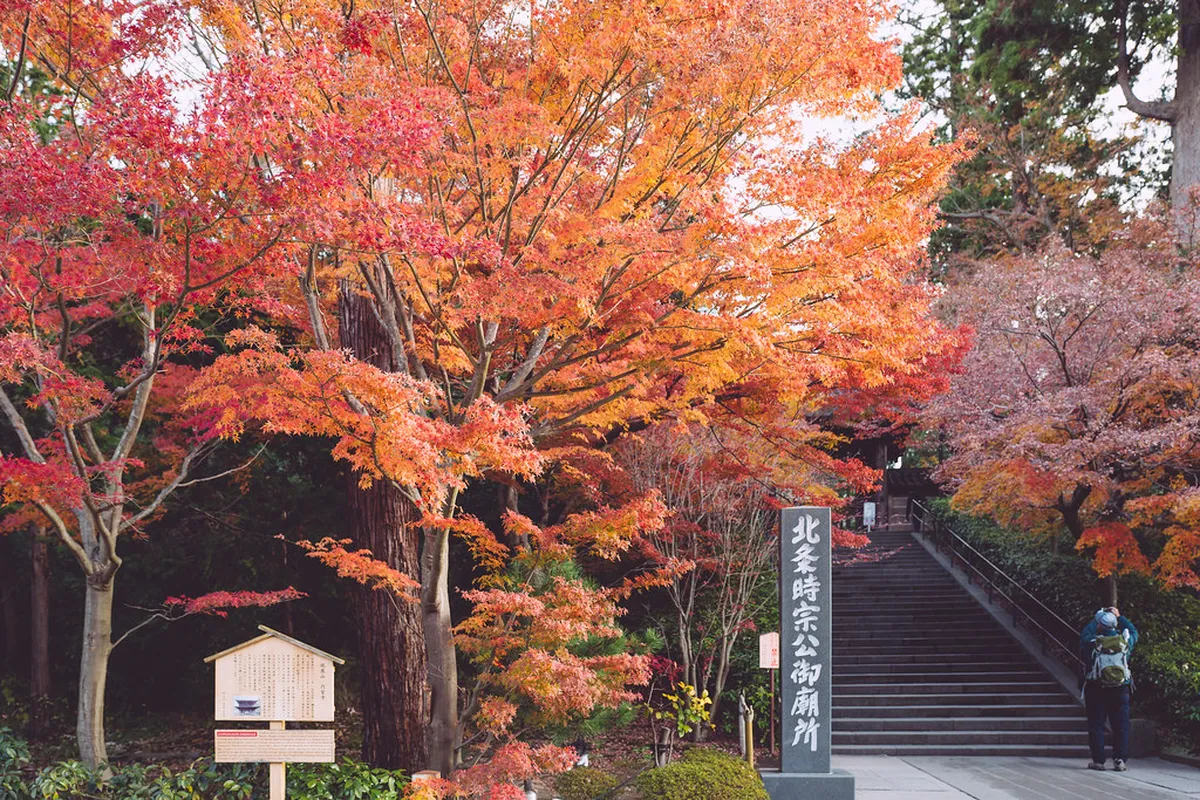
Late autumn is the headline season at Engakuji. Maples around the Sanmon Gate, the Myokochi pond, and the steps up to the Ogane peak in color from roughly November 25 through the first week of December most years. Photographers cluster on the stone steps below the gate at golden hour; arriving at opening time (08:00) gives you 30 to 45 minutes of clean shots before tour groups arrive. The Hozoten treasure exhibition, when the Shariden interior is partially visible, often falls on the first weekend of November and is worth aligning your trip with if dates work.
Spring brings cherry blossoms in late March and early April, particularly around the entrance steps and the Obai-in sub-temple at the back. The contrast of pale pink against the dark weathered Sanmon timber is one of the quieter sakura scenes in Kamakura — far less crowded than Tsurugaoka Hachimangu down the road. June replaces blossoms with hydrangeas and lush moss; for the famous "ajisai" wash, neighboring Meigetsuin is the bigger draw, but Engakuji's quieter side paths offer their own modest bloom.
Summer and winter both reward visitors who prefer solitude. July and August can be humid but bring deep cicada-loud green, and the cedar canopy keeps temperatures noticeably cooler than the streets below. Winter mornings sometimes dust the rooftops with snow and clear the grounds of crowds entirely; the Joya-no-Kane bell-ringing on New Year's Eve, when the public is invited to toll the Great Bell, is one of the most atmospheric Kamakura experiences if you can manage the late-night logistics. Consult a kamakura autumn leaves guide to fine-tune the dates of your visit.
Practical Visitor Information: Hours, Fees, and Access
Reaching the temple is the easiest in Kamakura: the main gate sits less than a minute from the west exit of Kita-Kamakura Station on the JR Yokosuka Line. From Tokyo Station the ride is roughly 55 minutes; from Yokohama, about 20 minutes. Check a kamakura transportation guide for current train schedules, the Kamakura-Enoshima Pass options, and tips for combining JR with the Enoden line further south.
Entry is 500 yen for adults and 200 yen for children, paid in cash at the main gate. Most visitors spend 60 to 120 minutes on the main loop; allow 30 extra minutes if you plan to climb to the Great Bell. The Butsunichi-an tea house and Obai-in sub-temple both have a small additional charge (around 100 to 300 yen). ATMs are scarce around Kita-Kamakura — withdraw cash at Kamakura Station or Tokyo before you arrive.
A common first-timer mistake is assuming the whole complex closes at the same time as the main gate. Sub-temples and tea houses typically shut by 15:30 to 16:00, even when the outer grounds remain open until 16:30. If you want to see the Shariden viewing area, the Great Bell, and have tea, start before 14:00. Public restrooms exist near the entrance and partway up the slope but are spread out; carry a small bag for trash since public bins are rare across Japan.
- Visitor Logistics and Costs
- Entrance Fee: 500 yen (adults) / 200 yen (children)
- Operating Hours: 08:00 to 16:30 (Mar-Nov)
- Winter Hours: 08:00 to 16:00 (Dec-Feb)
- Sub-temple/tea-house cutoff: typically 15:30
- Nearest Station: Kita-Kamakura (JR Yokosuka Line)
- Access from Major Hubs
- From Tokyo Station: ~55 minutes via JR Yokosuka Line
- From Yokohama: ~20 minutes via JR
- From Shinagawa: ~50 minutes (direct)
- Walking Distance from station: under 1 minute (west exit)
Mobility, Stairs, and Know Before You Go
Voyapon and other competitor guides mention the slope but skip the actual numbers, which matters if you are traveling with seniors, young children, or anyone with knee or heart issues. The complex is built as a series of stepped terraces, and elevation gain from the gate to the Great Bell is roughly 60 vertical meters. The first staircase — about 30 stone steps — sits immediately at the entrance, before you reach the ticket gate, with no ramp alternative. From the ticket gate to the Butsuden is largely flat with one short flight of perhaps a dozen steps.
The climb to the Ogane (Great Bell) is the steep one: roughly 140 uneven stone steps split across two flights, with a flat rest section in the middle. There are no handrails on the lower flight and only an intermittent rope rail higher up. In rain or after autumn leaf fall the stones can be slippery; sneakers or hiking shoes are strongly recommended over sandals. If the bell climb is not feasible, the views from the Hojo terrace and the Myokochi pond area capture much of the temple's atmosphere without the elevation.
The Great Bell climb involves roughly 140 uneven stone steps with no handrails on the lower flight. Stones are slippery in rain and after autumn leaf fall. Wear closed shoes, not sandals. Wheelchair access is limited throughout the complex — the entrance staircase has no bypass ramp.
Wheelchair access is limited. The first entrance staircase has no bypass, and most upper buildings are reached only by steps. Visitors with mobility needs can still appreciate the Sanmon Gate, the immediate forecourt, and parts of the lower garden if accompanied by someone who can help with the entrance steps; staff at the main gate are generally helpful if asked politely. Strollers are difficult to push beyond the Butsuden — many families park them at the entrance area.
Engakuji vs Kenchoji: Which to Prioritize
If your Kita-Kamakura time is tight, the question most travelers ask is whether to choose Kenchoji or Engakuji. Both are top-tier Rinzai Zen temples in the Gozan ranking and both reward a visit, but they differ in character. The short answer: visit Engakuji first if you arrive by train and care about National Treasures, autumn maples, or joining a public zazen sitting; visit Kenchoji if you want the largest, flattest, most ceremonial Zen complex in Japan and have time for a longer walk.
- Founded: Engakuji 1282 (Hojo Tokimune); Kenchoji 1253 (Hojo Tokiyori) — Kenchoji is the older institution.
- Gozan rank: Kenchoji is first; Engakuji is second among Kamakura's Five Mountains.
- Layout: Engakuji climbs a wooded valley with steep stairs; Kenchoji spreads across flat grounds with a long central axis — easier walking.
- National Treasures: Engakuji has two (Shariden and Ogane bell); Kenchoji has one (the Bonsho temple bell).
- Distance from station: Engakuji is at the Kita-Kamakura station exit; Kenchoji is a 15-minute walk south down Route 21.
- Public zazen: both offer it; Engakuji's Sunday Nichiyo Zazenkai is more beginner-friendly and English-tolerant.
- Crowds in autumn: Kenchoji's wider paths absorb groups better; Engakuji's narrower stairs feel busier at peak foliage.
The pragmatic itinerary is to do both. Trains arrive at Kita-Kamakura between 08:30 and 09:00; spend 90 minutes at Engakuji, walk 15 minutes south, and reach Kenchoji before the lunch surge. From Kenchoji you can continue down the Daibutsu Hiking Course or back toward Kamakura Station for the rest of the day.
How to Combine Engakuji with a Kita-Kamakura Itinerary
Engakuji is the natural starting point for a Kita-Kamakura walking tour because the gate is right at the station. After exiting, dedicate 90 to 120 minutes to the temple, then walk south along Kamakura Kaido (Route 21). Within 10 to 15 minutes you reach Tokeiji, the historic "divorce temple" once a refuge for women fleeing abusive marriages, and Meigetsuin, famous for hydrangeas in June and a single round Zen window framing its inner garden year-round.
Continue another 5 to 10 minutes south and you arrive at Kenchoji, the top-ranked Gozan temple discussed above. The full Kita-Kamakura corridor — Engakuji, Tokeiji, Meigetsuin, Kenchoji — fits comfortably into a half day if you keep tea-house pauses short. The footpath between landmarks is lined with small soba shops, antique stores, and craft galleries that feel a world away from the busier Komachi-dori in central Kamakura.
Hungry travelers will find excellent dining around the station. Kita-Kamakura is famous for shojin ryori, the vegetarian Buddhist temple cuisine, served at restaurants like Hachinoki near the Engakuji entrance. Soba and uneagi specialists are also well represented; for broader options check the best restaurants in kamakura roundup. Dining inside a converted traditional house adds to the day.
If you have energy and daylight left, the Daibutsu Hiking Course starts near Kenchoji and runs roughly 3 km southwest through wooded ridges to Hasedera and the Great Buddha. Allow 90 minutes one way, wear proper shoes, and bring water in summer. The trail closes at dusk and after heavy rain. Combining a Kita-Kamakura temple morning with the Daibutsu trail and a Hase afternoon makes one of the most rewarding day trips out of Tokyo.
Frequently Asked Questions
What is Engakuji Temple famous for?
The temple is famous for being the second of Kamakura's Five Mountains and housing the Shariden National Treasure. It is also known for its massive Ogane Great Bell and its role as a center for Rinzai Zen meditation. Many visit for the stunning autumn foliage.
How do I get to Engakuji Temple from Tokyo?
Take the JR Yokosuka Line from Tokyo Station or Shinagawa Station directly to Kita-Kamakura Station. The journey takes about 50 to 60 minutes. The temple entrance is located right next to the station's west exit for easy access.
Can foreigners participate in Zen meditation at Engakuji?
Yes, foreigners are welcome to join public Zazen sessions held at the temple. While instructions are often in Japanese, the physical practice is easy to follow by observing others. Ensure you wear modest, comfortable clothing and maintain strict silence during the session.
Is Engakuji Temple worth visiting compared to Kenchoji?
Both temples are worth visiting, but Engakuji is more convenient for those arriving by train. It offers a more forested, hillside atmosphere compared to the grander, flatter layout of Kenchoji Temple. Many travelers visit both on a single day trip.
How much is the entrance fee for Engakuji?
The entrance fee for adults is 500 yen, while children typically pay 200 yen. Prices are subject to change, so it is wise to carry small bills in yen. Most areas of the temple only accept cash payments at the gate.
Engakuji Temple remains a cornerstone of Japanese Zen culture and a rare place where two National Treasures sit within a still-functioning monastery. Its position right at Kita-Kamakura Station makes it the most logistically friendly stop on any Kamakura day trip. From the Sanmon Gate to the Great Bell to the quiet Butsunichi-an tea house, every section rewards an unhurried pace.
Time your trip to season and schedule: late November for maples, Sunday morning for public zazen, the first weekend of November for the Hozoten treasure airing. Respect the etiquette around the meditation halls and the sub-temple closing times, and the day flows. Pair Engakuji with Kenchoji or the Meigetsuin path and you have one of the best half-day Zen circuits in Japan.
Take time to climb the stone steps, listen to the cicadas or wind in the cedars, and stand quietly under the Ogane bell. This is more than a tourist landmark — it is a 740-year-old working monastery, and the silence on its terraces is the same silence Hojo Tokimune sought when he founded it. Your journey through Kita-Kamakura starts here.
Combine this with our main Kamakura attractions guide for a fuller itinerary.
For related Kamakura deep-dives, see our Kenchoji Temple Kamakura Travel Guide and Sasuke Inari Shrine Travel Guide guides.
Free: The Kamakura Essentials guide
Top things to do, where to stay, a perfect day plan, getting around, and the best time to go — a Kamakura mini-guide you can take offline.
You might also like


Continue reading
More guides you'll find useful