
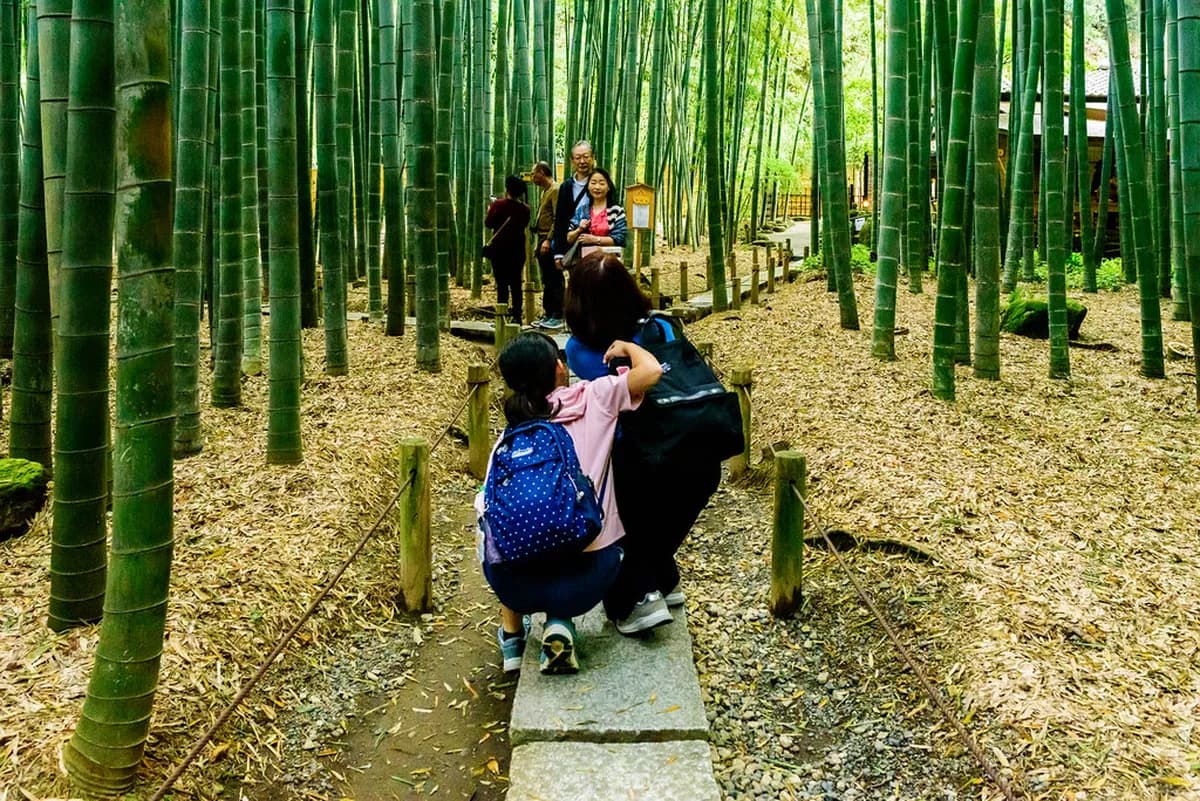
Hokokuji Bamboo Temple Kamakura: 2,000 Stalks, 1 Hour
Hokokuji's 2,000-stalk bamboo grove takes just 45-60 minutes, matcha at Kyukoan tea house included. See how to get there by bus and when to avoid crowds.
On this page
Hokokuji Temple sits in the quiet eastern hills of Kamakura, a 10-minute bus ride from the main station and a world away from the day-trip crowds at Hase or the Great Buddha. Its 2,000-stalk bamboo grove and tucked-away tea house draw visitors looking for one calm hour rather than a packed sightseeing checklist.
The temple is small. Most travelers cover the entire site in 45 to 60 minutes, including matcha at the Kyukoan tea house behind the grove. That compact footprint is part of the appeal: you arrive, slow down, and leave without the logistical fatigue of a larger landmark.
This 2026 guide covers what to see, the realistic timing windows that beat the tour buses, current ticket prices, and a few practical points (light, etiquette, accessibility) that the popular SERP results skip.
Must-See Hokokuji Attractions
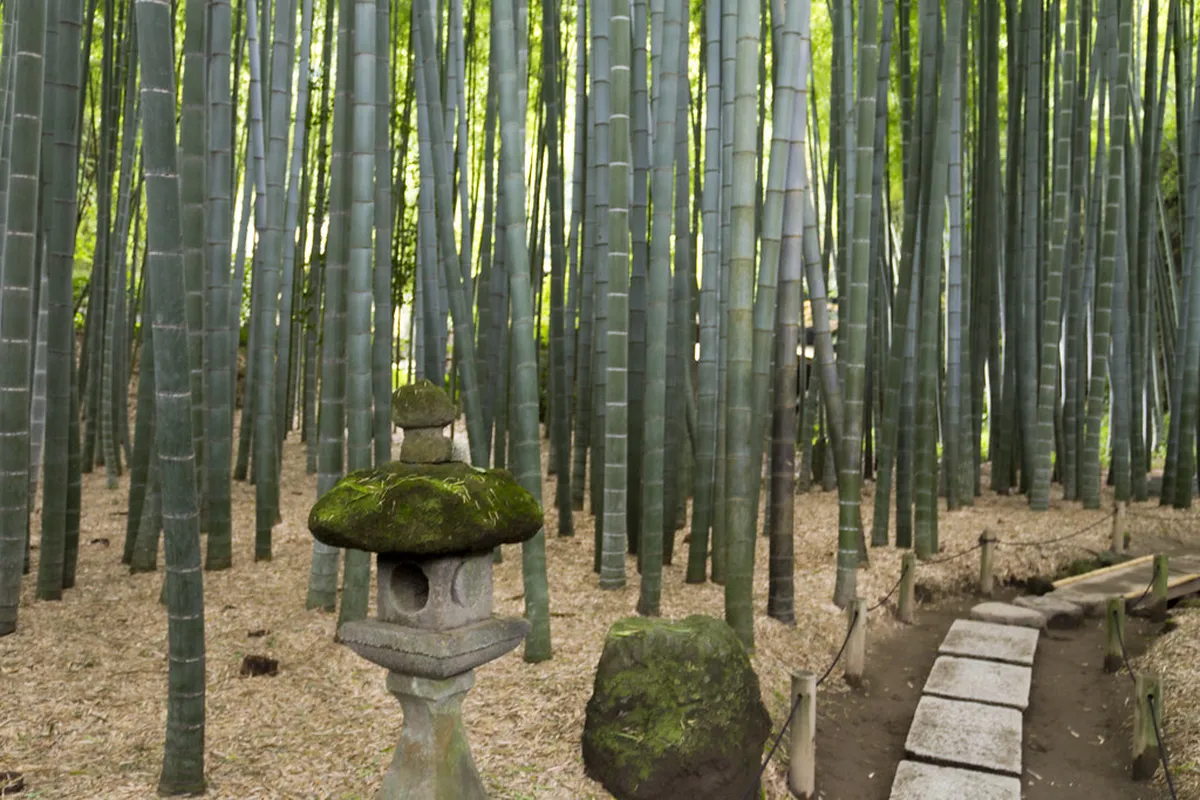
The grove of roughly 2,000 moso bamboo stalks behind the main hall is the reason most people come. The path is short — perhaps 80 metres of looping stone walkway — but the canopy is dense enough that ambient noise drops noticeably the moment you step inside. Sunlight filters through in shifting bands the Japanese call komorebi, which photographs best when the sun is high enough to clear the eastern ridge but low enough to angle through the stalks.
Behind the grove, three shallow yagura caves are carved into the hillside. They hold the remains of the Ashikaga clan, including descendants of temple-founder Ashikaga Ietoki, and date roughly to the early 14th century. Most visitors miss them because the caves sit off to the right of the tea-house turn — look for the small wooden marker rather than the more obvious path.
The Butsuden, or main prayer hall, holds the seated Shaka Nyorai (Shakyamuni Buddha) and is the third or fourth iteration of the building — earlier halls were lost to medieval wars and the 1923 Great Kanto Earthquake. The architecture is deliberately spare in the Rinzai Zen style, so don't expect Nikko-grade carving; the value here is restraint.
If you have time afterwards, the neighbouring Jomyoji Temple (one of Kamakura's Five Great Zen Temples) sits five minutes' walk back toward the bus stop. Pairing the two makes a focused half-morning of Zen sites without doubling back. See the broader Kamakura attractions guide for how Hokokuji fits into a full day.
The bamboo grove light peaks around 11:00 in summer and 11:30 in winter, once the sun clears the eastern hillside. Arrive at 9:00 on a weekday for near-empty paths, or accept that the best komorebi light and the busiest crowds overlap by mid-morning.
- Bamboo grove — roughly 2,000 stalks, 80-metre stone path, ticket required at the gate.
- Kyukoan tea house — matcha and a small wagashi served sitting on tatami facing the grove, 600 yen on top of admission.
- Yagura caves — Ashikaga family memorial caves carved into the hillside behind the grove.
- Butsuden main hall — houses the Shaka Nyorai statue; rebuilt after the 1923 earthquake.
- Karesansui rock garden — small dry-landscape garden near the entrance, easy to walk past if you're not looking.
The History Behind Hokokuji and Its Bamboo Grove
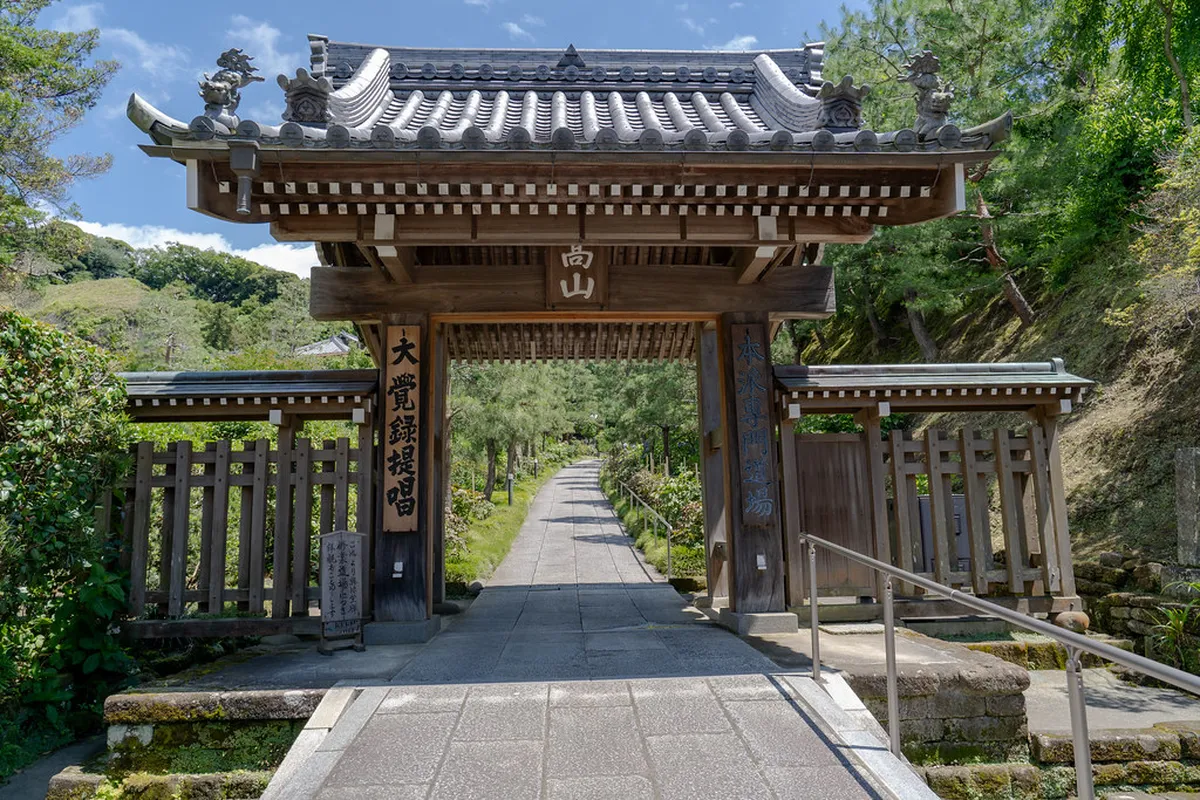
Hokokuji was founded in 1334 by Tengan Eko, a Rinzai Zen priest who had trained in Yuan-dynasty China, and remains an active Rinzai Kenchoji-branch temple today (see the official Hokokuji Temple site for current zazen and event schedules). The patron was the Ashikaga clan — the same family that would, the following year, install Ashikaga Takauji as the first shogun of the Muromachi (Ashikaga) Shogunate. The temple served as the family's mortuary chapel for the Kamakura branch, which is why the yagura tomb caves remain part of the grounds today.
The grove itself is not the original 14th-century planting. Bamboo of this scale is replaced and managed across generations; the current stand is maintained by the temple's gardeners, who thin and harvest stalks each year to keep light reaching the floor. That ongoing maintenance is why the grove looks open and walkable rather than choked, and it's also why you'll occasionally see fresh-cut sections behind cordons.
Tengan Eko's calligraphy and a handful of period documents survive on the grounds, though most are not on public display. The temple's Rinzai lineage connects it to Engaku-ji and Kencho-ji on the other side of Kamakura, two of the city's "Gozan" Five Great Zen Temples — useful context if you're building a temple itinerary around the city's Zen heritage rather than its more famous Pure Land sites.
Art, Culture, and the Tea Ceremony at Kyukoan
Hokokuji is not a museum in the formal sense — there is no ticketed exhibition hall — but the grounds carry the visible vocabulary of medieval Rinzai Zen. The karesansui rock garden near the entry uses raked gravel and standing stones as a meditation aid; the convention is that gravel reads as water and standing stones as mountains or islands. It rewards 90 seconds of stopping rather than walking past.
The Kyukoan tea house (sometimes romanised Kyomyo-an) is the cultural centrepiece. For 600 yen on top of the 400-yen admission you receive a bowl of whisked matcha and a seasonal wagashi, served while you sit on a tatami platform facing directly into the grove. The standard etiquette: take the wagashi first, then drink the matcha in three measured sips, and rotate the bowl 90 degrees clockwise before setting it down. Staff are used to first-time visitors and won't correct you, but the small gesture is appreciated.
Wood carvings on the Butsuden's bracketing and the temple bell housing reflect the simpler late-Kamakura aesthetic rather than the ornate later Edo style. If you've already visited Nikko or Nijo Castle in Kyoto, the contrast is striking; Hokokuji's craft is in the proportions and joinery rather than gilding.
Parks, Gardens, and the Grove Through the Seasons
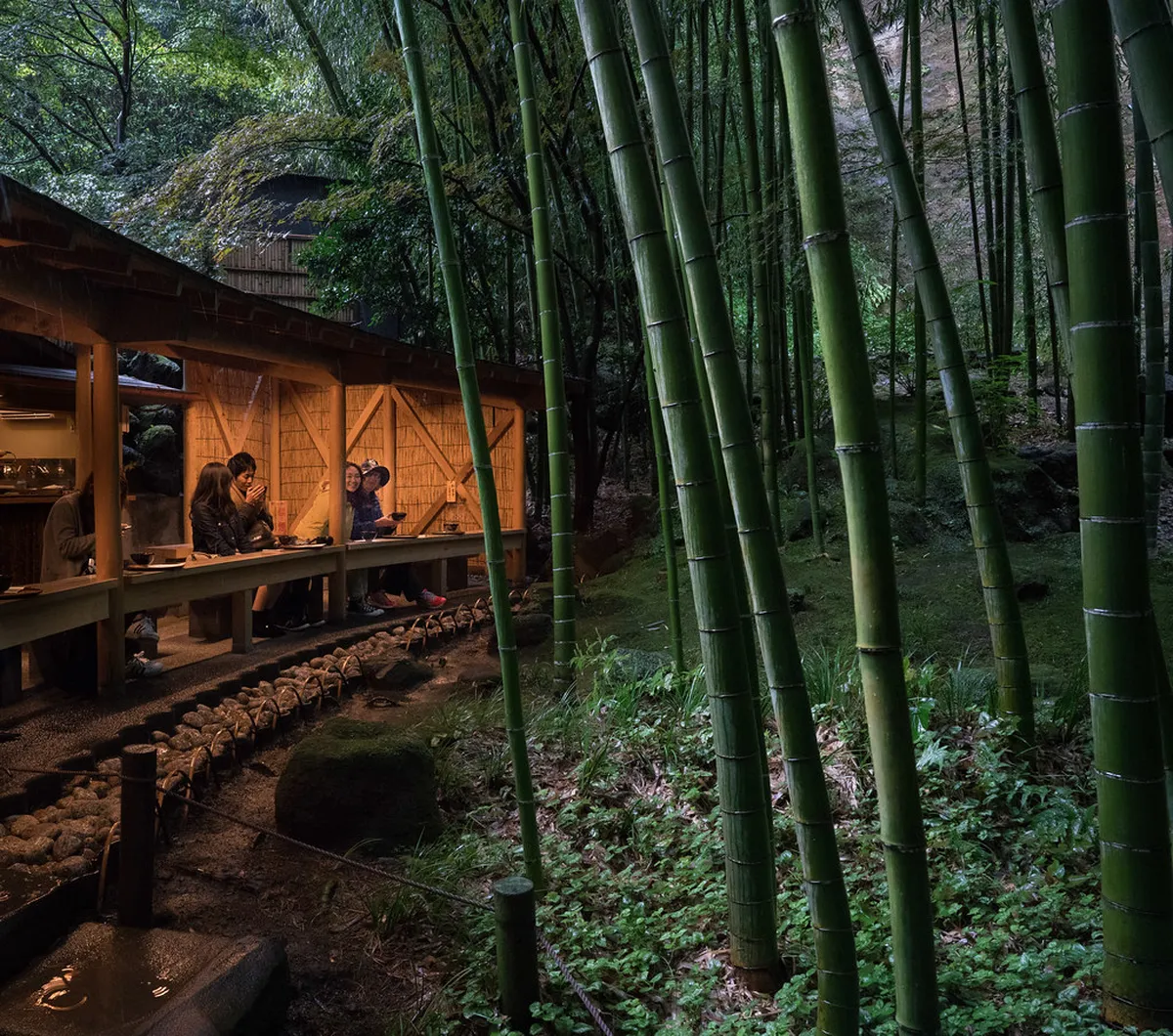
The grounds are compact but layered. Beyond the bamboo, a moss-bedded path winds past hydrangea bushes, a small pond, and seasonal plantings tended by the temple. Cherry blossoms frame the front gate in late March to early April; hydrangeas come in mid-June; the maples near the entry turn deep red in mid- to late November, which is the busiest two weeks of the year.
Winter is genuinely under-rated. With the maples bare, the bamboo's green stands out more starkly, the path is dry, and weekday morning crowds thin to almost nothing. The trade-off is that the tea house's open shoji panels make sitting for matcha colder than you'd expect — bring a layer.
The grove canopy stays largely evergreen year-round, which means the photographic look does not change as dramatically across seasons as, say, a Kyoto temple garden would. If your priority is "bamboo plus dramatic foliage colour," aim for the third week of November. If your priority is "bamboo plus quiet," aim for January or February on a weekday.
Photography, Light, and Visitor Etiquette
The grove's light peaks roughly two hours after opening — closer to 11:00 in summer, around 11:30 in winter — once the sun clears the eastern hillside and angles through the upper canopy. This is also, unfortunately, when the tour groups arrive. The honest trade-off is that the best komorebi light and the worst crowds overlap; a 9:00 arrival gives you flat but empty light, while a late-afternoon visit gives you long shadows in a half-emptying grove.
Tripods and large monopods are not permitted on the grove path — staff will ask you to fold them. Hand-held works fine; a wide-angle lens (24–35mm full-frame equivalent) captures the canopy better than a telephoto, and bumping ISO is preferable to using flash, which is also discouraged inside the grove. The most common first-timer mistake is shooting from the middle of the path; step to the edge and angle upward to get the canopy without other visitors in the frame.
Speaking inside the grove is permitted but kept low — this is an active temple, not a park. Drones are banned. The Kyukoan tea house allows photos of your own bowl and the view, but staff prefer no flash and no photos of other guests. Removing shoes before stepping onto the tatami is required.
Family-Friendly, Budget, and Accessibility Notes
Tripods and large monopods are not permitted on the grove path — staff will ask you to fold them. Drones are banned, flash is discouraged inside the grove, and the tea house requests no photos of other guests.
Hokokuji is one of the cheaper major sights in Kamakura. Adult admission is 400 yen (children 200 yen) as of 2026, with the optional matcha set adding 600 yen at the tea house. A family of four with one tea service rarely spends more than 2,000 yen on the visit itself, well below what you'd pay at the Great Buddha plus Hasedera combined.
Children handle the site well: the path is short, there's space to walk without being on a road, and the bamboo canopy is genuinely impressive at kid eye-level. The constraint is noise — toddlers used to running and shouting will draw quiet looks from other visitors and staff. Strollers fit on the entry path but the grove's gravel sections are uneven, so a baby carrier is easier from the temple gate inward.
Wheelchair access is partial. The entry forecourt and the tea house viewing platform are reachable, but the yagura caves and the upper grove path involve unpaved sections and a few stone steps. Staff at the ticket booth can advise on the current accessible route if you ask. For a budget-friendly meal nearby, see our list of best restaurants in Kamakura — the area near Kamakura Station has soba shops and bento options under 1,500 yen.
| Ticket / Item | Price (2026) | Notes |
|---|---|---|
| Adult admission | 400 yen | Covers grove + grounds |
| Child admission | 200 yen | — |
| Kyukoan matcha set | 600 yen | Optional add-on at tea house |
| Family of 4 (2 adults + 2 children, 1 matcha) | ~1,800 yen | Well below Hasedera + Daibutsu combined |
How to Plan a Smooth Hokokuji Day
The temple opens at 9:00 and closes at 16:00, with last admission usually at 15:30. Arrive at 9:00 sharp on a weekday and you will have the grove almost to yourself for the first 30 minutes. By 10:30 the first tour buses arrive at the Jomyoji bus stop. By midday in spring or autumn the path can feel congested.
From Kamakura Station's east exit, take Keikyu bus 23, 24, or 36 from stop number 5 toward Kanazawa-Hakkei or Jomyoji, get off at the Jomyoji stop (about 10 minutes, 200 yen), and walk roughly 3 minutes east. The walk from the station takes 25 to 30 minutes through residential lanes — pleasant in cool weather, less so in August humidity. See our Kamakura transportation guide for fare cards and bus schedules.
If you're coming from the capital, fold Hokokuji into the eastern half of a day-trip and hit the Great Buddha and Hasedera in the morning. Our Kamakura day trip itinerary from Tokyo walks through that order. Note that travelling east-to-west in the afternoon means cutting against the rush — counter-intuitively, going west first then east keeps you ahead of the bus group flow.
Hokokuji vs Arashiyama: Which Bamboo Grove to Visit
The most common question travellers ask is whether Hokokuji is worth the detour if they're already planning Arashiyama in Kyoto. Short answer: they are different products. Arashiyama's grove is a public lane — wide, free, photogenic, and overrun by 09:00 with influencer queues that make a calm photo nearly impossible. Hokokuji is a small ticketed temple grove with maybe 200 visitors per day on average, an active tea house, and an enforced quiet code.
If your trip skews "see the icon, take the photo, move on," Arashiyama still wins on scale and accessibility. If your trip skews "sit, drink matcha, hear the wind move through bamboo," Hokokuji wins on every metric — atmosphere, density-per-visitor, and the cultural integration with the temple itself. The 400-yen ticket is, in effect, a crowd filter.
For Tokyo-based travellers without a Kanazawa leg, Hokokuji removes the entire shinkansen-and-overnight question. You can be at the grove by 10:00 from central Tokyo and back in your hotel by 16:00, which makes it the easier "bamboo grove experience" by a wide margin.
Extending Your Stay: Where to Go After Hokokuji
Hokokuji sits in eastern Kamakura, an area many day-trippers never reach. After tea, walk five minutes back toward Jomyoji Temple for its ranked Zen garden and a second matcha service at the on-site Kisen-an tea house — yes, you can have two tea ceremonies in one morning, and they pair surprisingly well. The Hokokuji-Jomyoji-Sugimotodera triangle covers the eastern Zen circuit in about three hours.
If you have a half-day left, the Great Buddha in Hase and the seaside walk along Yuigahama beach round out a full Kamakura day. Hikers can connect to the Tenen Hiking Trail just north of Hokokuji; see our Kamakura hiking trails and station exit guide for current trailheads and the safer route variants after the 2024 trail-section repairs.
For travellers staying overnight, eastern Kamakura is mostly residential without major hotel inventory. Most ryokan and inns cluster nearer to Hase Station or central Kamakura. Our roundup of the best ryokan in Kamakura covers the practical short-list, including which inns include kaiseki dinner and which are closest to the station for early train returns to Tokyo.
Frequently Asked Questions
How much does it cost to visit Hokokuji Temple?
Entry to the temple grounds costs 300 yen per person. If you wish to enjoy matcha at the tea house, you should purchase a combined ticket for 900 yen. Check Japan.travel for any recent price updates before your visit.
Which hokokuji bamboo temple kamakura options fit first-time visitors?
First-time visitors should prioritize the bamboo grove and the Kyomyo-an tea house experience. Arriving by bus from Kamakura Station is the easiest transport option for newcomers. This combination covers the most iconic features of the site in about one hour.
How much time should you plan for hokokuji bamboo temple kamakura?
Most visitors spend between 45 and 60 minutes exploring the temple and the bamboo grove. If you plan to have tea, allow an extra 20 minutes for a relaxed experience. This timing fits well into a broader day trip itinerary through eastern Kamakura.
Is the bamboo temple in Kamakura worth visiting?
Yes, it is widely considered one of the most beautiful and unique temples in the city. The dense bamboo forest provides a different atmosphere than the more common wooden temple structures. It offers a perfect spot for photography and quiet reflection away from the city center.
Hokokuji is small, focused, and rewarding in inverse proportion to how much you rush it. The 400-yen ticket covers a 14th-century Rinzai Zen temple, a managed grove of 2,000 bamboo stalks, the Ashikaga family tomb caves, and access to one of the most quietly atmospheric tea houses in the Kanto region — all inside a one-hour visit window.
Time it well: 9:00 weekday arrival for solitude, mid-November for foliage, January for empty paths and crisp light. Skip the tripod, sit for matcha, and let the visit run shorter than you'd expect rather than padding it.
Pair it with Jomyoji next door and the Great Buddha in the morning, and Hokokuji becomes the calm centrepiece of a Kamakura day rather than a checklist stop. That's the point of going.
Use our Kamakura attractions hub to plan the rest of your trip.
For related Kamakura deep-dives, see our Kenchoji Temple Kamakura Travel Guide and Engakuji Temple: The Ultimate Visitor Guide to Kamakura’s Zen Landmark guides.
Free: The Kamakura Essentials guide
Top things to do, where to stay, a perfect day plan, getting around, and the best time to go — a Kamakura mini-guide you can take offline.
You might also like

Continue reading
More guides you'll find useful


