

Sasuke Inari Shrine Travel Guide
Plan sasuke inari shrine with top picks, neighborhood context, timing tips, and practical booking advice for a smoother trip.
On this page
Sasuke Inari Shrine sits in a forested side valley west of Kamakura Station, reached by a 20 to 25 minute walk through quiet residential lanes. A double row of red torii climbs the hillside above a stream, and the upper grounds hold hundreds of small white fox figures left by past petitioners. The site is free, open year-round, and stays noticeably cooler than the coast even in midsummer.
The shrine traces its founding to Minamoto no Yoritomo, the first Kamakura shogun, who is said to have received military advice in a dream from a fox-spirit calling itself the "Inari of the hidden village." After his victory in 1180 he built this shrine in gratitude. In 2026 the site remains a working place of worship rather than a polished tourist attraction, which is exactly why it rewards visitors who slow down.
Must-See Sasuke Attractions
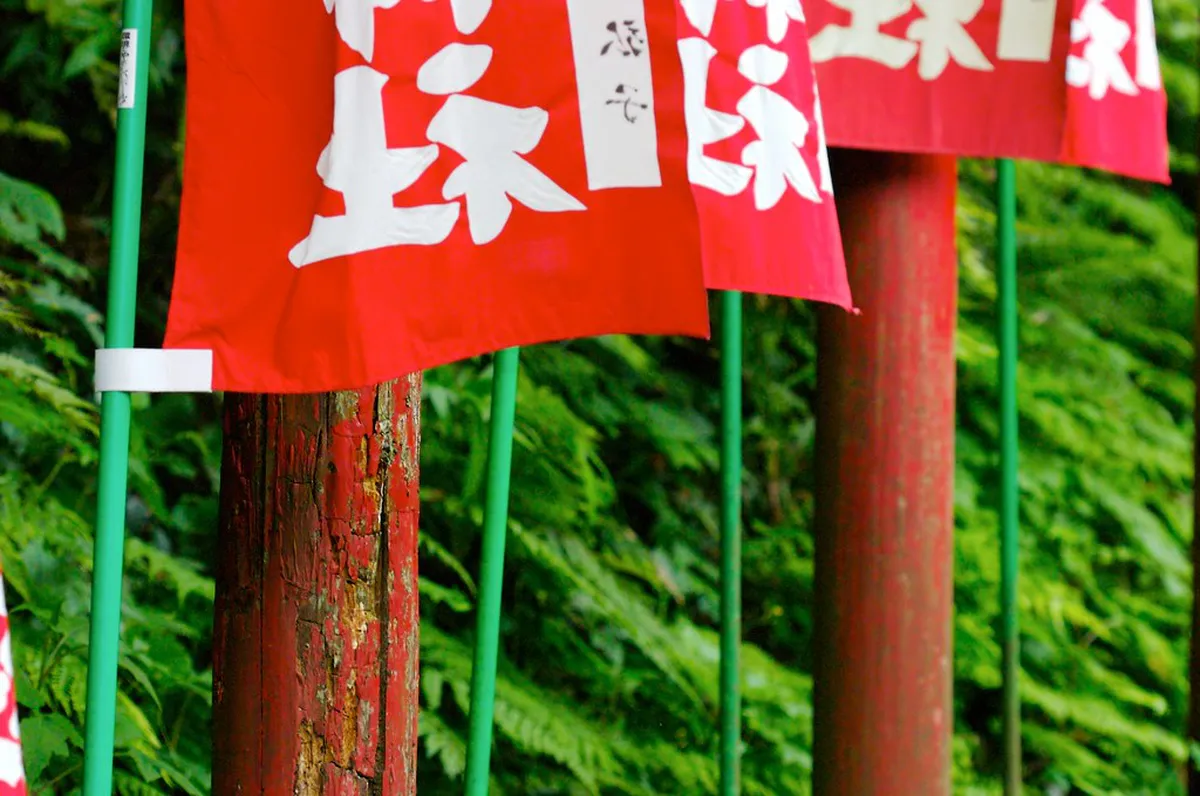
The signature view is the lower torii corridor, a narrow tunnel of vermilion gates rising in three short flights up the slope. Photograph it from the bottom looking up for the brightest contrast against the cedars, then turn around at the first landing for the framed view back down toward the entrance bridge. Most visitors miss the second angle.
Past the upper torii you reach the Shaden, the small main hall, with the inner Okumiya tucked further uphill behind it. Both halls are modest wooden structures painted in muted tones, and the visual drama comes from the surrounding fox population. Around the eaves and along the rock shelves you will see the shirogitsune, palm-sized white stone foxes left as ex-voto offerings; the priest's office sells blank ones from roughly 500 yen so you can inscribe a wish and add it to the collection.
The Junitenseki, eleven small stone tablets representing Buddhist guardian deities, line a short side path uphill from the Okumiya. They are easy to walk past, but they mark the spot where Yoritomo is traditionally said to have received his dream. The whole circuit, including the upper trail, takes 30 to 45 minutes if you read the signs.
Museums, Art, and Culture in Sasuke
Inari is the Shinto deity of rice, fertility, prosperity, and worldly success, and white foxes are believed to act as Inari's messengers rather than as the deity itself. That distinction explains the layered scene at Sasuke: the foxes you see are not idols but mediators left by people asking for help with business, exams, or family matters. Many statues carry hand-written names and small dates on the base.
The shrine's name is itself a piece of folklore. "Sasuke" is widely read as a contraction of "Sa-emon-no-suke," an early honorific title given to Yoritomo before he became shogun, so the shrine literally translates as "the Inari of Sasuke." Local accounts also link the surrounding valley to a "hidden village" associated with the legendary ancestors of medieval scouts and informants who served the early Kamakura government, which is one reason the site feels deliberately tucked away.
The current Shaden was rebuilt in 1919 after the 1923 plans were already underway, with subsequent post-war repairs; many of the surrounding stone elements are older. For deeper background, the entry on en.Wikipedia.org is a useful primer, and the official municipal listing on visit.Trip-Kamakura.com carries the address and phone number for current visiting conditions.
Parks, Gardens, and Outdoor Spots in Sasuke
The shrine grounds occupy a tight ravine shaded by tall sugi cedar and bamboo. Moss covers the lanterns, the stone steps, and the lower torii bases, which means the site looks dense and green even in winter when the deciduous trees are bare. The stream running below the entrance keeps the air several degrees cooler than central Kamakura on summer afternoons.
From behind the Okumiya a marked footpath climbs to the Daibutsu Hiking Course ridge in roughly 10 minutes. Following the ridge southwest brings you out near Kotoku-in and the Great Buddha; following it north drops you toward Genjiyama Park. This connection to the broader Kamakura hiking trails is the single best reason to visit Sasuke as part of a half-day walk rather than a quick stop.
Seasonal contrasts are strong. In June the lower path is fringed with hydrangeas tied to the wider hydrangea season across the city; mid-November to early December brings koyo when maples behind the Shaden glow against the red gates. The valley floor catches typhoons hard, so the back trail occasionally closes for landslide repair after major storms; check the bulletin board at the entrance before committing to the upper loop.
Flower Report and Seasonal Trade-offs
Sasuke does not have a formal garden, so the "flower report" is really a moss-and-foliage report tied to the surrounding forest. Spring (late March to early May) gives you fresh greenery and cherry blossoms on the approach lanes rather than inside the shrine. Early summer (mid-June) brings hydrangeas along the lower path and pairs well with a same-day stop at Hasedera, which holds Kamakura's largest hydrangea trail.
Autumn (mid-November to early December) is the most photogenic window because the maple reds match the torii. The trade-off is that weekends in this period draw the same crowds that pack Engaku-ji, so go on a weekday and arrive before 9:30 AM. Winter (January and February) is sparse but it is the only time you can usually photograph the gate corridor with no other visitors in frame; bring traction-soled shoes because frost on the moss is genuinely slippery.
- Spring: cherry blossoms on residential approach, fresh moss, comfortable temperatures, low to medium crowds.
- Early summer: hydrangeas on lower path, high humidity, slick stones, medium crowds spilling over from Hasedera.
- Autumn: maples behind the Shaden, dry air, best photography light, highest weekend crowds of the year.
- Winter: bare trees, deepest quiet, occasional frost, easiest access to the upper trail when not closed for maintenance.
| Season | Highlights | Crowd Level | Trade-off |
|---|---|---|---|
| Spring (late Mar–early May) | Cherry blossoms on approach, fresh moss | Low–Medium | Comfortable temperatures |
| Early Summer (mid-Jun) | Hydrangeas on lower path | Medium | High humidity, slick stones |
| Autumn (mid-Nov–early Dec) | Maples behind the Shaden, best light | High weekends | Best photography but most crowds |
| Winter (Jan–Feb) | Bare trees, deep quiet, frost | Very low | Upper trail may close; frost on moss |
Family-Friendly and Budget-Friendly Options in Sasuke
Sasuke is one of the strongest free attractions in Kamakura. There is no admission fee, no ticket booth, and no required guide. Total spend for a typical visit is whatever you pay for transport plus an optional 500 yen if you buy a fox statue, which makes it an obvious anchor for a low-cost itinerary built around walking and free shrines.
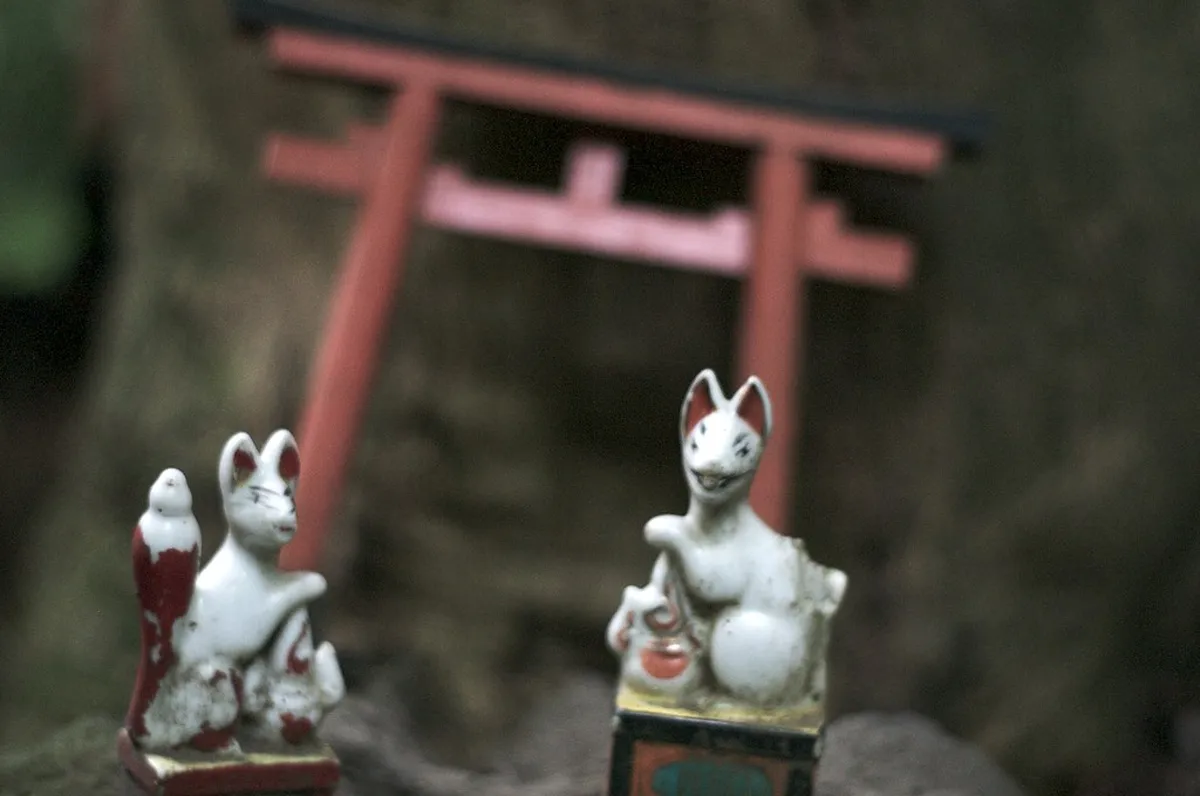
Children tend to engage well because the fox-spotting works as a self-directed game, and the upper grounds are small enough that adults can keep visual contact at all times. The downside for families is the steep stone-step section between the lower and upper torii: it is uneven, narrow in places, and not stroller-accessible. Plan to carry babies in a front pack or backpack and skip the site entirely if anyone in your group has serious knee issues.
There are no shops or vending machines on the shrine grounds and only an occasional vending machine on the approach road, so bring water and a snack. Restrooms are basic and located near the entrance only, so handle that before the climb. Pets are not welcomed inside the precincts.
Aim to arrive between 8:30–9:30 AM before Tokyo tour groups arrive. The priest's office where you buy fox statues (from ¥500) and Goshuin stamps operates roughly 9:00 AM–4:00 PM. The Inari fox motif stamp here is one of the most distinctive in the Kanto region.
How to Plan a Smooth Sasuke Attractions Day
Aim to arrive between 8:30 and 9:30 AM. Tour groups from Tokyo do not usually reach the western valleys until after 10:00, and morning side-light through the cedars is the best photography condition of the day. The shrine itself has no posted hours for the open-air precincts, but the priest's office where you buy fox statues and Goshuin stamps generally operates from around 9:00 AM to 4:00 PM.
Wear closed shoes with rubber soles. Stone steps, mossy paving, and the dirt section toward the ridge are all slippery when wet, and trainers with smooth soles are the most common cause of falls here. Pack a small daypack so your hands stay free for the railings; if you plan to continue onto the Daibutsu course, add 1.5 to 2 hours and carry at least 500 ml of water per person.
Group Sasuke with other western-Kamakura sights for efficiency. A practical loop is Kamakura Station to Sasuke to Zeniarai Benzaiten to Genjiyama Park to Kotoku-in (Great Buddha) to Hasedera to Hase Station, which takes 4 to 5 hours at a relaxed pace. Slot it into the broader Kamakura day trip itinerary if you only have one day in the city.
The back trail to the Daibutsu Hiking Course occasionally closes for landslide repair after major storms. Check the bulletin board at the shrine entrance before committing to the upper loop. Frost on the mossy steps in winter is genuinely slippery — wear rubber-soled shoes.
Explore Options Nearby
Zeniarai Benzaiten Ugafuku Shrine is a 6 to 8 minute walk from Sasuke through the same residential valley. It is famous for the cave spring where visitors wash banknotes and coins for prosperity, and the two shrines complement each other thematically since both deal with worldly success. Most visitors do them together as a single 90-minute stop.
From Sasuke you can also walk to the Great Buddha of Kamakura in 25 to 35 minutes via the Daibutsu Hiking Course, which is the same ridge trail that runs above the shrine. This is the route that lets you skip the buses on Yuigahama-dori entirely. The trail is moderately easy in dry weather but gets muddy fast after rain.
For food, walk back toward the station along Imakoji-dori. Small cafes and a few independent kissaten serve coffee, matcha, and light meals; many sell fox-themed senbei or wagashi as souvenirs. None of these places are inside the shrine grounds themselves, so eat before you start the climb or after you come back down.
Explore Shrine and Temples
Within Kamakura, Sasuke pairs naturally with two contrasting visits. Tsurugaoka Hachimangu on the east side is the city's grand state shrine, broad, ceremonial, and built for processions; Sasuke on the west is intimate, mossy, and built for personal petitions. Doing both in one day shows you the two registers of medieval shogunal religion.
Sasuke also offers a Goshuin (red ink stamp) at the priest's office for 300 to 500 yen. The seal here features the Inari fox motif, which is collected by Goshuin enthusiasts because it is one of the more design-distinctive stamps in the Kanto region. Bring a proper Goshuincho (stamp book); paper-only versions are sometimes unavailable and feel wasted on this seal.
If you have a second day in the area, head north to the Zen complex at Kencho-ji and Engaku-ji for raked gravel, large halls, and a completely different architectural mood. Sasuke's narrow valley setting is unusual precisely because most major Kamakura sites are flat-grounded; the verticality and enclosure are part of why it shows up on "power spot" lists despite its small size.
Basic Information
The shrine is open daily and does not require advance booking. Trains from Tokyo Station to Kamakura Station via the JR Yokosuka Line take about 56 to 60 minutes and cost roughly 940 yen one-way; the Shonan-Shinjuku Line from Shinjuku is similar. Once at Kamakura Station, take the west exit and walk 20 to 25 minutes following signs through the residential neighborhood. Plan transport to the city using the Kamakura transportation guide.
Taxis from Kamakura Station can reach the shrine entrance for around 1,000 to 1,200 yen but cannot drive the final narrow lane to the torii; you will be dropped a 2 to 3 minute walk from the gate. Local buses do not run a useful route to Sasuke specifically, which is why walking is the default option. The address for navigation apps is 2-22-12 Sasuke, Kamakura City, Kanagawa Prefecture.
- Operating Hours and Access
- Hours: precincts open year-round; priest's office roughly 9:00 to 16:00
- Cost: free admission; fox statue 500 yen; Goshuin 300 to 500 yen
- Access: 20 to 25 minute walk from JR Kamakura Station west exit
- Phone: 0467-22-4711
- Official listing: visit.Trip-Kamakura.com
- Visitor Facilities and Rules
- Restrooms: basic, near the entrance only
- Pets: not allowed in the precincts
- Photos: permitted; no tripods inside the gate corridor
- Etiquette: bow once before entering each torii, two bows two claps one bow at the Shaden
Explore by Area
The Sasuke valley is one of three distinct character zones west of Kamakura Station. The Sasuke-Hase axis along the coast feels touristy and crowded, the Kita-Kamakura zone north of the station feels formal and Zen, and the Sasuke valley itself feels residential and wooded. The valley is narrow, traffic is minimal, and houses sit close to the lane, so keep your voice down on the approach.
The shrine entrance is hidden at the very end of a lane that looks like it dead-ends in someone's driveway. The first torii is visible only from the last 20 meters; many first-time visitors walk past the turn-off and have to backtrack. Pin the address in your map app before you leave the station, especially if you are coming back after dark from the upper trail.
If you want to extend the experience, consider booking a night at a ryokan in Kamakura in the Sasuke or Hase areas. Staying overnight lets you reach the shrine at sunrise with the entire valley to yourself, which is the closest you can come to seeing it the way locals did before tourism arrived.
Explore by Category
For travelers thinking by interest rather than by neighborhood, Sasuke fits cleanly in three categories. As a "power spot" it is one of the most cited sites in Kanagawa Prefecture due to the dream-founding legend and the dense fox population. As a hiking trailhead it gives the cleanest backdoor onto the Daibutsu course. As a photography subject it offers high-saturation reds against deep cedar greens with very little visual clutter.
It does not work well as a rainy-day backup. The stone steps and the upper trail both become hazardous in heavy rain, and there is no covered area large enough to wait out a storm. On wet days substitute Hasedera, which has covered viewing platforms, or Kencho-ji, which has large covered halls.
Photographers should know the corridor faces roughly south-east, so morning light is direct on the gates while afternoon light sidelights the foxes uphill. Photo galleries on en.Japantravel.com show the seasonal variation if you want to compare conditions before booking.
Frequently Asked Questions
Which sasuke inari shrine options fit first-time visitors?
First-time visitors should focus on the main tunnel of red torii gates and the central fox statues. These provide the most iconic experience and are easy to access from the main entrance. Most guests combine this with a visit to the nearby Zeniarai Benzaiten Shrine for a complete morning.
How much time should you plan for sasuke inari shrine?
You should plan for about 45 to 60 minutes to explore the shrine grounds thoroughly. This allows enough time to climb the stairs, take photos, and see the hidden fox statues. If you plan to use the hiking trails, add another hour to your schedule.
What should travelers avoid when planning sasuke inari shrine?
Avoid visiting during heavy rain as the stone steps can become very slippery and dangerous. You should also avoid wearing high heels or uncomfortable shoes due to the steep terrain. Try to skip the midday rush between 12:00 PM and 2:00 PM to ensure a more peaceful experience.
Sasuke Inari Shrine rewards visitors who treat it as a small, working religious site rather than a checklist photo stop. The combination of the red torii corridor, the field of white fox petitions, the dream-founded legend, and the back-trail connection to the Daibutsu course gives it more depth than its 30-minute visual loop suggests. Bring water, sturdy shoes, and a Goshuincho if you collect stamps.
Plan an early arrival, group it with Zeniarai Benzaiten and the Great Buddha for a tight western-Kamakura morning, and check the entrance bulletin board for trail closures after typhoons. Done well, this is the most atmospheric free hour in Kamakura in 2026.
See our Kamakura attractions guide for the broader city picture.
For related Kamakura deep-dives, see our Kenchoji Temple Kamakura Travel Guide and Engakuji Temple: The Ultimate Visitor Guide to Kamakura’s Zen Landmark guides.
Free: The Kamakura Essentials guide
Top things to do, where to stay, a perfect day plan, getting around, and the best time to go — a Kamakura mini-guide you can take offline.
You might also like


Continue reading
More guides you'll find useful


