

Enoshima From Kamakura Day Trip Travel Guide
Plan your enoshima from kamakura day trip with our expert guide. Discover top sights, costs, and timing for a perfect coastal Japan escape.
On this page
I built this enoshima from kamakura day trip guide after my third visit to the Shonan coast in 2026. The 10 km stretch between Kamakura Station and Enoshima Island links Japan's old samurai capital with a small sea-shrine island, and the Enoden train threading them together is the star of the journey. Tokyo visitors especially treasure this coastal corridor. First-time visitors usually underestimate how much of the day they will spend simply riding, walking and pausing to photograph the coast.
This plan focuses on efficiency over ambition. We hit the Enoshima bridge by 10:00 to beat the largest tour-bus crowds and aim to be at the Sea Candle observation tower for the 17:30 sunset window. The itinerary works year-round but is sharpest from October to April when humidity is low and Mt Fuji is visible roughly four out of five clear days.
Most travellers struggle to balance Kamakura's temple sprawl with Enoshima's compact island ascent. If you want to enter the Iwaya Caves and watch sunset from the western cliffs, dedicate the full day to this corridor and skip Kita-Kamakura. Use the Kamakura transportation guide for the wider Kanagawa context.
Enoshima From Kamakura Day Trip: At a Glance
The corridor is short but vertical. Kamakura Station to Enoshima Station on the Enoden railway takes 25 minutes for 260 yen, then 15 minutes on foot across Benten Bridge to the island gate. Once on the island, you climb roughly 60 m of elevation to reach the Sea Candle, either on stone steps or via the paid Enoshima Escar escalators (360 yen for the full three-section ticket).
Plan for six to eight hours from the moment you board the Enoden until you head back to Tokyo. The local seafood here is shirasu, the tiny whitebait served raw or boiled over rice; lunch sets typically run 1,200 to 1,800 yen. Most island shops on Benzaiten Nakamise-dori shutter between 17:00 and 18:00, so do souvenir shopping before climbing to the Sea Candle.
- Morning (09:30 to 12:00): Enoden, Benten Bridge, Enoshima Shrine
- Afternoon (12:30 to 16:30): shirasu lunch, Samuel Cocking Garden, Iwaya Caves, Chigogafuchi cliffs
- Evening (17:00 to 19:00): Sea Candle sunset, Subana-dori shopping, return Enoden
Must-See Enoshima Attractions
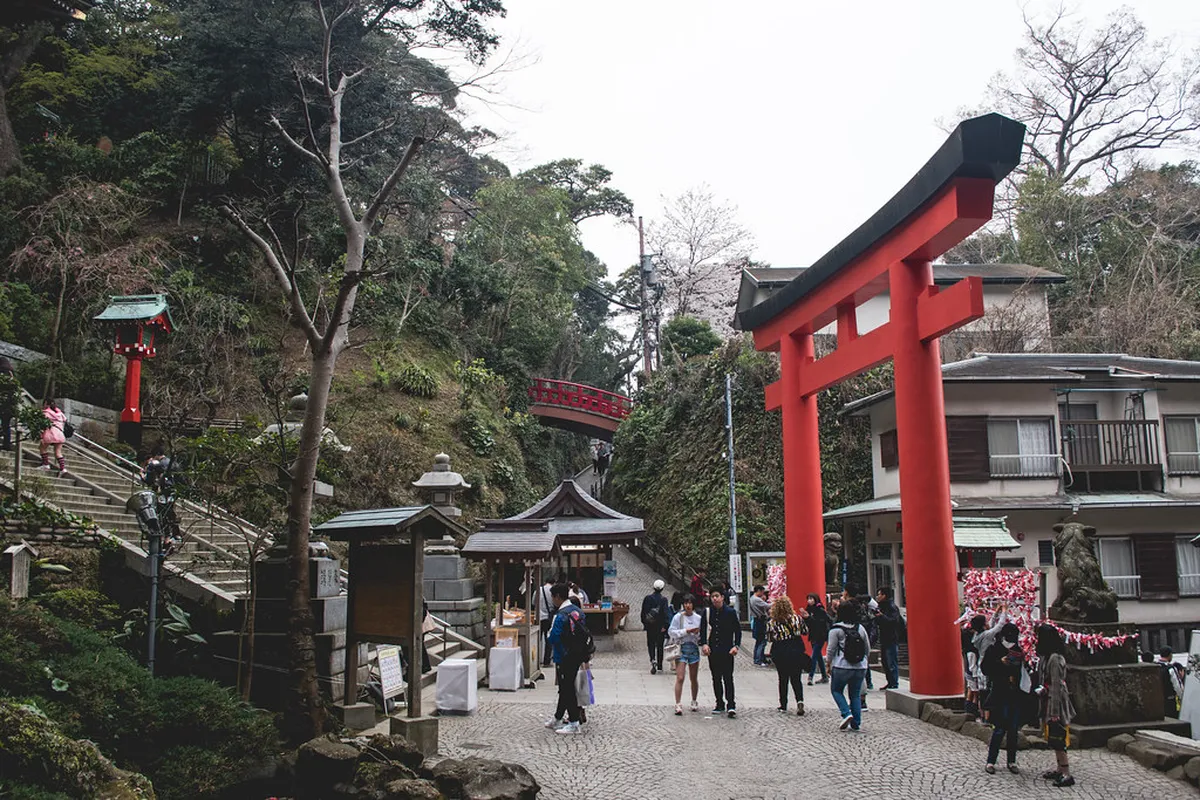
The Enoshima Shrine complex is a three-part pilgrimage: Hetsunomiya near the entrance, Nakatsunomiya midway up, and Okutsunomiya near the cliff edge. Entry to the shrines themselves is free; only the inner Hoanden hall housing the Naked Benzaiten statue charges 200 yen. Allow 45 minutes to walk all three at a steady pace, longer if you stop for the goshuin stamps (500 yen each).
The Enoshima Sea Candle is the lighthouse-style observation tower at the highest point of the Samuel Cocking Garden. Combined entry to garden and tower is 500 yen for adults, 250 yen for children, and the deck stays open until 20:00 in summer and 19:30 in winter. From the open-air upper level you can see Mt Fuji to the west on clear days; bring a light jacket because wind exposure is significant.
The Enoshima Iwaya Caves on the western tip are two seaside caverns linked by a rocky path. Entry is 500 yen and operating hours are 09:00 to 17:00 (last entry 16:30, often shortened in winter and closed entirely in rough seas). Staff hand each visitor a small candle to carry through the second cave's unlit corridor — it is the closest thing to a temple-meets-grotto experience in Greater Tokyo and the differentiator that makes Enoshima worth the climb back up afterwards.
The Iwaya Caves close entirely in rough seas and the last entry is 16:30 (earlier in winter). Check conditions the morning of your visit. Arriving before 16:00 guarantees entry even if the forecast looks marginal.
The Enoshima Escar is the network of three covered outdoor escalators bypassing the steepest stairs from the bronze torii to the Samuel Cocking Garden. The full pass costs 360 yen, individual sections 200 yen each. The escalators only go up; you walk down. Skip them on a return visit but use them on a hot summer day if you have older travellers in your party.
Kamakura Stops Along the Enoden
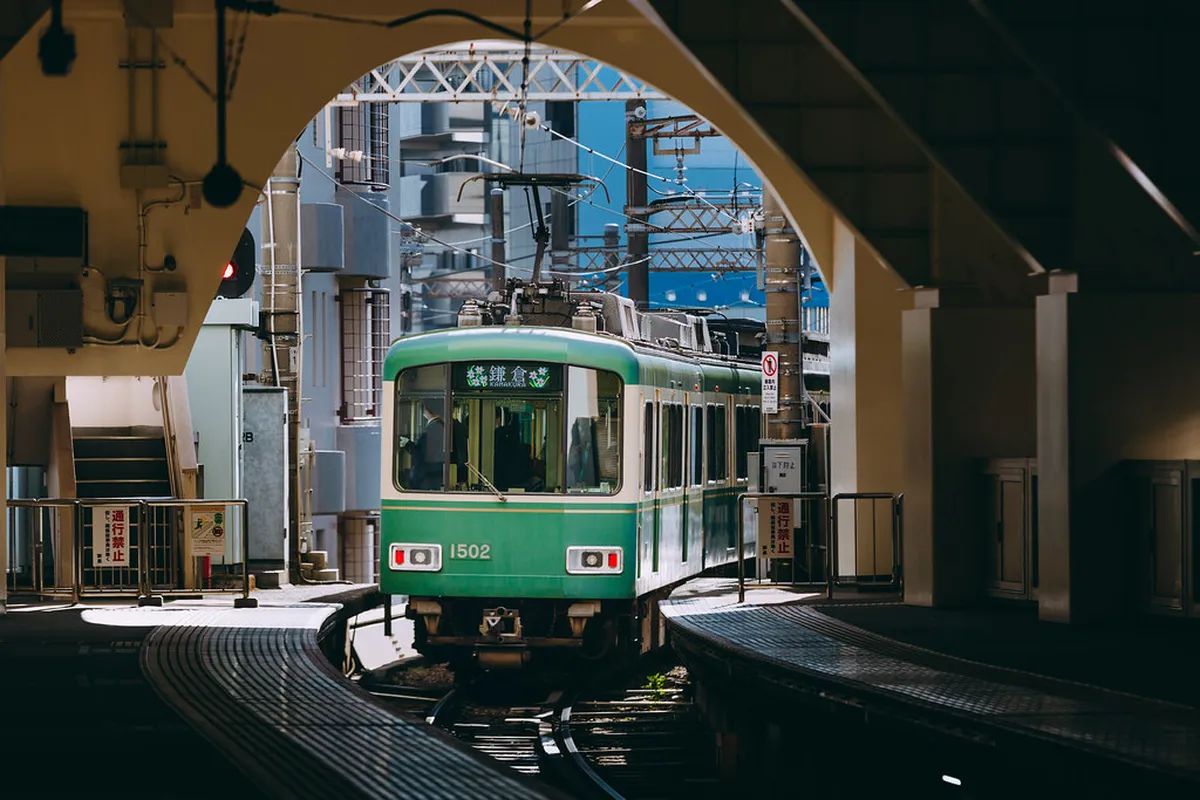
The Enoden has 15 stations and most travellers stop at three on a one-day trip. Hase Station (10 minutes from Kamakura) puts you within a six-minute walk of both Kotokuin Temple's Great Buddha (300 yen entry, 08:00 to 17:30) and Hasedera (400 yen entry, 08:00 to 16:30), the cliff-side temple with the eleven-headed Kannon. Pair these in 90 minutes if you are tight on time.
Kamakura Station itself is the eastern anchor. Komachi-dori, the covered shopping street running north toward Tsurugaoka Hachimangu Shrine, is packed with snack stands. Two regulars worth the queue are Giraffa for deep-fried curry-cheese bread and Kamakura mille mele for whole apple pies. Tsurugaoka Hachimangu, a 10-minute walk from the JR exit, is free to enter and is the city's most important Minamoto-clan shrine.
Mid-line, Inamuragasaki and Shichirigahama deserve a brief train pause if your schedule permits. Yoridocoro is a tatami breakfast restaurant beside the tracks at Inamuragasaki — reservations only, queues regularly exceed an hour without one. Shichirigahama Beach, two stops further west, is the standard postcard frame for Mt Fuji rising behind a surf break.
Enoshima-Kamakura Freepass: Is It Worth It?
The Enoshima-Kamakura Freepass is Odakyu Railway's flagship day pass. It bundles a round-trip Odakyu ticket from your departure station to Fujisawa, unlimited rides on the Odakyu segment between Fujisawa and Katase-Enoshima, and unlimited rides on the entire Enoden line. From Shinjuku the adult fare is 1,640 yen; from Fujisawa-only it drops to 810 yen. Children aged 6 to 11 pay 430 yen and 410 yen respectively.
The pass also unlocks small partner discounts: a souvenir gift at Hasedera, 10% off Enoshima Aquarium admission, 5% off food at iL CHIANTI BEACHE, and a discount on the Sea Candle ticket. To break even from Shinjuku you need to take the Odakyu round-trip plus three or more Enoden segments, which any version of this itinerary will hit easily.
| Pass | Price (adult) | Best for | Covers |
|---|---|---|---|
| Enoshima-Kamakura Freepass (from Shinjuku) | 1,640 yen | Tokyo-based visitors | Odakyu round-trip + unlimited Enoden |
| Enoshima-Kamakura Freepass (from Fujisawa) | 810 yen | Nearby departure | Odakyu Fujisawa segment + unlimited Enoden |
| Noriorikun (Enoden only) | 800 yen | JR Pass holders | Unlimited Enoden rides only |
| Hakone Kamakura Pass (3-day) | 7,520 yen | Hakone + Kamakura combo trips | Hakone Freepass area + Enoshima-Kamakura area |
JR Pass holders should buy the Noriorikun Enoden-only pass (800 yen) at any Enoden station. This gives unlimited Enoden rides without paying for the Odakyu segments already covered by the JR Pass from Tokyo to Kamakura.
You can buy the Freepass three ways: digital via the EMot app on your phone (recommended), at the Odakyu Sightseeing Service Center on the B1 West Underground Exit of Shinjuku Station (08:00 to 16:00 daily), or at multilingual ticket vending machines. The digital version is QR-code based — each traveller needs their own smartphone, you cannot share one device between two people.
Hakone Kamakura Pass: When It Beats the Freepass
The Hakone Kamakura Pass is Odakyu's three-day combination pass covering both the Hakone Freepass area (mountain railway, ropeway, sightseeing cruise, buses) and the Enoshima-Kamakura Freepass area (Odakyu plus Enoden). From Shinjuku it costs 7,520 yen for adults and 1,480 yen for children. Romancecar limited-express supplements are not included and run 700 to 750 yen each way.
This pass only makes sense if you are stitching a single trip across both regions. Hakone alone justifies a full day of mountain transit, so the typical use is a two-night pattern: Shinjuku to Hakone for one or two days, then descend to Odawara, transfer to Fujisawa, and spend the third day on the Kamakura-Enoshima coast before returning to Shinjuku. If you are only doing the coastal day trip, the standard Enoshima-Kamakura Freepass is far cheaper.
Noriorikun: The Enoden-Only 1-Day Pass
The Noriorikun is Enoden's own one-day pass, separate from any Odakyu product. It covers unlimited rides on the Enoden line only and costs 800 yen for adults and 400 yen for children. You can buy it at any Enoden station ticket machine, including Kamakura, Hase and Enoshima.
Noriorikun is the right choice for one specific traveller: the JR Pass holder. JR Pass covers the Yokosuka Line direct from Tokyo Station to Kamakura at no marginal cost, but the JR Pass does not cover Enoden, Odakyu or the Romancecar. Pairing JR Pass plus Noriorikun (800 yen) gives you the same unlimited Enoden access as the Freepass without paying for the Odakyu segments you would not use. It also wins for travellers staying overnight in Kamakura who only need local hop-on hop-off rides.
Which Direction First: Kamakura or Enoshima?
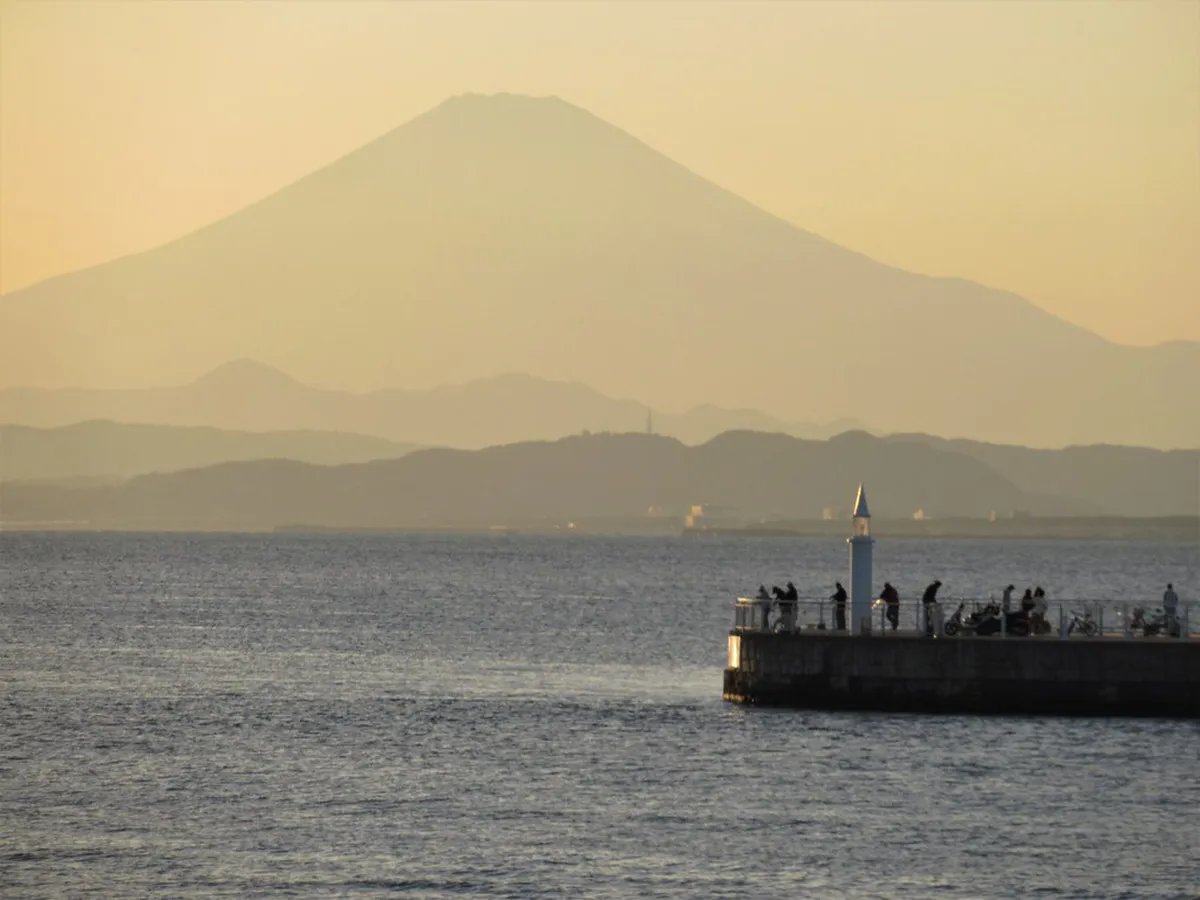
None of the routing decisions matter more than this one, and most guides skip it. The two options are eastbound (start at Enoshima, finish in Kamakura) or westbound (start in Kamakura, finish on Enoshima). Choose based on three variables: where you are sleeping, when you want sunset, and which coast view matters more.
Westbound (Kamakura first, Enoshima sunset) is the better default for travellers based in Tokyo using the Freepass. You hit the Great Buddha and Hasedera in the cooler morning hours when temple grounds are quietest, eat a shirasu lunch around 13:00, then ride the Enoden west and arrive on Enoshima with enough afternoon left to clear the Iwaya Caves before the 16:30 last-entry cut-off. Sunset from the Sea Candle is the natural finale, and you board the Romancecar at Katase-Enoshima for a one-seat ride back to Shinjuku.
Eastbound (Enoshima first) suits travellers staying overnight in Kamakura, anyone who wants to swim or surf at Shichirigahama in the morning, or photographers who want the rising sun behind them when shooting Mt Fuji from the western cliffs. The trade-off is rushing the caves before crowds peak around 11:00 and ending the day in central Kamakura with no comparable sunset spectacle.
Getting There From Tokyo (NAVITIME and Romancecar Tips)
From Shinjuku, the Odakyu Rapid Express to Fujisawa is roughly 60 minutes; transfer to the local for Katase-Enoshima (5 minutes more), then walk 15 minutes across the bridge. The Limited Express Romancecar bypasses the Fujisawa transfer and runs direct Shinjuku to Katase-Enoshima in about 70 minutes for a 700 to 750 yen supplement on top of the base fare. Romancecar reservations open 30 days ahead and weekend windows can sell out for the front "saloon" seats with the panoramic windshield.
The Japan Travel by NAVITIME app (free, available in English on iOS and Android) is the most reliable journey planner for this corridor because it correctly distinguishes Odakyu, JR and Enoden services that Google Maps occasionally muddles. It also surfaces the Romancecar supplement clearly as a separate fare line. Use NAVITIME to confirm same-day return windows, particularly the last Romancecar from Katase-Enoshima which is typically around 21:00.
If you arrive via JR rather than Odakyu, the Yokosuka Line from Tokyo Station reaches Kamakura in about 60 minutes for 950 yen one-way. This route is covered by JR Pass but not by the Enoshima-Kamakura Freepass; pair it with a Noriorikun pass for Enoden-only travel as described above.
What to Book Ahead
Three things genuinely benefit from advance booking on this route. Romancecar reserved seats top the list — book through the EMot app two to three weeks ahead for weekend departures, especially during sakura (late March), Golden Week (early May) and koyo autumn colour weekends in November. Online prices are typically 50 yen cheaper than vending-machine purchases at Shinjuku.
Yoridocoro at Inamuragasaki, where you sit on tatami with the Enoden trundling past the window, takes phone reservations only and runs three breakfast seatings. Without one, expect to wait 60 to 90 minutes on weekends. Sea Candle illumination events in winter (typically late November through February) move to timed-entry tickets bookable online 30 days out — check the official calendar before you commit to a date.
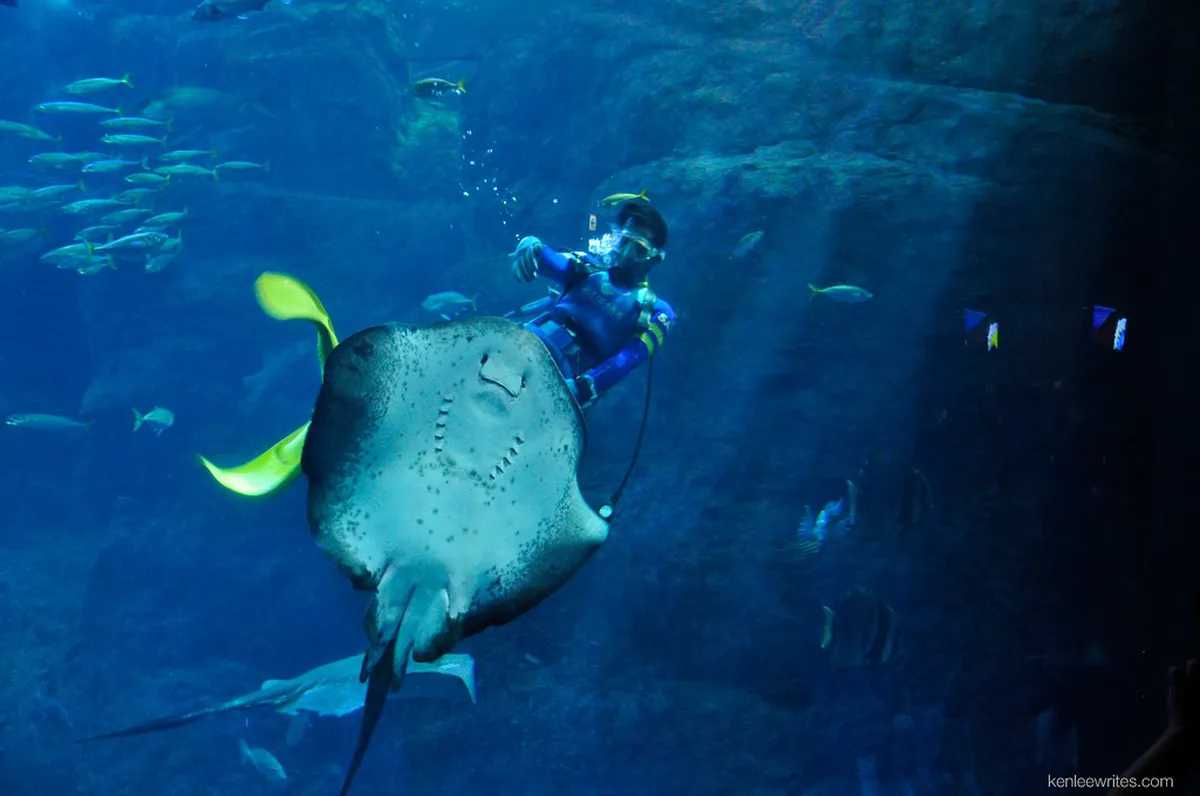
Enoshima Aquarium at the foot of the bridge is worth a same-week reservation only if you are travelling with children; otherwise walk-up tickets work fine on weekdays. For a curated half-day with a guide, you can also browse small-group kamakura day trip itinerary 2026 options that include both regions in one booking.
Is a Day Trip to Enoshima Worth It?
Yes, if you commit to a focused two- or three-anchor day rather than trying to see everything. The high-value combination is Great Buddha plus Hasedera in Kamakura, Iwaya Caves plus Sea Candle on Enoshima, with one shirasu lunch and one shopping street stroll between them. Trying to layer in Tsurugaoka Hachimangu, Hokokuji bamboo grove and the Daibutsu hiking trail in the same day pushes you into rushed-checklist territory.
For deeper temple visits, browse the Hase-dera Temple guide Kamakura. If you want to add a hiking element, the Kamakura hiking trails and station exit guide covers the Daibutsu Trail in detail. Travellers staying overnight should also factor in Kamakura nightlife options and the best ryokan in Kamakura for traditional accommodation. The island is at its photogenic peak during the June hydrangea bloom at Hasedera and the late-November illuminations on Enoshima.
Frequently Asked Questions
Is Kamakura covered by JR Pass?
Yes, JR trains serve Kamakura Station from Tokyo. However, the local Enoden train to Enoshima requires a separate ticket. You can buy an Enoden day pass for 800 yen at the station.
Can I use a Suica card to go to Kamakura?
You can use Suica or Pasmo cards for all trains to Kamakura. This includes the JR lines and the private Enoden railway. Simply tap your card at the ticket gates for easy access.
What is the best pass for Kamakura?
The Enoshima-Kamakura Freepass is the best value from Tokyo. It covers round-trip travel and unlimited Enoden rides. This pass costs about 1,640 yen from Shinjuku Station.
An enoshima from kamakura day trip is the most efficient way to combine samurai-era temples, a working coastal railway and a sea-shrine island in one Tokyo-based day. Pick the right pass for your starting point, choose your direction based on where sunset finds you, and book Romancecar seats early for the smoothest finish.
Check the marine forecast the morning of your trip — the Iwaya Caves close in rough seas and Mt Fuji visibility from the Sea Candle drops sharply in summer haze. Pack walking shoes for the staircases, a light layer for the cliff wind, and enough cash for the smaller snack stalls that still refuse cards.
For the wider Kamakura context, see our complete Kamakura attractions guide.
For related Kamakura deep-dives, see our Yuigahama Beach Kamakura Guide and Kamakura with Kids: 8 Essential Planning Tips and Attractions guides.
Free: The Kamakura Essentials guide
Top things to do, where to stay, a perfect day plan, getting around, and the best time to go — a Kamakura mini-guide you can take offline.
You might also like


Continue reading
More guides you'll find useful


