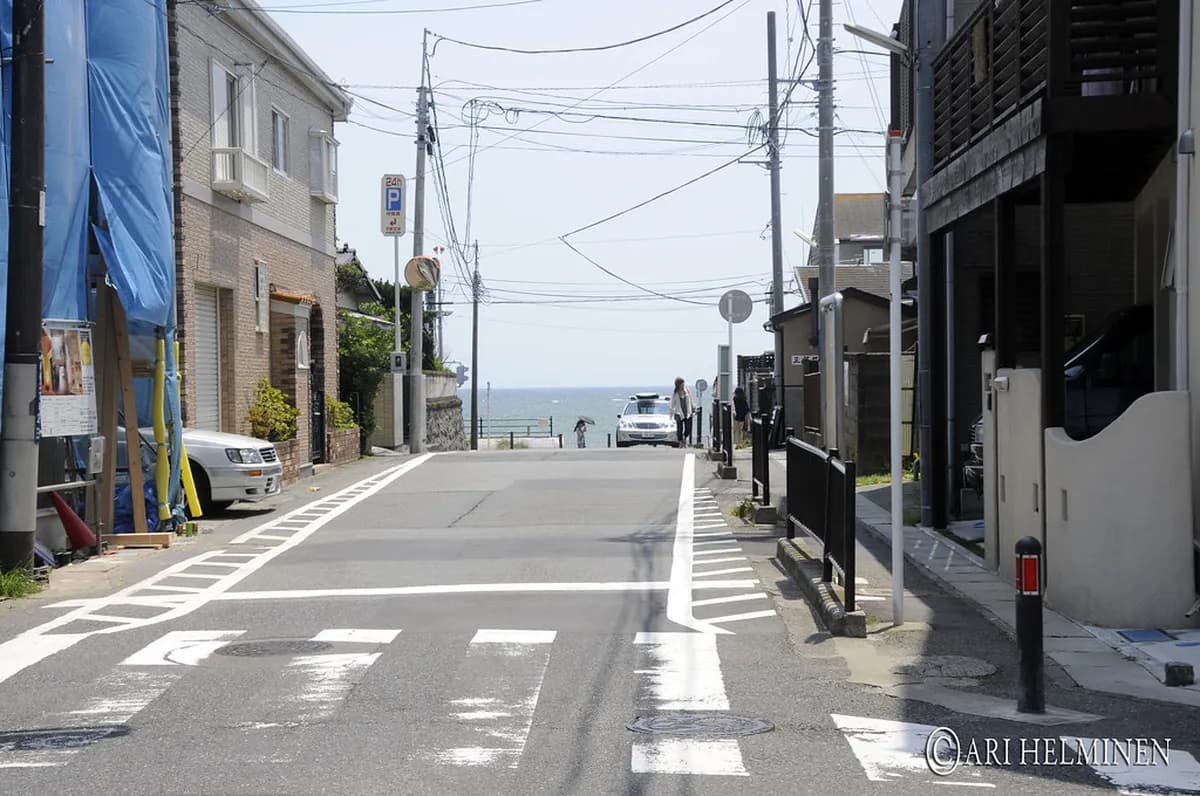
Kamakura with Kids: 8 Essential Planning Tips and Attractions
Plan the perfect Kamakura with kids day trip. Our guide covers the Great Buddha, Enoden train rides, stroller-friendly paths, and the best family beaches.
On this page
Kamakura offers a refreshing escape from the neon lights and crowded sidewalks of central Tokyo for families. You will find wide coastal views and ancient temples that provide plenty of space for children to explore safely. Taking a kamakura day trip from Tokyo lets parents enjoy cultural sites without feeling overwhelmed, even with a toddler in tow.
The city balances eighth-century history with modern coastal charm, making it ideal for travelers of all ages. Your children can ride vintage trams, splash in shallow surf, and climb inside an eleven-meter bronze Buddha all in a single afternoon. This 2026 guide focuses on the practical details that turn a tiring sightseeing slog into a smooth, kid-paced day.
Why Kamakura is a Top Family Day Trip
Kamakura is often called the Kyoto of Eastern Japan because of its samurai-era past and concentration of temples. Families appreciate the slower pace compared to the frantic energy of Shibuya or Shinjuku, and the compact footprint means you can hit several major sights without long transit gaps. Most spots are within twenty minutes of Kamakura Station by foot or by Enoden tram.
Children find the local history engaging when it is delivered through hands-on experiences rather than placards. The Samurai Bushi guesthouse, for example, runs short tours where a guide in lacquered armor walks kids through warrior etiquette and lets them handle replica gear. These sensory moments do more to anchor a six-year-old's memory than any audio guide.
Nature is always within reach. You can swap a morning of temple hopping for an afternoon on the sand at Sagami Bay, or duck into a forested hiking trail behind Kenchoji when the kids need to move. That variety is the real reason Kamakura outperforms a packed Asakusa itinerary for families.
Best Seasons for a Family Visit
Spring and autumn are the easiest seasons for walking the city with a stroller. April and May are mild but bring occasional showers, so pack a compact rain cover. Late November into early December delivers vivid red maples through the inner gardens at Kenchoji and Engakuji, and the temple grounds feel almost theatrical against autumn light.
June is hydrangea season, when Hasedera and Meigetsu-in turn blue and violet for roughly three weeks. Lines at Meigetsu-in can stretch ninety minutes on weekends; arrive at opening (08:30) or save it for a weekday. July and August demand careful planning around heat and humidity that often clear 32C with high dewpoints, and we cover the heat tactics in their own section below.
Winter in Kamakura is underrated. Skies are clear, crowds shrink, and you have a real shot at seeing Mount Fuji from Inamuragasaki on a January morning. Some side gardens close earlier, but the headline temples and Yuigahama Beach all remain open and walkable through New Year.
Navigating Transport from Tokyo to Kamakura
The JR Yokosuka Line runs directly from Tokyo Station to Kamakura Station in about 60 minutes, with wide cars that easily fit a folded stroller and a daypack. From Shibuya, the JR Shonan-Shinjuku Line covers the same route in roughly 55 minutes; from Shinjuku, the Odakyu Line delivers you to Fujisawa where you transfer to the Enoden. See our kamakura transportation guide for platform-specific details.
For families planning to ride the Enoden up and down the coast, a day pass usually beats per-ride fares after three legs. The JRE Kamakura-Enoshima Pass covers JR access plus unlimited Enoden and Shonan Monorail rides, while the Odakyu Enoshima-Kamakura Free Pass adds the Odakyu leg from Shinjuku. Both let you change plans on the fly when a child melts down two stops early.
- JR Yokosuka Line direct from Tokyo Station, around 60 minutes and 950 yen one way; cleanest route with reserved-seat Green Cars on most services.
- JR Shonan-Shinjuku Line from Shibuya, around 55 minutes and 950 yen; same fare, fewer transfers when starting from western Tokyo hotels.
- Odakyu Enoshima-Kamakura Free Pass from Shinjuku, around 90 minutes and 1,640 yen including unlimited Enoden rides; best value when you plan a full beach loop.
- JRE Kamakura-Enoshima Pass at 1,160 yen if you already hold a JR ticket into Kamakura; covers Enoden and Shonan Monorail for the day.
| Route | From | Duration | Fare | Best for |
|---|---|---|---|---|
| JR Yokosuka Line | Tokyo Station | ~60 min | 950 yen | Central/east Tokyo hotels |
| JR Shonan-Shinjuku Line | Shibuya | ~55 min | 950 yen | West-side Tokyo hotels |
| Odakyu Free Pass | Shinjuku | ~90 min | 1,640 yen | Full beach loop day |
| JRE Kamakura-Enoshima Pass | Any JR station | varies | 1,160 yen | Enoden + Shonan Monorail |
Must-See: The Great Buddha (Kotoku-in)
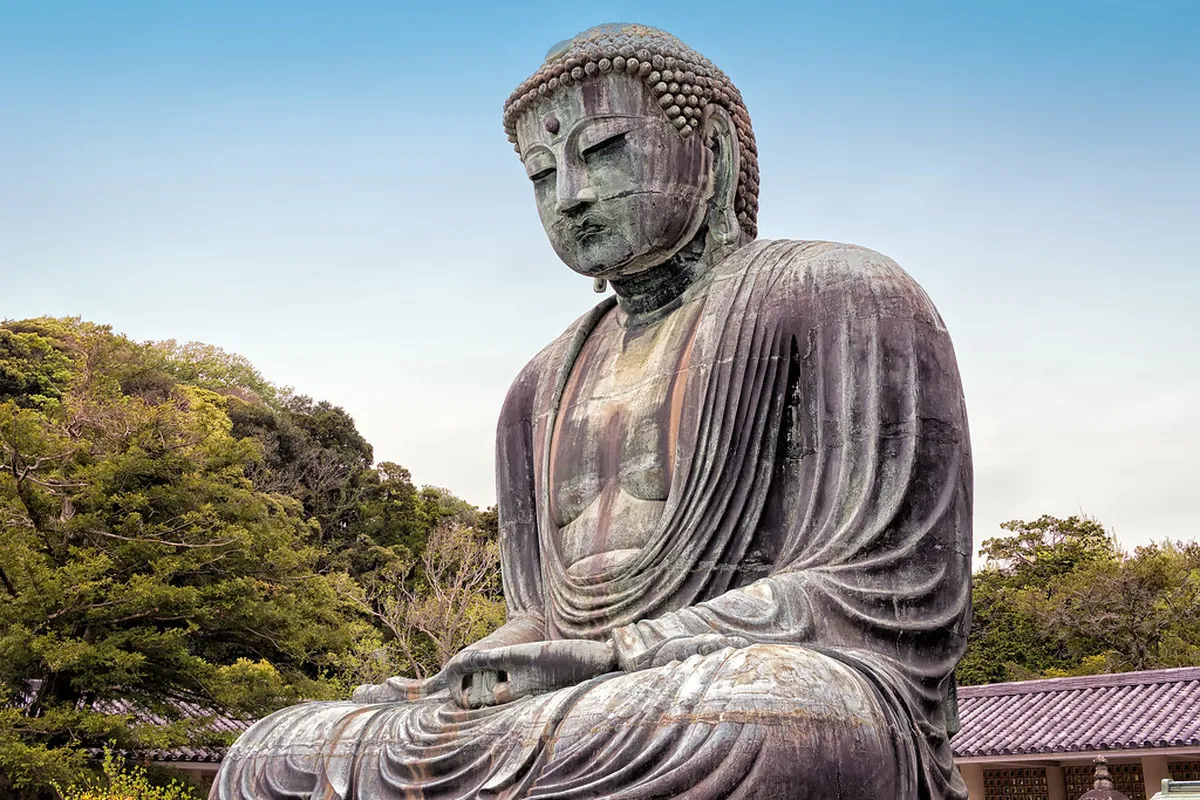
No first family visit to Kamakura is complete without the bronze giant at Kotoku-in. The 11.4-meter statue has sat in the open air since 1495, after a tsunami swept away the surrounding hall, and it shows surprisingly well at toddler eye level. Use our great buddha kamakura visiting guide for opening hours and the back-route walk from Hase Station that skips the worst Komachi-dori crowds.
The headline kid-pleaser is climbing inside the hollow statue for an extra 50 yen. The interior staircase is dark, narrow, and warm; we would skip it on a 32C afternoon and target it first thing in the morning instead. Children five and up usually love it; under-threes tend to balk at the gloom.
Before leaving, visit the temple gift shop and pick up a wooden rice paddle for around 300 yen. They are durable, light enough to fly home in a checked bag, and far more memorable than a plastic keychain. The garden tucked behind the statue holds a shishi-odoshi, the bamboo water feature that tips and clacks every twenty seconds; turn it into a listening game by asking the kids to count the beats between knocks.
Adventure on the Enoden Electric Railway
The Enoden line is more than transport; it is an attraction in its own right. The vintage green carriages, in continuous service since 1902, weave between residential houses with only inches of clearance, then break out along the seawall for an open ocean view. Kids who can stand are happiest at the front window watching the driver work the brake handle by hand.
Ride the full length toward Enoshima for the most coastal scenery, then turn around at Koshigoe or Enoshima itself. If your children still have legs left, an enoshima from kamakura day trip pairs naturally with the train ride and adds a sea cave and the Sea Candle observation tower.
One station deserves a parental warning. Kamakura-Kokomae is the famous Slam Dunk anime crossing, and the platform regularly fills with photographers ignoring the queue. Hold small hands tight when boarding, and consider riding past it on the outbound leg, then returning later in the day when the late-afternoon light has cleared most of the casual crowd.
Sun and Sand at Yuigahama Beach
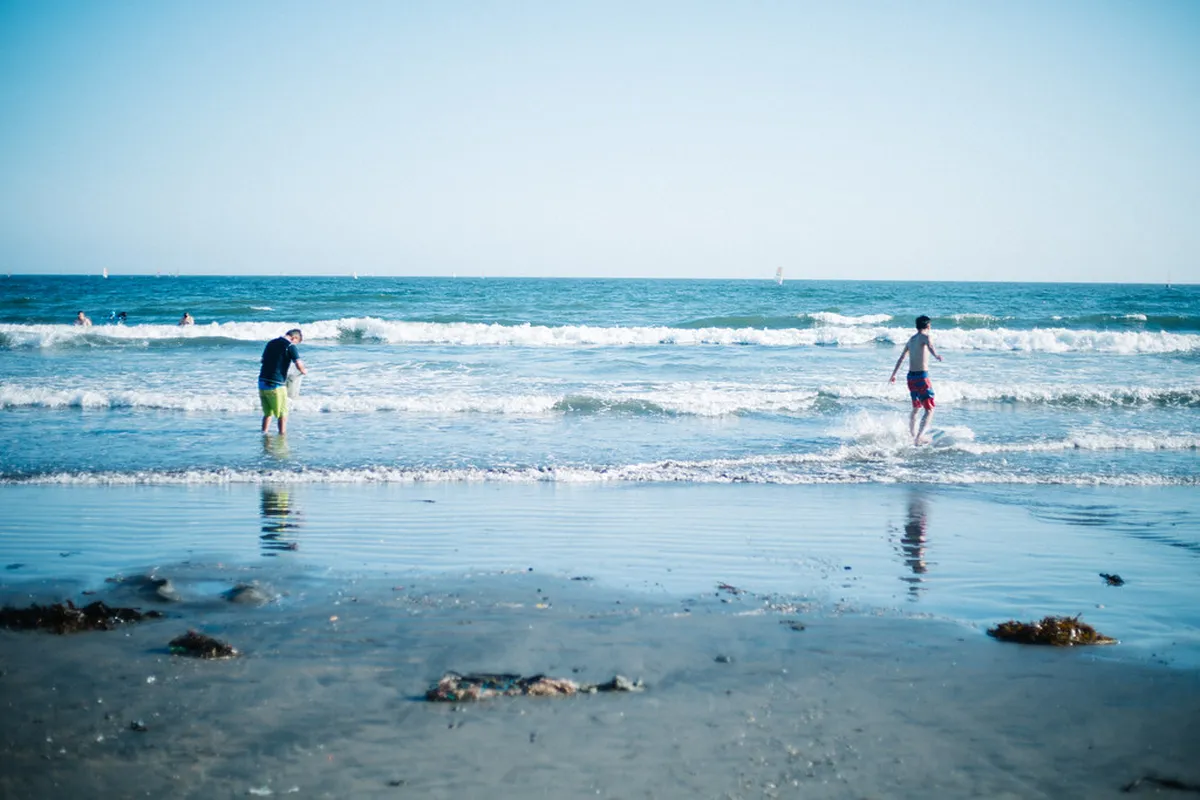
Yuigahama is the most family-accessible beach on the Kamakura coast, a flat 10-minute walk from Yuigahama Station on the Enoden.
Check the Sagami Bay tide table before visiting Yuigahama Beach. Low tide exposes a wide tidepool zone ideal for kids; high tide narrows the beach to a thin strip. Free tide charts are available at tide.gsi.go.jp.
Check the Sagami Bay tide table the night before you go. Yuigahama at low tide exposes a wide tidepool zone where small crabs and shellfish appear, which most parenting blogs miss entirely; high tide narrows the usable beach to a thin strip and pushes the surf zone within three meters of the seawall. The Japanese Coast Guard publishes free tide charts under "tide.gsi.go.jp" that work in any browser.
From early July through late August, temporary umi-no-ie beach huts line the sand offering shade, lockers, hot showers, and basic meals for around 1,500 yen per adult day pass. Bodyboard rentals run 1,500 to 2,000 yen per day at shops along Route 134; lessons for ages eight and up start around 5,000 yen for ninety minutes including the board.
Exploring Tsurugaoka Hachimangu Shrine
Tsurugaoka Hachimangu, founded in 1063 by Minamoto no Yoritomo's ancestor, is the cultural anchor of the city. The Dankazura is the raised pedestrian path that runs straight from the third torii gate to the shrine entrance, lined with cherry trees and benches every fifty meters. It is flat, paved, shaded, and the single most stroller-friendly approach in town; skip the parallel sidewalk on Wakamiya-oji and use the Dankazura.
The shrine grounds include the Genji and Heike ponds, two koi-stocked water gardens connected by red drum bridges that kids enjoy crossing. Buy a small bag of fish food for 100 yen at the pond-side kiosk; pigeon feeding has been discouraged since 2023 to reduce flock numbers around the gates.
Turn the temizuya purification basin into a kid-friendly ritual rather than rushing past it. The sequence is straightforward and works for ages four and up: pick up the wooden ladle in your right hand, pour water over your left, swap the ladle to your left and rinse your right, then cup water in your left hand to rinse your mouth, and finally tip the ladle upright so the remaining water rinses the handle. Walking children through the five steps once at the entrance gives them a job to do at every shrine for the rest of the trip. For a special memory, book a Kyoto Kimono Rental Wargo (Children's Kimono) session before your visit; the kids package runs around 2,900 yen for ages three to ten.
Essential Logistics: Strollers and Dining
If you would rather not lug your own gear from Tokyo, Kamakura Station's East Exit Tourist Information Center rents Aprica-style strollers for 500 yen per day with a passport or driver's license deposit. Service runs 09:00 to 17:00 and there are typically six units available; arrive before 11:00 on weekends because they regularly run out by lunchtime. Komachi-dori, the souvenir street stretching from the East Exit, is gentle on stroller wheels but turns into shoulder-to-shoulder traffic on weekends.
For meals, pick a kid-friendly room before everyone hits the wall. KAKAN KAMAKURA serves Chinese-fusion lunches with high chairs and a quiet back room (mains around 1,200 to 1,800 yen), and Gelateria Il Brigante four minutes from the station is the post-beach reward of choice. Our best restaurants in kamakura roundup covers more options including okonomiyaki, ramen, and pizza if your group needs variety.
Diaper-changing facilities are widely available. The Tokyu Store fifth-floor accessible restroom (two minutes from the East Exit), the McDonald's opposite the station, and Tsurugaoka Hachimangu's main precinct all have changing tables. Hasedera and Kotoku-in both added baby rooms in their visitor centers in 2024. The MamaPapaMap app maps every nursing room in Japan and works without a Japanese SIM.
Stroller rentals at the East Exit Tourist Information Center run out by 11:00 AM on weekends — only six units are available. Arrive before then or bring your own compact stroller.
- Stroller rental: Kamakura Station East Exit Tourist Information, 500 yen per day, passport deposit, 09:00 to 17:00.
- Coin lockers: 600 yen for medium size at both Kamakura and Hase stations; ample on weekdays, full by 11:00 on weekends.
- Family lunch: KAKAN KAMAKURA for Chinese-fusion with high chairs, Sometaro for okonomiyaki cooked at the table, Garden House next to Starbucks Onarimachi for pizza and a fenced terrace.
- Snack stops: Gelateria Il Brigante for gelato until 16:00, Romi-Unie for jam-and-biscuit gift boxes, Iwata Coffee for fluffy 880-yen pancakes.
Summer Heat and Crowd Survival
July and August in Kamakura push the heat index into the danger zone for small children, and the standard tourist routes along Wakamiya-oji and Komachi-dori bake without shade between 11:00 and 15:00. Three tactics keep the day workable. First, swap the standard "Kamakura Station to Kotoku-in" walk for the parallel route along Sasuke-dori and the Sasuke Inari forest path; you lose ten minutes but stay under tree canopy for almost the full leg.
Second, ride the Keikyu Bus from Kamakura Station East Exit to Daibutsu-mae instead of walking when temperatures clear 30C. The buses are aggressively air conditioned, run every ten minutes, and cost 200 yen per adult. Third, time the Great Buddha and Hasedera for first opening (08:00 and 08:00) when stone surfaces are still cool and queues are minimal, then retreat indoors to Kamakura Bunkakan or the Modern Art Museum during peak heat.
For weekend crowds during cherry blossom or hydrangea season, reverse the standard itinerary. Most day-trippers from Tokyo arrive at Kamakura Station, work outward to Kotoku-in, then return via Enoden. Land at Fujisawa instead, ride the Enoden inbound to Hase, hit Kotoku-in and Hasedera before lunch, and arrive at Tsurugaoka Hachimangu in late afternoon when most tour groups have departed. The reverse loop saves roughly forty minutes of queue time on a peak Saturday and gives kids the photogenic shrine in the gentlest light of the day.
Frequently Asked Questions
Is Kamakura stroller-friendly for families?
Yes, many parts of Kamakura are accessible with a stroller, especially the main roads and the Dankazura pathway. Some older temples have gravel paths or stairs, so a lightweight stroller is best. You can find more accessible spots in our guide to kamakura attractions.
Where can I find nursing rooms in Kamakura?
Nursing rooms are located in the Enoden Kamakura Station and several larger shopping complexes near the East Exit. Most major tourist sites like the Great Buddha also offer basic changing facilities. Look for the universal baby icon on local maps for quick directions.
What is the best beach in Kamakura for children?
Yuigahama Beach is the top choice for families due to its wide sandy shore and shallow waters. It features plenty of facilities like showers and restrooms during the summer season. The waves are generally calm, making it safer for younger children to play.
How long should a Kamakura trip with kids last?
A full day trip of 8 to 10 hours is usually sufficient to see the main highlights without rushing. If you want to include Enoshima Island, consider staying overnight in a local ryokan. This allows for a more relaxed pace and evening exploration.
Visiting Kamakura with kids is a rewarding experience that blends cultural education with outdoor fun and adventure. By planning your transport, choosing stroller-friendly routes, and timing the heat and crowds, you can ensure a stress-free day for the whole family. The memories of riding the Enoden train and seeing the Great Buddha will stay with your children for years to come.
Use our Kamakura attractions hub to plan the rest of your trip.
For related Kamakura deep-dives, see our Enoshima From Kamakura Day Trip Travel Guide and Yuigahama Beach Kamakura Guide guides.
Free: The Kamakura Essentials guide
Top things to do, where to stay, a perfect day plan, getting around, and the best time to go — a Kamakura mini-guide you can take offline.
You might also like


Continue reading
More guides you'll find useful