Kyoto Autumn Illumination 2026: Night Light-Up Guide by Temple
See the confirmed 2026 Kyoto autumn illumination dates, venue-by-venue hours and prices, and a two-venue-a-night plan for Higashiyama, Nijo Castle, and Kifune.
On this page
Last updated September 2026. Kyoto autumn illumination season runs from late October through mid-December, lighting temple gardens and one castle after sunset. Confirmed 2026 dates are already out for Kiyomizu-dera and Nijo Castle, and this guide covers hours, prices, and a two-venue-a-night strategy for Higashiyama, Kifune, and the Nijo–Toji corridor.
The 2026 Kyoto Autumn Illumination Forecast
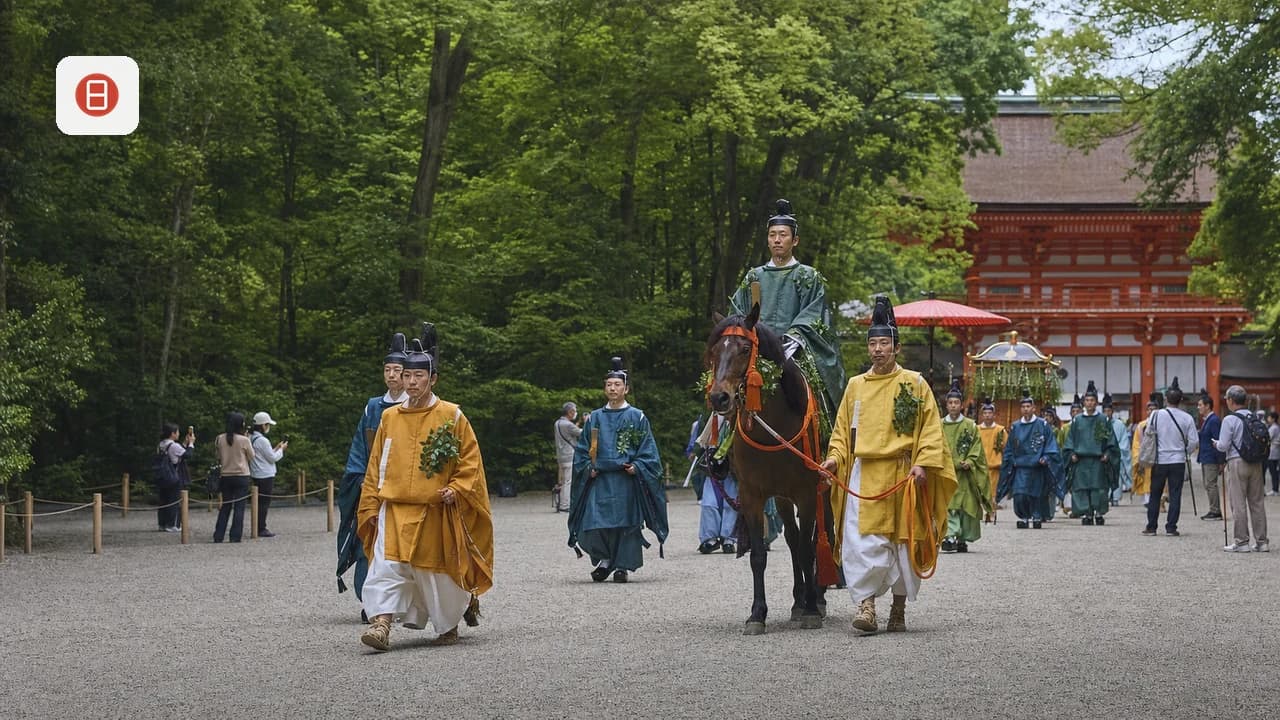
Kyoto's autumn light-up season opens in late October and runs through mid-December. The reddest maples and the biggest queues cluster into a shorter peak window: mid-November through early December. Two 2026 schedules are locked in already. Kiyomizu-dera has confirmed November 21–30, and the Nijo Castle NAKED projection event runs October 23 through December 5. Other temples typically confirm exact dates in early October, once the seasonal foliage forecast firms up. Check Kyoto's peak foliage forecast before booking flights around one weekend. Early risers can pair the season's opening with the Jidai Matsuri parade in late October. The Kurama Fire Festival also lands before peak foliage. Daytime highs can still reach 15°C (59°F) in late October. Once the mid-November-to-early-December peak sets in, illuminated evenings drop to roughly 5–8°C (41–46°F). For monthly detail, see Kyoto in October: Weather, Festivals, and Early Autumn Color (2026 Guide). Trips landing later should check Kyoto in November: Peak Foliage, Illuminations, and Crowd Timing (2026) instead.
| Window | Typical Nights | Crowd Level | Price Signal |
|---|---|---|---|
| Late Oct–early Nov (early season) | Mild, light jacket weather | Thinner queues, easier walk-up tickets | Kodai-ji entry from ¥600 |
| Mid-Nov–early Dec (peak season) | 5–8°C (41–46°F) | Longest queues, especially Kiyomizu-dera and Eikan-do after 19:00 | Nijo Castle NAKED weekend tickets up to ¥2,400 |
| Early–mid Dec (late season) | 5–8°C (41–46°F), colder after dark | Thinning crowds as venues wind down for the year | Same gate pricing, fewer sellouts |
Why Night Light-Ups Are Different: Yakan Tokubetsu Haikan and the Double-Admission Rule
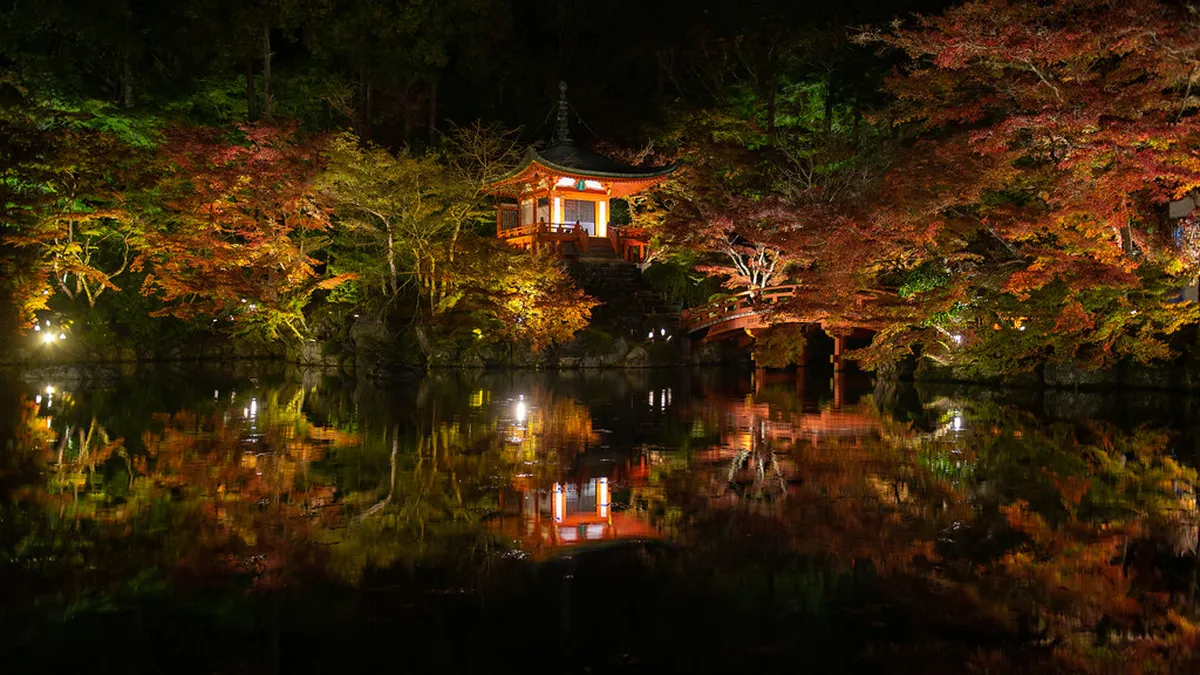
Temples call these evening openings yakan tokubetsu haikan, or special night viewing. Spotlights aimed up through the maple canopy change the color saturation entirely, and ponds like Eikan-do's Hoshoike turn into mirrors once the sun is down. A daytime visit and a night visit to the same temple are close to two different experiences. These evenings sit apart from Kyoto's usual daytime attractions circuit, and they reward planning a specific night around a specific temple. Several temples clear their grounds in late afternoon before reopening for the evening session. Around 16:30 the gates shut for changeover, then a fresh evening ticket line forms by 17:30. That means a daytime admission ticket does not carry over. Budget for two separate entries if you want both temple versions in one day.
Seven Illumination Venues to Build a Night Around
These seven venues form the core of the season, and each one plays a different role in a night out. Confirm each date on the temple's own site closer to your trip, since the yearly pattern repeats but exact dates shift. Higashiyama holds three of them within walking distance of each other, and the other four sit north, central, and south of the old city center.
Eikan-do closes entry at 20:30, but crowds surge after 19:00; plan arrival by mid-evening to skip peak congestion.
| Venue | Crowd Level | Price | Best For |
|---|---|---|---|
| Kiyomizu-dera | Heaviest of the seven | Normal admission (no separate evening rate) | The blue-searchlight view |
| Eikan-do (Zenrin-ji) | Long queue after 19:00 | ¥700 | Pond reflections |
| Kodai-ji | Moderate, spread across two gardens | ¥600 | Variety: projections plus pond |
| Toji | Lighter, good arrival-night pick | ¥1,000 adult / ¥500 child | Pagoda photography near the station |
| Nijo Castle (NAKED) | Moderate, timed by ticket slot | ¥1,600–¥2,400 | Projection mapping |
| Kifune Shrine & Eizan Railway | Heavy on weekends, calmer on weekdays | Free (train fare only) | Lantern approach and train-window maples |
| Kitano Tenmangu | Lighter than the Higashiyama venues | ¥1,200 (incl. tea and sweets) | River-reflected maple garden |
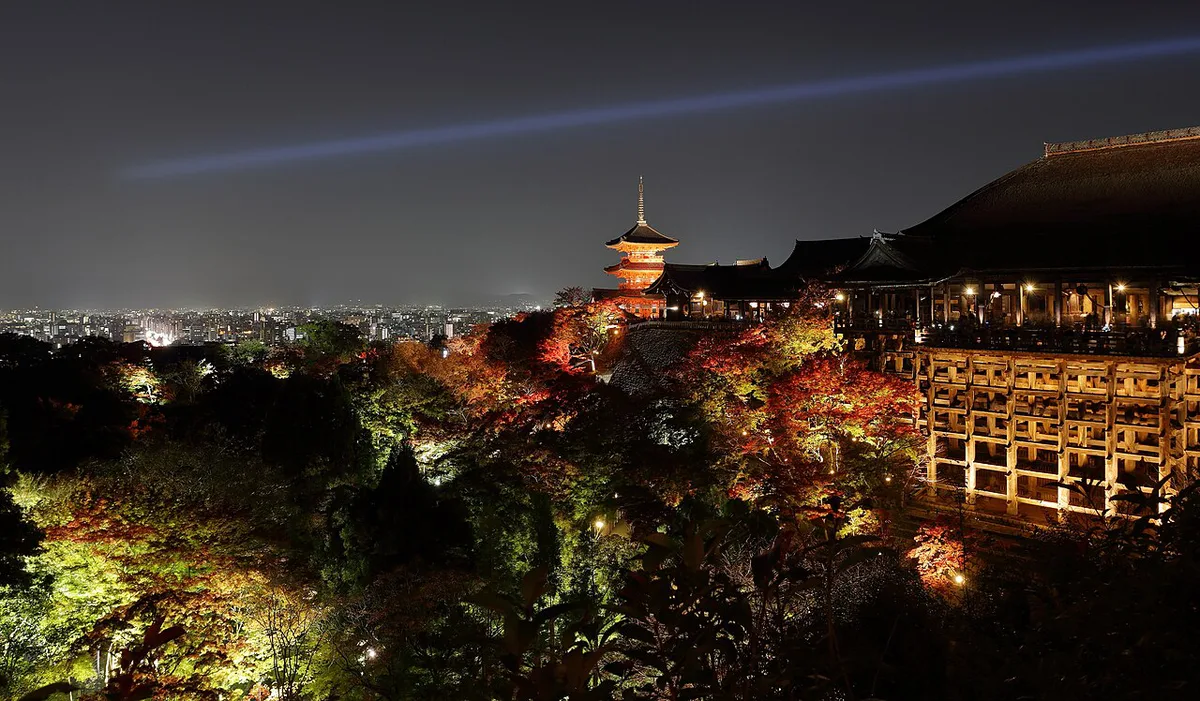
- Kiyomizu-dera — 2026 dates are November 21–30, open until 21:30 with last entry at 21:00. A single blue searchlight rises from the wooden stage over a sea of lit maples. Expect the heaviest queue of the seven.
- Eikan-do (Zenrin-ji) — ran November 15 to December 10 in its most recent season, 17:30–21:00 with last entry at 20:30, ¥700. Roughly 3,000 maple trees surround Hoshoike Pond, and the reflection is the reason to go. The queue swells hard by 19:00.
- Kodai-ji — ran October 24 to December 14 in its most recent season, daily 17:00–22:00 with last entry at 21:30, ¥600. Garden projections and the Otamaya Pond reflection give it more variety than a single-view temple. It's a 10-minute walk from Kiyomizu-dera via the Ninenzaka and Sannenzaka lanes.
- Toji — ran November 1 to December 14 in its most recent season, 18:00–21:30 with last entry at 21:00, ¥1,000 adult / ¥500 child. The five-story pagoda, reflected in Hyotan Pond, sits about 15 minutes on foot from JR Kyoto Station. It's five minutes from Toji Station on the Kintetsu line, and a practical pick for an arrival night.
- Nijo Castle (NAKED meets Nijo Castle) — confirmed for October 23 to December 5, 2026, 18:00–22:00 with last admission at 21:00. Projection mapping covers the Kara-mon gate and the Ninomaru Palace interiors. The 2026 theme marks 400 years since the Kan'ei Gyoko, the 1626 imperial visit staged at the castle.
- Kifune Shrine and the Eizan Railway maple tunnel — the shrine's illuminated season ran November 7 to 24 in its most recent year, dusk until 21:00, and it's free beyond train fare. The Eizan Railway's Maple Tunnel runs between Ichihara and Ninose stations. Kifune's lantern-lined approach steps are one of the more widely photographed scenes in autumn Kyoto.
- Kitano Tenmangu — ran November 1 to December 7 in its most recent season, from sunset until 20:00 with last entry at 19:40, ¥1,200 including tea and sweets. About 350 maple trees line both banks of the Kamiyagawa River through the shrine's Momiji Garden.
Plan Two Venues a Night: Higashiyama, Northern Kyoto, and the Nijo–Toji Loop
Five- and six-venue nights sound efficient, but they end in frustration. Queues and last-entry cutoffs make two venues the realistic ceiling. Group the seven venues into three clusters and give each its own evening. Spread these three nights across a stay of four or five nights, and pick where you sleep around them. The best areas to stay sit closer to Higashiyama and central Kyoto than to the northern hills.
- Higashiyama cluster: Kodai-ji from opening, then walk the Ninenzaka and Sannenzaka lanes up to Kiyomizu-dera before its 21:00 last entry.
- Northern Kyoto cluster: ride the Eizan Railway through the maple tunnel between Ichihara and Ninose, then continue to Kifune Shrine for the lantern-lit approach before its last light at 21:00. Hike the Kurama to Kibune trail in daylight first if you want to see the same hills without illumination.
- Central-south cluster: Toji's pagoda first on an arrival or departure night, or Nijo Castle's projection show if you've booked an online ticket, since both sit apart from Higashiyama and northern Kyoto.
Kyoto Autumn Illumination 2026 Tickets, Prices, and Booking Rules
Gate prices for 2026 run from free at Kifune to ¥2,400 for a peak-weekend Nijo Castle ticket once early-bird pricing sells out. Four of the seven — Kiyomizu-dera, Eikan-do, Kodai-ji, and Toji — have historically sold tickets at the gate on the night. Kitano Tenmangu operates the same way, and Kifune requires no ticket beyond ordinary train fare. Nijo Castle is the exception. Its NAKED event sells online in advance. Weekday tickets start around ¥1,600, and weekend early-bird tickets start from ¥2,000. Both rise once early-bird allotments sell through. Booking ahead on a weekday is the cheaper and calmer option of the two. Check dates and any last-minute closures against each temple's own site, or the Kyoto Travel events calendar, before you commit non-refundable hotel nights. The Japan National Tourism Organization site is a useful secondary check for any national-level travel advisories during peak season.
Nijo Castle operates October 23 through December 5 and requires advance online booking; weekend early-bird tickets start from ¥2,000 and rise to ¥2,400 as allocations sell.
Photography Without a Tripod: Handheld Settings for Night Maples
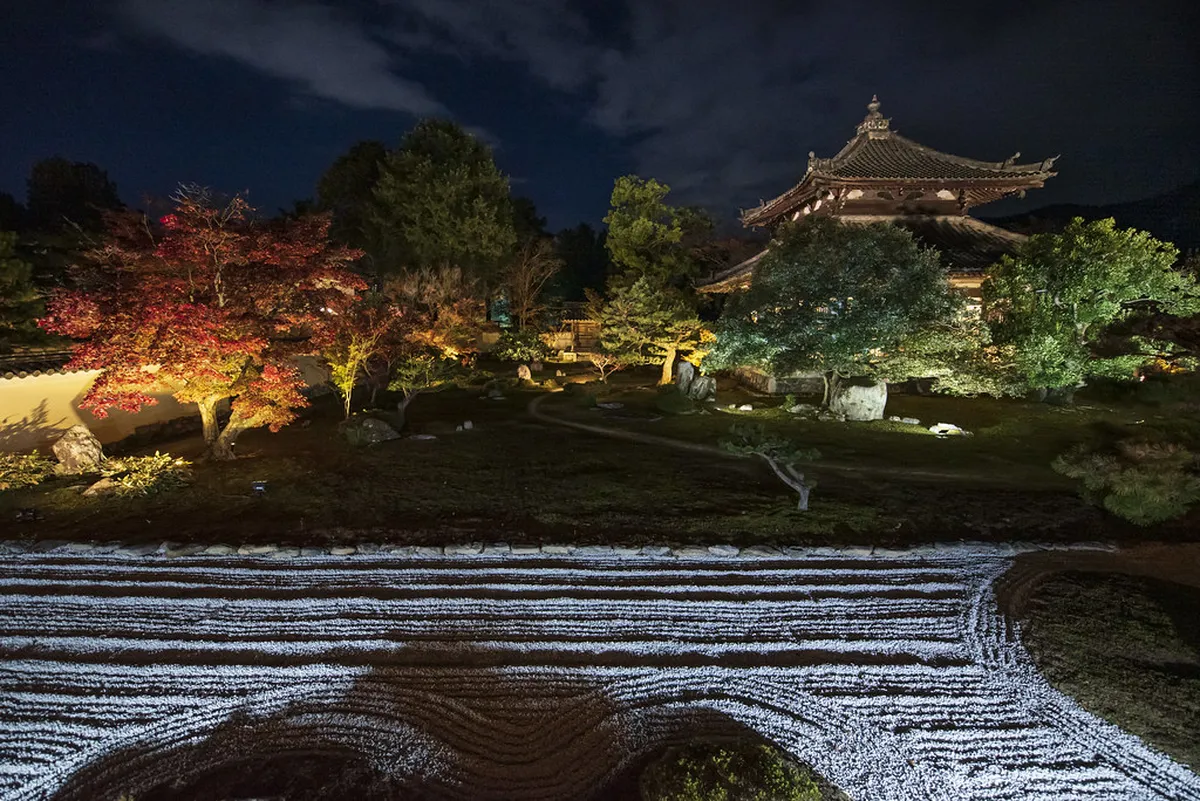
Nearly every venue on this list bans tripods and monopods, mainly for crowd safety on narrow paths after dark. Signage at the entrance settles it one way or the other. A few temples make exceptions in roped-off areas, but assume no tripod until you see otherwise. Handheld shooting after dark means raising ISO and slowing your shutter more than daylight habits allow. Start around ISO 1600 to 3200. Keep shutter speed no slower than 1/60 second. Open the aperture as wide as the lens allows. Brace against a railing or your own knee for extra stability, and switch off flash entirely. None of these temples want a flash going off over a reflecting pond. Pond reflections at Eikan-do and Kodai-ji shoot best from a low angle once the lights come on. Toji's pagoda reads strongest from across Hyotan Pond rather than close up.
Common Mistakes That Ruin an Illumination Night
A handful of avoidable mistakes account for most bad nights out during illumination season.
- The dinner trap: restaurants near Kiyomizu-dera and Kodai-ji book out or close early. Eat by 17:00 before you head up, or plan a later dinner after 21:00 in Gion or Kawaramachi once the crowds thin.
- Underdressing: illuminated evenings during peak season run 5–8°C (41–46°F), colder again in the northern hills around Kifune and Kurama. Bring a real jacket, not just a sweater. Check Kyoto's month-by-month weather before packing for a specific week.
- Riding the bus between 17:00 and 19:00: this is Kyoto's worst traffic window, and Higashiyama buses crawl. The subway plus a short walk is faster and more predictable at night.
- Arriving right at opening: the first thirty minutes after gates open are often the busiest. Arriving closer to the middle of the evening window, well before last entry, tends to move faster.
- Skipping the day-to-night ticket gap: the 16:30 changeover at some temples means a daytime ticket will not get you back in for the evening session.
When the Lights Go Out: Kyoto's Transition to Winter
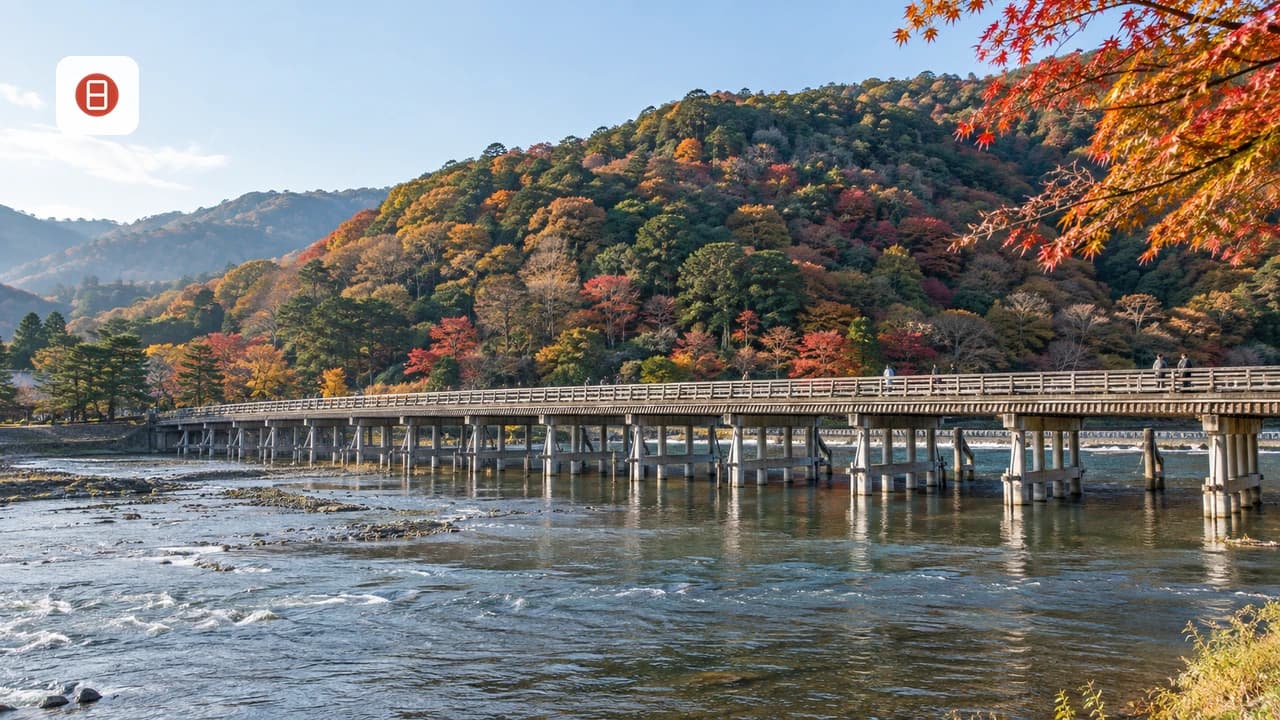
Kyoto's temple illuminations wind down through the first half of December as the last maples drop, with Toji and Kodai-ji among the last to close for the year. Once the season ends, Kyoto in Winter: 8 Best Things to Do & Travel Guide turns quieter, colder, and cheaper for hotels, with an occasional dusting of snow on temple roofs in January. Note that the Kyoto Botanical Garden's LIGHT CYCLES KYOTO installation, once floated as a non-temple alternative, closed permanently on March 31, 2026. Nijo Castle's projection-mapped event is the closest remaining large-scale light show once the maple-focused temple illuminations finish. If you're still weighing when to fly in, the Best Time to Visit Kyoto: Monthly & Seasonal Guide (2026) guide lays out how autumn compares with cherry-blossom season and the quieter winter months. Daytime detours to Arashiyama's autumn leaves fill out a trip built mostly around evenings. The Ohara temple gardens work the same way for a northern-Kyoto day before a Kifune night.
Getting to Kifune Without the Evening Bus Gridlock
For a Kifune illumination night, use trains for most of the journey. From Gion-Shijo or Sanjo, take the Keihan Line north to Demachiyanagi. This avoids the slow buses leaving central Kyoto during the evening rush.
At Demachiyanagi, transfer to the Eizan Railway Main Line toward Kibuneguchi. The Maple Tunnel lies between Ichihara and Ninose stations. Check the seasonal timetable because some departures slow through the illuminated section.
- Keihan Line: central Kyoto to Demachiyanagi
- Eizan Railway: Demachiyanagi to Kibuneguchi
- Kyoto Bus 33: Kibuneguchi Station to the Kibune stop near the shrine approach
The final bus is short, but its frequency can be limited after dark. Check the return timetable before walking up the lantern-lined steps. If you miss the bus, the walk between Kibuneguchi Station and Kifune takes roughly 25 to 30 minutes along the road. Leave Kifune with enough time to catch the Eizan Railway back to Demachiyanagi, then head to Gion or Kawaramachi for a late dinner.
Frequently Asked Questions
When exactly is the Kyoto autumn illumination 2026 season?
Most venues run somewhere between late October and mid-December, with the heaviest color and the biggest crowds from mid-November to early December. Kiyomizu-dera has confirmed November 21–30, and Nijo Castle's NAKED event runs October 23 through December 5. Other temples typically publish exact 2026 dates in early October.
Does a daytime temple ticket cover the evening illumination?
Usually not. Several temples clear the grounds around 16:30 and reopen for a separate evening session around 17:30, which means a fresh ticket. Budget for two admissions if you want to see a temple by day and by light-up.
Can I bring a tripod to photograph the illuminations?
Assume no. Nearly every venue on this list bans tripods and monopods for crowd safety on narrow, dark paths. Raise your ISO and brace against a railing instead.
How cold does it get during illumination season?
Illuminated evenings during peak season sit around 5–8°C (41–46°F), and colder again in the northern hills around Kifune and Kurama. Bring a proper jacket, not just a light layer.
Which venues are walk-up only, and which need advance booking?
Four of the seven — Kiyomizu-dera, Eikan-do, Kodai-ji, and Toji — have historically sold tickets at the gate on the night. Kitano Tenmangu operates the same way, and Kifune needs no ticket beyond ordinary train fare. Nijo Castle's NAKED event is the exception: book that one online in advance, ideally for a cheaper weekday slot.
Can illuminations be combined with other autumn events?
Late October overlaps with entries on Kyoto's festival calendar, including Jidai Matsuri and the Kurama Fire Festival. Both land before peak foliage, so they pair well with an early-season illumination trip.
Free: The Kyoto Essentials guide
Top things to do, where to stay, a perfect day plan, getting around, and the best time to go — a Kyoto mini-guide you can take offline.
You might also like

Continue reading
More guides you'll find useful