Arashiyama Autumn Leaves 2026: Peak Dates, Best Spots & Crowd Tips
Plan your Arashiyama autumn trip with 2026 peak foliage timing, Momiji Festival dates, and a strategy to beat the crowds at Kyoto's top fall destination.
On this page
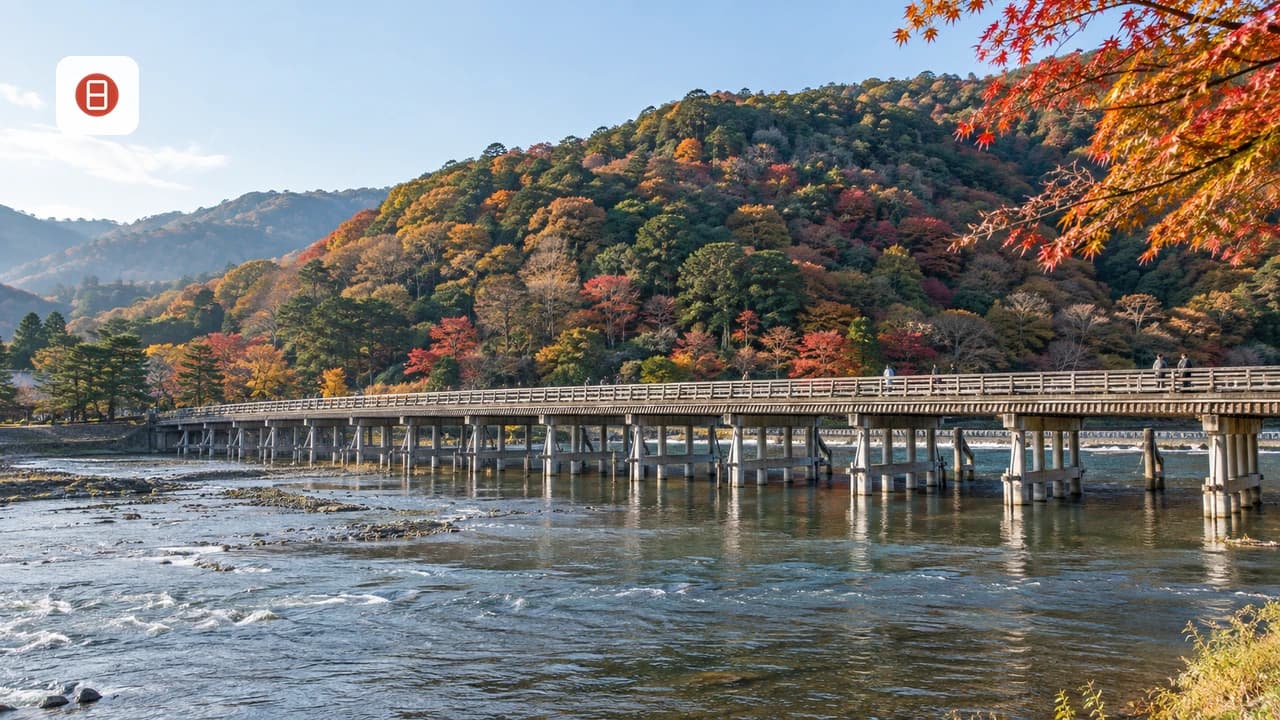
Last updated September 2026. Arashiyama autumn leaves turn the maple-covered hills behind Togetsukyo Bridge into a red-and-gold backdrop over the Katsura River, typically peaking from late November into early December. This guide covers the 2026 timing, the temple circuit worth the entry fee, and the arrival-time tactics that separate a calm morning from a bottleneck at the Kyoto Autumn Foliage: 10 Best Places and Planning Tips's most photographed stop.
Arashiyama Autumn Leaves 2026: The Fast Answer
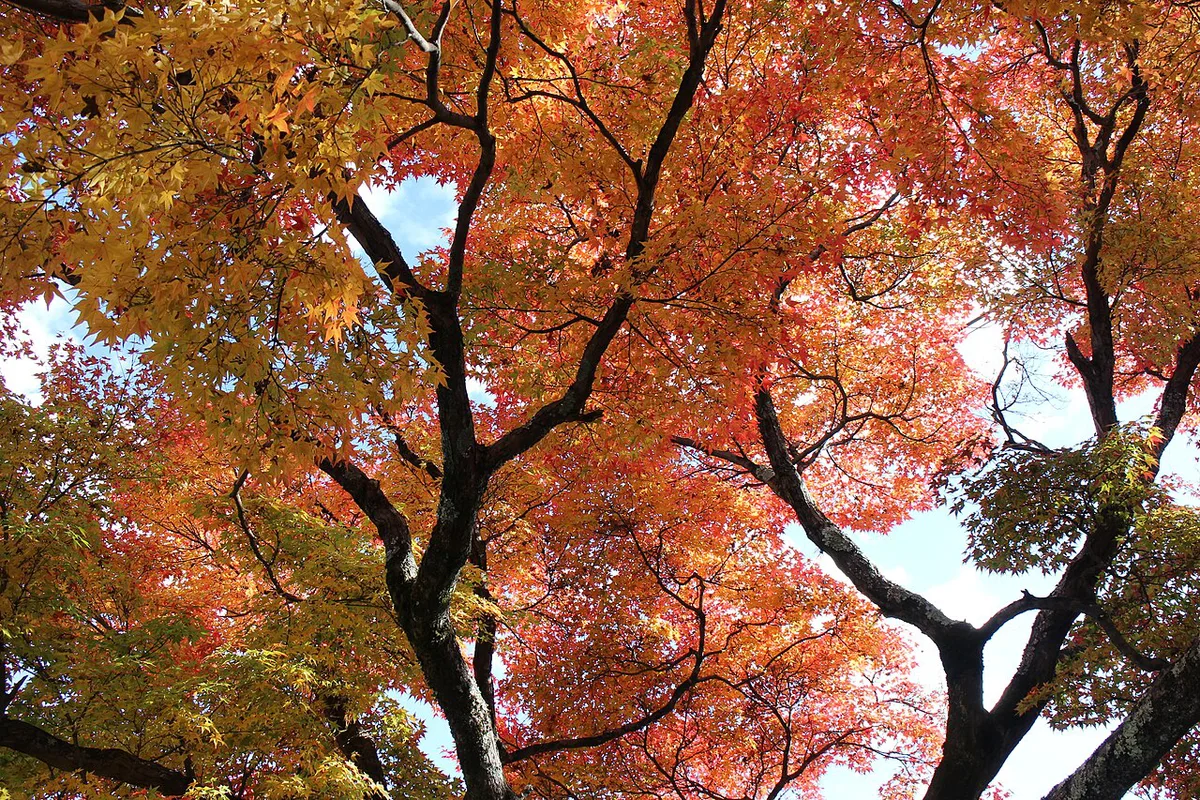
Peak color at Arashiyama typically falls from late November into early December, based on the multi-year pattern tracked by the Kyoto Official Travel Guide. Color usually begins changing in mid-November, and a warm autumn can push the brightest days toward early December. Treat late November as a target window, not a fixed date. Arashiyama earns its reputation as Kyoto's single most-photographed autumn district because the view compounds at every scale. Mount Arashiyama's maple-covered slope rises behind Togetsukyo Bridge, the Katsura River runs underneath it, and a dense temple circuit gives close-up color for a full day on foot. Pair that 2026 timing with the month-by-month detail in Kyoto in November: Peak Foliage, Illuminations, and Crowd Timing (2026). For the wider seasonal comparison across the whole city, check the Best Time to Visit Kyoto: Monthly & Seasonal Guide (2026). Routing Arashiyama into a longer Japan trip? The Japan National Tourism Organization tracks the same countrywide foliage season. Arashiyama also sits alongside the rest of the city's sights in the 20 Best Kyoto Attractions in 2026 guide, useful if autumn leaves are just one stop on a bigger itinerary.
| Spot | Best For | Entry Fee | Crowd Level |
|---|---|---|---|
| Togetsukyo Bridge | The classic bridge-and-mountain photo | Free | Extreme, all day |
| Sagano Bamboo Grove | Scale and light, not fall color | Free | Extreme after 9am, quiet before 8:30am |
| Tenryuji Temple | UNESCO garden plus vegan lunch | ¥600 | Heavy |
| Arashiyama Park Observation Deck | Free panoramic valley view | Free | Moderate, lighter on the second platform |
| Okochi Sanso Villa | Quiet garden with tea included | ¥1,000 | Light to moderate |
| Jojakkoji Temple | Pagoda framed by maples | ¥500 | Light |
| Nison-in Temple | Maple-lined Momiji-no-Baba approach | ¥500 | Light |
| Hogon-in Temple | Seasonal daytime and night illumination | ¥700 day / ¥1,000 night | Light |
Arashiyama Autumn Season Comparison: October Through December
Match your travel dates against this table before locking in flights. Daytime highs cool steadily across the season, so October's mild afternoons give way to near-freezing mornings by mid-December. Standard daytime entry to Rokuoin Temple runs ¥600, but its reserved evening illumination during the peak color weeks jumps to ¥3,500 including tea and sweets. That gap shows how sharply demand pricing moves once the maples turn, and it works as a useful benchmark for budgeting any of Arashiyama's other after-dark events. Cross-check Kyoto Weather By Month: 14 Essential Seasonal Insights for exact averages across your specific travel dates.
| Period | Foliage Stage | Crowd Level | Typical Daytime / Overnight Temps |
|---|---|---|---|
| Early-mid October | Green, no color change yet | Light | 22°C (72°F) days, 14°C (57°F) nights |
| Late October-early November | First color at higher elevations | Moderate, rising | 18°C (64°F) days, 10°C (50°F) nights |
| Mid-November | Approaching peak, Momiji Festival week | Heavy | 15°C (59°F) days, 7°C (45°F) nights |
| Late November-early December | Peak color across the valley | Extreme, weekend gridlock | 12°C (54°F) days, 5°C (41°F) nights |
| Mid-December | Past peak, leaves thinning | Light again | 9°C (48°F) days, 3°C (37°F) nights |
Getting to Arashiyama: JR, Hankyu, and Randen
JR San-In Line trains connect Kyoto Station to Saga-Arashiyama Station in about 17 minutes, the fastest option if you already hold a JR Pass. Departures run frequently through the day, so waits between trains stay short even during peak season. Saga-Arashiyama Station puts you a short walk from Tenryuji and the bamboo grove entrance, which matters once you are racing the day's crowds. Travelers based in central Kyoto or Gion often prefer the Hankyu Kyoto Line or the Randen (Keifuku) tram instead, since both skip a transfer back through Kyoto Station. Randen's Arashiyama terminus sits closer to the riverside path and the Kimono Forest installation than the JR station does. If you have not picked a base yet, the 9 Best Areas to Stay in Kyoto Travel Guide (2026) guide breaks down which neighborhoods put you closest to this side of the city. Arrive before 8:30am and Sagano Bamboo Grove is close to empty. Arrive after 10am on a November weekend and you are shuffling through a corridor of a thousand strangers. That same early start also gets you a clear shot of Togetsukyo Bridge before tour groups fill the frame, so treat a 7:30am departure from your hotel as the real strategy, not the temples' posted opening hours.
JR's 17 minutes from Kyoto Station makes an early arrival feasible, unlike buses caught in November traffic that take well over an hour.
The Classic Arashiyama Circuit: Bridge, Bamboo, and Tenryuji
Togetsukyo Bridge is the anchor shot of the trip, a 150-meter span (about 490 feet) over the Katsura River with Mount Arashiyama's maple slope rising directly behind it. Afternoon light backlights the maples from across the water for the cleanest photos. Mornings favor the bridge itself instead, since crowds have not arrived yet. Tenryuji charges ¥600 entry and centers on the Sogenchi Pond garden, a UNESCO World Heritage detail that predates most of Kyoto's surviving temple gardens. Budget close to an hour here to walk the full pond loop rather than glance at it from the veranda. Tenryuji also runs an on-site vegan lunch service, referred to in visitor reports as Shiboku, worth timing around if you want a sit-down break mid-circuit. Sagano Bamboo Grove sits at one of Tenryuji's exits and rewards a visit for scale and light, not for autumn color. Its stalks stay green year-round, so treat it as a separate photo subject from the maples rather than a foliage stop. Arashiyama Park's Kameyama-area observation deck is the best free view of the Hozugawa river valley, open 24 hours a day, year-round. Most visitors stop at the main platform and turn back. A second, quieter platform sits a few steps to its right, overlooking the same gorge with a fraction of the people. Turn away from the river at the main deck and the city stretches toward Mount Hiei, which rises 848 meters (2,782 feet) on the Kyoto-Shiga border.
Quiet Retreats: Where to Escape the Crowds
Four stops reward their entry fee with real breathing room, even during the last week of November. Okochi Sanso Villa costs ¥1,000 to enter, and that fee works as a built-in crowd filter since it includes green tea and a sweet you sit down to enjoy. Actor Okochi Denjiro built the villa as his private residence, and its garden opens onto a panoramic view over the river and city. Give it at least an hour. Rushing through defeats the point of paying for a slower pace. Jojakkoji Temple costs ¥500 and sits partway up Mount Ogura, with a wooden pagoda visible through the maples from its rear observation point. Crowding tends to cluster right at the entrance gate, since that is usually visitors photographing the gate rather than a line for tickets. Nison-in also charges ¥500 and is known for its Momiji-no-Baba, the maple-lined approach whose name translates roughly to Maple Horse Track. That approach is wider than most temple paths in Arashiyama, so an afternoon crowd spreads out rather than bottlenecking at the gate. Hogon-in opens only for seasonal special viewings, typically running from early October through mid-December, with daytime entry priced at ¥700. A separate evening illumination ticket, priced at ¥1,000, runs on selected nights from mid-November through early December, and timing your visit around its opening window matters more here than at any other stop on this list. For the fuller picture of Kyoto's temple light-up season, see the Kyoto Autumn Illumination 2026: Night Light-Up Guide by Temple guide.
Arashiyama Momiji Festival 2026
Arashiyama's Momiji Festival is tentatively scheduled for Sunday, November 8, 2026, the second Sunday of the month, following the date pattern regional guides have used in recent years. Boats carrying performers in Heian-period court dress depart from near Togetsukyo Bridge and drift along the river through the morning and into early afternoon. Taiko drumming and koto music accompany the boats from the riverbank. Origins trace back to the Heian-period custom of admiring red maples from the water, which is why boats and court costumes remain part of the format today. Claim a spot on the riverbank near the bridge by mid-morning for a clear sightline to the boats, rather than a view blocked by the day's regular bridge foot traffic. Confirm the exact date and schedule on the city's event listings closer to November, since festival dates shift slightly year to year and are usually finalized only a few months out. This festival is one entry point into Kyoto's autumn festival season. If you are stretching a trip across several weeks, October also brings the Jidai Matsuri procession. The Kurama Fire Festival runs even earlier the same month.
Trains, Boats, and Rickshaws: Arashiyama's Seasonal Experiences
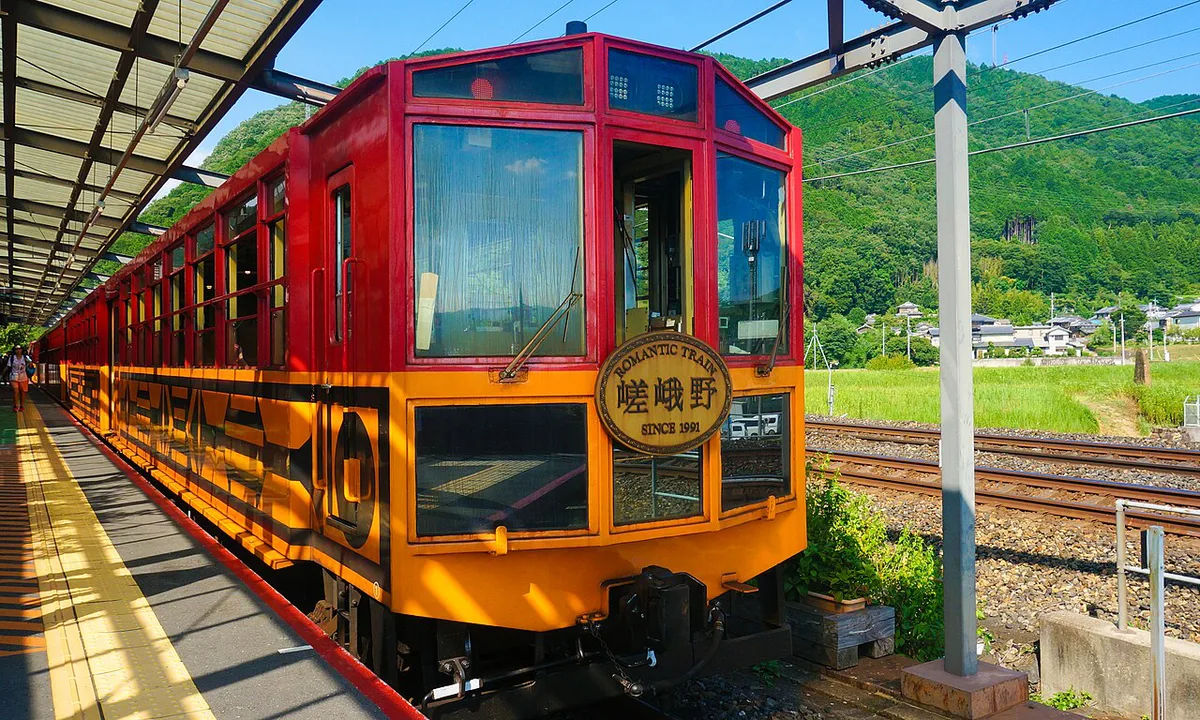
Sagano Romantic Train cars run along the Hozugawa river gorge for about 25 minutes, with adult tickets priced at ¥880 and children's tickets at ¥440. Seats sell out weeks in advance during peak color, so book online or at the ticket window as soon as your dates are fixed. A nighttime Illuminated Fantasy Train run is also available in season, lighting the gorge and the opposite bank after dark. A Hozugawa River boat ride offers a roughly two-hour drift downstream from Kameoka to Arashiyama, guided by boatmen using poles and oars rather than an engine. It is a slower, quieter way to see the same gorge the train runs alongside. Departure points are easiest to find by following signage upstream of Togetsukyo Bridge. Rickshaw tours run in blocks of 30, 70, 120, or 180 minutes, with English-speaking pullers who typically double as informal photographers along the route. They suit travelers with limited mobility or anyone who wants the classic photo without walking the full circuit. Expect rates well above the Sagano Romantic Train's ¥880 fare, given the private, guided format. Check current per-block pricing directly with operators near the bridge, since it varies by company and season.
Efficiency Half-Day Itinerary for Arashiyama
Both plans below assume peak-season crowd levels, so shift the wake-up time later if you are visiting in early-to-mid November instead. Pick this version if you are tight on time or already crowd-fatigued from central Kyoto.
- 7:30am - Arrive at Saga-Arashiyama or Randen Arashiyama Station and walk straight to Sagano Bamboo Grove before the day's tour groups.
- 8:00am - Photograph Togetsukyo Bridge in the morning light with minimal foot traffic.
- 8:30am - Enter Tenryuji at opening for the Sogenchi Pond garden.
- 10:00am - Climb to Arashiyama Park's observation deck, including the quieter second platform.
- 11:30am - Head back toward the station, or continue on to Okochi Sanso if time allows.
Slow Burn Full-Day Itinerary for Arashiyama
Choose this version if Arashiyama is the highlight of the trip rather than one stop among several. Pair it with a second morning at the Ohara Sanzen-in autumn guide rather than adding both to the same day. Travelers who want a hiking day instead of another temple circuit can substitute the Kurama to Kibune hike for day two.
- 7:30am - Same early start through Sagano Bamboo Grove and Togetsukyo Bridge.
- 9:00am - Work through Tenryuji, Okochi Sanso, Jojakkoji, and Nison-in in sequence, since they sit within a short walk of each other.
- 1:00pm - Break for yudofu or a riverside lunch before the afternoon light softens.
- 2:30pm - Walk north to Daikakuji, where 2026 entry runs ¥800 for the main hall area and ¥500 for the Osawa Pond area, both quieter than the bridge-side temples.
- 5:30pm - Return for Hogon-in's evening illumination if it is running that week, or ride the Sagano Romantic Train back through the gorge at dusk.
Practical Planning: Food, Mistakes, and Rainy Days
Yudofu, simmered tofu served in a clay pot, is Arashiyama's signature dish and appears on set-lunch menus throughout the temple district. Street food stalls cluster near Randen Arashiyama Station, useful for a fast bite between temples rather than a sit-down meal. Taking a bus from Kyoto Station to Arashiyama during peak color is the single biggest planning mistake visitors make. Bus routes funnel through the same surface streets as private cars and tour coaches, and November traffic can turn a 30-minute ride into well over an hour. Trains do not sit in that traffic, which is the real reason JR, Hankyu, and Randen routes outperform the bus by such a wide margin in November. Rain thins the crowds and adds mist across the mountain slope behind Togetsukyo Bridge, which is its own kind of photograph. Pack a compact umbrella and waterproof shoes rather than canceling plans, since temple gardens and the observation deck stay open and are often quieter in wet weather. Mornings can sit near 5°C (41°F) while afternoons climb toward 15°C (59°F), so layering matters more than any single jacket choice. Some visitors shift the trip earlier into October for thinner crowds and milder color. Others push later into Kyoto's early winter stretch instead, trading peak saturation for open space.
Late-November mornings hover near 5°C (41°F) while afternoons reach 15°C, a swing steep enough to require layering—much sharper than October's milder range.
Frequently Asked Questions
Is Arashiyama worth visiting during autumn despite the crowds?
Yes, if you build in the crowd-avoidance tactics rather than treating them as optional. Arriving before 8:30am, prioritizing entry-fee gardens like Okochi Sanso and Hogon-in, and saving Togetsukyo Bridge for early morning or late afternoon light all cut down on the density most visitors complain about. The color itself, spread across a UNESCO temple garden, a river valley, and a maple-lined temple approach, is not something a shoulder-season visit fully replicates.
How much time do you need for Arashiyama in autumn?
Plan on a minimum of four to five hours to cover Togetsukyo Bridge, Sagano Bamboo Grove, and Tenryuji without rushing. Add the quiet retreats and a full day becomes the realistic target. That list includes Okochi Sanso and Jojakkoji, plus Nison-in and Hogon-in. Travelers adding North Sagano's Daikakuji or a Sagano Romantic Train ride should budget a full day starting by 7:30am.
What is the best station for Arashiyama autumn leaves?
Saga-Arashiyama Station on the JR San-In Line is the fastest option, about 17 minutes from Kyoto Station and convenient for a JR Pass. Randen Arashiyama Station works better if the Kimono Forest or the riverside path are also on your list, since it sits closer to both. Either station puts you within walking distance of Togetsukyo Bridge and the start of the temple circuit.
When exactly is peak season in Arashiyama in 2026?
Based on the historical pattern, expect the brightest color from late November into early December 2026, with color starting to shift in mid-November. A warmer autumn can push the peak toward the first week of December, so treat any single date as a target rather than a guarantee. Check the Kyoto Official Travel Guide's autumn leaves calendar closer to the season for real-time color-stage updates.
Is the Sagano Bamboo Grove good for autumn color, or is it a separate stop?
Sagano Bamboo Grove is a separate stop from the maple viewing, not part of it. Its stalks stay green through every season, so the autumn appeal is about scale, light, and the sound of stalks moving in the wind rather than color. Pair it with Tenryuji, which sits at one of its exits, so the walk between the two takes only a few minutes.
Free: The Kyoto Essentials guide
Top things to do, where to stay, a perfect day plan, getting around, and the best time to go — a Kyoto mini-guide you can take offline.
You might also like


Continue reading
More guides you'll find useful