Tori-no-Ichi 2026: A Guide to Tokyo's Lucky Rake Festival
Tori-no-Ichi 2026 falls on Nov 7 and Nov 19 in Tokyo. Compare the Asakusa and Shinjuku shrines, kumade rake prices, and timing tips to dodge the crowds.
On this page
Last updated September 2026. Tori no ichi is Tokyo's November rooster-day fair, held at shrines citywide to pray for good fortune and business prosperity. In 2026 it falls on just two nights, November 7 and November 19, since the calendar has no third rooster day this year.
What Is Tori-no-Ichi, Tokyo's Rooster-Day Fair?
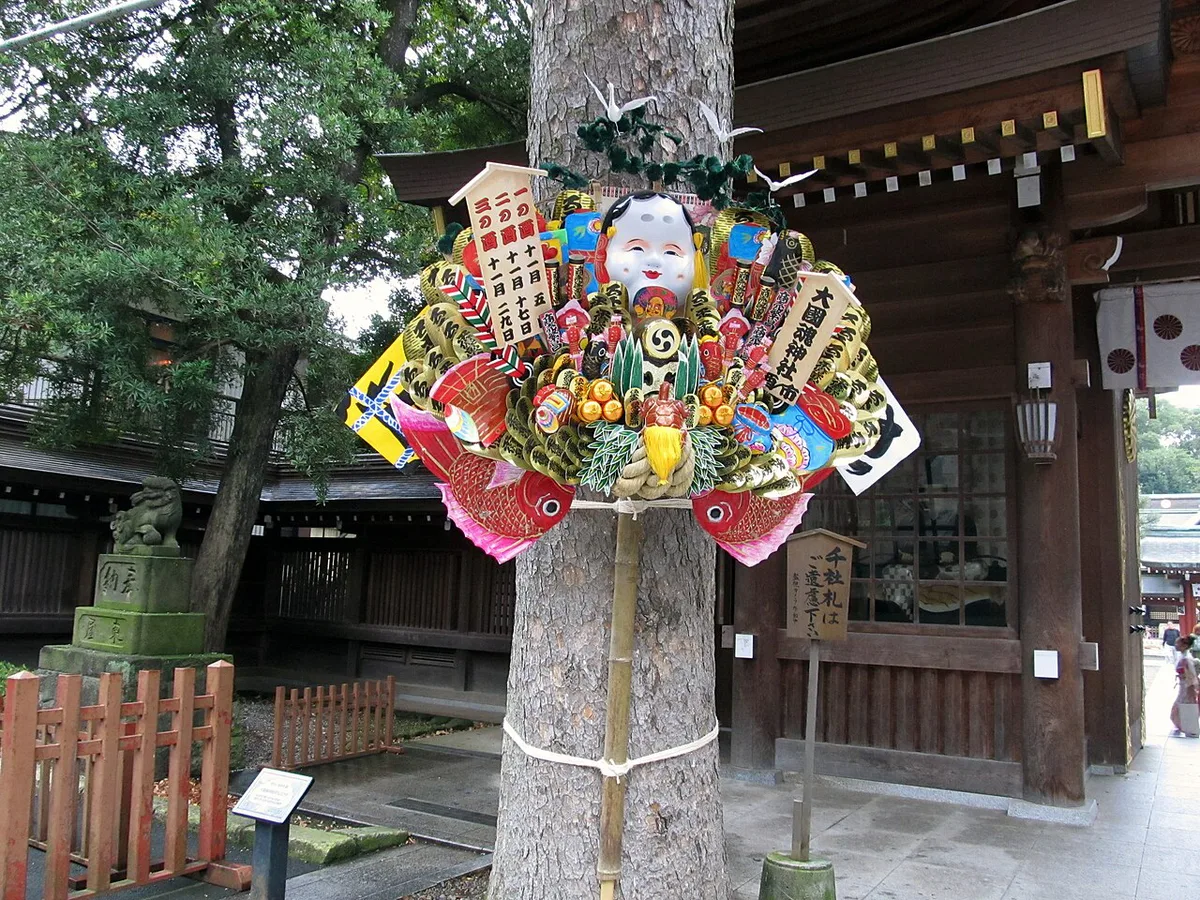
Tori-no-Ichi is a rooster-day fair held at shrines and temples across Tokyo on two or three Days of the Rooster each November, a tradition that traces back to the Edo period, a stretch of Japanese history running from the early 1600s into the mid-1800s. The fair takes its name from the rooster, the tenth sign of the Japanese zodiac and a symbol tied to gain and business fortune. Visitors come to pray for good luck and business prosperity for the year ahead. The signature item is the kumade, a bamboo rake decorated with gold coins, masks, and lucky charms meant to rake in wealth. Vendors seal every kumade sale with tejime, a sharp, rhythmic hand-clap performed by the whole sales team. It's one of the highlights on any list of Tokyo's November events. It also earns a spot on longer Tokyo attractions itineraries for travelers visiting in late autumn.
- Dates: Saturday, November 7 and Thursday, November 19, 2026
- Hours: midnight to midnight on both days
- Entry: free at every venue
- Main shrines: Otori Shrine and Chokoku-ji Temple in Asakusa; Hanazono Shrine in Shinjuku
Tori-no-Ichi 2026 Dates: Ichi-no-Tori and Ni-no-Tori
Rooster days come from the old lunar calendar and repeat roughly every 12 days, so the fair never lands on a fixed date. Some years bring three rooster days; 2026 has only two. Ichi-no-Tori, the first rooster day, falls on Saturday, November 7, 2026. Ni-no-Tori, the second, falls on Thursday, November 19, 2026. Hanazono Shrine also holds a smaller eve festival on November 6, the night before Ichi-no-Tori. Without a third rooster day this year, both nights draw heavier crowds than a typical three-day year. Because the cycle resets annually, a year with two rooster days can easily be followed by one with three, so always check the current year's dates rather than assuming this year's schedule repeats. Confirm the schedule closer to your trip through Tokyo's official tourism guide, since exact hours can shift year to year.
Best Time to Go: A 24-Hour Crowd Guide
Each Tori-no-Ichi fair runs a full 24 hours, opening at midnight with the ceremonial Ichiban Taiko drum. In past years, shrines have also held a separate pre-dawn ritual that requires advance registration to watch, so check shrine notices close to the date if that interests you. Crowds build and thin in predictable waves across the day. Early morning, roughly 3 AM to 10 AM, gives the clearest view of the rake displays and the best light for photography. The afternoon window from 3 PM to 5 PM works well for families, arriving before the after-work rush. After dark, especially from 7 PM to 11 PM, lantern light and crowd noise take over, and the fair feels like a different event entirely.
Plan 3 AM to 10 AM for the calmest viewing experience; with only November 7 and November 19 available in 2026, these windows fill quickly.
| Time | What to Expect |
|---|---|
| Midnight - 2 AM | Ritual opening, high energy, heavy crowds |
| 3 AM - 10 AM | Calmest window, best for photographing the kumade |
| 3 PM - 5 PM | Family-friendly stretch before the evening rush |
| 7 PM - 11 PM | Peak crush; hardest time to see the rakes clearly, but the atmosphere peaks |
Day vs Night: What You'll Actually See
The mood of Tori-no-Ichi shifts completely depending on when you show up. Morning visitors can walk right up to the stalls and study the gold koban coins, Okame masks, and tiny sake barrels wired onto each kumade in full detail. By evening, paper lanterns replace daylight, smoke drifts from the yakisoba grills, and the crowd thickens enough that getting a clear look at any single rake takes patience. Neither version is better, exactly. Daytime rewards close inspection and easy photos; nighttime rewards atmosphere, noise, and the sheer density of people chasing luck at once. If your schedule allows two visits, one in daylight and one after dark shows two very different sides of the same fair.
Asakusa, Shinjuku, or Fuchu: Choosing Your Shrine
Asakusa's Otori Shrine and the adjoining Chokoku-ji Temple host the original and largest fair, ringed by more than 800 food stalls. Both sit in the Senzoku area of Taito City, just steps apart. Chokoku-ji dates to 1630; Otori Shrine split off from it in 1868, after a government order separated Buddhist and Shinto practice nationwide. Its altar enshrines a statue of Washimyoken Bodhisattva, known locally as Otori-sama and said to bring fortune, standing on the back of an eagle. Skip Asakusa Station for this one; that's a 15 to 20-minute walk through dense crowds. Iriya or Minowa Station, both on the Hibiya Line, put you about 10 minutes from the shrine instead. Afterward, Hoppy Street's old-school bars sit a short walk away for a nightcap. Shinjuku's Hanazono Shrine is smaller but far more convenient, a few minutes' walk from Shinjuku-sanchome Station and close to Kabukicho and Golden Gai. Hanazono also keeps its Misemono Goya sideshow tents, a rare survival from older matsuri. Travelers who want to skip the central Tokyo crowds entirely can head to Okunitama Shrine in Fuchu, about 30 minutes west on the Keio Line.
Choose Iriya or Minowa over Asakusa's 15 to 20-minute walk, especially if visiting during the 7 PM to 11 PM peak crush.
| Venue | Best For | Getting There |
|---|---|---|
| Otori Shrine & Chokoku-ji Temple (Asakusa) | The largest, most traditional fair; 800+ food stalls | Iriya or Minowa Station (Hibiya Line); skip Asakusa Station |
| Hanazono Shrine (Shinjuku) | Easiest access, nightlife pairing, sideshow tents | A few minutes from Shinjuku-sanchome Station |
| Okunitama Shrine (Fuchu) | A quieter, local alternative | About 30 minutes west via the Keio Line |
How to Buy a Kumade Rake (and What the Clapping Means)
Small kumade start around ¥1,000 to ¥3,000, a manageable souvenir even for visitors with no business to bless. Elaborate rakes bought by shop owners and companies start near ¥50,000 and climb well past ¥300,000 for the largest, gold-heavy pieces. Prices for the large business rakes are rarely marked, since negotiating the final number face to face is part of the tradition. Buying one is part negotiation, part performance. Haggle gently with the vendor, agree on a price, then brace for tejime. The vendor's whole crew claps in a sharp, synchronized rhythm to seal the sale and send good luck along with it. Regular buyers are expected to size up their rake every year, trading last year's smaller rake for something bigger as their fortunes grow. Watching a shop owner or company representative negotiate for a rake priced well over ¥100,000 is its own kind of spectator sport, even for travelers who never plan to buy one.
What to Eat at Tori-no-Ichi
Vendors line the approach streets as well as the shrine grounds themselves, so the food starts well before you reach the kumade stalls. Kashira-imo, whole steamed taro root, is one of the fair's signature bites. Kirishansho, a pepper-flavored rice cake, is the other. Beyond those two, standard matsuri fare rounds out the stalls. Expect yakisoba, takoyaki, grilled corn, and hot sake served in paper cups. Go hungry, especially after dark, when the stalls are busiest and the smoke and lantern light make the whole street feel older than it is.
Mistakes to Avoid at Tori-no-Ichi
A few planning errors repeat every year. Taking Asakusa Station instead of the shorter Iriya or Minowa walk, about 10 minutes, is the most common one. Here's what else trips people up.
- Getting off at Asakusa Station instead of Iriya or Minowa: it turns a 10-minute walk into a 15 to 20-minute slog through dense crowds.
- Assuming the fair runs all month: in 2026 it only happens on November 7 and November 19, nothing more.
- Bringing a stroller or a large bag: shrine grounds get packed tight, and bulky items turn into a liability fast.
- Booking an early train or flight home: if you're out near midnight, skip anything as early as a 6 AM departure the next day.
What Comes After Tori-no-Ichi in Tokyo's Calendar
Tori-no-Ichi opens Tokyo's run into the year-end season rather than closing anything out. Mid-November also brings Shichi-Go-San celebrations to shrines across the city, as families bring young children to be blessed. Winter illuminations across the city typically begin lighting up within the following weeks, extending the same after-dark appeal into December. By this point, Tokyo's fireworks season has already wrapped up for the year. For a different kind of festival energy, compare it against Tokyo's summer festival circuit, which runs on scale and heat rather than lanterns and rakes. Travelers building a longer trip around live music might also browse Tokyo's music festival calendar for what's coming later in the year. Anyone returning to Tokyo in September should also note the Grand Sumo Tournament, one of six held annually and a straightforward pairing with a Tori-no-Ichi trip the following November.
Frequently Asked Questions
When is Tori-no-Ichi 2026?
Two dates only: Saturday, November 7, and Thursday, November 19, 2026. Both fairs run the full 24 hours, midnight to midnight, though the ceremonial opening at midnight draws its own small crowd.
Is Tori-no-Ichi free to attend?
Yes, entry to Otori Shrine, Chokoku-ji Temple, and Hanazono Shrine is free during the fair. You only pay if you buy food, drink, or a kumade rake. Shrine grounds stay open to the public throughout, with no gate charge at any entrance.
Asakusa or Shinjuku: which shrine should you pick?
Asakusa's Otori Shrine and Chokoku-ji Temple host the largest fair, with more than 800 food stalls. Hanazono Shrine in Shinjuku is smaller but easier to reach, a few minutes from Shinjuku-sanchome Station. Okunitama Shrine in Fuchu is a quieter third option, about 30 minutes west on the Keio Line.
Which station should you use for the Asakusa fair?
Skip Asakusa Station, which leaves roughly a 15 to 20-minute walk through crowds. Use Iriya or Minowa Station on the Hibiya Line instead, about a 10-minute walk from the shrine. Walking from either Iriya or Minowa passes local shops and small eateries, part of the appeal of arriving this way instead of fighting through Asakusa Station's crowds.
How long should you plan to stay?
Ninety minutes to two hours covers most visits. Serious kumade shoppers, or anyone waiting for the midnight drum, should plan longer and arrive by 11 PM to find a spot before the crush peaks.
Is Tori-no-Ichi worth combining with dinner or drinks nearby?
Yes, Hanazono Shrine sits a few minutes from Kabukicho and Golden Gai for drinks after the fair. Asakusa's fair sits close to Hoppy Street, an old-school row of bars and stalls that stays open late.
Should you buy a kumade even if you don't own a business?
A small rake, around ¥1,000 to ¥3,000, works as a meaningful souvenir with or without a shop to bless. Every purchase, however small, still gets the full tejime clapping treatment from the vendor's crew.
Free: The Tokyo Essentials guide
Top things to do, where to stay, a perfect day plan, getting around, and the best time to go — a Tokyo mini-guide you can take offline.
You might also like


Continue reading
More guides you'll find useful