Tokyo Fireworks Festivals 2026: Dates, Best Spots & Viewing Guide
Planning around Tokyo fireworks festivals 2026? Compare Sumida River, Edogawa and Katsushika hanabi dates, top viewing spots, ticket tips, and crowd-avoidance strategies.
On this page
Last updated July 2026, this guide to tokyo fireworks festivals 2026 breaks down the dates, neighborhoods, and logistics behind the city's biggest hanabi-taikai. Most of the headline displays land between the last week of July and the first two weeks of August, exactly when Tokyo's heat and humidity peak and locals cool off after dark in cotton yukata. Between the Sumida River's two historic launch sites and Edogawa's much larger show, deciding where to stand matters just as much as deciding which night to go.
Hanabi Season in Tokyo: What to Expect in 2026
Hanabi, the Japanese word for fireworks, has been part of Tokyo's summer since 1549, with displays traditionally believed to ward off evil spirits as much as entertain. Most of the city's marquee hanabi-taikai cluster between late July and mid-August 2026, when evening temperatures stay warm well after sunset and crowds lean on portable fans, cooling neck rings, and frequent hydration breaks rather than waiting for cooler air. Because typhoon activity tends to build during this same stretch, it's worth checking the season's typhoon season outlook before locking in travel dates, since heavy rain systems are the main reason a Tokyo fireworks festival gets postponed to its backup date.
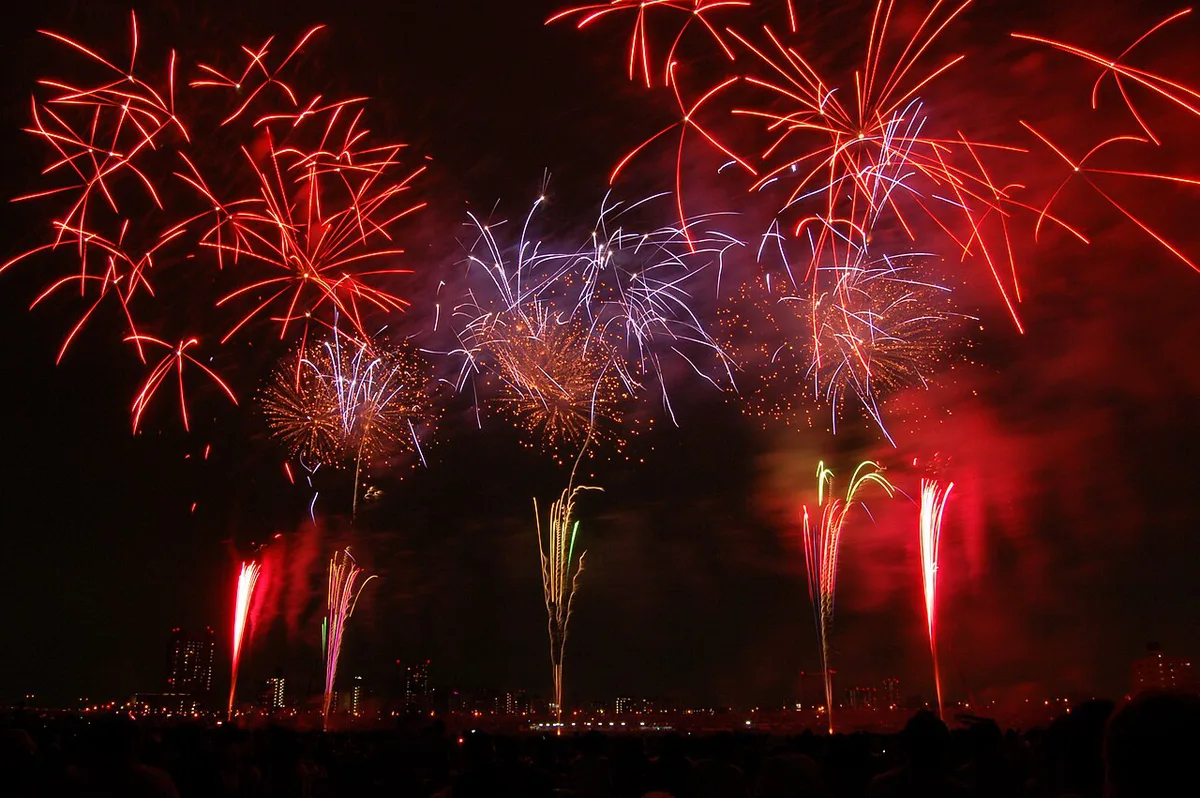
Tokyo Fireworks Festivals 2026: The Big Three Hanabi-Taikai
Three festivals anchor the Tokyo fireworks calendar each summer, each with a distinct location, scale, and atmosphere. Beyond these three, Tachikawa's Showa Kinen Park Fireworks Festival near the end of July offers extensive parkland for spreading out, and dozens of smaller neighborhood hanabi light up parks and riverbanks across Tokyo through July and August without drawing citywide crowds.
- Sumida River Fireworks Festival (Sumidagawa Hanabi Taikai) - Asakusa/Sumida-ku, last Saturday in July (July 25, 2026): Tokyo's oldest and most prestigious hanabi, launching from two separate sites along the river and drawing around 950,000 spectators for close to 20,000 shots. Side streets near Asakusa Station, the bridges further upstream, and yakatabune boat cruises are the classic vantage points, and the nearby Ryogoku Fireworks Museum covers the event's Edo-period roots.
- Edogawa Fireworks Festival - Edogawa-ku riverside, Saturday, August 1, 2026: A single large-scale display firing roughly 14,000 shots in themed segments, with wide riverbank grounds that give families more room to spread a tarp than the denser Sumida crowds.
- Katsushika Noryo Fireworks Festival - Shibamata, over the Edogawa River from the riverside baseball grounds, late July: A shitamachi (old downtown) neighborhood event with a closer, more intimate sightline to the shells than the bigger two festivals, plus a stronger local food-stall atmosphere.
Which Tokyo Fireworks Festival Should You Choose?
With three major hanabi-taikai and a handful of smaller displays all within reach, matching the festival to the kind of trip you're on makes the night go smoother. Use this as a starting point, then confirm the current year's official listing for exact timing before you commit to a viewing spot.
Sumida River draws 950,000 spectators with station crowd-control restrictions, while Edogawa's wider riverside grounds reduce tarp-competition pressure—a key logistics advantage for families choosing between the two largest festivals.
| Traveler Type | Best Pick | Why |
|---|---|---|
| Photographers | Sumida River, near Tokyo Skytree | Skytree's elevated sightline and the river's two launch sites give long, unobstructed shot compositions |
| Families | Edogawa Fireworks Festival | Wider riverside grounds and a large-scale themed show give kids room to move without Asakusa's side-street density |
| Comfort seekers | Paid stadium-style seating (Jingu Gaien is the classic example) | Trades a surcharge for a guaranteed seat instead of hours holding a tarp |
| Rainy-day planners | Any festival, with a backup date noted | Tokyo hanabi commonly follow a rain-postponement policy rather than an outright cancellation |
Essential Logistics: Tickets, Tarps, and Trains
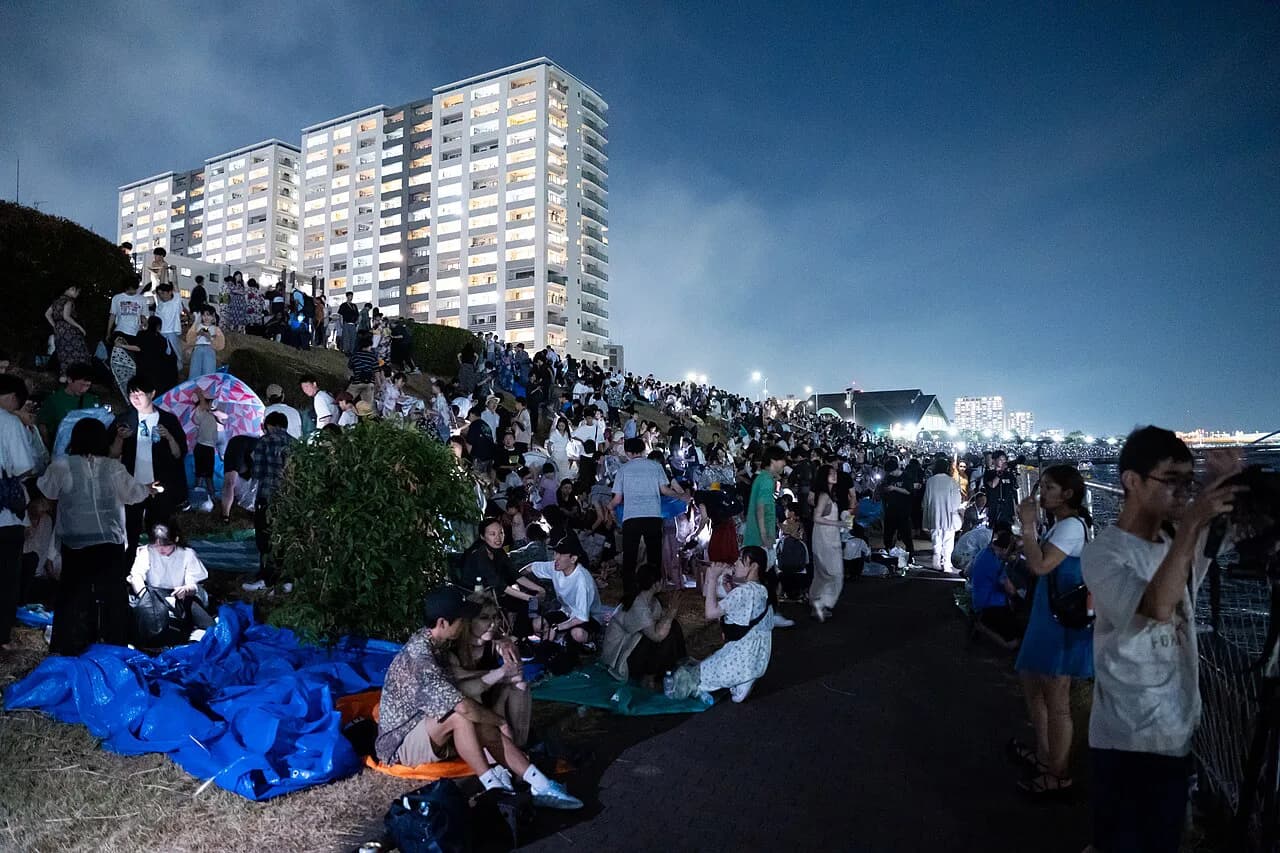
Paid seating for the biggest festivals is typically allocated through an online lottery that opens in May or June, with results confirmed a few weeks before the event; general vendors such as Ticket Pia and Lawson Tickets commonly handle sales for major hanabi-taikai, so it's worth checking those portals as soon as the 2026 season opens. Free public viewing stays available at both Sumida River and Edogawa, but claiming a spot means arriving early. Tokyo's blue-tarp culture governs how those free spots get taken: lay a tarp or blanket to mark territory well before sunset, expect the ground around major viewing parks to be fully covered hours before the first shell fires, treat a placed tarp as reserved space, and pack out everything you bring in. Transportation is the biggest planning variable of the night. During the Sumida River Fireworks Festival, Asakusa Station sees crowd-control restrictions and can close intermittently once the show ends, so budget extra time and consider walking toward a neighboring station rather than waiting out a queue. The festivals also overlap with Tokyo's O-bon holiday season, when trains run fuller than usual across the network, and loading a Suica or Pasmo IC card in advance lets you skip ticket-machine queues entirely at the gates.
Cultural Experiences Beyond the Sky: Yukata, Yatai, and Pre-Festival Stops
Wearing a yukata, the light cotton summer robe, is considered a classic part of the hanabi experience, and rental shops near major festival sites offer same-day dressing service, so there is no need to arrive already dressed. Beyond the aesthetics, a yukata is simply more breathable than regular clothing during Tokyo's peak summer humidity, and renting one is treated as a normal part of the evening rather than a costume. Festival grounds fill with yatai food stalls selling classic matsuri fare: yakisoba, takoyaki, and chocolate-dipped bananas are the must-try trio, alongside grilled corn, shaved ice, and cold drinks to offset the heat. Before heading to the riverbanks, use the daylight hours for a change of pace: browse Nakano Broadway's retro shops for vintage finds, or take in views from Shibuya Sky before the evening crowds build along the river.
Other Notable Summer Events in Japan for 2026
For travelers building a multi-city summer trip, several other 2026 events pair naturally with a Tokyo hanabi weekend.
- Tenjin Matsuri (Osaka), July 23-25, 2026: one of Japan's most symbolic water-and-light festivals, built around a river boat procession that culminates in fireworks.
- Summer Comiket (Tokyo), August 14-16, 2026: the Comic Market draws pop-culture and doujinshi fans and overlaps with the tail end of Tokyo's fireworks season.
- Mitama Festival (Yasukuni Shrine, Tokyo), July 13-16, 2026: a quieter, lantern-lit cultural counterpoint to the big hanabi crowds, with free entry.
Mistakes to Avoid at Tokyo's Fireworks Festivals
With crowds that can reach hundreds of thousands of people at a single festival, restroom lines back up fast as the show approaches, so plan a bathroom break at least two hours before the fireworks start rather than waiting until you're already staked out on a tarp. Staying for the finale also means leaving with everyone else: trying to catch the very last train right after a major hanabi display routinely turns into a multi-hour station wait or a long walk toward a quieter line, so build in either a late-night taxi budget or a plan to leave before the final shells. Cell networks slow to a crawl once a million-person crowd packs into a few square kilometers, so agree on a specific, physical landmark to regroup at before the show starts rather than counting on a text message. If the daytime heat before an evening festival feels like too much, or a forecast points toward a rain postponement, an air-conditioned reset at Tokyo Joypolis in Odaiba or a cooler few hours at Sanrio Puroland both make an easy backup plan that still fits a Tokyo summer itinerary.
Festivals vary wildly in scale—from Katsushika's intimate crowd to Sumida's 950,000 spectators—making pre-planned bathroom breaks and offline regrouping landmarks essential safeguards against crowd-related mishaps.
Jingu Gaien Fireworks Festival: The Easier Paid-Seat Option
If the idea of guarding a blue tarp for half a day sounds miserable, keep Jingu Gaien Fireworks Festival on your shortlist. Held around Meiji Jingu Gaien in central Tokyo, it is better suited to travelers who want reserved seating, clear entry gates, and easier pre-show planning than the free-for-all riverbank festivals.
The main viewing areas are usually ticketed venues such as Meiji Jingu Stadium and nearby sports grounds, with live music before the fireworks. That makes the atmosphere feel closer to a summer concert than a traditional riverside hanabi-taikai. The tradeoff is cost and a less classic old-town setting, but it is practical for couples, older travelers, and families who do not want to navigate Asakusa-level crowds.
Use stations such as Gaienmae, Aoyama-itchome, Sendagaya, or Shinanomachi depending on your assigned gate, and confirm the current year’s ticketing and venue map before choosing seats.
For trip-planning details, see Sumidagawa Fireworks Festival - Wikipedia and Fireworks in Japan - Japan Guide.
For the wider city context, see our complete Tokyo tourism attractions guide.
Continue planning with Tokyo Trip Planner 2026: Attractions, Neighborhoods and Itineraries.
Frequently Asked Questions
When are Tokyo's fireworks festivals in 2026?
The two biggest, Sumida River and Edogawa, fall on the last Saturday of July (July 25, 2026) and Saturday, August 1, 2026, respectively, with the smaller Katsushika Noryo Fireworks Festival following in late July. Most of Tokyo's hanabi season runs from the last week of July through the first two weeks of August.
What's the difference between the Sumida River and Edogawa fireworks festivals?
Sumida River is Tokyo's oldest and most prestigious hanabi, launching from two sites near Asakusa and drawing around 950,000 spectators for close to 20,000 shots, while Edogawa fires a single larger display of roughly 14,000 shots across wider riverside grounds with more room to spread a tarp.
Do you need a ticket to watch Tokyo's fireworks?
No, free public viewing is available along the riverbanks and in nearby parks at every major festival, though it means claiming a spot with a tarp hours in advance. Paid seating is sold separately through an online lottery that typically opens in May or June, commonly through vendors such as Ticket Pia or Lawson Tickets.
What should you wear to a Tokyo hanabi festival?
A yukata, the light cotton summer robe, is the classic choice and can be rented near most major festival sites with same-day dressing service. It's simply more breathable than regular clothing in Tokyo's peak summer humidity, and wearing one is a normal part of the evening rather than a costume.
What happens if it rains during a fireworks festival?
Tokyo's hanabi-taikai commonly follow a rain-postponement policy rather than an outright cancellation, so light rain often doesn't stop the show. Heavier rain or a typhoon system can push the display to a backup date, so it's worth checking a festival's official listing close to your travel dates.
Free: The Tokyo Essentials guide
Top things to do, where to stay, a perfect day plan, getting around, and the best time to go — a Tokyo mini-guide you can take offline.
You might also like


Continue reading
More guides you'll find useful