Nezu Shrine Guide: Torii Path, Azalea Festival & Yanesen Walk
Plan a Nezu Shrine visit in Tokyo: Senbon Torii path, 1706 buildings, Bunkyo Azalea Festival, seasonal hours, three station routes and an optional Yanesen walk.
On this page
Last updated October 2026: this Nezu Shrine guide covers the torii tunnel, the azalea festival, seasonal hours and three station routes. Nezu Shrine sits in Bunkyo-ku and is listed among the Tokyo Ten Shrines. Grounds are free, and the main buildings date to 1706.
Nezu Shrine at a Glance
Legend credits Prince Yamato Takeru with founding the shrine in the first century. One travel writer notes that Shogun Tokugawa Tsunayoshi ordered it moved to its current site in 1705. Builders finished the main hall and gates in 1706. Japan has designated those buildings Important Cultural Properties. Because the Honden survived World War II, you can see an intact Edo-period compound inside a dense city. Expect a calmer visit than at the big-name shrines for most of the year. Crowds build mainly during the spring azalea season, so timing matters more here than at most Tokyo stops. Use the facts below to decide how long to stay. Most visitors need roughly an hour for the grounds, longer if they add the garden or a neighborhood walk. For more ideas across the city, browse our picks of other Tokyo sights.
- Address: 1-28-9 Nezu, Bunkyo-ku, Tokyo 113-0031
- Phone: 03-3822-0753
- Grounds admission: free
- Azalea garden: separate fee of ¥500 to ¥1,000 during the festival
- Closed days: none listed
- Shrine office and goshuin reception: 09:00 to 17:00
What to See at Nezu Shrine: Torii, Honden and Gates
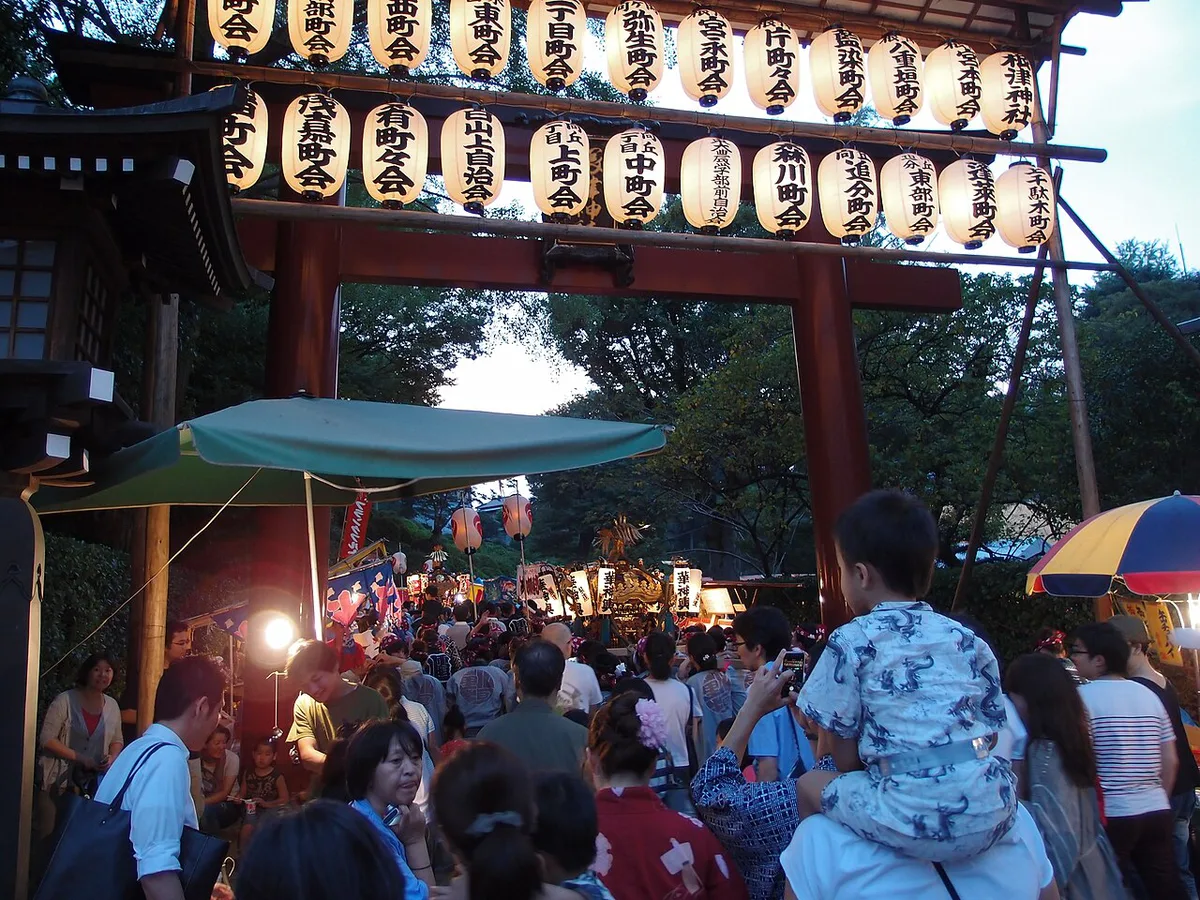
Start at the large torii at the main entrance. A wide paved approach leads over a wood-and-stone bridge to the two-story Nijumon gate. Two-story gates are normally a Buddhist temple feature, though some Shinto shrines adopted them. Just past it on the right sits the kagura-den, a stage for sacred dances. Beyond that, the cloisters and worship hall come into view. Gold finials and lion carvings decorate the eaves, so look up before you leave. A pair of komainu guardians stands in front, one mouth open and one closed. The Honden follows the Ishi-no-ma-zukuri style, where the worship and offering halls join under one structure. Photography of the worship hall interior is off limits, and trees limit distant shots from outside. A raised treasure house stands beside the hall. Confirm with the shrine office whether it is open before you plan around it. Look for the praying nutmeg tree, which visitors associate with granted wishes.
The Senbon Torii Path at Otome Inari
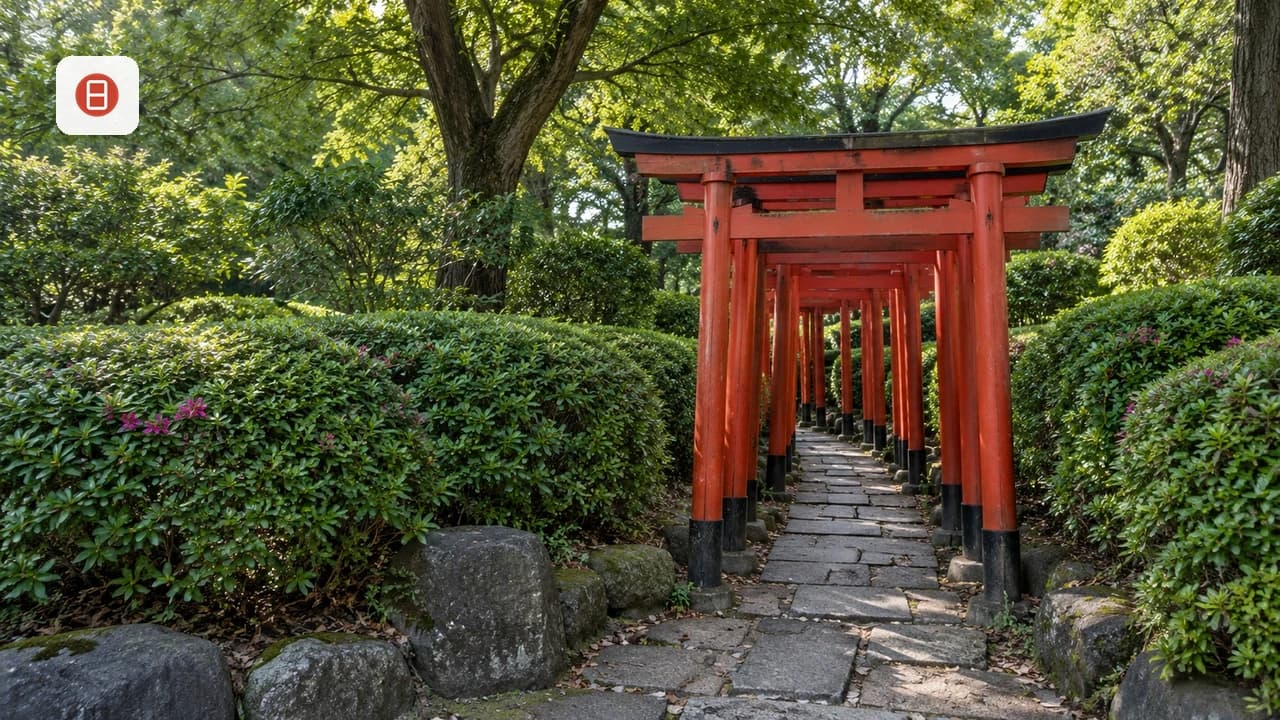
Otome Inari is a sub-shrine inside the grounds, and its scarlet torii corridor is the shot most visitors want. Gates stand close together, so the tunnel frames a single bright line of vermilion. Photographers do best early, when few people walk through. Walk at the edges rather than down the center, since the middle belongs to the deity. Stand slightly back from the entrance for a clean frame without strangers. Fushimi Inari in Kyoto is the larger, better-known version of this idea. Nezu offers a short taste of it without a train trip west. That makes it a practical swap if Kyoto is not on your route. Treat it as an alternative for scale, not a replacement. Steps along the path can complicate access for wheelchair users, so ask the shrine office about the easiest route before you go.
Bunkyo Azalea Festival: What to Expect
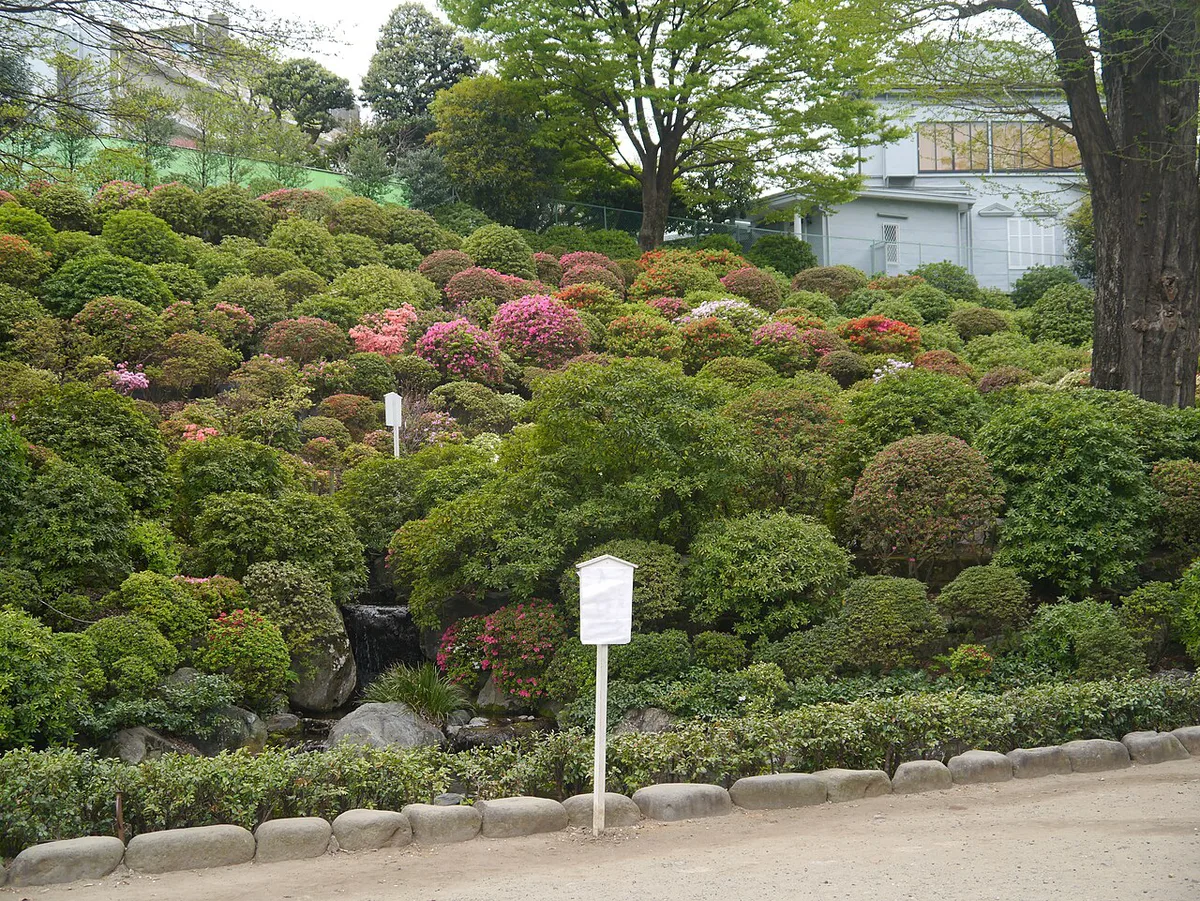
Mid-April brings the Bunkyo Azalea Festival, which lasts into early May. Around 3,000 azaleas across 100 varieties bloom in the garden. Good Luck Trip states that the garden opens to the public only during the festival. Budget ¥500 to ¥1,000 for garden entry, because the fee is separate from the free shrine grounds. Ask at the entrance for the current price. Peak bloom means peak crowds, especially on weekends and during Golden Week. Weekday mornings are calmer. Parking is available except during the festival period, per the shrine's FAQ answers. Plan for trains instead of a car. If you prefer serenity over color, visit outside the festival. You lose the azaleas but gain open paths and quiet benches. A second busy date is the Nezu Shrine Festival in mid-September. For seasonal context beyond the shrine, check when to visit Tokyo before you lock in dates.
Festival dates fall in April and May. April, May and September run 5:30 to 18:00, so the morning window opens earlier than the 6:00 start in winter.
- Festival timing: mid-April into early May
- Garden scale: about 3,000 azaleas, 100 varieties
- Garden fee: ¥500 to ¥1,000, separate from shrine entry
- Shrine festival: mid-September
Nezu Shrine Hours, Costs and Best Time to Visit
Hours shift with the seasons, so check the month you travel. Good Luck Trip lists November to January as 6:00 to 17:00. February runs 6:00 to 17:30. March runs 6:00 to 18:00. April, May and September run 5:30 to 18:00. June to August runs 5:00 to 18:00. October runs 5:30 to 17:30. Reception and goshuin hours are 09:00 to 17:00 per Tokyo Cheapo. The shrine lists no holidays. Confirm details on the official shrine website, since schedules change. Entry to the grounds costs nothing. Only the azalea garden charges, at ¥500 to ¥1,000 during bloom. Coin lockers are not available, so travel light. English pamphlets are also unavailable, according to the listing. Arrive near opening for the emptiest torii photos. Weekdays beat weekends for space. Late afternoon works too, though the gates close earlier in winter.
| Month | Listed hours |
|---|---|
| November to January | 6:00 to 17:00 |
| February | 6:00 to 17:30 |
| March | 6:00 to 18:00 |
| April, May, September | 5:30 to 18:00 |
| June to August | 5:00 to 18:00 |
| October | 5:30 to 17:30 |
How to Get to Nezu Shrine by Train
Three stations serve the shrine, and each gives a different approach. Tokyo Cheapo lists Todaimae Station on the Namboku Line (N12) at 323 m. That is the shortest walk, though the surrounding streets feel less like old Tokyo. Nezu Station on the Chiyoda Line (C14) sits 0.6 km away. Sendagi Station on the Chiyoda Line (C15) sits 0.7 km away. Good Luck Trip puts each at about five minutes on foot. Choose Sendagi if you want to fold in a Yanaka walk. Choose Nezu for a straightforward approach. Arriving from the water? Our guide to Tokyo's cruise terminal covers that arrival point. Monorail travelers can start at Hamamatsucho Station, which the Tokyo Monorail station page describes. Check a live route planner for the transfer to the Chiyoda or Namboku lines, since we cannot confirm an exact path here.
- Todaimae Station (Namboku Line, N12): 323 m, shortest walk
- Nezu Station (Chiyoda Line, C14): 0.6 km, simple approach
- Sendagi Station (Chiyoda Line, C15): 0.7 km, best for a Yanaka walk
Pair Nezu Shrine with a Yanesen Walk
Yanesen is shorthand for Yanaka, Nezu and Sendagi. These neighborhoods sit within walking distance of one another. Tokyo Cheapo describes Nezu Jinja as located northwest of Ueno Park. It also appears in that site's walking-route roundups. A simple plan starts at Sendagi Station and strolls toward Yanaka Ginza, the shopping street. Finish at the shrine, then leave through Nezu or Todaimae. Reverse the order if you want to see the torii at opening and wander later. Allow two to three hours for the full loop with stops. Skip the loop on rainy days and keep to the shrine itself. Staying nearby cuts the early-morning commute. Compare budget stays in Tokyo if cost drives your choice. Browse hotel options in Tokyo for more comfort near the Ueno side. Planning a longer trip? Our wider Japan planning page links onward routes.
Allow two to three hours for the full loop with stops. The grounds alone need roughly an hour, so the walk adds real time to the day.
Etiquette and Mistakes to Avoid at Nezu Shrine
Good manners keep the grounds peaceful for worshippers. Bow slightly at the main torii. Walk near the edges of the approach and inside the torii tunnel, not down the middle. Leave the worship hall interior unphotographed. Distance shots of the finials are fine where you can take them respectfully. Keep voices low near the hall. Do not skip the smaller sub-shrines, since Otome Inari and others reward a slow look. Do not arrive expecting lockers, because none exist. Do not assume the garden is open year-round. It opens during the festival only. Another common error is trusting old hours. Check the month. Goshuin stamps are available at the office from 09:00 to 17:00. Bring cash for the stamp and any garden fee.
Frequently Asked Questions
Is Nezu Shrine free to enter?
Yes, the shrine grounds are free. The azalea garden charges a separate fee of ¥500 to ¥1,000 during the festival. Confirm the current amount at the entrance.
Can I get a goshuin at Nezu Shrine?
Yes, the shrine lists red ink stamps. Reception hours are 09:00 to 17:00. Bring cash and check the official site if you travel near a festival date.
Is Nezu Shrine wheelchair accessible?
Steps appear along the torii path, so access can be limited there. Contact the shrine office before your visit. Ask which routes avoid the stairs.
When is the best time to see the azaleas?
The Bunkyo Azalea Festival runs from mid-April into early May. Around 3,000 azaleas bloom across 100 varieties. Visit on a weekday morning for fewer crowds.
Which station is closest to Nezu Shrine?
Todaimae Station on the Namboku Line is closest at 323 m. Nezu Station sits 0.6 km away. Sendagi Station sits 0.7 km away.
Can I park at Nezu Shrine?
Parking is available except during the festival period, according to the shrine's listed FAQ. Coin lockers are not available. Trains are the easier choice in azalea season.
Free: The Tokyo Essentials guide
Top things to do, where to stay, a perfect day plan, getting around, and the best time to go — a Tokyo mini-guide you can take offline.
You might also like

Continue reading
More guides you'll find useful