Hamamatsucho Station Tokyo: Monorail, Daimon and Waterfront Guide
Hamamatsucho Station Tokyo guide for 2026: JR platforms, the 13-minute Haneda monorail, Daimon subway transfers, gardens, water buses and luggage tips.
On this page
Last updated October 2026. Hamamatsucho Station in Tokyo links JR loop trains, the Haneda monorail and the nearby Daimon subway lines. Our Hamamatsucho Station Tokyo guide covers platforms, transfers, luggage choices and the gardens and piers within walking distance.
Hamamatsucho Station Tokyo: A Waterfront Gateway
Hamamatsucho sits in Minato City, and it works as a gateway for two reasons. JR East runs the Yamanote and Keihin-Tohoku lines here. Tokyo Monorail also starts here, with direct trains to Haneda Airport. Tokyo Station is about 8 to 10 minutes away by JR, so a short hop gets you to the main rail hub. Ministry figures for fiscal 2024 list 267,804 daily JR East users and 94,252 daily monorail users. Expect crowds at commuter hours. Off-peak, the station is easy to read and calm.
- Tokyo Station: about 8 to 10 minutes on JR
- Yurakucho: about 5 minutes on JR
- Ueno: about 12 minutes on the Yamanote Line
- Shibuya: about 20 minutes on the Yamanote Line
- Shinjuku: about 25 to 30 minutes on the Yamanote Line
- Haneda Airport: 13 minutes on the Haneda Express, about 20 minutes on most monorail trips
JR Platforms and the Daimon Interchange
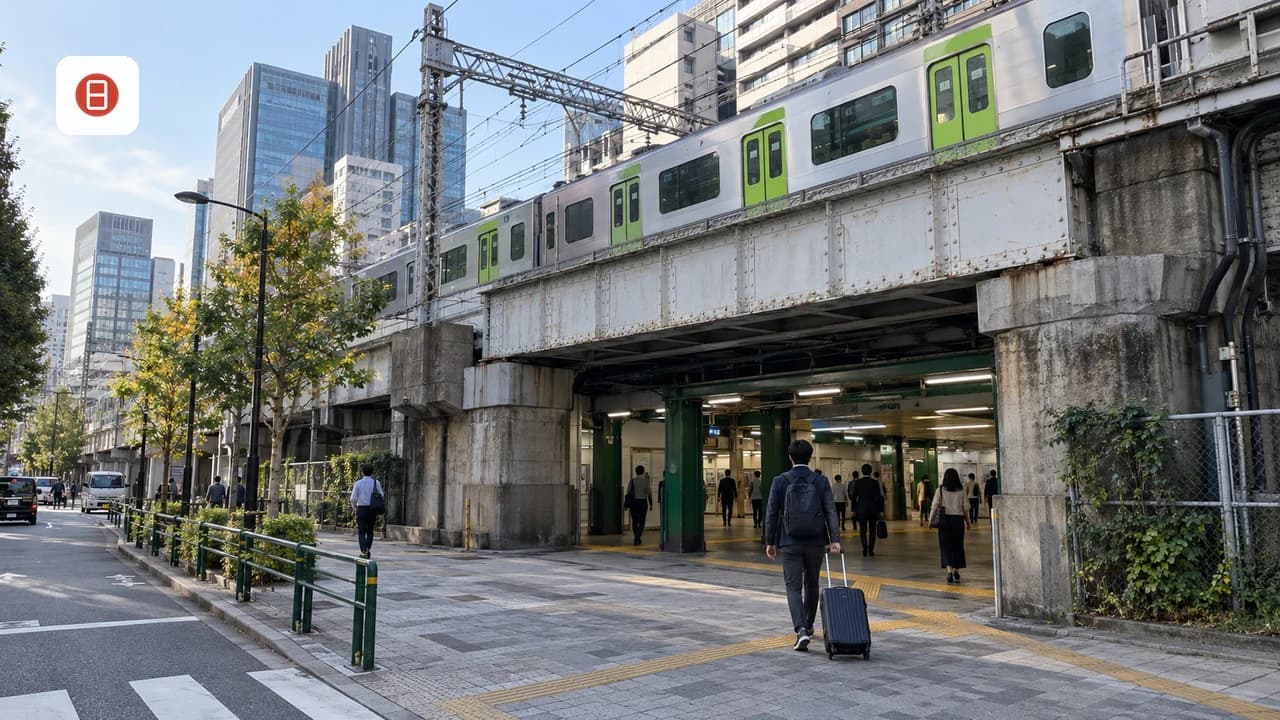
JR Hamamatsucho has two platforms and four tracks. Lines interchange across the platform in the same direction of travel, so a change of train is often a few steps. All Yamanote and Keihin-Tohoku trains stop here. A Japanese variant of Manneken Pis stands on the JR platform. Local accounts say it changes outfits monthly, so look for it while you wait. Tokyo Monorail uses a separate elevated building west of the JR platforms. A walkway links the two buildings. Two side platforms serve one track, with one platform for boarding and one for alighting. Daimon Station is the missing link most guides skip. It serves the Toei Oedo Line (E20) and Toei Asakusa Line (A09). Many route maps do not mark it as an interchange. One source describes the signed walk as about 1 minute. Treat it as a short transfer, and allow longer with a suitcase. Oedo trains reach Roppongi and Shinjuku, and Asakusa trains reach Asakusa and Higashi-Ginza. Toei fares are separate from JR, and a hotel guide notes that Toei lines are not covered by the JAPAN RAIL PASS. If this stop is one piece of a longer route, our Japan trip planning guide helps you place it.
- Track 1: Keihin-Tohoku Line toward Tokyo and Ueno
- Track 2: Yamanote Line toward Tokyo and Ueno
- Track 3: Yamanote Line toward Shinagawa and Shibuya
- Track 4: Keihin-Tohoku Line toward Shinagawa and Yokohama
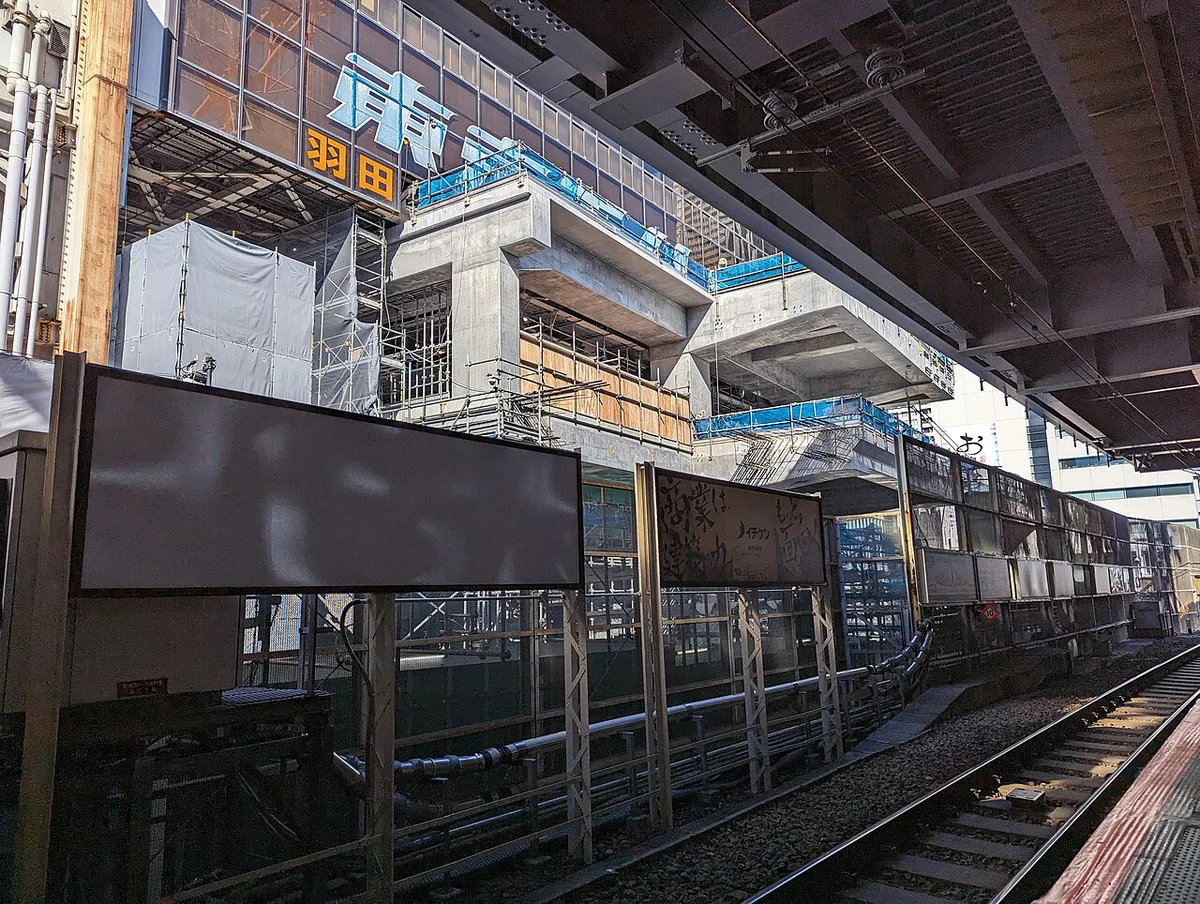
Haneda Airport by Tokyo Monorail
The Haneda Express links Monorail Hamamatsucho and Haneda in as little as 13 minutes. Most monorail journeys take about 20 minutes, depending on terminal and train type. Express service is listed toward Terminal 3. Rapid and local trains continue toward Terminal 2, and Tennozu Isle is the first stop on those services. One JR Pass retailer says the monorail is covered by the pass. Confirm that at the gates before you rely on it. The monorail operator's station information page lists the fare table and timetable. It gives the address as 2-4-12 Hamamatsucho. No fare is quoted in our sources, so check that page for the current amount. Domestic airlines JAL, ANA, Skymark and Air Do run check-in and ticketing just outside the main monorail entrances. That helps if you fly domestically with only a carry-on. For Narita, use Daimon Station on the Toei Asakusa Line. Some trains run through to the Keisei Line, and a hotel guide gives a typical trip of 70 to 100 minutes. Check the destination on the train before boarding.
| Haneda terminal group | Flight type | What to check |
|---|---|---|
| Terminal 3 | International | Haneda Express runs here in as little as 13 minutes |
| Terminals 1 and 2 | Domestic | Rapid and local trains run toward Terminal 2; confirm the stop on the timetable |
| Narita (via Daimon) | International | Asakusa Line through-service, about 70 to 100 minutes; not every train runs through |
Hamamatsucho vs Shinagawa for Airport Stays
Travelers often choose between Hamamatsucho and Shinagawa. Shinagawa is two stops further along the Yamanote Line past Tamachi and Takanawa Gateway. In our editorial assessment, the choice comes down to which airport and which train you need. Hamamatsucho wins for Haneda because the monorail starts here. Shinagawa wins if your plan depends on Shinkansen departures. Hamamatsucho also feels calmer than Shinjuku after dark, according to a local hotel guide. Pick it when an early Haneda flight matters more than a bullet-train connection.
| Priority | Hamamatsucho | Shinagawa |
|---|---|---|
| Haneda access | Monorail terminus, 13 minutes by express | Needs a different route |
| Shinkansen | Not the main hub | Stronger choice |
| Walkable sightseeing | Two Edo-period gardens nearby | Less in our sources |
| Evening mood | Business district with small bars | Check current options |
Gardens, Zojo-ji and Tokyo Tower on Foot
Kyu Shiba Rikyu Garden is the closest green space. It lies about 1/8 mile east of the station, a 6 to 10 minute walk. It began as an early Edo-period clan garden and centers on a pond. Hamarikyu Gardens lie north of it, about 15 to 20 minutes on foot. Its tidal pond has a tea house, and modern towers frame the view. On the west side, Zojo-ji Temple sits behind Shiba Park. The temple dates to the Muromachi period (1333-1573). From its grounds you get an up-close view of Tokyo Tower. The tower's observation deck stands 250 meters up, according to the Tokyo tourism guide. Acty Shiodome is a 3-minute walk north, and Shiodome City Center is about 10 minutes away. Tsukiji is about 15 minutes on foot. For another traditional stop elsewhere in the city, see Nezu Shrine. More ideas are in Tokyo's wider sightseeing list. For seasonal planning, read when to visit Tokyo before choosing garden days.
Water Buses and Island Ferries
Two piers cause most of the confusion here. Hinode Pier is for water buses. From there you can ride to Asakusa or Odaiba, or take a lunch or dinner cruise around the bay. Takeshiba Passenger Ship Terminal is for islands. High-speed ferries and slower passenger vessels leave from it for Tokyo's 11 islands. Oshima is under 2 hours away. Chichijima in the Ogasawara group is about 24 hours away, so plan food and sleep for that crossing. Yurikamome trains also run from Takeshiba Station to Odaiba, about 10 minutes to Daiba Station. If cruise ships are the reason for your trip, our cruise terminal arrival guide covers that separate bay-side port. The official Go Tokyo cruise page gives visitor information for it. Check sailing days and boarding points on the day, because ferry timetables change.
Eating and Sleeping Around the Station
By day this is a business district with wide streets. At night, small bars and bistros open, and the izakaya mood takes over. Try the casual spots near the tracks for a quick dinner after landing. Upscale waterfront dining sits closer to the bay. Prices are not given in our sources, so check menus at the door. As a base, Hamamatsucho is quieter than Shinjuku and closer to Haneda. Four rail operators serve the area: JR, Toei Subway, Tokyo Monorail and Yurikamome. That variety is useful when you arrive late with luggage. Compare options in our Tokyo hotel picks. If you are watching costs, read about budget stays in Tokyo.
Luggage, Rapid Trains and Construction Tips
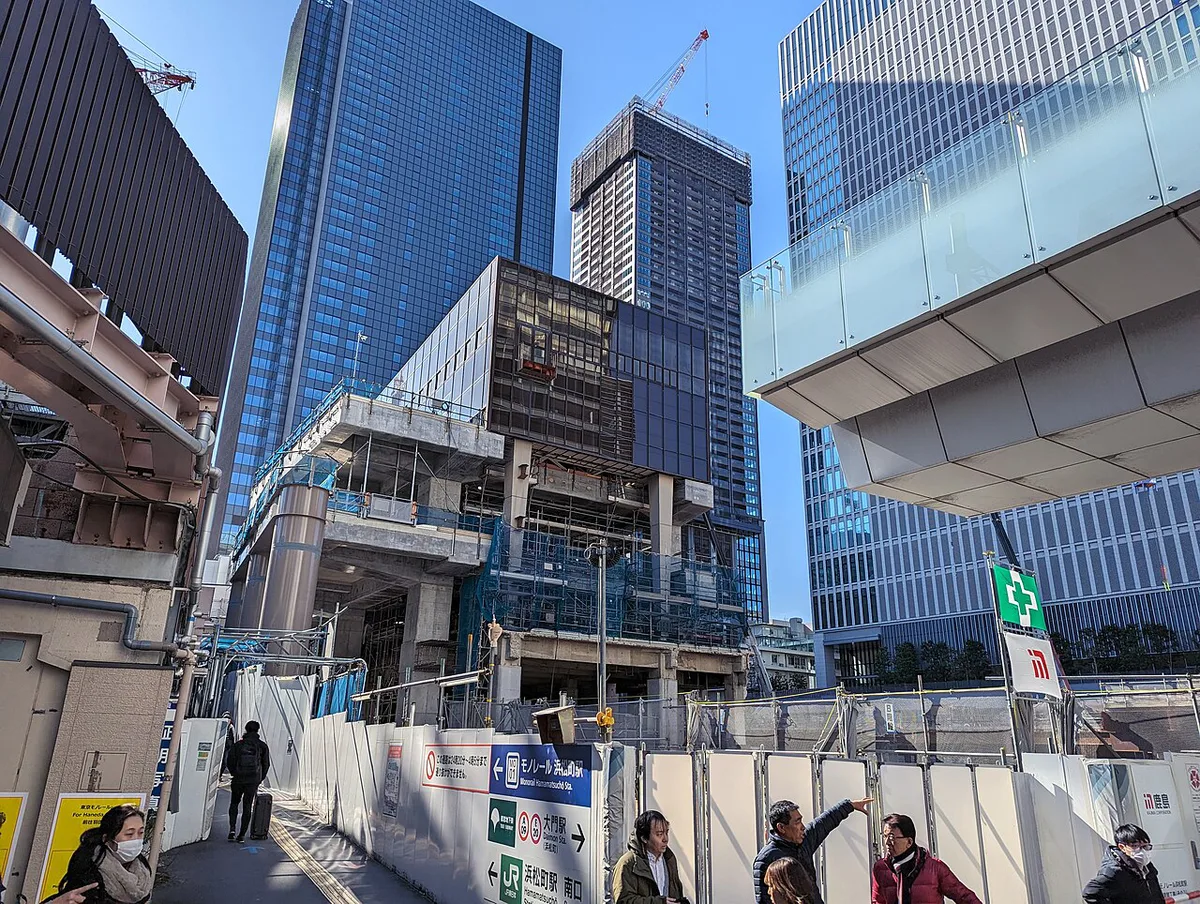
Coin lockers are available inside the station, according to one JR Pass retailer. Large-size availability is not confirmed in our sources, so arrive early if you carry big cases. Ask station staff about luggage-forwarding counters before a flight day, since our sources do not verify their locations. The monorail building is elevated, so check the JR East station diagram for elevator routes. Watch the Keihin-Tohoku rapid trains. The rapid runs from Hamamatsucho to Tokyo and skips Shimbashi. A local train stops at Shimbashi first. Check the destination and train type on the platform sign. The station is partly under and connected to the World Trade Center building. Redevelopment, including the Hamamatsucho One project, may change exits and signage. Follow temporary signs and allow extra minutes on first visits.
One source puts the Daimon walk at about 1 minute, but a suitcase makes that transfer slower. Allow extra time when you change there with luggage.
Frequently Asked Questions
How long does the monorail from Hamamatsucho to Haneda take?
The Haneda Express takes as little as 13 minutes. Most monorail trips take about 20 minutes, depending on terminal and train type. Check the timetable on the monorail operator's page.
Is Daimon Station the same as Hamamatsucho Station?
No, but Daimon is a short signed walk away. One source puts that walk at about 1 minute. Daimon serves the Toei Oedo and Asakusa lines. Many route maps do not show it as an interchange.
Does the JR Pass cover the Tokyo Monorail?
One JR Pass retailer says the monorail is covered. Confirm that at the gate before you rely on it. Toei subway lines at Daimon are not covered by the JAPAN RAIL PASS, according to a hotel guide.
Which JR platform do I need for Tokyo Station?
Use track 1 for the Keihin-Tohoku Line or track 2 for the Yamanote Line. Both go toward Tokyo and Ueno. Tokyo Station is about 8 to 10 minutes away.
Where do the islands ferries leave from?
Ferries to Tokyo's islands leave from Takeshiba Passenger Ship Terminal. Water buses to Asakusa and Odaiba leave from Hinode Pier. Oshima takes under 2 hours, while Chichijima takes about 24 hours.
Free: The Tokyo Essentials guide
Top things to do, where to stay, a perfect day plan, getting around, and the best time to go — a Tokyo mini-guide you can take offline.
You might also like

Continue reading
More guides you'll find useful