Nippori Fabric Town Guide: Shops, Hours and Planning for 2026
Plan a Nippori Fabric Town visit: train times, Tomato floor by floor, specialist shops, Sunday closures, payment tips and a Yanaka add-on.
On this page
Last updated October 2026: Nippori Fabric Town is a roughly 1 km strip in Higashi-Nippori, Arakawa-ku, with about 90 shops selling fabric, leather, buttons and beads. This guide covers how to reach it, what each floor of Tomato sells, which specialist shops to prioritize and how to carry your haul home. Plan around one fixed rule: most shops close on Sundays and public holidays.
What Nippori Fabric Town Is and Who Should Go
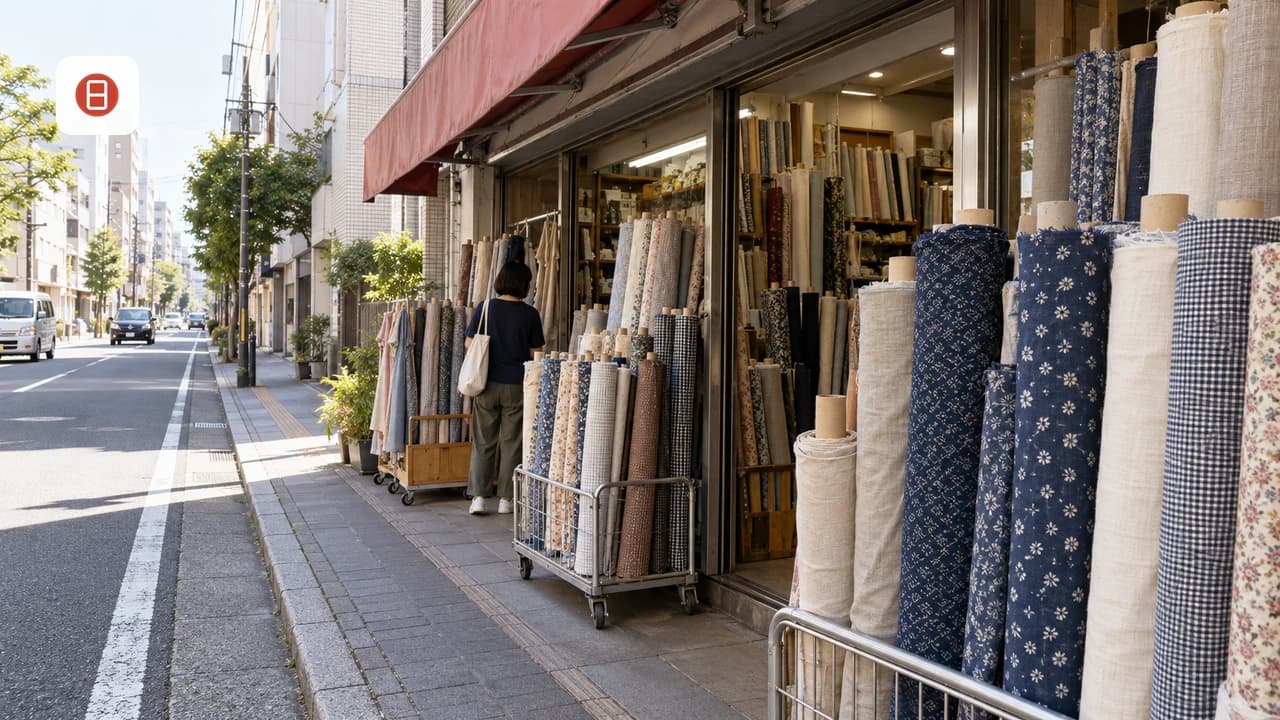
Nippori Fabric Town, also called the Nippori Textile District, runs along Chuo-dori east of Nippori Station. Go Tokyo describes it as a one-kilometer stretch with a history dating to the early Taisho era, in the 1910s. Today about 90 stores serve hobby sewers and wholesale buyers alike. The official Nippori association site lists more than 90 stores dealing in fabrics.
Three kinds of visitor get the most from the street. Home sewers can buy cotton prints, knits and lace by the meter. Designers and makers can source leather, hemp, Liberty-print cotton and trims in one afternoon. Souvenir hunters can pick up Japanese-pattern fabric, badges and beads that pack flat.
If you only want a quick look, the street still works. You can walk it end to end and watch bolts being cut. For a wider view of where this fits among Tokyo's retail districts, see our 15 Essential Tokyo Shopping Districts and Planning Tips for 2026.
Getting to Nippori Fabric Town by Train
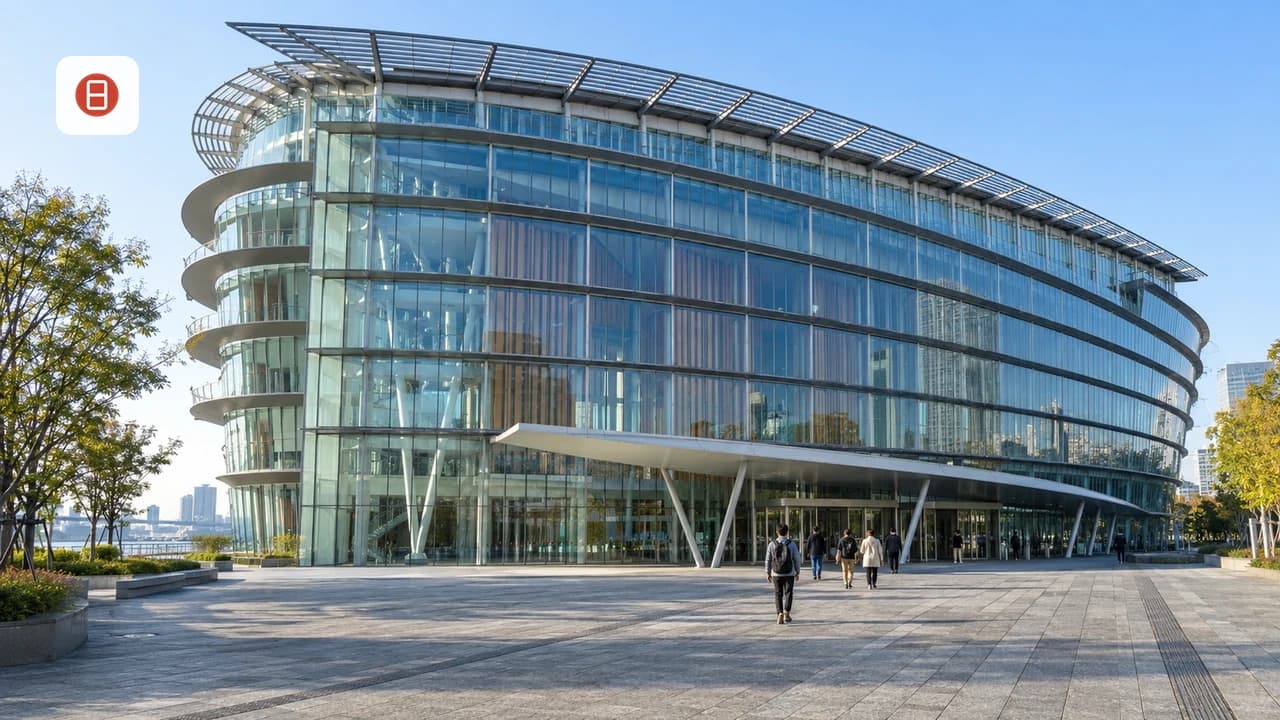
Nippori Station is the only access point you need. Go Tokyo lists the JR Yamanote, Joban and Keihin-Tohoku lines, the Keisei line and the Nippori-Toneri Liner as ways to reach it. Head for the east side of the station and walk up Chuo-dori. Yellow signs mark the start of the textile streets.
Journey times from the brief and Go Tokyo are below. Treat them as rail times only. Add a few minutes for platform changes and the walk out of the station.
- From Tokyo Station: 20 minutes on the JR Yamanote Line.
- From Shinjuku Station: 25 minutes on the JR Yamanote Line.
- From Haneda Airport: 45 minutes by train.
- From Narita Airport: about 1 hour 10 minutes by train, with the Keisei line serving Nippori.
Opening Hours, Sunday Closures and the Best Day
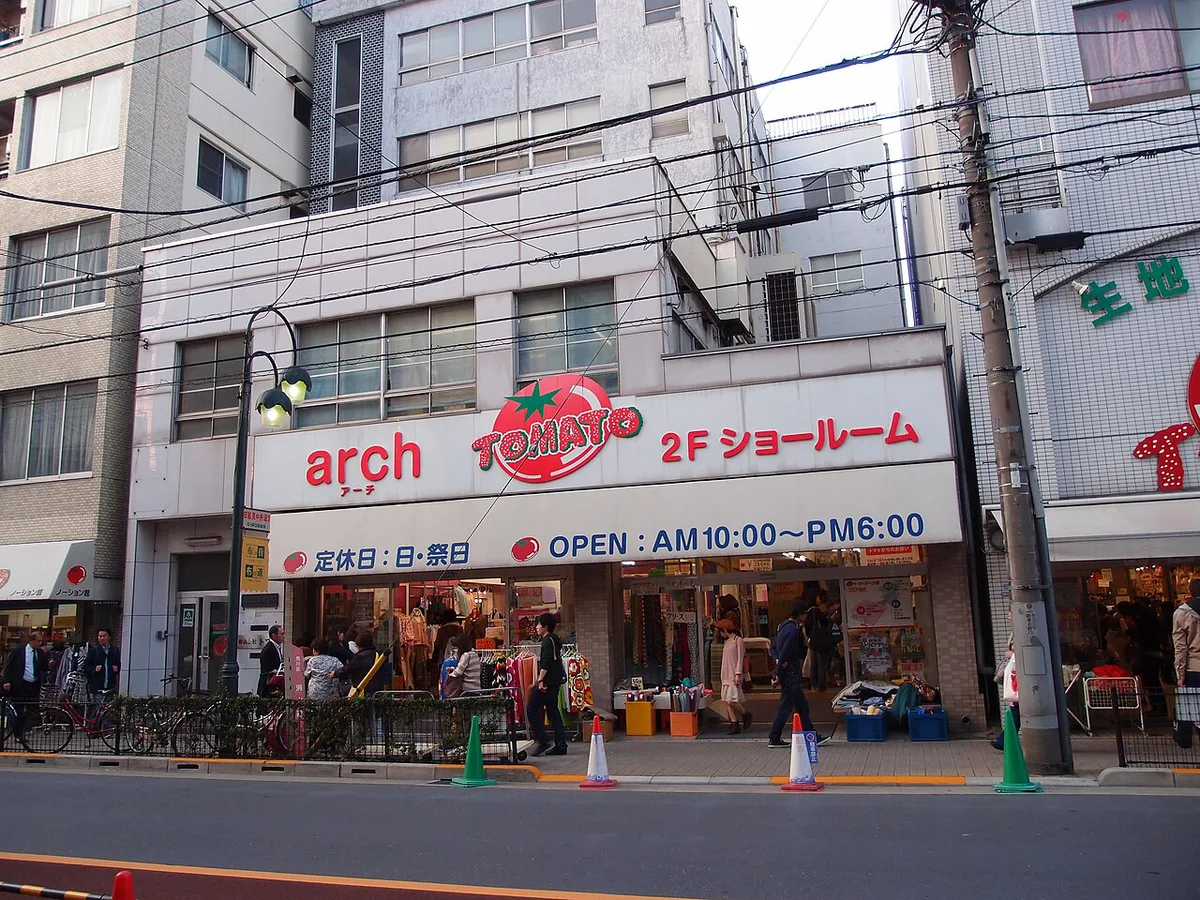
Hours vary by shop, but the brief gives a general window of 10:00 to 18:00. Tomato Main Shop lists 10:30 to 18:00 on its official shop page. Tomato is closed on Sundays and public holidays, and most other shops follow the same pattern.
Tomato's 10:30 to 18:00 window matches the 10:30 start suggested for the route, so arrive as the doors open.
Saturday is the busiest day, and it is also the day when nearly every shop is open. Weekday mornings are calmer, which helps if you plan to compare many bolts. Pick Saturday if you want full choice and can tolerate queues at the cutting counters.
Check Japan's holiday calendar before you book flights. A Monday holiday can close the whole strip, so a weekend trip may lose both Sunday and Monday. The official association news page also mentions a monthly second-Saturday maker event, so confirm the current schedule before you plan around it.
Weather matters on a 1 km walk with heavy bags. Our Best Time To Visit Tokyo Month By Month 2026 page covers seasonal heat and rain. Summer afternoons are tiring, and a wet bolt of cotton is heavier to carry.
Tomato Main Shop: What Is on Each Floor
Tomato is the anchor of the street. The official shop page says its main store has the largest sales floor in Nippori Fabric Town. It sells fabric on every floor from the 1st to the 5th. The address is 6-44-6 Higashi-Nippori, and the shop lists credit cards as accepted.
Start on the floor that matches your project. Staff can also take wholesale orders, and the shop page invites you to ask for help.
| Tomato detail | What the official page lists |
|---|---|
| Trading hours | 10:30am to 6:00pm |
| Closed | Sundays and public holidays |
| Payment | Credit card available |
| Online shop | Listed on the shop page |
- 1F: cotton prints, plus linen, lace and gauze. The official page calls this the ever-popular floor.
- 2F: knit fabrics.
- 3F: costume fabrics.
- 4F: cotton fabrics.
- 5F: wool and other apparel fabrics.
Specialist Shops by Category
Beyond Tomato, the street rewards you for choosing by material. Competitor guides and the brief agree on a short list of names. Check each shop's current stock and hours on the official site before you commit to a long detour.
Traditional Japanese patterns are the easiest souvenir category. Mihama and Tsukiyasu both sell hundreds of fabrics in Japanese designs. People buy them for garments, small gifts and wall-art pieces. Bring a paper list of widths, since pattern fabric is often cut in short lengths.
Leather and fur are handled by And Leather and Maki Ito. And Leather is split across several small shops. You can find leather pieces, accessories and kits for making your own goods. Maki Ito sells custom-cut leather and fur and also repairs jackets, bags and coats. Look for the street displays of buttons and metal fittings, because the entrance is easy to miss.
Notions are the best low-cost buys. NIPPORIOMARU sells beads on rainbow-colored walls. On-travelling sells badges, buttons and sewing accessories. Both fit easily into a carry-on.
Natural fibers sit further down the main street, where the crowds thin out. Humongous sells woodblock-printed fabrics. Yasuda Shoten specializes in hemp. Momo, a store near the station end of the route, sells original fabrics in hemp, linen, silk and cotton.
- Pakira: listed on the official site as a Liberty official dealer (MAP No.66).
- Okuyama: original costume and decorative fabrics, with contract sewing (MAP No.45).
- Alon: a knit select shop (MAP No.73).
- Fujikake Koubou: sublimation transfer printing listed from ¥2,860 per meter, tax included. Confirm before you order.
Planning Your Time: Half Day or Full Day
Competitor guides suggest about half a day for the strip. That is enough for Tomato, two or three specialists and a lunch break. Start at 10:30 so Tomato is open, and work outward along Chuo-dori.
A sensible route runs like this. Go through Tomato first while your energy is high. Walk east to the quieter end, where hemp and woodblock shops sit. Return toward the station and finish at Momo, so you carry your heaviest purchases the shortest distance.
Use a full day only if you are sourcing for a project or traveling with non-sewing companions. In that case, split the day. Shop in the morning and spend the afternoon in Yanaka. The Tokyo attractions guide shows where else to slot in other northern districts.
Language is rarely a barrier. Point to the bolt, hold up your fingers and say the quantity with meetoru, the Japanese word for meter. Write the number down on your phone to avoid confusion. Ask whether a fabric can be cut in half-meter lengths if you are testing a pattern.
Payment, Shipping and Carrying Fabric Home
Card acceptance is uneven. Tomato Main Shop lists credit cards as available. Small traditional stalls often prefer cash, according to the brief, so withdraw yen before you arrive. Keep small notes for notions and trims.
Fujikake Koubou lists transfer printing from ¥2,860 per meter, tax included, so add up the meters before you order.
Shipping is the question that decides how much you buy. Tomato's page mentions wholesale orders and an online shop, but it does not describe international shipping for walk-in purchases. Ask at the counter before you pay. If a shop cannot ship abroad, a Japanese courier such as Yamato Transport is the carrier to ask your hotel about, and sending bolts to your hotel keeps your hands free. Confirm any fee and pickup rules with the hotel desk. Our Tokyo hotel guide helps you pick a base with a front desk that handles parcels.
Weight is the hidden cost. Denim and heavy cotton bolts add up quickly. Bring a sturdy, foldable tote and weigh your suitcase before you leave the hotel. Flat items such as buttons, badges and printed cotton give you the best value per kilogram.
Beyond the Fabric: Yanaka, Tennoji and Arakawa Yuen
Go Tokyo notes that Tennoji Temple and the Yanaka neighborhood sit directly adjacent to Nippori Station. That makes a half-day shopping trip easy to extend. Walk to Yanaka Ginza, a retro shopping street known for snacks and cat-themed souvenirs.
Arakawa Yuen suits families. Go Tokyo says it first opened in 1950 and reopened in April 2022 after a major renovation. The Ferris wheel and miniature trains were renovated. An indoor playground and a café made from recycled Toden trains were added. Opening details can change, so check the current schedule before you go.
If you like old-town shopping, compare this strip with Ameyoko in Ueno. Ameyoko is a market street for food, clothing and general goods. Nippori is quieter and focused on materials. Our broader Japan Travel Guide: Plan Your Trip with Expert Tips & Itineraries shows how Tokyo fits into a longer trip.
If you want a green break instead, Tokyo has larger parks elsewhere. The Inokashira Park guide covers one option on the west side of the city.
Mistakes to Avoid at Nippori Fabric Town
Most problems come from timing and weight. Avoid these four.
- Arriving on a Sunday or public holiday. Most shops, including Tomato, are closed.
- Skipping cash. Small stalls may not take cards.
- Leaving the tote at the hotel. Bolts do not come with sturdy bags.
- Buying heavy fabric before you check shipping. Ask first, then buy.
- Starting at the far end. Begin at Tomato, then work outward, so your bags stay light.
Nippori Fabric Town Quick-Reference Table
Use this table to choose shops before you go. Hours can change, so confirm on the official association site.
| Shop | Specialty | Best for |
|---|---|---|
| Tomato Main Shop | Five floors of fabric | First-timers and professionals |
| Mihama | Japanese-pattern fabric | Souvenirs and kimono-style projects |
| Tsukiyasu | Japanese-pattern fabric | Gifts and wall-art pieces |
| And Leather | Leather and kits | Bag and wallet makers |
| Maki Ito | Custom-cut leather and fur, repairs | Jacket and coat fixes |
| NIPPORIOMARU | Beads | Jewelry makers |
| On-travelling | Badges and buttons | Small, packable souvenirs |
| Yasuda Shoten | Hemp | Natural-fiber projects |
| Humongous | Woodblock-printed fabric | Distinctive prints |
| Momo | Hemp, linen, silk and cotton | A last stop near the station |
Frequently Asked Questions
Where is Nippori Fabric Town?
It is in Higashi-Nippori, Arakawa-ku, east of Nippori Station. Take the east side of the station and walk up Chuo-dori. Yellow signs mark the start of the textile streets.
Is Nippori Fabric Town open on Sundays?
Most shops are closed on Sundays and public holidays. Tomato Main Shop lists the same closure days on its official page. Plan your visit for Monday to Saturday, with Saturday the busiest day.
How long do I need at Nippori Fabric Town?
Plan about half a day for a focused visit. That covers Tomato, a few specialist shops and lunch. Add Yanaka in the afternoon if you want a full day.
Can I use credit cards in Nippori Fabric Town?
Larger shops such as Tomato Main Shop list credit cards as accepted. Small traditional stalls may be cash only. Carry yen to be safe.
Can I ship fabric home from Nippori?
Ask each shop at the counter, because policies differ. Tomato mentions an online shop and wholesale orders, but not walk-in international shipping. A hotel desk can often help arrange a Japanese courier such as Yamato Transport.
Free: The Tokyo Essentials guide
Top things to do, where to stay, a perfect day plan, getting around, and the best time to go — a Tokyo mini-guide you can take offline.
You might also like
Continue reading
More guides you'll find useful