Ameyoko Shopping Street Tokyo: 2026 Visitor Guide
Plan Ameyoko in Tokyo for 2026: station exits, menchi katsu, fruit skewers, the ¥1,000 chocolate tatakiuri, cash tips and the best time of day.
On this page
Last updated October 2026: Ameyoko shopping street Tokyo packs roughly 400 shops into a 500 m strip under the JR tracks between Ueno and Okachimachi. Snacks start around ¥100, a bag of chocolate costs ¥1,000, and standing bars pour drinks by midday. Use this guide to choose a route, a time of day, and a realistic cash budget.
What Ameyoko Is and Why Locals Still Shop Here
Ameyoko is short for Ameya Yokocho, often translated as candy store alley. Stalls here sprang up after World War II, when the area became a black market for scarce goods. Another explanation says "ame" stands for America, because stalls sold American army surplus. Sources do not agree on which story is right, and both are repeated on the street today.
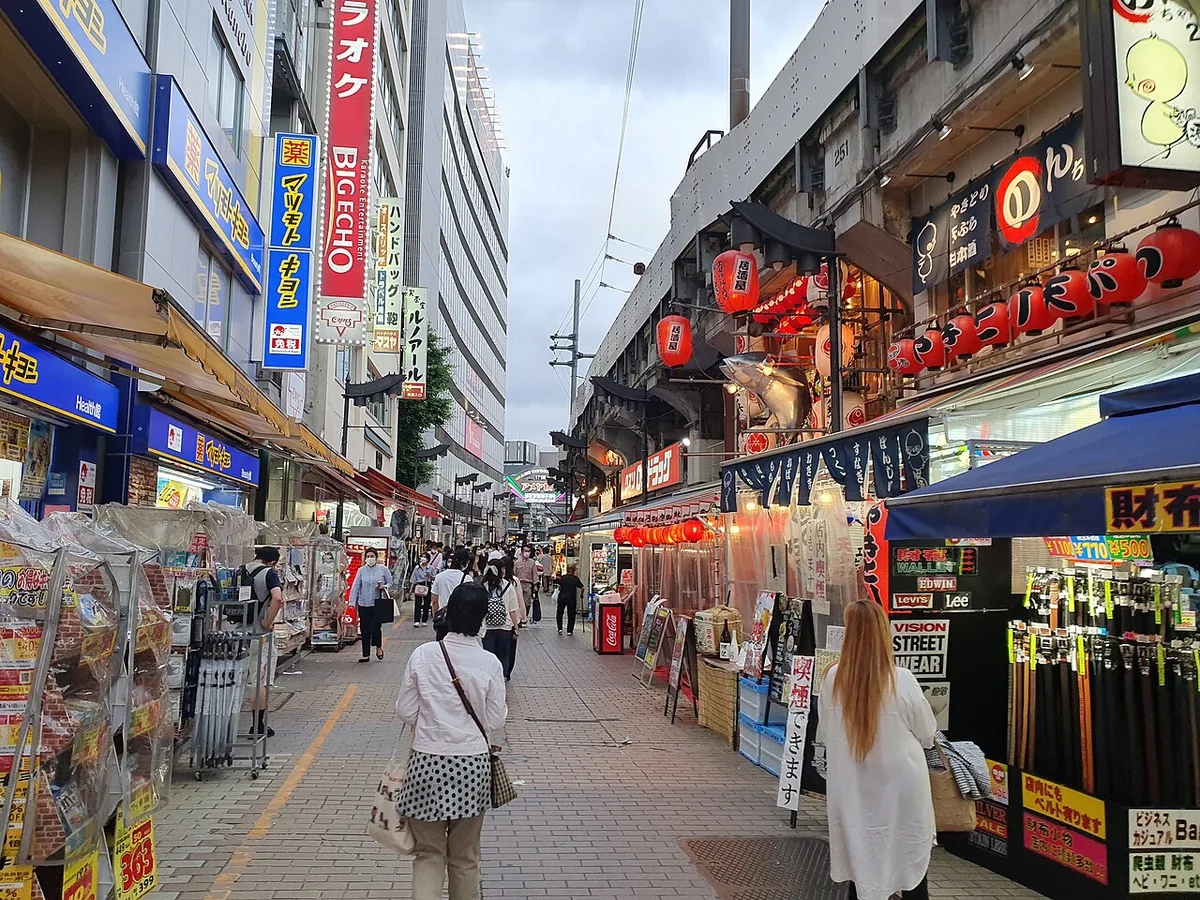
Today the market runs along the Yamanote Line tracks and holds roughly 400 stores. Fresh fish, dried goods, spices, cosmetics, sneakers, and snack stalls sit side by side. Tokyo is expensive, and Japan's national tourism organization describes Ameyoko as the place where you can still find deals on almost anything. Haggling and shouted sales pitches set it apart from the polished department stores elsewhere in the city.
Treat it as a working market, not a theme park. Shop owners move stock, shout prices, and expect you to decide quickly. Come hungry, carry small bills, and plan on one to three hours.
Ameyoko Shopping Street Tokyo: Layout and Getting There
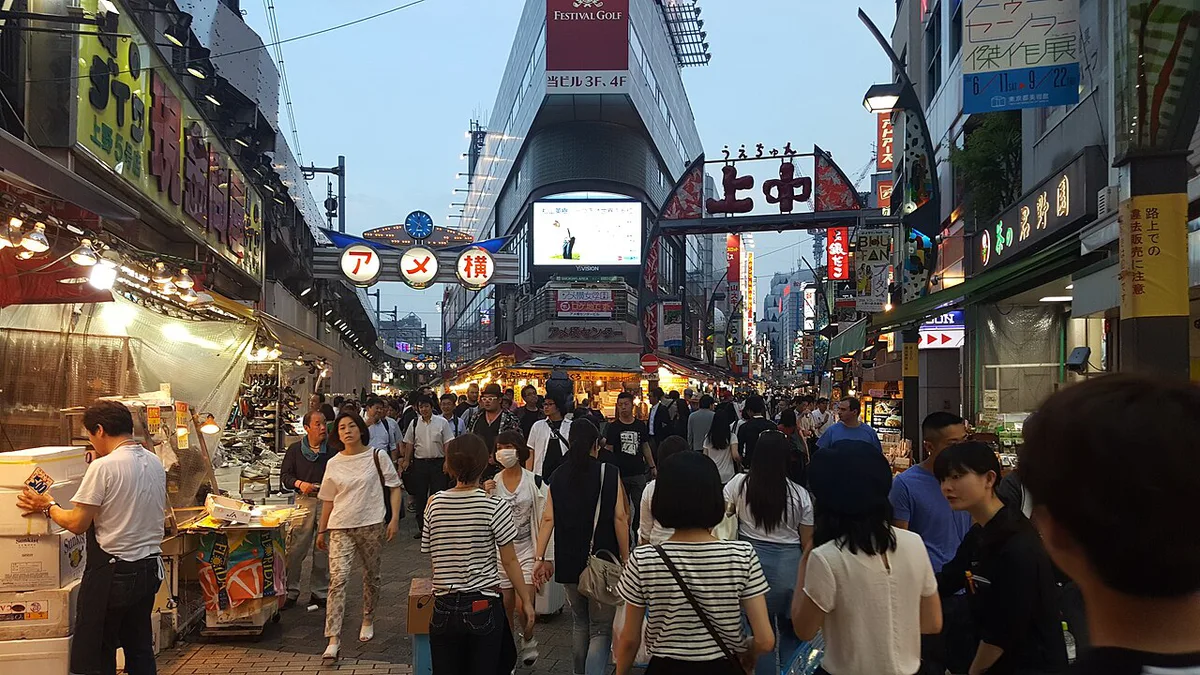
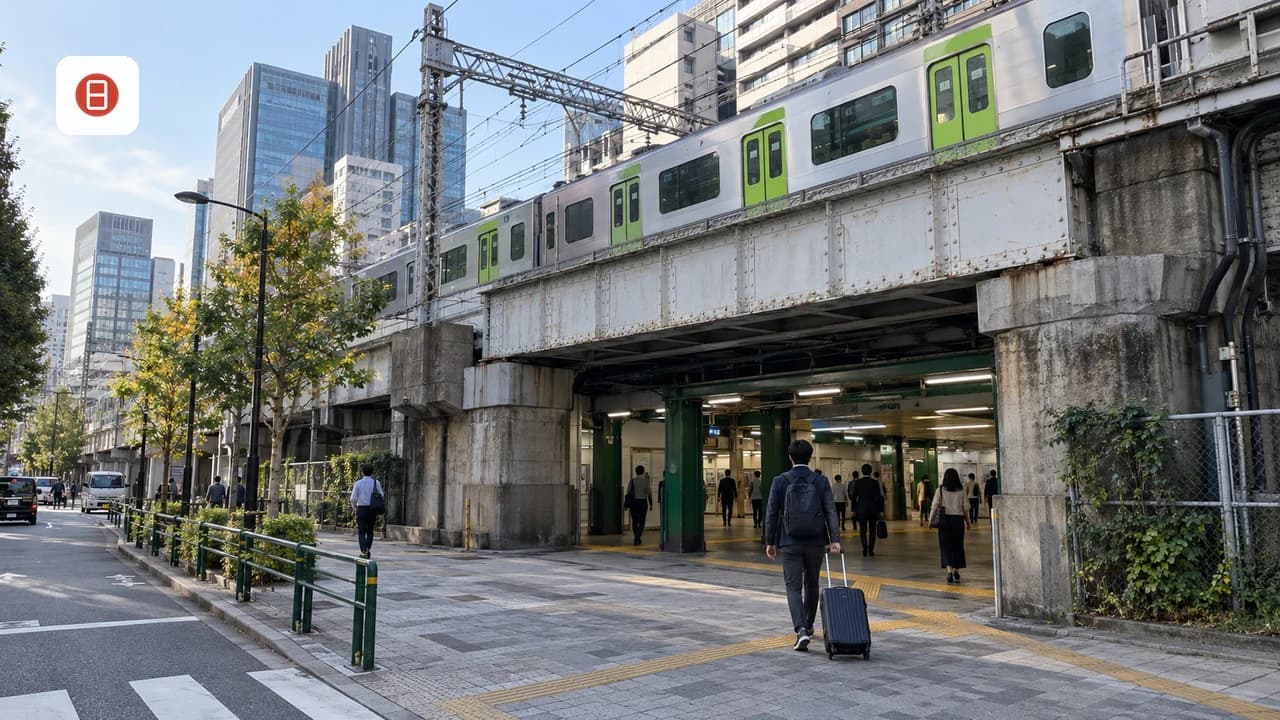
The market stretches about 500 m between JR Ueno Station and JR Okachimachi Station. From JR Ueno, the walk to the first stalls takes around 3 minutes. Two exits work well: Shinobazu and Hirokoji.
The northern entrance sits directly across the road from the Shinobazu Exit, beside the Yodobashi Camera store. Starting here lets you walk the full length toward Okachimachi. Walking the other way is just as easy if you arrive at Okachimachi first.
Several lines serve the area. The Yamanote and Keihin-Tohoku lines run directly overhead. Ginza, Hibiya, Oedo, and Keisei services also reach the neighborhood. The Oedo Line's Ueno-Okachimachi Station is a short walk from the market.
About 150 m from the northern entrance, a second street splits off. Locals call it Uechun, short for Ueno Naka-dori. It runs roughly parallel to Ameyoko, holds clothing and shoe shops plus sit-down restaurants, and is usually quieter. Use it as a pressure valve when the main lane jams.
- Main lane: food stalls, fish, sweets, and drugstores.
- Uechun: clothes, shoes, and casual restaurants.
- Ameyoko Center Building: indoor stores on the west side, with a basement food market.
- Marishiten Tokudaiji Temple: a small temple above the market, reached from a side street on the west side.
Opening Hours and the Best Time of Day
Most shops open around 10:00 and close around 20:00. Individual stalls set their own rules. Many shut on selected Wednesdays, so a midweek trip needs a backup plan.
Uokusa closes on the 2nd Wednesday of each month. Its 30-minute drink limit suits a quick stop, so check the calendar first.
| Shop | Closing day |
|---|---|
| Uokusa | 2nd Wednesday of each month |
| Uncle Joe | 3rd Wednesday |
| Ameyoko Center Building | 3rd Wednesday except in December |
| Hyakkaen New Fruit | Wednesdays |
| Cha-no-Kiminoen | 3rd Tuesday |
Closing days vary by shop. Uokusa closes on the 2nd Wednesday of each month. Uncle Joe closes on the 3rd Wednesday. Ameyoko Center Building closes on the 3rd Wednesday except in December. Hyakkaen New Fruit closes on Wednesdays. Cha-no-Kiminoen closes on the 3rd Tuesday. For current store details, check the official Ameyoko shop listings before you go.
Morning suits fresh fish and quieter aisles. Early afternoon is the best window for street snacks and standing-bar drinks. Evening brings izakaya crowds, though many snack stalls close by 19:00 or 20:00.
Weekends and holidays draw bigger crowds. For seasonal timing across the city, see our notes on seasonal timing advice.
The Chocolate Tatakiuri at Shimura Shoten
Tatakiuri literally means bang-selling. Vendors bang a box or surface while pitching, then pile in goods until a bag is full. At Shimura Shoten, near the Ueno end of the street, the chocolate version is the draw.
A seller drops boxes of chocolate into a bag and keeps adding. However much goes in, the bag costs ¥1,000. Tourism officials single this out as a distinctive way to shop. Several guides note that fewer stores still sell this way.
Shimura Shoten is listed at 6-chome 11-3 Ueno. Published hours conflict between sources, so check the day's opening before building your route around it.
Go with a ¥1,000 note and a small tote bag. Stand near the front, watch one full round, and decide before the seller starts adding. Filming is usually fine from a respectful distance, but ask first if the seller looks uneasy.
Street Food Worth Queuing For
Food is the easiest reason to walk the whole length. Prices below come from published guides and may shift, so treat them as 2026 planning figures.
- Hyakkaen New Fruit (6-chome): fruit on a stick for ¥100–¥200. Pineapple, melon, and watermelon are common, plus strawberries in season. Hours run roughly 10:00–19:00.
- Niku no Ohyama: menchi katsu minced-meat cutlets, priced at ¥150, ¥220, or ¥420 depending on the version. Croquettes are about ¥80. Weekday hours run to 23:00.
- Minatoya: takoyaki at 4 pieces for ¥200, 6 for ¥300, or 8 for ¥400. It also serves kaisendon, a bowl of raw fish over rice.
- Uncle Joe: Korean snacks such as tteok-bokki, chijimi pancakes, and hotteok.
- Tentenraku: dumplings, pork buns, and noodle soups on the first floor of Ameyoko Center Building.
- Uokusa: oysters, scallops, and crab at a standing bar.
Daytime Drinking at Senbero Bars
Senbero means roughly "a thousand yen gets you drunk." Several izakayas near the tracks serve cheap drinks from midday, and the culture is part of the market's identity.
Kacchan offers a first-floor standing set for ¥1,200. It includes tempura or a daily dish plus up to four drinks. Uokusa uses a 30-minute limit and up to two drinks, which suits a quick stop between snacks. Daitoryo opens at 10:00 and serves motsu, simmered offal. Tachinomi Kadokura is a standing bar open from 11:00.
Budget roughly ¥1,000 to ¥2,000 for a few drinks and a snack. Prices change, so confirm at the counter. Pace yourself if you plan to shop afterward, because the stalls are crowded and you will want a steady hand for cash.
Seating is often shared when places fill up. Say a short greeting, order from the board, and pay promptly. Lines at popular spots form daily, so arrive right at opening or in the late afternoon.
What to Buy on Ameyoko
Shopping here rewards a clear list. Start with sweets, then branch into dry goods and discount basics.
Matsumoto Kiyoshi's hours run 9:30–22:00, so it stays open after most stalls close. Its prices are fixed, so skip haggling and pay by card.
Niki-no-Kashi is a confectionery wholesaler founded in 1947. Guides cite thousands of snack varieties, available singly or in bulk. Hours are 10:00–20:00. It works well for gifts and tax-free purchases are available, according to published listings.
Matsumoto Kiyoshi, near the northern entrance, is a two-floor discount drugstore. It stocks cosmetics, health products, and snacks, and hours run 9:30–22:00. Prices there are fixed, so skip haggling.
Cha-no-Kiminoen, open since 1946, sells sencha, hojicha, genmaicha, and matcha. Upstairs, you can browse teapots and cups. Its ice cream comes in milk, matcha, and mixed flavors.
Garakuta Boeki carries American-style clothing, toys, and sundries, and keeps hours of 11:00–20:00. Sports gear and sneakers also fill many stalls. Tourism officials note that sports goods are often last-season brand items, not fakes.
- Sweets and bulk snacks: Niki-no-Kashi.
- Beauty and drugstore items: Matsumoto Kiyoshi.
- Tea and teaware: Cha-no-Kiminoen.
- Retro American goods: Garakuta Boeki.
- Seafood gifts and dry goods: stalls along the main lane.
Ameyoko Center Building and Marishiten Temple
Ameyoko Center Building rises on the west side, with four floors above ground and one basement. Its basement houses an ethnic food market. Shelves hold Chinese, Thai, Korean, and Vietnamese ingredients, plus spices, sauces, pickles, and exotic meats.
Upstairs, the first floor mixes cheap eateries with shoe and bag stores. Fashion and jewelry boutiques fill the second floor. A camera shop, record store, and sporting goods store sit on the third floor, and a golf-focused sporting branch occupies the fourth. Opening hours are listed as 10:00–20:00.
For a calmer break, look for Marishiten Tokudaiji. This small Buddhist temple stands on raised ground over the market. Its entrance is on a side street on the west side, directly opposite the Nishi-no-Kashi confectionery store. Five minutes there resets your pace before the next round of stalls.
Cash, Bargaining and Mistakes to Avoid
Carry cash. Many stalls remain cash-only, and a physical wallet is still the safest plan here. Cards work at larger stores such as drugstores, but small vendors may refuse them.
Haggling is limited. Some clothing and sporting goods sellers will negotiate, and tourism officials encourage it for certain items. Food stalls, drugstores, and fixed-price shops do not bargain. Ask politely and accept a no.
Avoid the year-end rush unless you want maximum chaos. Oshogatsu preparation fills the lanes, and moving at your own speed gets hard.
Other common mistakes are easy to dodge. Do not arrive after 19:00 expecting every snack stall to be open. Do not skip Wednesdays on your calendar. Do not eat while walking through packed sections, since narrow lanes leave little room.
Also, bring a bag for trash. Public bins are scarce in markets like this one.
Pairing Ameyoko With Ueno Events and Nearby Stops
Ueno Park sits next to the market and hosts 40+ festivals and events in 2026, according to one 2026 guide. Check the park calendar before choosing a date. A festival day can add crowds but also a strong reason to visit.
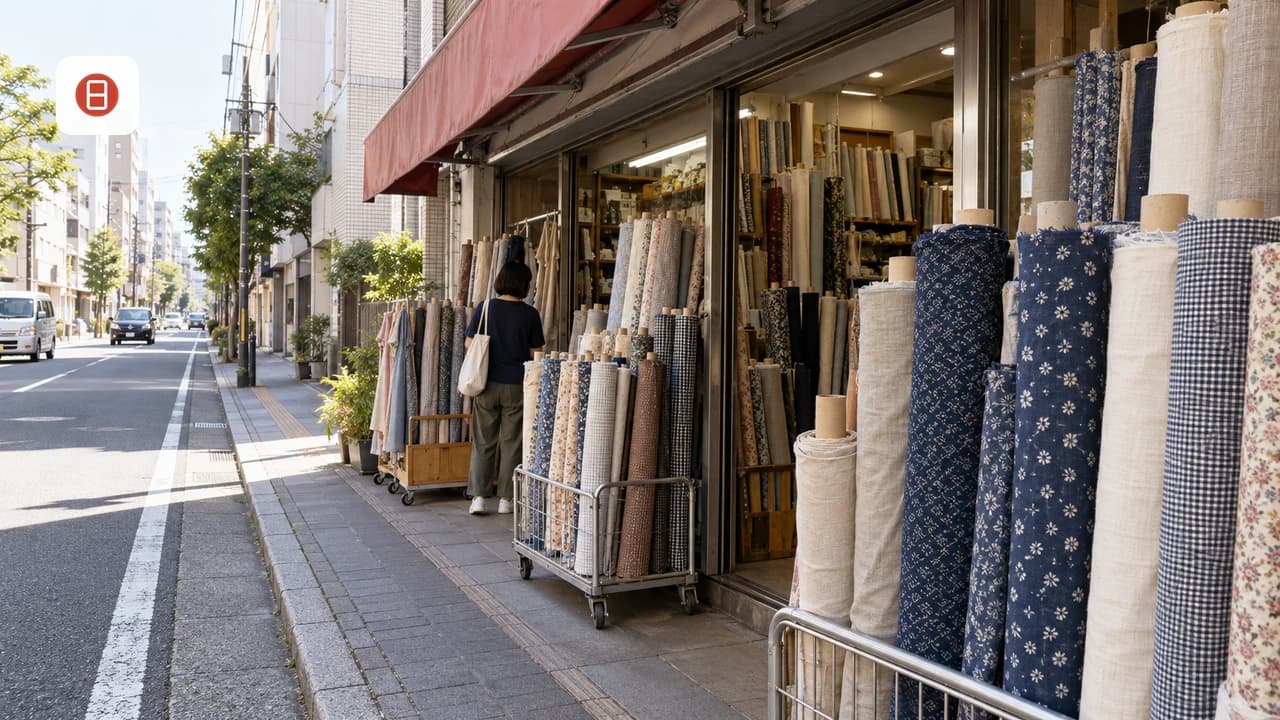
For a fabric-focused afternoon, pair Ameyoko with Nippori's fabric shops. The district also has an official Nippori Fabric Town site for shop details. If you want green space, ride out to Inokashira Park's lakeside paths by train.
Akihabara is about a 15-minute walk away, which makes it a natural extension for electronics browsing. Ameyoko works best as a half-day stop within a broader city plan. Explore more Tokyo sights to build the rest of your day.
Compare other districts in our guide to Tokyo shopping areas. If you need a base nearby, see these Tokyo hotel picks. For trip-wide logistics, our wider Japan planning page covers the basics.
Frequently Asked Questions
Is Ameyoko safe for tourists?
Ameyoko is a busy, popular market, and over half its customers are reported to be from overseas. Standard crowd precautions apply. Keep your wallet in a front pocket, hold your bag close, and stay aware in narrow lanes.
Can I find vegan food in Ameyoko?
Options are limited, since many stalls focus on meat, seafood, and fried items. Fruit skewers at Hyakkaen New Fruit are a safe snack at ¥100–¥200. The basement market in Ameyoko Center Building sells vegetables, pickles, and spices. Ask about broth and ingredients before ordering cooked dishes.
How long does it take to walk the whole street?
The strip is about 500 m, so a straight walk takes roughly 10 minutes. Browsing, queuing, and eating stretch that to one to three hours. Add time if you plan a standing-bar stop or the chocolate tatakiuri.
Do I need cash at Ameyoko?
Yes, bring cash. Many small stalls take cash only. Larger stores, such as drugstores, are more likely to accept cards. Carry several ¥1,000 notes and coins for snacks, which start around ¥100.
What day should I avoid visiting Ameyoko?
Wednesdays need care because many shops close on selected Wednesdays. Uokusa closes on the 2nd Wednesday and Uncle Joe on the 3rd. Ameyoko Center Building also closes on the 3rd Wednesday, except in December. Pick another weekday if food is your priority.
Free: The Tokyo Essentials guide
Top things to do, where to stay, a perfect day plan, getting around, and the best time to go — a Tokyo mini-guide you can take offline.
You might also like
Continue reading
More guides you'll find useful