

Skiing in Japan: The 8 Best Ski Resorts for Powder, Onsens, and Value in 2026
Plan skiing in Japan for 2026: compare Hokkaido and the Japanese Alps, see 8 top resorts, and get lift-ticket prices, transit times, and gear-shipping tips.
On this page
Last updated September 2026, skiing in Japan means chasing some of the driest, lightest snow anywhere, from Hokkaido's backcountry gates to Nagano's onsen towns. Siberian winter winds cross the Sea of Japan and drop that famous low-density powder, nicknamed Japow, on resorts from December through April. This guide ranks eight resorts and covers Japan's ski season timing, regional trade-offs, and gear logistics.
Choosing Where to Go Skiing in Japan: Hokkaido vs Honshu
Two regions dominate any serious skiing in Japan itinerary: Hokkaido in the north and the Japanese Alps of Nagano and Niigata in central Honshu. Hokkaido delivers the coldest temperatures and the most consistent powder days, built around a resort culture with widespread English-speaking staff and international dining. A closer breakdown of typical conditions and monthly snowfall lives in this Hokkaido winter guide. Vibe differs as much as terrain. Hokkaido's international resorts run closer to a Western ski town, with English menus and imported brands. Smaller Alps villages keep a more traditional, Japanese-speaking rhythm built around the local onsen rather than a bar scene. Nagano and Niigata sit closer to Tokyo, mix steep pitches with those onsen villages, and spread skiers across many smaller, independent resorts rather than one connected mega-resort. Nagano's snow patterns and resort spacing get a full rundown in this Nagano snow guide. Resorts near Niigata and Gunma also sit within day-trip range of Tokyo, which matters when time is short. A shortlist of those options is in these ski resorts near Tokyo. Skiers with one week and a flight already booked into Tokyo often default to the Alps for the shorter transfer. Skiers building a trip around powder above all else often pick Hokkaido regardless of the extra travel time. Either choice works for a first trip; the difference shows up mainly in transfer time and language support, not in snow quality itself. Niseko versus Hakuba is the classic first decision for a first Japan ski trip, and Niseko compared with Hakuba breaks down snow totals, crowds, and price gaps in more depth. For a full ranked rundown beyond the eight resorts below, see the best ski resorts in Japan.
| Factor | Hokkaido | Japanese Alps (Nagano & Niigata) |
|---|---|---|
| Snow character | Cold, dry powder driven by Siberian winds | Powdery and dry inland around Nagano; heavier, wetter snow near the coast in Niigata |
| Travel from Tokyo | About a 90-minute flight to New Chitose, then roughly a 3-hour bus to Niseko | About 90 minutes to Nagano on the Hokuriku Shinkansen; around 2 hours to Niigata on the Joetsu Shinkansen |
| English-language support | Widest range of English-speaking staff, menus, and ski schools in the country | Strong in Hakuba; more Japanese-only service in smaller Nagano and Niigata towns |
| Nightlife and après | Niseko carries the most bars and late dining; other Hokkaido towns stay quiet | Hakuba Village has izakayas and craft-beer bars; most other Alps towns center on onsens |
The 8 Best Ski Resorts in Japan, Hokkaido to Tohoku
This list moves from Niseko United in Hokkaido down to Zao Onsen in Tohoku, ranking each stop by snow quality, terrain variety, and overall atmosphere. Every entry below covers what makes it distinct rather than repeating a generic resort write-up. Skill level matters as much as region: Rusutsu and Niseko reward advanced tree skiers, while Furano and Shiga Kogen suit mixed-ability groups.
- Niseko United (Hokkaido)
- Four connected resorts, Hirafu, Niseko Village, Annupuri, and Hanazono, share one lift network and offer the most English-language service found anywhere in Japan's ski industry.
- Hirafu alone covers about 60% of Niseko United's terrain, and backcountry gates near the top lift lead toward Mt. Annupuri's roughly 4,300-foot (1,308 m) summit. Route and lift details are in this Niseko skiing guide.
- Typical snowfall timing and month-by-month conditions across the season are covered in the Niseko Snow Season Guide: Best Time to Ski & Ride.
- Rusutsu (Hokkaido)
- Three interconnected peaks hold deep tree-skiing runs alongside gentler beginner terrain, with noticeably shorter lift lines than neighboring Niseko sees on a powder morning.
- Rusutsu is an Epic Pass partner, with 5 days of access included on the Full and Local passes.
- Rusutsu's base area doubles as a summer amusement park, and select rides keep running through winter, an unusual pairing for a ski resort.
- Furano (Hokkaido)
- Furano sits in central Hokkaido with a working-town feel rather than a resort-village one, and it tends to see more stable weather than Hokkaido's coastal resorts.
- Family programs include snowmobiling, ice fishing, and kids' lessons taught in English.
- A month-by-month look at conditions and crowd levels is in this Furano winter guide.
- Hakuba Valley (Nagano)
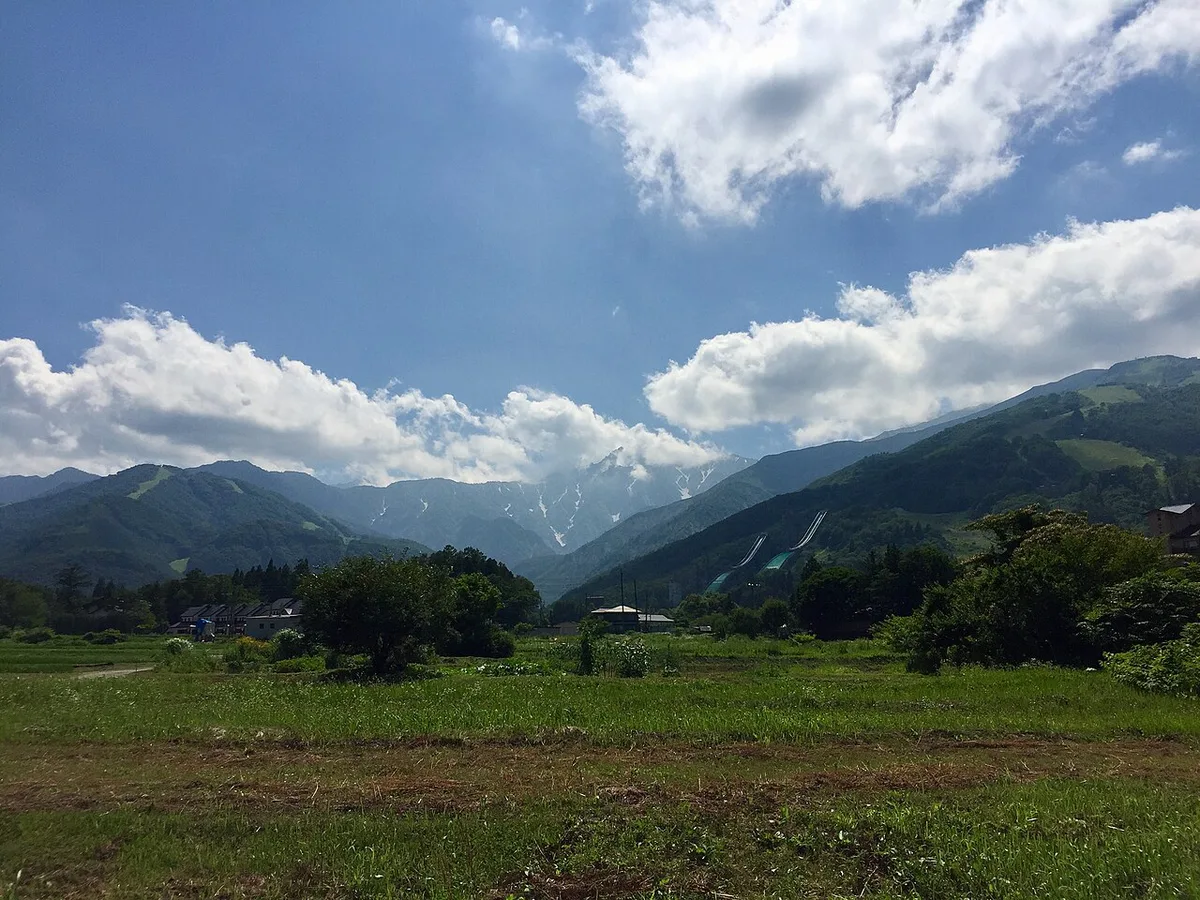
- Ten linked ski areas, including Happo-One, Goryu, Hakuba47, Iwatake, Tsugaike Kogen, and Cortina, combine for more than 200 runs across Hakuba Valley.
- Hakuba Valley hosted alpine events at the 1998 Winter Olympics, and published totals put annual snowfall around 36 feet (11 m).
- An Epic Pass gives 5 days combined across the ten areas. These resorts don't share one continuous lift system the way Niseko's do, so a car or the local shuttle bus matters more here for moving between them.
- Nozawa Onsen (Nagano)
- This is a hot-spring village first and a ski resort second, with public bathhouses scattered through the town center between runs.
- A dedicated ski school handles children's group and private lessons in English during the busiest weeks of the season.
- Off-piste terrain around the upper lifts counts among the more approachable sidecountry in the Alps, though a local guide is still worth hiring.
- Myoko Kogen (Niigata)
- Five linked resorts, Akakura Onsen, Akakura Kanko, Ikenotaira Onsen, Myoko Suginohara, and Seki Onsen, sit on the Nagano border. Together they post some of the heaviest snowfall totals in the country, at roughly 43 feet (13 m) a year.
- Crowds here skew domestic and Japanese-speaking, closer to Nozawa's atmosphere than to Niseko's or Hakuba's international mix.
- Akakura Onsen runs night skiing, and current conditions across the five linked areas are tracked by resort guides such as SnowJapan.
- Shiga Kogen (Nagano)
- Shiga Kogen strings together a wide range of slope grades on one lift ticket, which Japan's tourism board flags as a safe, easy pick for families with mixed skill levels.
- Patrol enforces off-piste boundaries strictly here, and skiers caught outside marked runs can have their lift pass confiscated for the rest of the trip.
- It also sits at a higher base elevation than most other Nagano resorts, which helps the snowpack hold up later into spring.
- Zao Onsen (Yamagata, Tohoku)
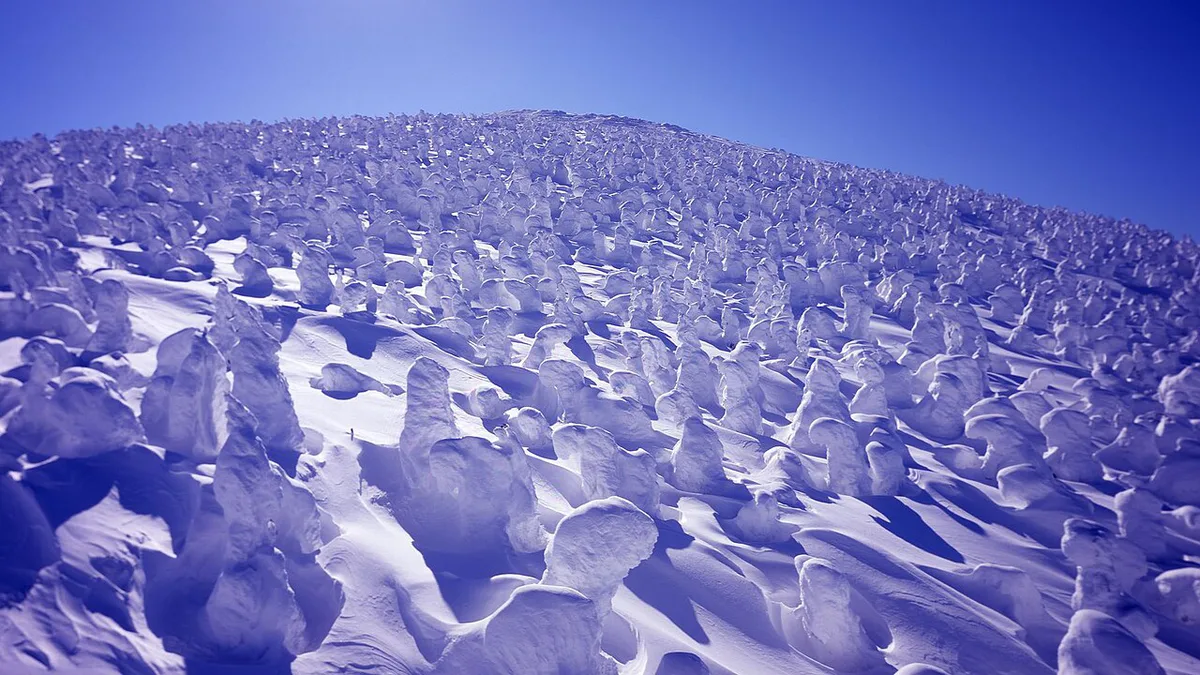
- Zao Onsen's slopes are lined with frost-caked fir trees nicknamed juhyo, or snow monsters, a sight that draws visitors even outside ski season.
- Reach it by shinkansen to Yamagata Station, then a local bus onward, with no rental car required.
- See this Zao attractions guide for the full sightseeing picture, snow monsters included.
Skiing in Japan with Kids: Family Programs and Kids' Clubs
Several resorts build specifically around families rather than expert terrain. Tomamu, in central Hokkaido, pairs family-standard lodging with groomed slopes and activities built for kids, alongside more remote sidecountry runs for adults who want to break off from the group. Furano runs snowmobiling, ice fishing, and English-language children's lessons alongside its main slopes, noted earlier in this guide. In the Alps, Tsugaike Kogen in the Hakuba Valley has gentle slopes built for first-timers, and Nozawa Onsen's ski school runs dedicated group and private classes for children. Shiga Kogen's mixed-grade layout across one ticket also works well for families skiing at different levels on the same day. Most resort childcare programs run in Japanese only, so English-speaking families should confirm language support directly with a resort or their accommodation before relying on it. Rusutsu and Niseko lean toward the opposite end, with tree skiing and off-piste access that draws more advanced adult skiers, though both still keep groomed beginner runs open for the rest of the group. Rusutsu's dual identity as a winter resort and summer amusement park also appeals to families, since some rides keep running through the season for kids who need a break from the slopes.
Getting to Japan's Ski Resorts (and Getting Your Gear There Too)
Two travel patterns cover almost every ski trip to Japan: fly into Hokkaido, or ride the Shinkansen into the Alps. For Niseko and Hokkaido's other resorts, the standard route is a flight to New Chitose Airport near Sapporo, about 90 minutes from Tokyo. From there, a shared or private bus takes roughly 3 hours to reach Niseko, with stops at Hirafu, Niseko Village, and Annupuri along the way. Sapporo Teine sits less than an hour from Sapporo city center, useful for a single powder day without committing to a full Niseko trip. For Nagano, the Hokuriku Shinkansen covers Tokyo to Nagano Station in about 90 minutes. Niigata sits around 2 hours from Tokyo on the Joetsu Shinkansen, useful for Myoko Kogen and Gala Yuzawa. Gala Yuzawa has its own Shinkansen stop with a gondola straight into the base area, which makes it workable as a car-free day trip from Tokyo. Travelers flying into Narita or Haneda who want to skip Tokyo entirely can book a long-distance transfer straight to Hakuba, typically a 4- to 5-hour ride. Multi-resort ski passes popular in North America and Europe now reach into Japan too. Ikon Pass tiers include 5 or 7 days at Niseko United's four linked resorts, depending on the pass level. Epic Pass tiers include 5 days at Rusutsu and another 5 days combined across Hakuba Valley's ten areas, on the Full and Local options. Coverage and blackout dates shift between seasons, so confirm current partner resorts directly with the pass provider before assuming last season's map still applies. Booking order, whether to lock in lodging or lift tickets first, is mapped out in this Japan ski trip planning guide. Skiers hauling their own gear rarely need to carry it through train stations by hand. Courier services, often called takkyubin locally, collect ski bags at the airport, a convenience store, or a hotel front desk and deliver them to the next hotel. Delivery can take a full day rather than arriving same-day, so hand-carry boots and a base layer for the first morning and let the bags catch up. Ask the front desk or airport counter for current rates and delivery windows before counting on next-day arrival.
Traveling roughly 3 hours to reach Niseko from the airport takes longer than about 90 minutes by shinkansen to Nagano, favoring time-pressed Alpine skiers.
What Skiing in Japan Costs in 2026
Day-to-day costs in Japan undercut most North American and European resorts, based on published rates from Japan's national tourism board. Japan's national tourism organization, Japan Travel, lists typical lift tickets at ¥3,500 to ¥5,000 per day. Full ski or snowboard rental sets, boots and poles included, start around ¥3,300. Budget lodging is available from about ¥5,000 a night, well below rates at Niseko's five-star hotels. More than 450 resorts operate nationwide, a count roughly on par with the total in the United States, so small hills away from Niseko and Hakuba routinely undercut those headline numbers. Prices also drop outside the January-February peak, when lift lines shrink along with the crowds. Premium package operators bundle transfers, lift passes, rentals, and lessons into one price, which trims planning time at a markup over booking each piece separately. Group bookings and multi-night stays sometimes unlock discounted lift-and-stay packages through the same package operators mentioned above. At the luxury end, ski-in-out hotels such as Niseko's Park Hyatt Hanazono, open since January 2020, anchor the top of the market with private onsens and multiple restaurants on site. Mid-range options include pensions, family-run guesthouses common near smaller resorts, and minshuku, traditional Japanese bed-and-breakfasts that include a home-cooked meal. None of these figures include flights into Japan, which typically represent the largest single line item in a ski trip budget.
Typical day lift tickets cost ¥3,500 to ¥5,000 per day, while Epic Pass tiers grant 5 days at Rusutsu and 5 across Hakuba Valley's ten linked areas.
| Item | Typical price |
|---|---|
| Day lift ticket | ¥3,500–¥5,000 |
| Full rental set (skis or board, boots, poles) | from ¥3,300 |
| Budget lodging | from ¥5,000 per night |
Onsens, Izakayas, and Japan's Après-Ski Culture
Après-ski in Japan runs quieter than the tailgate parties common in the Alps or the Rockies, built around soaking and small-plate dining instead of loud bars. Onsen etiquette is simple: rinse off at the washing stations before entering the communal bath, and skip the swimsuit since most baths are bathing-suit-free. Some traditional baths restrict visible tattoos, so it's worth checking a resort's own onsen policy before a soak. Izakayas, small pubs pouring sake and serving grilled skewers, cluster around every resort base. Niigata's coastal towns pair their izakayas with sushi sourced straight from the Sea of Japan. Niseko carries the most international dining and nightlife in the country. Details on where to eat and drink are in this Niseko attractions guide. Hakuba Village runs a close second, with its own izakayas and craft-beer bars. On a rest day between resorts, many Nagano-based itineraries add a stop to watch snow monkeys soak in outdoor hot springs. Details on visiting are in this snow monkey park guide. Karaoke rooms, rented private rather than shared with a crowd, are a common way groups end an evening after dinner.
Backcountry Skiing and Gate Access
Marked gates at resorts including Niseko and Hakuba open into sidecountry zones once ski patrol confirms conditions are safe. Closures happen fast when conditions turn, so a gate being open in the morning is no guarantee it stays open all day. Rules vary sharply by resort. Shiga Kogen confiscates lift passes from skiers caught outside marked boundaries, while Niseko and Myoko Kogen lean more permissive with clearly marked gate access. Hiring a local guide is standard practice for a backcountry day, not just a beginner precaution, given how fast whiteout conditions can close in above the treeline. Avalanche gear, a beacon, a probe, and a shovel, is non-negotiable off-piste. A full winter checklist, gear included, is in Japan's packing list. Some resort towns also offer standalone avalanche-awareness courses for visiting skiers who want a refresher before heading through a gate. Helicopter-assisted skiing is limited in Japan compared with North America, with one established operation running out of Mt. Shiribetsu north of Rusutsu for experienced skiers only. Cat-skiing, reaching terrain by snow groomer instead of a helicopter, runs at Niseko and Tomamu in Hokkaido and at a handful of smaller Honshu resorts.
Common Mistakes to Avoid When Planning a Japan Ski Trip
A few planning mistakes show up again and again among first-time visitors. Broader trip-planning basics, visas, rail passes, and city stopovers among them, are covered in this Japan travel guide.
- Booking after the Lunar New Year rush fills up
- Travelers observing the Lunar New Year holiday crowd Niseko and Hakuba during that window every year, and rooms and lift-and-stay packages sell out weeks ahead of the actual dates.
- Overlooking smaller local resorts
- Skipping Rusutsu, Myoko Kogen, and Zao Onsen in favor of only Niseko and Hakuba means shorter lift lines, lower prices, and quieter slopes go unused.
- Expecting a European-style party scene
- Nightlife outside Niseko and Hakuba Village is genuinely quiet, centered on onsens and izakayas rather than late bars, so plan evenings around soaking and dinner, not clubbing.
- Skipping travel insurance for backcountry days
- Resort rescue and medical costs off-piste are the skier's responsibility, not the resort's, so confirm a policy covers backcountry skiing before heading through a gate.
- Assuming every resort speaks English
- English signage and lessons concentrate in Niseko and Hakuba; smaller resorts such as Myoko Kogen and Furano operate mostly in Japanese, so a translation app or a guide helps outside the two biggest hubs.
How to Forward Ski Gear with Takkyubin
Takkyubin lets you send ski bags ahead from an airport counter, hotel, or participating convenience store. It is especially useful when changing regions by train. Allow at least one full day for delivery, and longer around weekends or heavy snowfall.
- Address the label to your accommodation, using its full name, postal code, phone number, and your check-in date.
- Write your name exactly as it appears on the hotel booking, then ask staff to confirm the delivery date.
- Keep boots, goggles, outerwear, medication, and one change of base layers with you.
Hotel reception staff can usually complete the form, while airport counters can help with English instructions. Ask whether the property accepts ski-bag deliveries before sending anything. Keep the receipt and tracking number until the bag reaches the hotel. For a first ski day, rent equipment if your own bag may arrive late. This avoids hauling skis through Tokyo stations, platform stairs, and packed Shinkansen carriages.
Frequently Asked Questions
Is skiing in Japan cheaper than skiing in the US?
Published rates put day lift tickets in Japan at roughly ¥3,500 to ¥5,000, according to Japan's national tourism board. That undercuts many US resort day-ticket prices, though exact savings depend on which US resort and season you compare against. Rental and lodging costs follow the same pattern, generally landing below comparable US mountain towns.
Do you need a car to ski in Japan?
No car is required for most trips. Shinkansen and resort shuttle buses cover Niseko, Hakuba, and Gala Yuzawa without one. A car helps most in Nagano and Niigata, where smaller resorts sit farther apart and don't share Niseko's single lift network.
Can beginners ski in Niseko?
Yes. Hanazono, one of Niseko United's four linked resorts, has a dedicated beginner area and terrain park. Group and private lessons run in English during peak weeks, and Hirafu's lower slopes are also gentle enough for a first week on snow.
What is the snow monster phenomenon at Zao?
Juhyo are fir trees at Zao Onsen that ice and snow coat until they turn into thick, ghost-like shapes, locally nicknamed snow monsters. They're most dramatic in January and February and are visible from Zao's slopes and lift lines, not just on a dedicated hike.
When is the best time to go skiing in Japan?
Most resorts run from mid-December through April, with January and February delivering the most consistent snowfall. High-altitude resorts can open earlier in some years, so check each resort's own opening-date announcement before booking flights. Lunar New Year holiday travel also draws crowds to Niseko and Hakuba, and its dates shift annually, so build in buffer time around it.
Explore More Japan Ski Guides
Dig deeper into planning a Japan ski trip, from resort-by-resort comparisons to season timing, Tokyo-area day trips, and the onsen towns and snow-country side trips that round out a winter itinerary.
Resort Guides
- 10 Best Ski Resorts in Japan (2026/27)
- Niseko vs Hakuba: Which Japan Ski Resort Fits You in 2026?
- 10 Amazing Niseko Attractions
- Niseko Skiing Guide: 9 Essential Tips for Your Trip
- 15 Best Zao Onsen Things To Do & Travel Guide
- Furano in Winter: 9 Essential Things to Know
Planning & Logistics
- Japan Ski Trip Planning Guide: JaPow Regions, Costs, and Logistics
- Japan Ski Resorts Near Tokyo: Day Trips & Weekend Guides for 2026/27
- Japan Packing List: Seasonal & Essential Travel Guide
- Getting Around Japan 2026
Season & Snow
- Japan Ski Season 2026/27
- Niseko Snow Season Guide: Best Time to Ski & Ride
- Hokkaido in Winter: 10 Essential Experiences and Itinerary Guide
- 10 Best Things to Do in Nagano in Winter
Beyond the Slopes
Free guide: Japan's Hidden Gems
12 under-the-radar places beyond Tokyo & Kyoto — with the best season to visit each and a local tip you won't find in the guidebooks.
You might also like


Continue reading
More guides you'll find useful


