Furano in Winter: 9 Essential Things to Know
Discover the best of Furano in winter. From the Blue Pond illumination to dog sledding and hidden curry shops, plan your perfect Hokkaido snow trip with our guide.
On this page
I visited Furano in late January, and the dry powder snow felt like floating on clouds. Mid-January to mid-February is the absolute best window for snow quality and local winter festivals. This guide was updated January 2024 based on my recent winter journey through the region. Late November to early December and late March are the best shoulder months for budget travelers.
Winter here transforms the famous lavender fields into a vast, silent ocean of deep white snow. You can enjoy world-class skiing or explore the magical top attractions in Furano without the summer crowds. The crisp air often creates rare phenomena like diamond dust on clear, freezing mornings. Planning ahead is essential because the most popular hotels fill up many months in advance.
Useful resources: the official Furano Tourism Association and Biei Tourism sites list current flower-season timing, hours and access.
How to Get to Furano in Winter
Traveling to the heart of Hokkaido is straightforward if you plan for the winter weather conditions. You can take a direct bus from Sapporo which takes about three hours through scenic passes. Trains from Asahikawa are also frequent and offer a reliable way to reach the ski slopes. Check the latest schedules as heavy snowfall can sometimes cause minor delays on rural lines.
The JR Furano Line from Asahikawa takes 73 minutes and costs 1,290 yen — no advance booking needed, tickets are bought at the counter on the day. From Sapporo, the Hokkaido Chuo Bus takes around 3 hours and costs approximately 2,700 yen; the train via Takikawa transfer takes about 2 hours 20 minutes and costs 4,540 yen. The bus is cheaper; the train connection is faster if you value reliability over price.
One critical detail that catches first-timers out: the JR Furano Line stops at three stations — Kami-Furano, Naka-Furano, and finally Furano Station. You want the last stop, Furano Station. Getting off one stop early at Naka-Furano leaves you several kilometres from the town centre and most hotels, a serious problem in winter conditions with heavy luggage. Confirm the final stop with the conductor if you are unsure.
Drivers should be cautious as the roads between Biei and Furano can become extremely icy. Many resorts also offer private shuttle services from New Chitose Airport for their guests. Renting a car gives you flexibility but requires an international driving permit and genuine experience with heavy snow driving. The local bus network covers the ski resort and Ningle Terrace forest cabins but not the scattered Biei tree landmarks — for those, a car or a guided day tour is necessary.
Season Comparison: When to Visit
Understanding the subtle shifts between the winter months helps you plan the perfect itinerary. December marks the start of the season, while February brings the most reliable snow depths. Temperatures often hover between -10°C and -2°C / 14°F to 28°F during the peak months. Based on climate data, January is typically the coldest month with the most frequent snowfall.
The atmosphere changes significantly from the quiet early season to the festive mid-winter period. Prices for hotels in Furano tend to peak during the Lunar New Year holiday window in late January or early February. Book accommodation at least four months ahead for any February stay. Consult the best time to visit guide for more seasonal details.
Budget-conscious travelers should consider early March for lower rates and decent snow. While the powder might not be as light, the longer days allow for more exploration. Many shops offer end-of-season sales on winter gear and local souvenirs during this period. You can still find plenty of snow activities without the heavy crowds of January.
| Season | Weather | Crowds | Prices | Events | Best for |
|---|---|---|---|---|---|
| Spring (April to May) | 2–15°C / 36–59°F | Low | Low | Cherry Blossoms | Budget Trips |
| Summer (June to August) | 15–28°C / 59–82°F | High | High | Lavender Festival | Flower Viewing |
| Fall (Sept to Oct) | 5–18°C / 41–64°F | Medium | Medium | Autumn Colors | Hiking |
| Winter (Nov to March) | -10 to -2°C / 14–28°F | High | High | Snow Festival | Skiing |
Top Winter Activities and Outdoor Adventures
Furano is famous for its light snow that enthusiasts call diamond dust because of its sparkle. You can book a hot air balloon free flight to see the landscape from 1,000 metres above the valley floor. This rare perspective offers a stunning view of the Daisetsuzan mountain range and, on clear mornings, the diamond dust itself glittering in the early light. Flights depart between 07:00 and 10:30 and must be booked well ahead as spots fill within days.
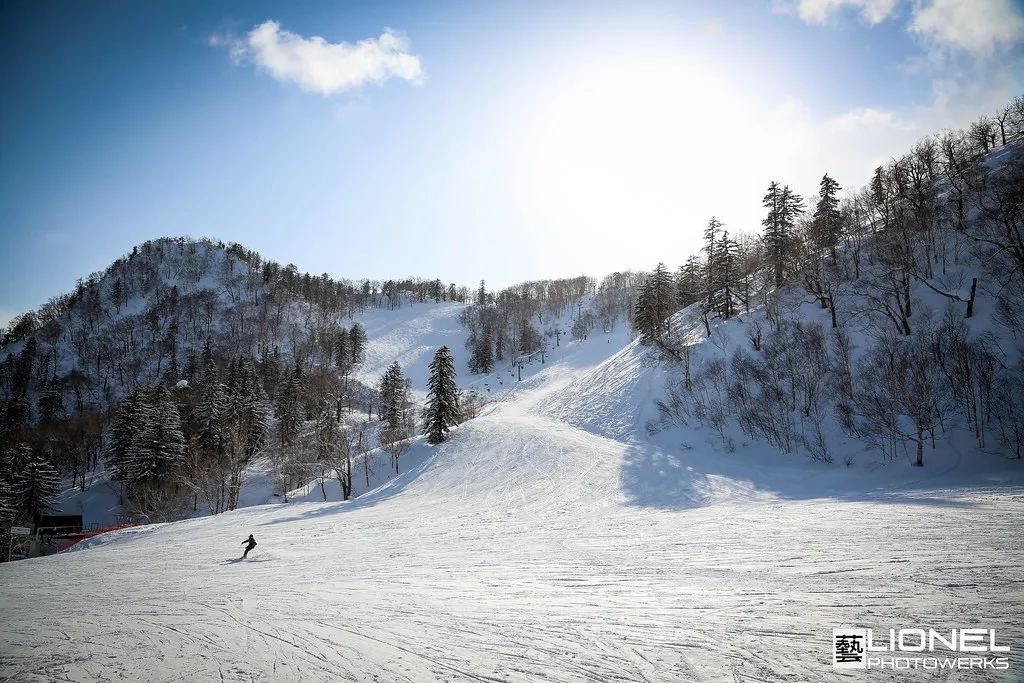
Furano Ski Resort receives some of Hokkaido's lightest, driest powder — Siberian storms dump an average of 7 metres annually, with January and February seeing the heaviest falls. The resort runs two zones: Kitanomine (open mid-December to late March) and Furano (late November to early May), with 28 trails split roughly 20% advanced, 40% intermediate, and 40% beginner. Night skiing is available until 20:00, and the Furano Ropeway reaches the summit with panoramic views of the Daisetsu Mountain Range.
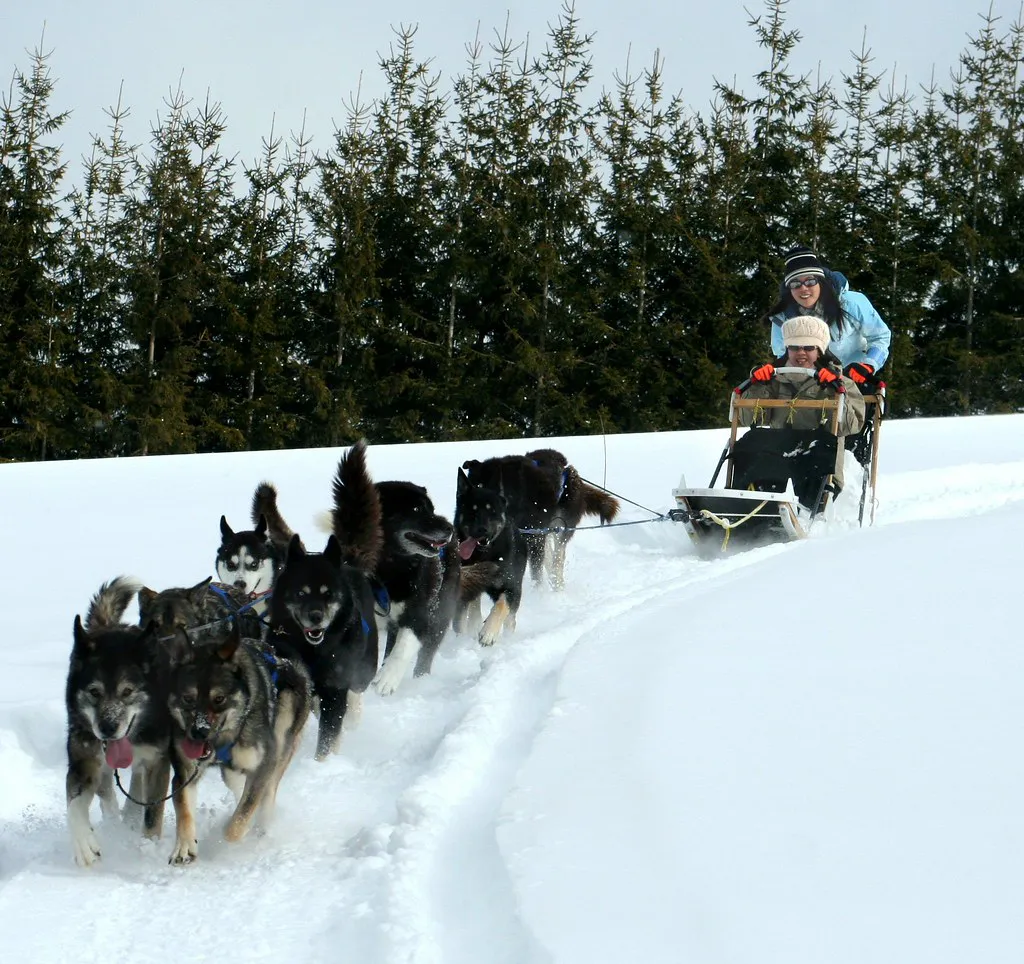
Dog sledding at Furano Kan-Kan Village is another winter-only highlight. Teams of Siberian Huskies pull you across open snow-covered fields, with time to meet the dogs afterwards. Kan-Kan Village operates from late December through mid-March and also offers snow tubing, snow rafting, and snowmobiling by day. After dark, tens of thousands of lights illuminate the venue and a snow dome café serves hot drinks inside walls built from ice.
For something quieter, snowshoeing through the birch forests and hills around Rokugo takes you into countryside that appeared in the beloved TV drama From the North Country. Night-watching tours from Asobiya give you a guided look at Japanese deer and North Red Fox moving through the silver birch trees after dark. Ice fishing for smelt at Kanayama Lake requires no experience — a tent is set up over a hole in the ice, the guide provides all equipment, and any fish you catch can be eaten as fresh tempura on the spot.
Aoi-Ike (Blue Pond) and Biei's Frozen Landscapes
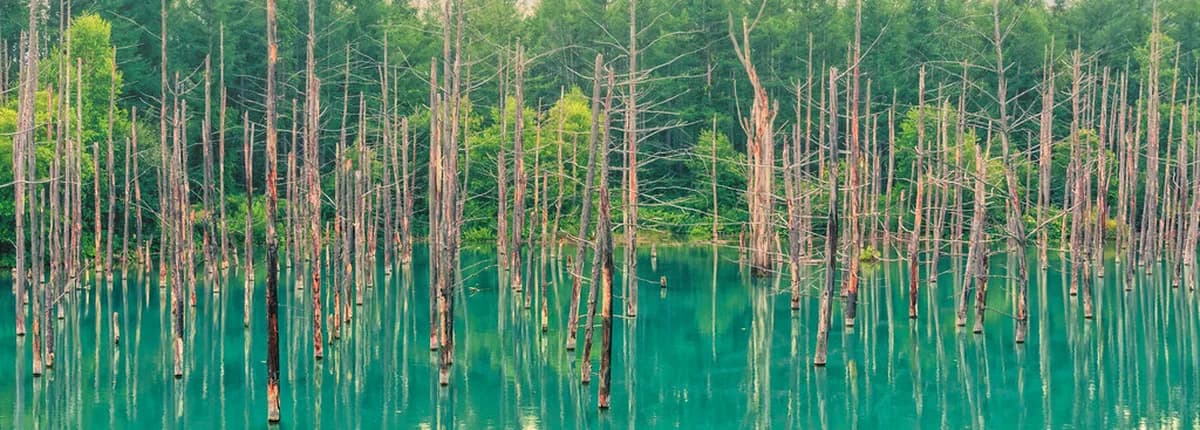
The Shirogane Blue Pond takes on an ethereal glow during the winter months. The pond itself freezes over and is blanketed by snow, hiding the famous blue water — but the winter illumination that runs from late October through late April turns the larch trees and frozen surface into a colour-shifting light show after dark. The lights run until 21:00. Check the official guide for Shirogane for exact illumination dates and cancellation conditions.
Nearby, the Shirahige Waterfall is arguably the better winter stop. Groundwater seeps from the cliffs and flows into the cobalt-blue Biei River below, and in January and February the waterfall freezes into dramatic ice formations while the river retains its vivid colour — a contrast that photographers rank among Hokkaido's most striking winter scenes. A five-minute drive from the Blue Pond, it is easy to combine both in one stop.
Taking a day trip to Biei allows you to trace the famous tree circuit. The Lone Christmas Tree is an eight-metre spruce set alone against a white horizon — it must be viewed from the road as the surrounding farmland is private. The Tree of Seven Stars and the Ken and Mary Tree look completely different in winter, their bare branches sometimes coated in frost deposits that bloom like white flowers on very cold mornings. All three are reachable by car; only the Lone Christmas Tree can be visited on foot without entering private land.
Farm Tomita and the Winter Flower House
The famous outdoor lavender fields at Farm Tomita are buried under heavy snow from early December onwards. By January the rows of lavender roots are invisible under a smooth white sheet, and the roadside stalls are closed. For visitors expecting the purple hillsides of summer posters, this is a disappointment — but the farm stays open and offers something genuinely unusual for winter.
The greenhouse on the grounds, called the Winter Flower House, grows lavender year-round. Step inside and the scent hits immediately — purple blooms in full colour while the world outside is entirely white. The facility also houses a dry flower gallery containing one of Japan's largest collections of dried botanicals, and a photo studio displaying Farm Tomita across all four seasons. The welcome shop sells lavender soft ice cream, lavender wine, and a range of preserves and cosmetics.
The farm is reachable by car year-round. In summer a seasonal Lavender Farm station opens on the JR line nearby, but this does not operate in winter — plan to arrive by taxi or rental car. A small snowman-building area in the park grounds makes this a worthwhile stop for families travelling with children.
Ningle Terrace and Indoor Cultural Experiences
Ningle Terrace sits beside the New Furano Prince Hotel and is one of the few evening attractions that does not require snow or skis. Fifteen log cabins connected by lantern-lit wooden walkways house craftspeople selling handmade woodwork, glass, jewellery, and textiles. The name comes from a novel by So Kuramoto about tiny forest creatures in Hokkaido. After a day in sub-zero temperatures, the warm interiors and slow pace are a genuine relief.
For hands-on experiences, the Furano Music Box Hall in the Rokugo district lets you assemble a custom music box by selecting a melody and decorating the case — the hall also displays hundreds of antique hand-cranked models and pipe organs. Kaikuugama, a pottery studio set among larch trees between Furano and Biei, offers clay workshops where visitors throw bowls or cups; finished pieces are fired and shipped home. Both make good half-day indoor activities on a stormy day.
The Furano Cheese Factory is open in winter and offers same-day workshops for making butter, ice cream, or cheese using local dairy. The underground cellar at the Furano Wine Factory is worth a visit for tastings paired with views of the snow-covered basin. Furano Jam Garden lets you bottle preservative-free local-fruit jam and design your own label, which doubles as an easy souvenir to carry home.
Where to Eat: Furano's Best Winter Comfort Food
Furano's restaurant scene in winter is thin, and the logistics are trickier than most travel guides admit. Many restaurants are run by one or two people and close without notice — even if Google says they are open. Almost all restaurants close between roughly 14:00 and 17:30 and do not reopen until early evening. The most popular spots fill up weeks in advance and take reservations only, with no walk-in tables available. If you are eating dinner, book before you arrive.
Nothing beats a steaming bowl of Hokkaido curry after a long day in the freezing air. Visit Yuiga Doxon for their famous omelet curry, but remember the secret refill rule. You must say Ru-ru-ru to the staff to get more of their spicy sauce. The rustic wooden interior and warm fire make it a favourite for cold evenings — arrive early as the queue forms fast and waits of 15–30 minutes are normal in peak season.
Witch's Spoon on Hinodemachi is a small curry restaurant run by two local women serving chicken leg curry soup at around 1,880 yen. Curry & Bar Jam near Motomachi is popular with locals for hearty soup curries loaded with Hokkaido vegetables — menus are translated into English and they take card payments (not American Express). Both are cash-preferred; carry enough yen as many smaller restaurants do not take cards at all. When everything is closed, Lawson convenience stores stock hot onigiri, skewers, and noodles that are a perfectly reasonable backup.
Relaxing After the Snow: Onsens and Hotels
Soaking in a hot spring after a day of skiing is one of the true pleasures of a Hokkaido winter. The New Furano Prince Hotel at the base of the ski resort has a large public bath and is ski-in, ski-out — the most convenient base if the slopes are your priority. La Vista Furano Hills Hotel near the station is a step above for those who value private baths and mountain views over slope access. Both fill up months in advance during January and February; budget options like guesthouses in the town centre can be found for around 5,000–8,000 yen per person per night in shoulder season.
For a longer soak away from the crowds, Fukiage Open-Air Onsen is about 40 minutes by car from Furano Station and ranks among Hokkaido's most atmospheric bathing spots — set in a rocky riverbed with steam rising into the frozen air. It requires a car and is not suitable in severe weather, but on a clear evening with stars overhead it justifies the effort. Note that Fukiage is gender-separated; check current conditions before travelling.
Those willing to venture further will find Tomamu the Tower by Hoshino Resorts about an hour south of Furano. Tomamu is a luxury resort in a different category — the Ice Village with its ice bar, ice church, and ice hotel rooms operates annually between December and mid-March. The Fog Deposit Terrace (Unkai Terrace in winter) opens on clear mornings when frost crystals coat the mountain forest in white, and the Cloud Bar lets you sit three metres above the snow with an unobstructed view of the rime-covered mountains. Tomamu is ideal for a one-night side trip rather than a base; it is 30 to 40 minutes from central Furano by car.
Practical Tips for Furano Winter Travel
Dressing in layers is the most effective way to stay comfortable in Hokkaido's extreme cold. You will move between freezing outdoor winds and very heavily heated indoor spaces all day. High-quality thermal base layers — merino wool works best — are essential for anyone planning time outdoors. Windproof outer layers become critical at higher elevations like the Asahidake Ropeway, where temperatures below -20°C are possible in midwinter.
Footwear is just as important as your coat when navigating deep snow and icy sidewalks. Choose waterproof boots with good grip or purchase detachable ice cleats at a local hardware or outdoor shop for around 500–1,000 yen. Thick wool socks keep your toes warm during long waits. Lip balm, moisturiser, and a portable power bank are all essential — phone batteries drain quickly in sub-zero temperatures, and most of Furano's key spots do not have indoor charging facilities.
A few operational rules that save real headaches: carry sufficient cash at all times because many restaurants and smaller shops are cash-only. Download Japanese for offline use in Google Translate before you arrive — English is limited outside the ski resort and main hotels. If you plan to photograph the Blue Pond illumination or the Biei tree circuit, bring a tripod and keep your camera warm in an insulated bag; cold drains batteries fast and condensation can form on lenses when you move from outdoors to indoors. Finally, book restaurants and onsens in advance, not on arrival — popular spots in Furano fill weeks ahead during the January–February peak.
Frequently Asked Questions
Is Furano too cold in winter?
Furano is very cold with temperatures often dropping below -10°C / 14°F. You should wear high-quality thermal layers and windproof jackets to stay warm. Most indoor spaces are heavily heated for your comfort.
Can I see lavender in Furano during winter?
You cannot see the famous outdoor lavender fields as they are covered in deep snow. However, Farm Tomita has a greenhouse where some lavender is grown year-round. This allows visitors to see the purple blooms even in January.
Do I need a car for Furano in winter?
A car is helpful but not strictly necessary due to the resort shuttles and JR trains. Driving on icy roads can be very dangerous for those without experience. Many top sights are accessible via organized day tours from the main hotels.
Furano in winter offers a perfect blend of high-octane adventure and serene, snowy landscapes. Whether you are skiing the powder or eating curry, the warmth of Hokkaido hospitality remains unforgettable. Start planning your trip to this winter wonderland today for the best availability.
Remember to check the weather forecasts daily to make the most of your time. The magical beauty of the frozen Blue Pond and the quiet forests awaits your arrival.
Free guide: Japan's Hidden Gems
12 under-the-radar places beyond Tokyo & Kyoto — with the best season to visit each and a local tip you won't find in the guidebooks.
You might also like


Continue reading
More guides you'll find useful