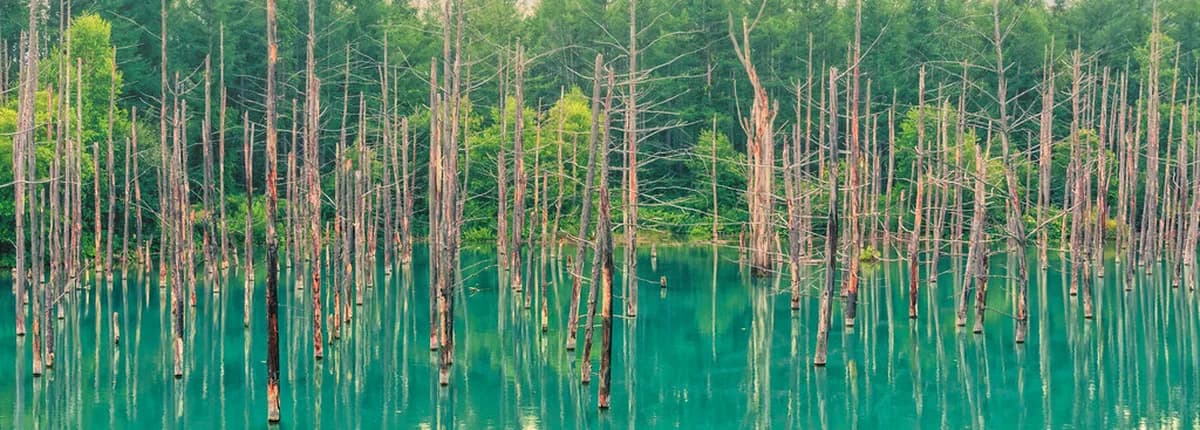
The Blue Pond in Biei is one of the most famous natural wonders in Hokkaido.
Known locally as Aoiike, this stunning site draws thousands of visitors with its surreal cobalt waters and silver birch trees.
Planning a visit requires careful timing to see the best colors and navigate local transport.
This the blue pond (aoiike) visitor guide covers everything you need for a perfect trip.
What is Aoiike (The Blue Pond) and Why is it Blue?
The Blue Pond was created by accident after a dam was built on the Biei River. Engineers constructed the dam to protect the town from volcanic mudflows from Mt. Tokachi. The resulting reservoir trapped water that eventually took on a magical blue appearance. While the pond looks natural, it is actually a man-made feature born from disaster prevention.
The vibrant color comes from a unique scientific phenomenon involving aluminum particles. Water from the nearby Shirogane Onsen contains high levels of aluminum that mix with the river. This creates a colloid mixture that scatters sunlight in a specific way. Science refers to this as Rayleigh scattering, which is the same reason the sky appears blue.
The intensity of the blue changes based on the weather and the angle of the sun. On clear days, the water can look like a bright turquoise or deep sapphire. Rain or heavy wind can stir up sediment and temporarily dull the color. Visitors often find the most vivid hues during the early morning hours in summer.
How to Get to the Blue Pond from Sapporo, Asahikawa, and Biei
Most travelers begin their journey by taking a train to Biei Station. You can use the JR Hokkaido Furano Line to reach Biei from Asahikawa or Furano. The train ride offers beautiful views of the rolling hills and agricultural landscapes. Once you arrive at Biei Station, you will need to transfer to a bus or taxi.
The Dohoku Bus Route 39 is the primary public transport option for reaching the pond. Buses depart from Biei Station and take about 20 minutes to reach the Aoiike bus stop. You should check the Dohoku Bus Official Site for current seasonal timetables. Buying a Biei & Shirogane Area 1-Day Free Pass can save money if you visit multiple sites.
Public transport users must watch the clock carefully due to limited bus frequency. There is often a 20-minute window between the arrival and the next return bus. This is usually enough time for a quick walk, but missing it causes long delays. If you prefer a slower pace, consider visiting Furano and renting a car for the day.
Best Time to Visit: Seasonal Differences (Summer vs. Winter)
Summer is the most popular time to visit because the blue color is most intense. From June to August, the green foliage provides a beautiful contrast against the water. You can also combine your trip with a visit to Tomita Farm to see the lavender fields. Be prepared for large crowds and warm temperatures during these peak months.
Winter offers a completely different experience as the pond freezes over. The water is covered in snow, making the pond look like a flat white field. While you cannot see the blue water, the snow-covered trees create a hauntingly beautiful scene. The winter landscape feels much quieter and more serene than the busy summer season.
Spring and autumn are shoulder seasons that offer unique visual shifts. In May, melting snow can make the water look a bit milky or light blue. Autumn brings vibrant red and yellow leaves that reflect on the pond's surface. These months are ideal for travelers who want to avoid the heaviest tourist traffic.
- Seasonal Visual Expectations Table
- Summer: Bright cobalt blue water
- Winter: Frozen white snow surface
- Autumn: Blue water with red leaves
- Spring: Milky turquoise meltwater
The Winter Illumination: Dates and Timing
The winter illumination event is a major highlight for those visiting in the cold months. Special LED lights are set up around the pond to create a shifting light show. The lights change colors and patterns to simulate the movement of water and wind. This event usually runs from November through April each year.
Lighting typically starts around 5:00 PM and lasts until late in the evening. The exact start time changes each month as the days get longer or shorter. Viewing the pond at night requires a tripod if you want to take clear photos. The dark forest background makes the illuminated trees stand out brilliantly.
Visiting during the illumination requires extra planning for transportation. Bus schedules may be adjusted to accommodate evening visitors during the peak event. Taxis are available from Biei Station but can be expensive for solo travelers. Always verify the current light show hours on the Biei Town Official Tourism Page before departing.
Essential Facilities: Parking, Toilets, and Food
The parking area at the Blue Pond is large but fills up quickly on weekends. Starting July 1, 2026, the parking fee for standard cars will increase to 1,000 yen. This update aims to manage the high volume of traffic and maintain the site. Ensure you have cash or a compatible payment card ready when entering the lot.
There are no toilet facilities located directly along the pond's walking path. You must use the restrooms located near the parking lot before you start walking. The path is about 500 meters long and takes roughly ten minutes to complete. Plan ahead to avoid any discomfort while you are viewing the water.
Food options at the site are limited to a small souvenir shop and snack stand. You can try unique blue-colored treats like soda-flavored soft serve ice cream. For a full meal, you will need to drive back toward Biei or Shirogane Onsen. Many visitors enjoy stopping at the Furano Cheese Factory for fresh local dairy products.
What Clothing and Gear Do You Need for a Winter Visit?
Winter in Biei is extremely cold with temperatures often dropping below zero. You should wear high-quality thermal layers to stay warm during your walk. A windproof jacket is essential because the area around the pond can be breezy. Don't forget a warm hat and gloves to protect your extremities from frostbite.
The walking paths can become incredibly slippery due to packed snow and ice. Wearing boots with good grip is necessary for safety on the uneven ground. Many locals recommend using ice spikes or crampons that strap onto your shoes. You can buy these inexpensive spikes at convenience stores in Asahikawa or Biei.
Photography enthusiasts should bring extra batteries for their cameras in winter. Cold temperatures can drain battery life much faster than usual. Keep your spare batteries in an inner pocket close to your body heat. A lens cloth is also useful for wiping away any snow or condensation.
Is the Blue Pond Worth Visiting? (Honest Review)
Some visitors feel the Blue Pond is smaller than they expected from photos. The site has become highly commercialized with paved paths and large fences. However, the color of the water remains truly unique and worth seeing once. It is a great stop if you are already exploring the Biei and Furano area.
Crowds can be a major drawback during the peak summer and autumn seasons. You may have to wait for a clear spot along the fence to take a photo. Arriving before 9:00 AM is the best way to enjoy a more peaceful experience. The site feels much more magical when you aren't surrounded by hundreds of people.
If you only have one day in Hokkaido, this site might feel like a quick stop. It is best enjoyed as part of a larger itinerary including other local landmarks. The drive between Biei and the pond is filled with scenic "patchwork" hills. Most travelers find the visit satisfying when combined with nearby natural attractions.
Nearby Attractions: Shirogane Onsen and Shirahige Waterfall
Just a few minutes away by car is the beautiful Shirahige Waterfall. The water falls over a cliff into the blue Biei River below. This waterfall does not freeze in winter, providing a stunning contrast with the snow. It is easily accessible from a bridge that offers a perfect viewing platform.
Shirogane Onsen is a nearby hot spring town perfect for relaxing after your walk. Many hotels offer day-use baths where you can soak in mineral-rich water. The heat is especially welcome after spending time in the cold Hokkaido air. This area also serves as a gateway to hiking trails on Mt. Tokachi.
You can also explore other famous spots like Shikisai no Oka for flower views. Another popular destination is Ningle Terrace for its fairy-tale forest shops. These locations are all within a short driving distance from the Blue Pond. Combining these stops creates a diverse and memorable day trip through Biei.
Muslim-Friendly Travel Tips: Food and Prayer Near Biei
Muslim travelers should be aware that the Blue Pond site has no prayer rooms. The nearest dedicated prayer facilities are located in the city of Asahikawa. Asahikawa Airport offers a multi-purpose room that can be used for daily prayers. Plan your schedule so you can perform your prayers before or after the pond visit.
Finding halal-certified food in the rural Biei area can be quite challenging. Most restaurants in the town focus on local pork and seafood dishes. It is often easier to find Muslim-friendly options in larger cities like Asahikawa. Some seafood restaurants can accommodate dietary needs if you ask for no alcohol or lard.
Bringing your own snacks or a packed lunch is a practical solution for the day. Convenience stores in Biei sell onigiri with simple ingredients like tuna or salmon. Always check the labels for hidden ingredients like emulsifiers or shortening. Planning your meals in advance ensures a stress-free experience while exploring the countryside.
Frequently Asked Questions
Why is the Blue Pond in Biei blue?
The pond's color comes from aluminum particles in the water that create a colloid mixture. This mixture scatters sunlight, making the water appear blue through a process called Rayleigh scattering. The hue changes with the weather and sun. Visit Furano to learn more about the region's geography.
How do I get to the Blue Pond without a car?
You can take the JR Furano Line to Biei Station and then transfer to the Dohoku Bus Route 39. The bus ride takes about 20 minutes and drops you at the Aoiike bus stop. Be sure to check the return schedule carefully to avoid waiting.
Is the Blue Pond blue in winter?
In winter, the surface of the Blue Pond freezes and is covered by a thick layer of snow. You will see a white, flat landscape rather than blue water. However, the night illumination event uses colorful lights to create a beautiful visual experience on the snow.
What time does the Blue Pond illumination start?
The winter illumination usually begins around 5:00 PM, depending on the month and sunset time. It typically runs from November through April. You should check the official Biei tourism website for the exact start times during your specific travel dates.
Are there toilets at the Blue Pond?
Yes, there are public toilets located near the parking lot entrance. However, there are no restrooms along the actual walking path or viewing area. It is best to use the facilities before you start the ten-minute walk to the water's edge.
The Blue Pond remains a must-see destination for anyone traveling through Hokkaido's Biei region.
Whether you visit for the summer blues or the winter lights, the scenery is unforgettable.
Remember to account for the 2026 parking fee changes and plan your transport carefully.
Enjoy your journey to this unique and scientifically fascinating corner of Japan.