

10 Best Ski Resorts in Japan (2026/27): Where to Find the Best JaPow
See Japan's best ski resorts for the 2026/27 season, from Niseko's powder to Hakuba's Olympic terrain, plus real transit times and costs.
On this page
Last updated September 2026, this ranking of the best ski resorts in Japan groups marquee mountains by the traveler they suit best. Powder hunters, Olympic-terrain skiers, and onsen-first travelers each have a clear match somewhere between Hokkaido and the Japanese Alps. Japan's ski season runs roughly December through April, and the right base depends on the kind of skiing that matters most.
Hokkaido vs. Honshu: Choosing Your Region First
This guide builds on our broader Skiing in Japan: The 8 Best Ski Resorts for Powder, Onsens, and Value in 2026 coverage, and every ranking here starts with a regional choice. Hokkaido delivers the driest, most consistent powder in the country, cooled by Siberian winds crossing the Sea of Japan. Honshu's Japanese Alps counter with higher elevations, Olympic-era infrastructure around Nagano, and easier rail access from Tokyo. Japan's national tourism board covers all three regions in its own skiing in Japan guide. A table below breaks down the practical differences. Hokkaido wins on raw snow reliability and low-hassle English support, especially around Niseko. Japan's Alps counter back with faster rail access from Tokyo and a deeper mix of Olympic-pedigree terrain, onsen villages, and budget lodging. Neither region beats the other outright; the right pick depends on whether snow depth or trip logistics matters more.
Niseko in Hokkaido averages 468 and 624 inches seasonally, but Furano gets only 275 inches—even within Hokkaido, wind exposure trumps regional advantage.
| Category | Hokkaido | The Japanese Alps (Nagano/Niigata) |
|---|---|---|
| Snow style | Dry, consistent powder from Siberian winds | Powder inland at Nagano's higher resorts, heavier snow near the Niigata coast |
| Signature terrain | Tree runs and gladed powder at Niseko, Rusutsu, and Kiroro | Olympic-caliber pistes at Happo-One and 18 linked ski areas at Shiga Kogen |
| English-language support | Extensive in Niseko, an Ikon Pass destination | Strong across Hakuba Valley's 10 linked resorts, an Epic Pass partner |
| Getting there from Tokyo | Fly into New Chitose Airport, then transfer by bus or car | Hokuriku Shinkansen reaches Nagano in about 90 minutes |
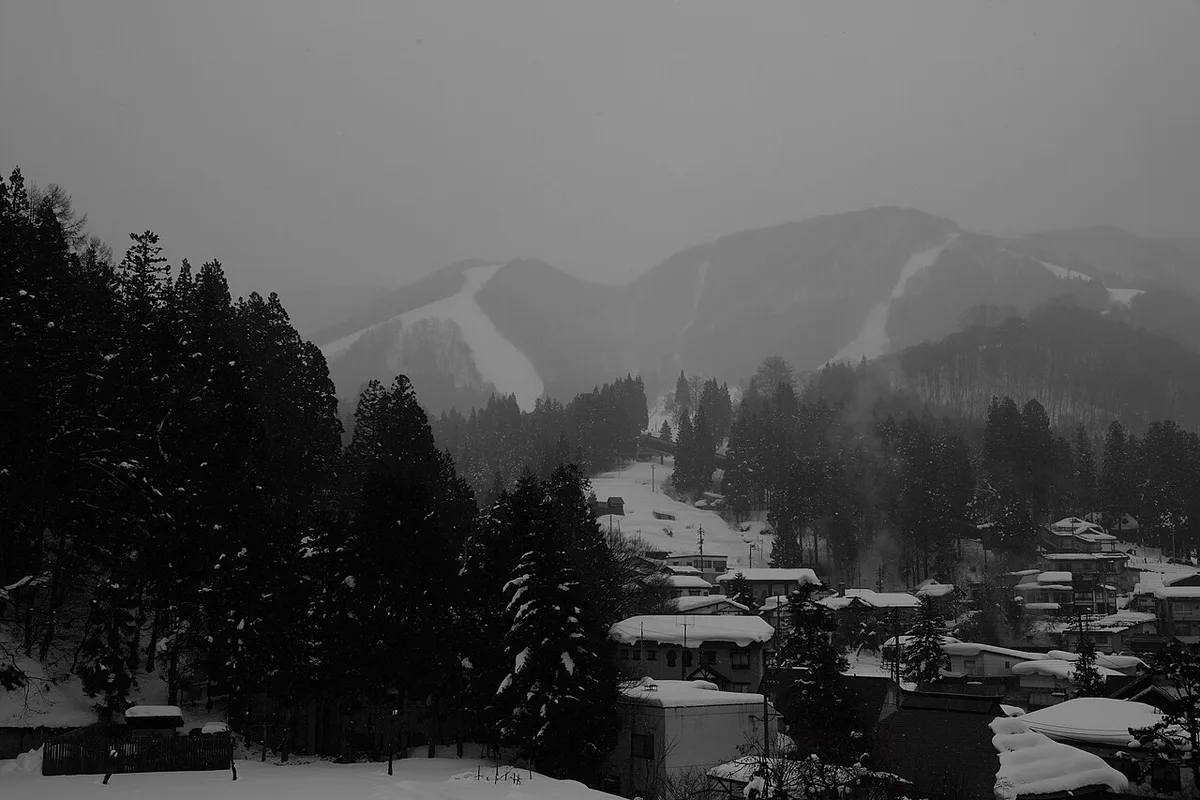
10 Best Ski Resorts in Japan, Ranked by Traveler Type
Ten resorts below cover Hokkaido's powder belt, the Japanese Alps, and easy day trips from Tokyo, each matched to the traveler it fits best. Every entry names a decision criterion first, since picking a mountain that fits a trip matters more than any single ranking.
- Niseko United — Best for Powder Hounds and English-Language Ease
- Four linked ski areas, Grand Hirafu, Hanazono, Niseko Village, and Annupuri, share one lift ticket and roughly 31 trails.
- Estimated seasonal snowfall runs between 468 and 624 inches, driven by Siberian winds crossing the Sea of Japan.
- New Chitose Airport sits about 69 miles away, roughly a two-hour transfer, and the Niseko Skiing Guide: 9 Essential Tips for Your Trip breaks down each village.
- Rusutsu — Best for Powder Without Niseko's Crowds
- Three interconnected peaks, West Mountain, East Mountain, and Mt. Isola, hold 37 trails on 4 gondolas and 14 lifts.
- Longest run Isola Grand stretches 2.2 miles, and tree runs like Tiger and Super East draw advanced skiers.
- From New Chitose Airport, expect about a two-hour transfer across 52 miles. Rusutsu has partnered with the Epic Pass in past seasons.
- Furano — Best for an Authentic Hokkaido Town Base
- Two connected zones, Furano and Kitanomine, share 11 lifts and a vertical drop over 3,117 feet.
- Average snowfall runs about 275 inches a season, and skiers 12 and under ride free.
- Downtown Furano sits minutes from the lifts, and the Furano in winter guide covers town-specific planning.
- Kiroro — Best for Managed Tree Skiing and Quiet Slopes
- Twenty-three courses cover terrain up to a 36.8-degree pitch, with five designated Tree Run Areas for lift-accessed powder.
- Base snowfall averages roughly 531 inches, climbing to about 748 inches near the summit.
- New Chitose Airport is roughly 64 miles away, about a 90-minute transfer, and Otaru sits about 40 minutes away by taxi.
- Tomamu — Best for Families Who Want a Resort Village
- Twenty-nine courses spread across two mountains with a 1,919-foot vertical drop and 13 miles of trails.
- An Ice Village with 11 ice domes and an indoor wave pool round out the non-ski amenities.
- Reaching Tomamu from New Chitose Airport takes about two hours across roughly 87 miles, by rail or resort shuttle.
- Hakuba Valley — Best for Variety on One Lift Pass
- Ten linked ski areas, including Happo-One, Goryu, Hakuba47, Cortina, and Tsugaike Kogen, share more than 200 runs combined, per the Hakuba Valley official site.
- Happo-One alone drops 3,514 vertical feet across 16 courses, with a longest run of about 5 miles.
- Narita and Haneda airports sit roughly 170 to 216 miles away, about a 4.5- to 5-hour transfer, and the 10 Best Things to Do in Nagano in Winter (2026) covers valley-wide logistics.
- Nozawa Onsen — Best for Onsen Culture and Village Life
- 740 acres and 44 pistes include a run from Yamabiko to the village stretching nearly 6 miles.
- Thirteen free public sotoyu bathhouses sit within walking distance of the lifts, and the local ski club dates to 1918.
- Nozawa Onsen Liner bus connects Iiyama Station to the village in about 25 minutes.
- Shiga Kogen — Best for Exploring 18 Ski Areas on One Pass
- Eighteen linked ski areas cover 988 acres and about 49.7 miles of pistes on 48 lifts.
- Yokoteyama tops out at 7,569 feet, Japan's highest ski area, and the season often runs from mid-November into late May.
- Off-piste skiing is strictly enforced here, and nearby Jigokudani Snow Monkey Park Travel Guide makes a good non-ski day off the slopes.
- Myoko Kogen — Best for a Traditional, Less-Commercialized Trip
- Five separate resorts, Akakura Onsen, Akakura Kanko, Ikenotaira Onsen, Myoko Suginohara, and Seki Onsen, sit along the Nagano-Niigata border.
- Proximity to the Sea of Japan brings an estimated 512 inches of snowfall a season, while its inland edge keeps the snow relatively light.
- Backcountry access here draws experienced skiers looking for a quieter alternative to Hakuba.
- Gala Yuzawa and Kagura — Best for a Tokyo Day Trip
- Gala Yuzawa's gondola connects directly to its own train station, making a same-day round trip from Tokyo realistic.
- Kagura sits higher in elevation, with a 410-acre area, a 4,019-foot vertical drop, and the Dragondola linking it to neighboring Naeba.
- Reach Kagura by Shinkansen to Jomo-Kogen Station, then a local bus, and see day trips from Tokyo for full routing.
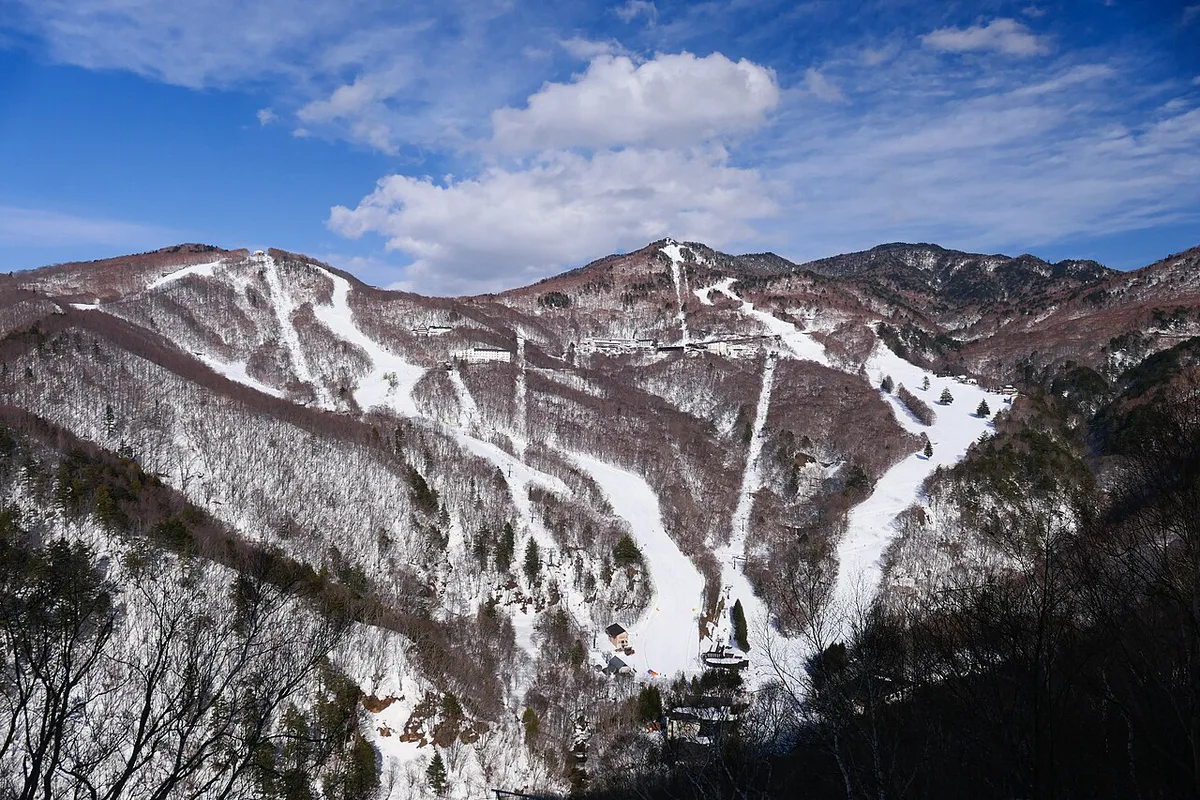
The Japan Skiing Experience: Onsens, Independent Schools, and Backcountry Gates
Ski schools, rental shops, and many restaurants in Japan typically operate independently of the resort that hosts them. This differs from the single-operator model common across North America. A lift ticket rarely bundles lessons or gear, so book both separately and reserve an English-speaking instructor ahead of peak weeks. Après-ski leans toward onsen soaks and izakaya dinners rather than loud bars, though Niseko and Hakuba both support a livelier scene for travelers who want one. Guided cat-skiing and backcountry tours run out of Niseko and Tomamu for travelers chasing fresh tracks without a hike. Backcountry rules vary sharply by resort, as this list shows. Our Hokkaido in winter guide covers how powder days typically unfold.
- Niseko
- Marks 9 terrain gates and 18 designated powder zones for guided sidecountry access beyond the main pistes.
- Shiga Kogen
- Enforces strict on-piste-only rules and can confiscate a lift pass for skiing outside marked runs.
- Nozawa Onsen and Myoko Kogen
- Tend toward looser off-piste norms, though rescue costs fall on the skier if something goes wrong.
Getting There and Getting Around: Trains, Airports, and Luggage
Most international arrivals land at Narita or Haneda, then continue toward the mountains by rail or private transfer. Hokuriku Shinkansen service reaches Nagano in about 90 minutes from Tokyo, and Joetsu Shinkansen service reaches Niigata in roughly 2 hours. Hokkaido-bound travelers instead fly into New Chitose Airport near Sapporo, then transfer by bus or car to resorts such as Niseko, Rusutsu, or Furano. Many mountain hotels and lodges also run free shuttles connecting nearby train stations to the slopes. Luggage-forwarding services, known as takkyubin, ship ski bags and suitcases ahead to a hotel so travelers can move between cities hands-free. This service is inexpensive and available at airports, convenience stores, and most accommodations. Rental shops typically stock both premium, branded gear and older equipment at a lower price, so specify a preference when booking. Pack layers and confirm what a resort or rental shop supplies before flying. Our Japan Packing List: Seasonal & Essential Travel Guide breaks down what to bring versus rent. For a full checklist across transit, packing, and timing, see our Japan Ski Trip Planning Guide: JaPow Regions, Costs, and Logistics.
What Skiing in Japan Costs in 2026/27
Japan's on-mountain costs tend to run below equivalent days in the US or the Alps. A single-day lift ticket typically costs ¥3,500 to ¥5,000, and full rental packages start around ¥3,300 a day. Budget accommodation is available from about ¥5,000 a night, well below resort-town rates elsewhere. Travelers already holding an Ikon Pass or an Epic Pass may get discounted or included days at Niseko, Rusutsu, or Hakuba Valley resorts. Partner terms shift season to season, so confirm current 26/27 access before building a trip around one specific pass. For real-time snow and condition reports across every major mountain, the independent SnowJapan resort guide is worth bookmarking.
| Item | Typical 2026/27 Range |
|---|---|
| Single-day lift ticket | ¥3,500–¥5,000 |
| Full rental package (skis, boots, poles) | From ¥3,300/day |
| Budget accommodation | From ¥5,000/night |
| Multi-resort pass access | Ikon Pass at Niseko; Epic Pass at Rusutsu and Hakuba Valley — confirm 26/27 status |
Mistakes to Avoid When Planning a Japan Ski Trip
A few planning missteps show up again and again on Japan ski trips. Avoiding these before locking in dates or a resort saves both money and disappointment.
A common mistake: assuming all resorts allow tree skiing. At Shiga Kogen's 48 lifts, strict on-piste-only rules can result in lift pass confiscation.
- Booking around Chinese New Year without a buffer
- Holiday timing shifts between January and February most years, and every major resort fills up during that window.
- Lodging near the lifts often needs booking up to six months ahead to secure a room during that stretch.
- Target early-to-mid January or March instead if travel dates stay flexible.
- Our Niseko Snow Season Guide: Best Time to Ski & Ride breaks down week-by-week timing.
- Assuming every resort allows off-piste or tree skiing
- Shiga Kogen enforces strict on-piste-only rules and can confiscate a lift pass for skiing outside marked runs.
- Niseko and Myoko Kogen allow guided backcountry access instead, through marked gates or looser local norms.
- Skipping the lift schedule check
- Some smaller resorts pause select lifts midweek, so confirm operating days before basing an itinerary around one run.
- Traveling without a luggage plan
- Pairing ski gear with a takkyubin forwarding booking beats hauling bags through every train transfer.
When to Ski Japan: Match Your Dates to Snow and Crowds
Japan’s season usually runs from December into April, but the best window depends on the region and your priorities. Hokkaido often provides the most dependable midwinter powder. Cold Siberian air gathers moisture over the Sea of Japan before reaching resorts such as Niseko, Rusutsu, and Kiroro. Nagano and Niigata can offer excellent snow too, especially at higher areas such as Shiga Kogen and Kagura.
- December: Early-season conditions can be variable, although Hokkaido and high-elevation resorts often open first.
- January: Usually the strongest month for frequent powder snowfall, particularly in Hokkaido.
- February: Snow remains reliable, but Lunar New Year dates can bring heavier demand for lodging and transfers.
- March: Expect milder weather, longer daylight, and spring skiing. Choose higher resorts for the best chance of preserved snow.
Check each resort’s lift status and snow report before committing to a short trip. Weather patterns can differ greatly between coastal Niigata, inland Nagano, and Hokkaido.
Frequently Asked Questions
Should you ski Niseko or Hakuba first?
Niseko suits powder-focused, English-friendly trips with a lively village scene. Hakuba suits skiers who want Olympic-caliber terrain and more lodging choices spread across 10 linked ski areas. Our Niseko versus Hakuba comparison walks through the full tradeoffs.
When is the best time to ski in Japan for powder?
January and February typically deliver the most reliable snowfall across Hokkaido and the Japanese Alps. February also brings Chinese New Year crowds, since the holiday moves between January and February most years. Early-to-mid January or March often balances good snow against lighter crowds.
Do lift tickets in Japan include ski school or rental gear?
No, Japanese resorts usually run ski schools and rental shops as independent businesses, separate from the lift ticket. Book lessons and equipment ahead of peak weeks, especially if an English-speaking instructor matters.
How much should you budget for a day of skiing in Japan?
A single-day lift ticket typically runs ¥3,500 to ¥5,000. Full rental packages start around ¥3,300 a day, and budget accommodation is available from about ¥5,000 a night.
Can you day-trip to ski resorts from Tokyo?
Yes, Gala Yuzawa's gondola connects directly to its own train station for a same-day round trip. Kagura also works, reached by Shinkansen to Jomo-Kogen Station and then a local bus, though it takes a longer transfer.
Is off-piste and tree skiing allowed everywhere in Japan?
No, rules vary sharply by resort. Niseko and Myoko Kogen take a looser approach, permitting guided backcountry runs through marked gates instead. Shiga Kogen keeps things strictly on-piste and will pull a lift pass for skiing outside marked runs.
Which Japan ski resorts work best for families with young kids?
Furano gives skiers 12 and under free lift passes and gentle terrain around Kitanomine. Tomamu adds an indoor wave pool and an Ice Village for non-ski days. Shiga Kogen's wide, groomed runs across 18 linked ski areas also suit mixed-ability families.
Free guide: Japan's Hidden Gems
12 under-the-radar places beyond Tokyo & Kyoto — with the best season to visit each and a local tip you won't find in the guidebooks.
You might also like


Continue reading
More guides you'll find useful


