
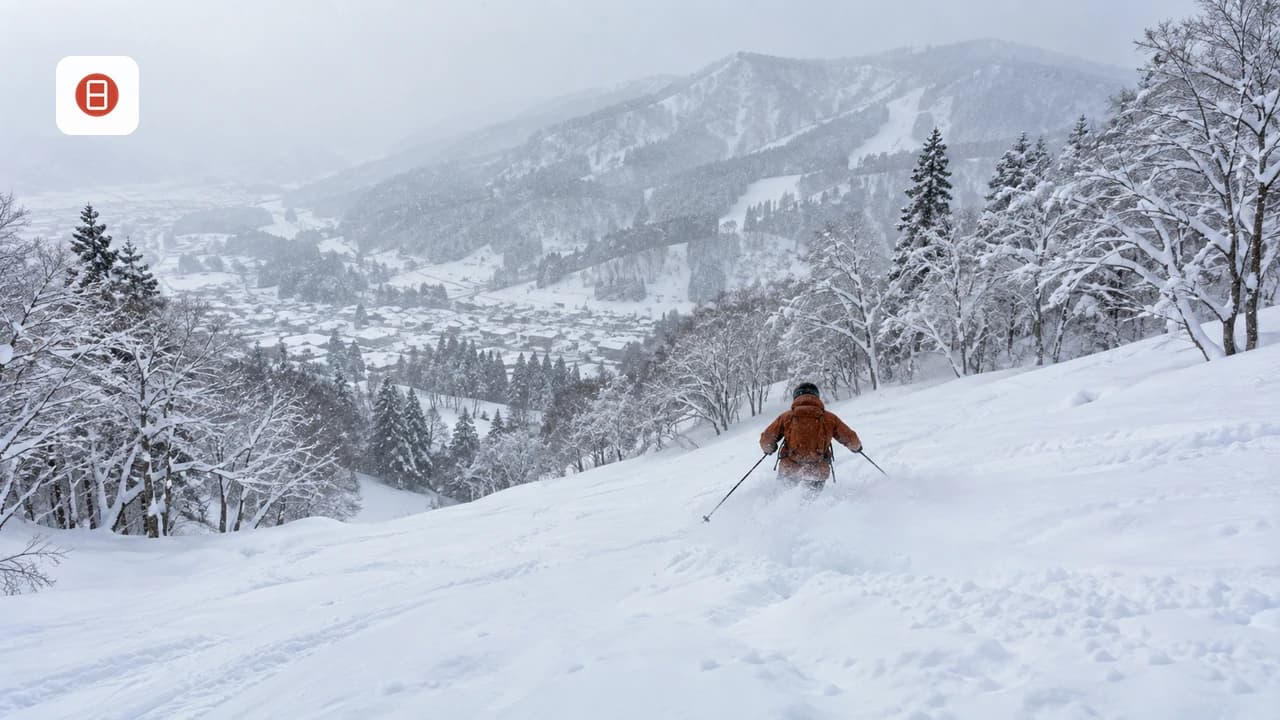
Japan Ski Season 2026/27: The Complete Month-by-Month Guide
A month-by-month guide to the Japan ski season: Hokkaido vs Honshu snow, 2026/27 resort dates, JPY costs, and logistics for planning a trip.
On this page
Last updated September 2026. The Japan ski season runs from late November through early May, with Hokkaido's Niseko and Rusutsu opening first and Nagano's Alps holding snow latest. This guide breaks down month-by-month conditions, the Hokkaido-versus-Honshu trade-offs, and 2026/27 costs, so you can time a trip around real powder instead of a guess.
When Is the Japan Ski Season? A Month-by-Month Answer
Japan's ski season runs from late November through early May, though most travelers plan around a shorter core window. The reliable stretch for lifts, terrain, and full resort operations runs from mid-December to early April. Hokkaido opens first. Niseko's season historically starts in the last week of November or the first week of December. 2026/27 estimates put Niseko's opening around November 30 and Rusutsu's around December 2. Honshu's Nagano Alps open more gradually, with Hakuba's top lifts running from late November but full opening closer to mid-December. January and February are the non-negotiable months for powder chasers, since snowfall is heaviest and most consistent then. For a fuller regional breakdown before locking dates, the skiing in Japan overview covers season length by region. The Niseko Snow Season Guide: Best Time to Ski & Ride details week-by-week conditions for that resort specifically. For up-to-date conditions once the season opens, SnowJapan's resort guide tracks snow reports across the country in real time.
Season Comparison: Early, Peak "Japanuary," and Spring
Conditions shift enough across the season that timing changes both the skiing and the price. Early season, late November to mid-December, means thin cover and groomer-only runs, with temperatures hovering near 0°C (32°F) on some mornings before a real base builds. Peak "Japanuary," early January to mid-February, delivers the heaviest, most consistent snowfall, and Hokkaido mornings during this stretch often sit around -5°C (23°F). By late February and early March, snow quality generally holds, though a handful of years bring an earlier thaw. Spring skiing, mid-March to early April, trades some powder odds for bluebird days. Village-level afternoons can climb toward 5°C (41°F) even as upper-mountain snow stays skiable.
Spring skiing, mid-March to early April, offers better rates than peak season though snow thins at lower elevations.
| Season | Dates | Snow and Crowds | Best For |
|---|---|---|---|
| Early Season | Late Nov–mid Dec | Thin base, groomers only, first-tracks feel | Early powder chasers comfortable with limited terrain |
| Christmas and New Year | Late Dec–early Jan | Moderate base, the year's highest crowds and prices | Families set on snow over the holidays |
| Peak "Japanuary" | Early Jan–mid Feb | Deepest, most consistent snowfall of the season | Powderhounds prioritizing snow over price or crowds |
| End of Peak | Late Feb–early Mar | Still strong most years, occasional bluebird breaks | Skiers wanting peak-level snow at a slight discount |
| Spring Skiing | Mid Mar–early Apr | Corn snow, bluebird days, thinning cover at lower elevations | Piste lovers combining skiing with sightseeing |
Hokkaido vs Honshu: Choosing Your Region
Hokkaido and Honshu deliver different versions of the same Japan ski season. Cold winds crossing the Sea of Japan drop drier, lighter "sea-effect" snow across Hokkaido's Niseko, Rusutsu, and Furano, with fewer freeze-thaw cycles than lower-latitude mountains. Honshu's Nagano Alps, including Hakuba, Nozawa Onsen, and Shiga Kogen, carry steeper Olympic-era terrain and easier rail access from Tokyo. Hakuba Valley's official site confirms the valley links several separate resorts under one regional identity. Japan's tourism board puts that count at roughly ten resorts across the valley. Prices and English signage tilt toward Hokkaido, while Honshu trades some of that convenience for onsen-village character and a longer spring tail. Travelers comparing the two head-to-head can work through the Niseko vs Hakuba comparison. For region-wide planning beyond those two resorts, see Hokkaido in Winter: 10 Essential Experiences and Itinerary Guide. Honshu's own snow patterns are covered separately in the 10 Best Things to Do in Nagano in Winter (2026).
Hokkaido's sea-effect powder forms around -5°C (23°F) mornings; inland peaks like Shiga Kogen run even colder near -8°C (18°F).
Where to Ski: Top Resorts for 2026/27
Japan's ski map covers dozens of serious resorts, but eight come up in nearly every trip-planning conversation. Each entry below groups resorts by what they do best, from beginner-friendly hubs to onsen-village classics and family-friendly Tohoku terrain. For the complete rundown across every region, the best ski resorts in Japan guide ranks the full set side by side.
- Niseko United: four linked areas, Grand Hirafu, Hanazono, Niseko Village, and Niseko Annupuri. The combined area has 31 trails and 26 lifts, plus the most English-friendly services of any Japan ski town. See the Niseko Skiing Guide: 9 Essential Tips for Your Trip for village-by-village picks.
- Rusutsu: three interconnected mountains, 37 trails, and a terrain mix of roughly 30% beginner, 40% intermediate, and 30% advanced, with lighter crowds than neighboring Niseko.
- Hakuba 47 and Goryu: a 2,605-foot vertical drop and Hakuba Valley's largest night-skiing area on illuminated groomed runs. The terrain suits park riders and families sharing one lift pass.
- Nozawa Onsen: nearly 6 miles on the Yamabiko run down to a village with 13 free public onsens and ski history dating to 1897.
- Sapporo Teine: about 40 minutes (9 miles) from downtown Sapporo, with a 2,241-foot vertical drop split between Olympic-era expert terrain and wide beginner slopes.
- Furano: two connected zones averaging about 275 inches of snowfall a year, plus free lift passes for kids 12 and under. Check the Furano in Winter: 9 Essential Things to Know guide for family logistics.
- Shiga Kogen: Japan's largest interconnected resort, with 18 ski areas on one pass. Yokoteyama's 7,569-foot summit is the country's highest ski elevation, where mornings run colder than the valley floor, often near -8°C (18°F). The Jigokudani Snow Monkey Park Travel Guide nearby makes a natural rest-day trip.
- Zao Onsen (Tohoku): frost-covered "juhyo" snow-monster trees and hot-spring bathing on the Yamagata-Miyagi border, reachable by shinkansen to Yamagata Station plus a local bus. The Zao attractions guide covers the full monster-tree season.
Is a Tokyo Day Trip to the Slopes Worth It?
Tokyo sits close enough to a few ski areas that a same-day trip is technically possible. Gala Yuzawa in Niigata is a common first choice for this, since a gondola links the shinkansen platform directly to the slopes. Kagura, also in Niigata, sits higher and holds powder longer, reachable via shinkansen to Jomo Kogen Station. A day trip means a shinkansen ride each way, a few hours on snow, and a tired return leg. That trade-off suits a single powder day more than a full ski vacation. Round-trip shinkansen fares plus a lift pass often add up to close to the cost of a one-night stay, once transit is factored in. For multi-day trips or families wanting more terrain and less transit fatigue, the Japan ski resorts near Tokyo guide breaks down every option within reach of the city.
Getting There, Getting Around, and Moving Your Gear
Airport choice depends entirely on region. New Chitose Airport (CTS) serves Hokkaido, and a flight from Tokyo takes about 90 minutes. From New Chitose, a direct bus to Niseko runs roughly three hours, stopping at Hirafu, Niseko Village, and Annupuri along the way. Honshu resorts route through Haneda (HND) or Narita (NRT) instead. Door-to-door transfer services to Hakuba from either airport take about four to five hours. A local bus, the Nozawa Onsen Liner, links Iiyama Station to the village in about 25 minutes. Skiers carrying their own gear rarely want to haul it through train stations. Most use takkyubin, Japan's same-day and next-day luggage-forwarding service, to send boards, boots, and suitcases straight to a hotel instead of onto the Shinkansen. Airports, convenience stores, and most hotels can arrange a pickup. That cost is modest next to the hassle of managing oversized bags on public transit. Lodging spans traditional ryokans, Western-style hotels, and self-catered apartments. Seasonal staff housing is also common for those working a season rather than visiting one. The Japan Ski Trip Planning Guide: JaPow Regions, Costs, and Logistics covers booking logistics in more depth. Check the Japan Packing List: Seasonal & Essential Travel Guide before deciding what to ship ahead versus carry on the plane.

What Japan Ski Season Costs in 2026
Day-to-day costs in Japan are moderate compared with Alpine Europe or North America, though prices climb sharply during the busiest weeks. Japan's official tourism site lists baseline prices for lift passes, rental gear, and lodging. Those entry-level rates apply mainly outside the Christmas-New Year window and the first weeks of February. During those peak stretches, the same room or pass routinely costs more and books out months ahead. Niseko also participates in the Ikon Pass and Mountain Collective networks. Skiers who already hold one of those passes for a North American season can put it to use in Japan too. Off-mountain spending adds up as well. A night of Japanese-style karaoke, with unlimited food, drinks, and songs, commonly runs about ¥3,000 per person in resort towns like Niseko. It's a useful benchmark for budgeting a social night off the slopes. Group lesson fees and private guiding are another line item worth planning for, since English-speaking instructors book up first in peak weeks. Peak-season rooms often sell out by summer for the following winter. Book January and February accommodation as soon as dates are confirmed. Spring and early December are the better-value windows if flexibility matters more than guaranteed powder.
- Lift passes: ¥3,500–¥5,000 per day
- Full rental sets (skis or board, boots, poles): from ¥3,300
- Ski-town lodging: from ¥5,000 per night
- Karaoke night with unlimited food, drinks, and songs: about ¥3,000 per person
Onsens, Après-Ski, and Mistakes to Avoid
A few habits separate a smooth Japan ski season from a frustrating one. The "first lift" rush is real in Niseko, where seasoned powderhounds queue early to beat others to fresh tracks. Night skiing offers a quieter alternative. Hakuba 47 and Goryu run Hakuba Valley's largest night-skiing area on illuminated groomed runs, well after the day-trip crowds head down. Some resorts also draw a more experienced crowd than others. Niseko and Rusutsu skew toward skiers who already have a season or two elsewhere. Family-friendly terrain is easier to find at Furano, Sapporo Teine, and Tohoku resorts like Zao. After a day on snow, onsens are the standard recovery ritual across every region. Most onsens require full nudity and a rinse before entering the water. Many still restrict visible tattoos, though policies vary enough by facility to check before arrival. Nozawa Onsen alone has 13 free public bathhouses woven through the village, making onsen-hopping part of the evening rather than an errand. Most travelers visit in the early evening, after skiing ends and before dinner, when facilities are least crowded. Rest days away from the lifts are common in Nagano, where the snow monkeys at Jigokudani draw skiers based in Hakuba or Shiga Kogen. For storm days when lifts go on wind hold, the Niseko attractions guide covers non-ski activities in the Niseko area.
Why Japan Gets So Much Snow—and When Storms Can Pause Lifts
Japan’s famous powder comes from cold continental air moving south from Siberia. As it crosses the Sea of Japan, it collects moisture. Mountain ranges then force that air upward, where it cools and falls as snow.
This pattern helps explain why Hokkaido and Japan’s Sea of Japan coast can receive frequent storms. Niseko, Rusutsu, Furano, Myoko, Nozawa Onsen, and much of Niigata benefit when northwesterly winds are active. Snowfall can be lighter on the Pacific-facing side of Honshu during the same weather system.
- Expect the deepest storm cycles most often from January through February.
- Check wind forecasts as well as snowfall totals; strong winds can close upper lifts and exposed gondolas.
- Choose a resort with tree skiing or several lift aspects for better storm-day options.
A large overnight snowfall total does not always mean every run will open. Give yourself several ski days, especially if powder is the priority, rather than building a trip around one perfect forecast.
Frequently Asked Questions
When does the Japan ski season start in 2026?
Hokkaido resorts open first. 2026/27 estimates put Niseko's opening around November 30, 2026, and Rusutsu's around December 2, 2026. Honshu resorts like Hakuba and Nozawa Onsen typically follow with full openings in early to mid-December. These are estimated dates based on historical patterns, so check each resort's own snow report closer to the trip.
What is the best month to ski in Japan for powder?
January and February are the most reliable months for deep, consistent snowfall, a stretch some travelers call "Japanuary." Hokkaido mornings in this window often sit around -5°C (23°F), cold enough to keep the snow dry and light. Late February into early March still delivers strong snow most years, often with fewer crowds than the January peak.
Is Niseko or Hakuba better for a first Japan ski trip?
Niseko generally suits first-time visitors best, with the most English-language services and beginner-friendly terrain across its four linked resort areas. Hakuba offers steeper, more varied terrain across multiple mountains and easier rail access from Tokyo, which appeals to stronger skiers wanting more terrain to explore. Neither town sits inside greater Tokyo, so factor in a several-hour transfer either way. For a side-by-side look, the Niseko vs Hakuba comparison breaks down terrain, cost, and access in detail.
How much does a Japan ski trip cost per day?
Lift passes generally run ¥3,500 to ¥5,000 a day, and full rental sets start from about ¥3,300. Ski-town lodging starts from roughly ¥5,000 a night outside peak weeks. That same room can cost significantly more over Christmas, New Year, and early February. Food, onsens, and a night of karaoke, commonly around ¥3,000 per person, add to the daily total but rarely rival lift and lodging costs.
Do you need to ship ski gear separately on Japan's trains?
Most travelers use takkyubin, Japan's luggage-forwarding service, to send skis, boards, and boots straight to a hotel instead of hauling them onto the Shinkansen. Airports, convenience stores, and most accommodations can arrange a pickup, usually for next-day delivery. It helps to plan this alongside a broader packing list, covered in the Japan Packing List: Seasonal & Essential Travel Guide, so gear and forwarding decisions line up before departure.
Can a Japan ski trip fit into a longer Japan itinerary?
Spring skiing in Honshu, mid-March to early April, can overlap with early cherry blossom viewing in some years. Nagano-based skiers often add a day trip to see the snow monkeys as well. For a longer itinerary beyond the mountains, the Japan Travel Guide: Plan Your Trip with Expert Tips & Itineraries covers regions and logistics nationwide.
Free guide: Japan's Hidden Gems
12 under-the-radar places beyond Tokyo & Kyoto — with the best season to visit each and a local tip you won't find in the guidebooks.
You might also like


Continue reading
More guides you'll find useful


