Japanese Travel Phrases: 8 Essentials With Pronunciation
Essential Japanese travel phrases for greetings, restaurants, trains, shopping, and emergencies, with romaji, pronunciation, and notes on when to use each.
On this page
Last updated November 2026: these japan travel phrases give you eight core lines, plain-English pronunciation, and notes on when each one fits. English support thins out beyond major hubs, so a few phrases plus pointing and a translation app go a long way. Save the tables below to your phone before you fly.
The 8 Japan Travel Phrases That Cover Most Situations
Eight phrases handle most of a first trip. Learn them in the order below. Each one has Japanese script, romaji, and a rough English sound. Romaji spelling varies between sources, so arigato and arigatou point to the same word. This guide uses one consistent style and marks long vowels with a macron.
| Japanese | Romaji | Sounds like | Use it when |
|---|---|---|---|
| すみません | Sumimasen | soo-mee-mah-sen | Getting attention, passing through a crowd, or a light apology |
| ありがとうございます | Arigatō gozaimasu | ah-ree-gah-toh go-zye-mahss | Thanking staff politely |
| お願いします | Onegaishimasu | oh-neh-guy-shee-mahss | Asking for something, adding please |
| こんにちは | Konnichiwa | kon-nee-chee-wah | Daytime greeting |
| わかりません | Wakarimasen | wah-kah-ree-mah-sen | You do not understand |
| 英語が話せますか? | Eigo ga hanasemasu ka? | eh-ee-go gah hah-nah-seh-mahss kah | Checking for English help |
| 〜はどこですか? | ~ wa doko desu ka? | wah doh-koh dess kah | Finding a station, toilet, or shop |
| いくらですか? | Ikura desu ka? | ee-koo-rah dess kah | Asking the price |
How to Pronounce Japanese in 60 Seconds
Five vowels do most of the work. Say a as in far, i as in see, u as in moo, e as in edge, and o as in moe. Give every syllable about equal weight, with no heavy stress. Long vowels, written ō or ou, simply last a beat longer. That is why daijobu and daijoubu mean the same thing. Station names follow the same rule, so Shibuya eki sounds like eh-ki.
Greetings and Politeness: Which Word Do You Use?
Match the greeting to the hour. Ohayō gozaimasu works in the morning, konnichiwa in the afternoon, and konbanwa in the evening. Oyasuminasai is for the end of the night. Sumimasen does triple duty as excuse me, sorry, and thanks for the trouble. Gomen nasai is a more personal apology, best for a real mistake. Traveling alone means more counter conversations, so our solo trip planning advice pairs well with this page.
| Situation | Say | Why |
|---|---|---|
| Squeezing past someone | Sumimasen | Light, polite, works everywhere |
| Calling a waiter | Sumimasen | Gets attention without sounding rude |
| Stepping on a foot | Gomen nasai | Personal apology for a real mistake |
| Someone holds a door | Arigatō gozaimasu | Polite thanks |
| Leaving a friend | Mata ne | Casual see you later |
| Leaving a shop or hotel | Arigatō gozaimashita | Polite thanks as you go |
Restaurants and Izakaya Phrases
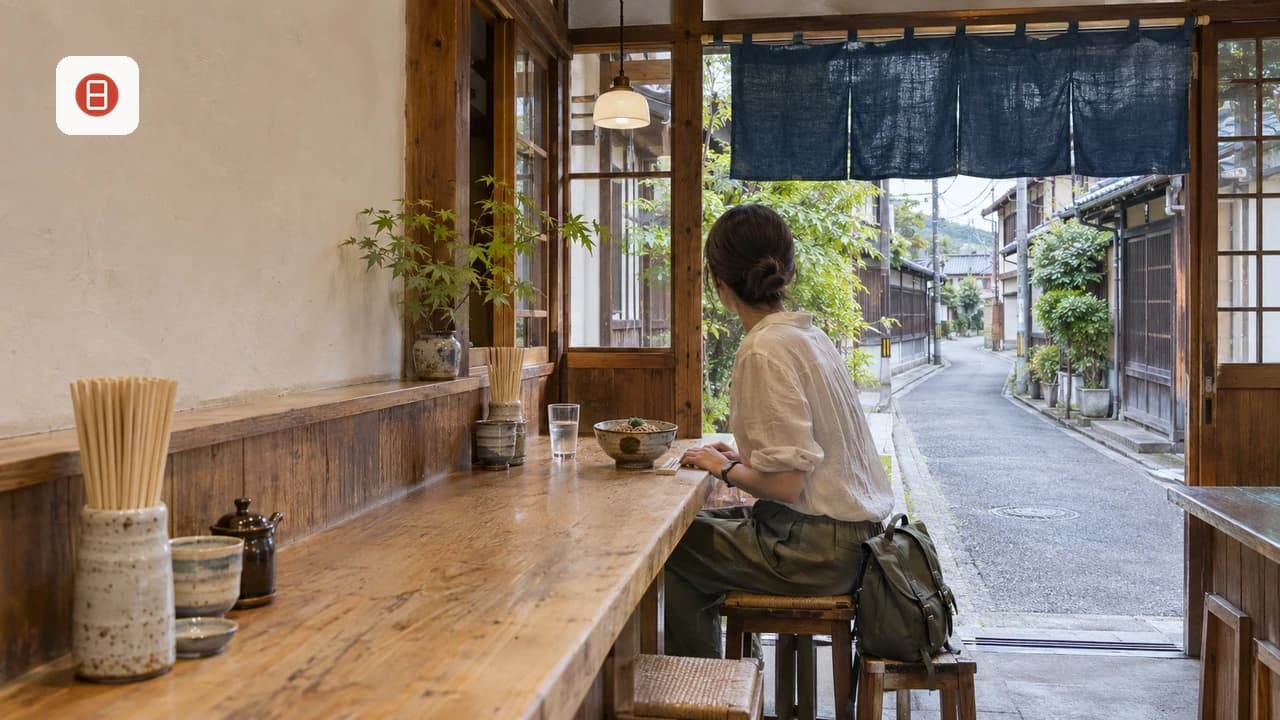
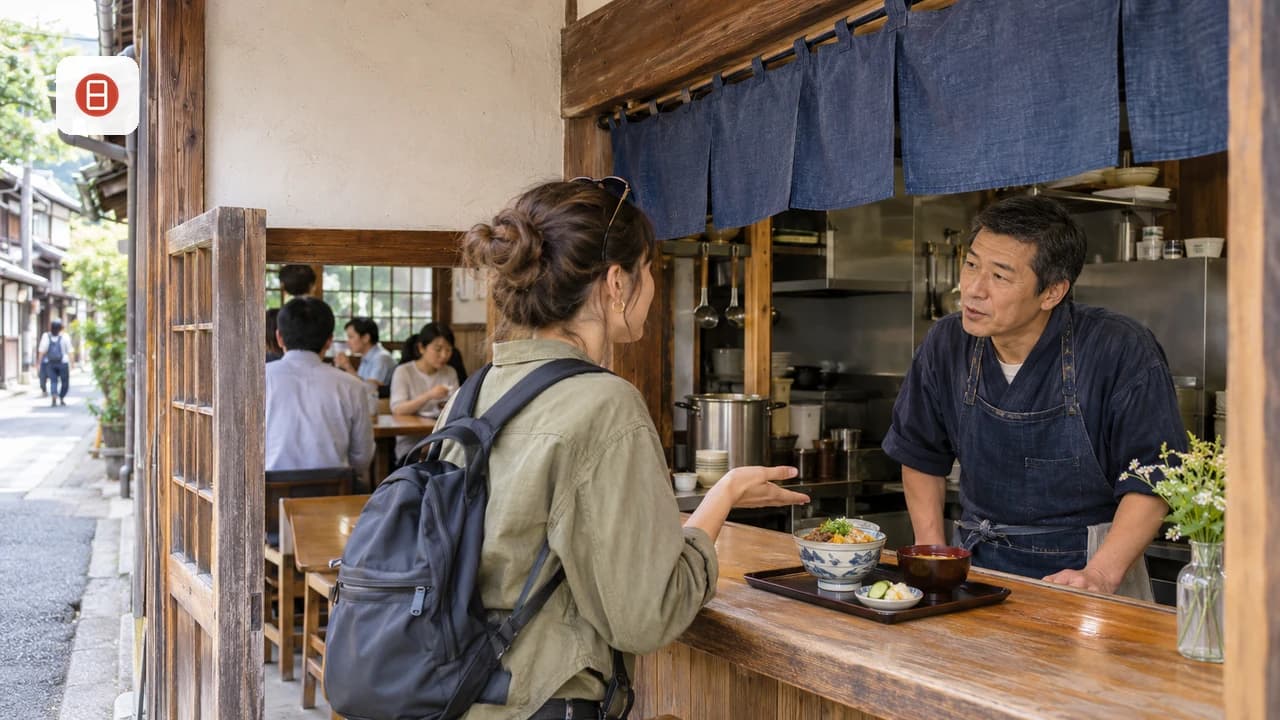
Say sumimasen to call staff, then point at the menu item and add onegaishimasu. Before eating, say itadakimasu. Afterward, say gochisōsama deshita to thank the kitchen. To ask for the bill, say okaikei onegaishimasu. Many small places use a ticket machine near the door, where you pay first and hand the ticket to staff. Shoes come off at the genkan, the entrance step, in some venues. Card acceptance varies, so ask kādo ga tsukaemasu ka? and keep cash ready. Tipping is generally not expected, but confirm current etiquette with official tourism guidance.
- Water, please: O-mizu onegaishimasu (oh-mee-zoo)
- I can't eat sushi: Sushi wa taberaremasen
- Delicious: Oishii (oy-shee)
- Cheers: Kanpai (kahn-pie)
Trains and Getting Around
Ask for a station with the place name plus wa doko desu ka. Shibuya eki wa doko desu ka means where is Shibuya station. Check the platform with kono densha wa (destination) ni ikimasu ka, meaning does this train go to a place. Staff may answer in rapid Japanese, so look for a pointing gesture or a sign. For taxis, show the address on your phone instead of pronouncing it. Tokyo's loop line is a good place to practice reading station names, and our Yamanote Line orientation covers it.
Shopping, Konbini, and Paying
Start with ikura desu ka to ask the price. Say kore o kudasai while pointing, which means this one, please. Ask kādo ga tsukaemasu ka for card, or offer genkin for cash. Prices are in yen, and numbers help here. Hyaku is 100, sen is 1,000, and man is 10,000. So hyaku en is ¥100. At a konbini, the cashier often offers a tray for your money. Place cash or the card there instead of handing it over. Say fukuro wa irimasen if you do not need a bag. Ask menzei desu ka to check whether tax-free shopping applies.
Yen answers to ikura desu ka are easier to read once sen is 1,000 yen and man is 10,000 yen.
- Hyaku en: ¥100
- Sen en: ¥1,000
- Ichi man en: ¥10,000
Emergencies and Getting Help
Start with wakarimasen, then try tetsudatte itadakemasu ka, meaning can you help me. In urgent situations, say tasukete kudasai, meaning please help. Useful nouns are yakkyoku for pharmacy and byōin for hospital. This guide does not list emergency phone numbers because none were verified for this draft. Check the JNTO safety tips page for current contacts, and save them before you travel.
When Phrases Fail: Apps, Pointing, and Written Cards
Japanese pronunciation can slip under stress, so keep a fallback. Camera translation reads menus and signs. Voice mode helps with short conversations. Download offline language packs at your hotel, because mobile data can drop in stations and rural areas. Battery drain is real, so carry a power bank. Before your trip, save a Japanese note about allergies or dietary limits as a screenshot. Showing written text is often faster than explaining. Official language help is listed on Japan's tourism language page.
| Situation | Phrase effort | App convenience |
|---|---|---|
| Restaurant order | Low: onegaishimasu and pointing | Camera menu translation |
| Train help | Medium: wa doko desu ka | Maps plus a screenshot of the station name |
| Allergy | Low if you carry a card | Saved written card works offline |
| Emergency | Learn tasukete kudasai | Fallback only; do not rely on signal |
Mistakes to Avoid With Japanese Phrases
A few habits cause most awkward moments. Fix them early and your short phrases land better.
- Overusing sayonara: it sounds final. Use mata ne with friends or a polite thanks when leaving shops.
- Treating sumimasen as sorry-only: it also means excuse me and thanks.
- Asking loud, English-only questions: start with sumimasen, then try Eigo ga hanasemasu ka?
- Copying slang like yabai or sugoi in formal settings: stick with polite forms.
- Mixing casual and formal: onegaishimasu is safer than a friend-style request.
Where English Is Likelier and Where Phrases Matter More
As general guidance, tourist zones in Tokyo, Kyoto, and Osaka and major hotels offer more English. Small eateries, rural areas, and local transport lean on phrases and apps. If you are building a route, start with our Japan trip planning basics. A one-week route stays mostly in hub areas. Moving on to ten days in Japan adds smaller stops. A two weeks across the country plan leaves the most room for places where your phrases earn their keep.
Frequently Asked Questions
What are the most useful Japanese phrases for tourists?
Start with sumimasen, arigatō gozaimasu, and onegaishimasu. Add wakarimasen, ikura desu ka, and wa doko desu ka. Those six cover greetings, requests, prices, and directions.
Do you need to speak Japanese to travel in Japan?
No. Major hubs offer more English, and pointing plus a translation app handle most tasks. Phrases matter more in small eateries and rural areas.
How do you say thank you and excuse me in Japanese?
Say arigatō gozaimasu for polite thanks. Use sumimasen for excuse me. Sumimasen can also mean sorry or thanks for the trouble.
Is sayonara the normal way to say goodbye?
Not really. Sayonara sounds final in everyday use. Mata ne works with friends, and a polite thank you suits shops.
What do you say before and after eating in Japan?
Say itadakimasu before you eat. Say gochisōsama deshita after the meal. Both show thanks for the food.
How do you ask for the bill in Japan?
Say okaikei onegaishimasu. Call staff first with sumimasen. Some places ask you to pay at the register or a ticket machine instead.
Free guide: Japan's Hidden Gems
12 under-the-radar places beyond Tokyo & Kyoto — with the best season to visit each and a local tip you won't find in the guidebooks.
You might also like


Continue reading
More guides you'll find useful