
Yamanote Line Guide: Stations, Map, Fares & Tips (Tokyo)
Plan your Yamanote Line trip: the 30-station Tokyo loop, which stops to visit, how fares and passes work, and mistakes to avoid.
On this page
Last updated November 2026: the japan rail yamanote line is a circular JR East route that links Tokyo's main hubs in about one hour. This guide covers the station order, IC card basics, the JR Pass question, and which stops suit which traveler. For wider trip context, start with our Japan Travel Guide: Plan Your Trip with Expert Tips & Itineraries.
Japan Rail Yamanote Line: What It Is and How It Differs from "Japan Rail"
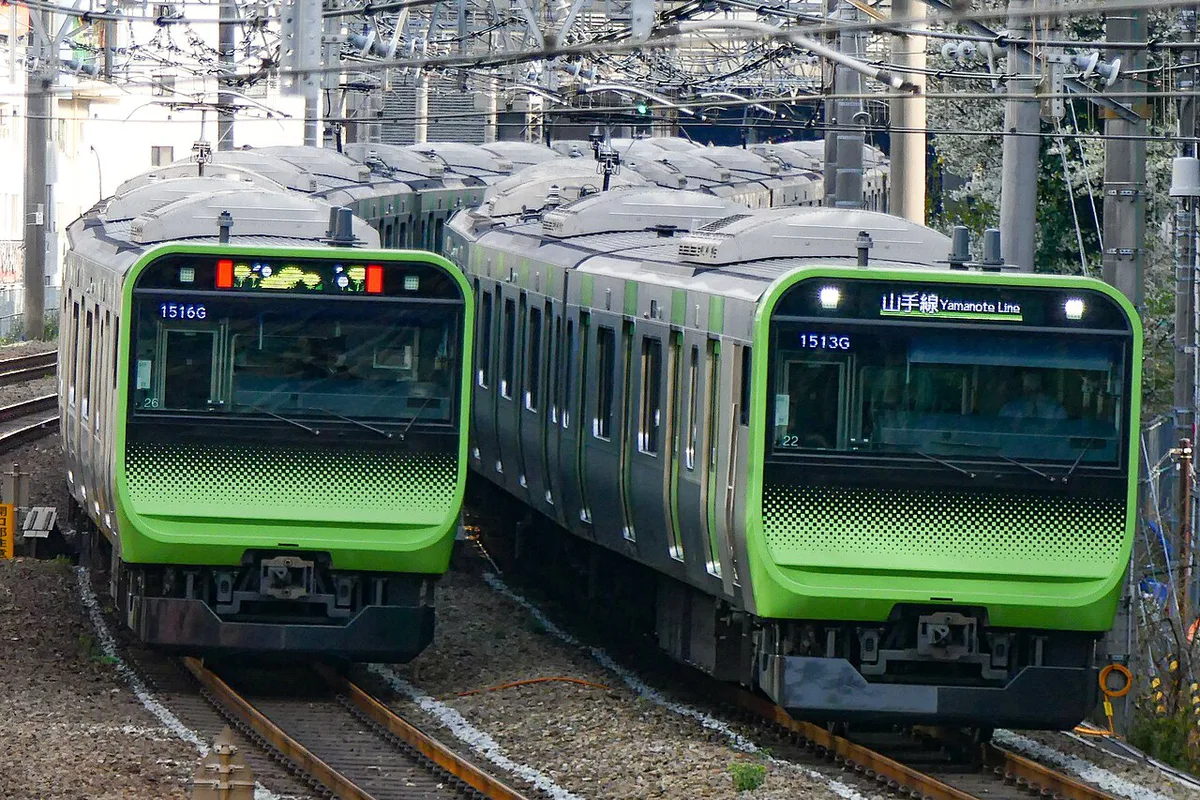
The Yamanote Line (山手線, Yamanote-sen) is a circular train line that connects Tokyo's major city centers. A trip around the whole circle takes approximately one hour. Trains are roughly 200 meters long, and departures run about every 2 to 4 minutes in each direction. That frequency means you rarely need a timetable. Search results list 30 stations on the loop, and Takanawa Gateway, opened in 2020, is the newest. Confirm the current count on the Japan Travel getting-around page before you plan around it. "Japan Rail" in your search usually means the national JR network or the JR Pass. The Yamanote Line is one local commuter loop inside that network, run by JR East. You do not book it, reserve a seat, or pick a departure time. You tap in and board.

Yamanote Line Map and Stations at a Glance
Picture the loop as a ring with Tokyo Station on the east side and Shibuya and Shinjuku on the west. From Shinjuku, japan-guide lists the stops in counter-clockwise order. Check direction labels on the platform before you rely on that wording. The table below keeps only the main stops and the transfers that matter to visitors.
| Station | What it's for | Key transfers |
|---|---|---|
| Shinjuku | Business, entertainment and shopping district; described as Japan's busiest station | Many suburban lines start here |
| Harajuku | Youth shopping district; main Meiji Shrine entrance is next to the station | None needed for the shrine |
| Yoyogi | North entrance of Meiji Shrine | None needed for the shrine |
| Shibuya | Large shopping and business district popular with younger crowds | Several suburban lines start here |
| Ebisu | Closest station to Yebisu Garden Place | Loop only |
| Shinagawa | One of the busiest loop stations | Tokaido Shinkansen stop |
| Takanawa Gateway | Newest station, opened 2020; closest JR station to Sengakuji Temple | Loop only |
| Hamamatsucho | Closest JR station to Tokyo Tower and Zojoji Temple | Tokyo Monorail toward Haneda Airport |
| Shimbashi | Business area near Tsukiji Outer Market and Hama Rikyu Gardens | Loop only |
| Yurakucho | Near Ginza and the Imperial Palace's Sakuradamon gate; dining under the tracks | Loop only |
| Tokyo | Marunouchi district, Imperial Palace East Gardens | Terminal for shinkansen lines; suburban lines |
| Akihabara | Center of Electric Town for electronics and otaku goods | Loop only |
| Ueno | Ueno Park and Ameyoko street next to the station | Shinkansen to northern Japan |
| Nippori | Connection point for Keisei trains | Keisei trains to and from Narita Airport |
| Komagome | Rikugien Garden just south of the station | Loop only |
| Ikebukuro | Large shopping and entertainment district | Several suburban lines start here |
Fares, IC Cards and the JR Pass Question
This brief supplies no verified fare figures, so check current fares and pass rules on the official JR East site. Whether any rail pass covers the Yamanote Line depends on the pass's current rules, so confirm that before you buy.
- Suica and PASMO are the two IC cards named in our research. Both let you tap through gates without buying a paper ticket each time.
- Paper tickets work too, but an IC card saves stops at the machine when you hop on and off.
Which Stations to Get Off At, by Traveler Type
Pick stops by interest rather than trying to see every station. Each stop below is a gateway to one theme.
- First-timer: Shinjuku, Shibuya and Tokyo Station give you three very different districts on one loop.
- Shopping and youth culture: Harajuku and Shibuya sit next to each other on the west side.
- Temples and gardens: Yoyogi or Harajuku for Meiji Shrine, Ueno for the park, and Komagome for Rikugien Garden.
- Electronics and anime: Akihabara, in the middle of Electric Town.
- Nightlife: Shinjuku, with Shin-Okubo also on the loop.
- Food and markets: Shimbashi for Tsukiji Outer Market, and Yurakucho for dining beneath the tracks.
- Souvenir streets: Okachimachi, where the Ameyoko shopping street starts.
Airport and Shinkansen Connections via the Loop
Treat the loop as a connector, not a direct airport service. Nippori links to Keisei trains for Narita Airport. Hamamatsucho is the terminal of the Tokyo Monorail, which serves Haneda Airport. For bullet trains, Shinagawa is on the Tokaido Shinkansen. Tokyo Station is the terminal for all shinkansen lines. Ueno handles shinkansen trains to northern Japan. Going via the loop means one or two transfers with luggage. Faster direct options may exist, so compare them on the Keisei and Tokyo Monorail official pages. We do not list journey times here because the brief does not supply them.
One-Day Yamanote Itineraries
Use these as skeletons and adjust the number of stops to your energy. A half-day plan fits 3 to 4 stops. Riding the full loop without stopping takes about one hour. Hopping on and off costs more time but gives you actual sightseeing. Riding straight through gives you a skyline overview and little else.
Pair 3 to 4 stops with airport transfers, since luggage on the loop can mean one or two changes.
- West side: Shinjuku, then Yoyogi or Harajuku for Meiji Shrine, then Shibuya.
- East side: Tokyo Station, then Akihabara, then Ueno for the park and Ameyoko.
- Garden day: Komagome for Rikugien Garden, then Ueno, then Akihabara.
- Time budget: one hour for the full loop, or 3 to 4 stops for a half-day.
Riding Tips and Mistakes to Avoid
Rush-hour trains fill quickly, so avoid peak commutes if you carry a large bag. Direction confusion is the most common error. Check the platform signs for inner or outer loop labels before you board. Shinjuku and Shibuya are large, with many exits and transfers, so allow extra time to find your platform. Cross-loop transfers to subway lines add another layer of signs. Learning a few station-sign words helps, and our Japanese travel phrases page covers the basics. If you travel alone, read our solo travel in Japan advice first. The JNTO also publishes official safety tips for visitors. Last-train times vary by station, so verify them with JR East before a late night out.
Departures every 2 to 4 minutes mean you rarely need a timetable, yet the platform direction label still decides your ride.
Service Status and Disruptions
Search results show service-suspension notices for the line from time to time. Check the official JR East train status page on the day you travel. Do not rely on a dated notice you saw while planning.
Where to Base Yourself
Choose a station that matches your trip style, then use the loop for day trips within Tokyo. If Tokyo is one stop in a longer route, compare our 7-day Japan itinerary with the 10-day Japan itinerary. Longer trips may suit our 2-week Japan itinerary.
- Shinjuku: nightlife, shopping and many suburban lines.
- Shibuya or Harajuku: youth culture and Meiji Shrine access.
- Tokyo Station: shinkansen departures and the Marunouchi district.
- Ueno: Ueno Park, Ameyoko and northbound shinkansen.
Frequently Asked Questions
How long does the Yamanote Line take to go around?
A trip around the whole circle takes approximately one hour. Plan on more if you stop to sightsee.
Is the Yamanote Line covered by the JR Pass?
Eligibility depends on the current pass rules. Check the official JR East pass pages before you buy anything.
Which direction does the Yamanote Line go?
The loop runs both ways. Read the inner or outer loop labels on the platform signs before boarding, and do not assume a direction.
How often do the trains run?
Departures run about every 2 to 4 minutes in each direction. Each train is roughly 200 meters long.
Which Yamanote stops are best for first-time visitors?
Start with Shinjuku, Shibuya and Tokyo Station. Add Harajuku for Meiji Shrine and Akihabara for Electric Town.
Is the Yamanote Line good for getting to the airports?
It works as a connector. Nippori links to Keisei trains for Narita, and Hamamatsucho links to the Tokyo Monorail for Haneda.
Is it worth building a day around the loop?
Yes, if you pick 3 to 4 stops on one side of the ring. The west side suits shrines and shopping, while the east side suits electronics and parks.
Free guide: Japan's Hidden Gems
12 under-the-radar places beyond Tokyo & Kyoto — with the best season to visit each and a local tip you won't find in the guidebooks.
You might also like


Continue reading
More guides you'll find useful


