Travel Alone in Japan: Solo Trip Guide for First-Timers
Planning a solo trip to Japan? Learn how to eat, stay, get around and stay safe alone, plus when a small-group tour makes more sense.
On this page
Last updated November 2026: you can travel alone in Japan on a first trip, and many visitors do. Counter dining, single-occupancy hotels and a rail network built around IC cards remove most solo friction. Sections below cover each area, plus a self-check on when a small-group tour fits better.
Is It Practical to Travel Alone in Japan? The Short Answer
Yes, for most first-timers. Three things make a solo trip workable: easy-to-use public transport, eating formats that suit one person, and accommodation sold by the single room. Language is a smaller hurdle than most people expect, and the ladder further down shows where it matters. Solo travel suits you if you are comfortable with quiet meals and self-directed days. Consider a group or hybrid format if you dislike navigating alone or want built-in company. Neither choice is wrong. The next section compares them directly.
Solo, Small Group or Hybrid: Which Fits You?
Compare the three formats on comfort, flexibility and social contact. Cost is shown as a direction only, because tour pricing varies by operator and season. Check current rates with any operator before you decide.
| Format | Comfort level | Flexibility | Cost direction | Social contact | Best for | Skip this if |
|---|---|---|---|---|---|---|
| Fully solo | Higher once you have a base and a routine | Highest | Usually lowest per day, but single rooms can cost more per person | Self-driven | Independent planners | You dislike making daily decisions |
| Small-group tour with local leader | High; logistics handled | Low | Usually highest | Built in | Anxious first-timers | You want to change plans on the day |
| Hybrid (solo plus a day tour or two) | Balanced | Medium to high | In between | Occasional | Most first-time solo visitors | You want zero scheduled commitments |
Eating Alone in Japan
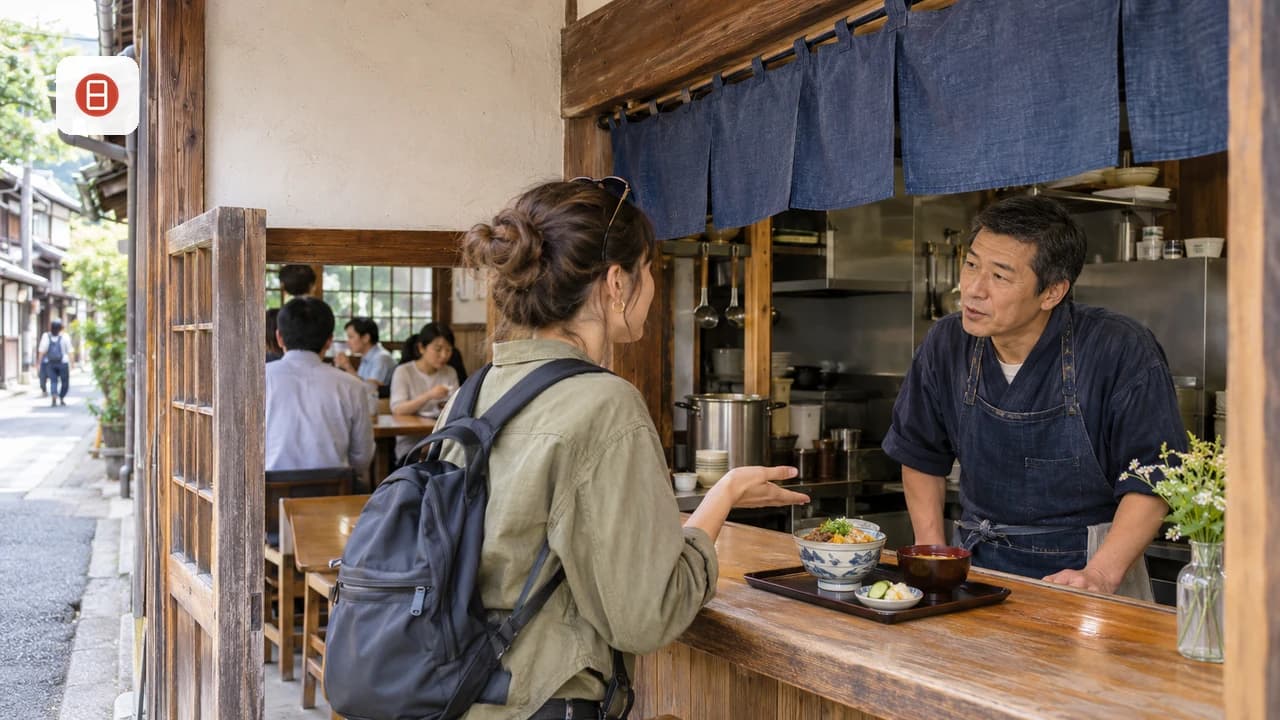
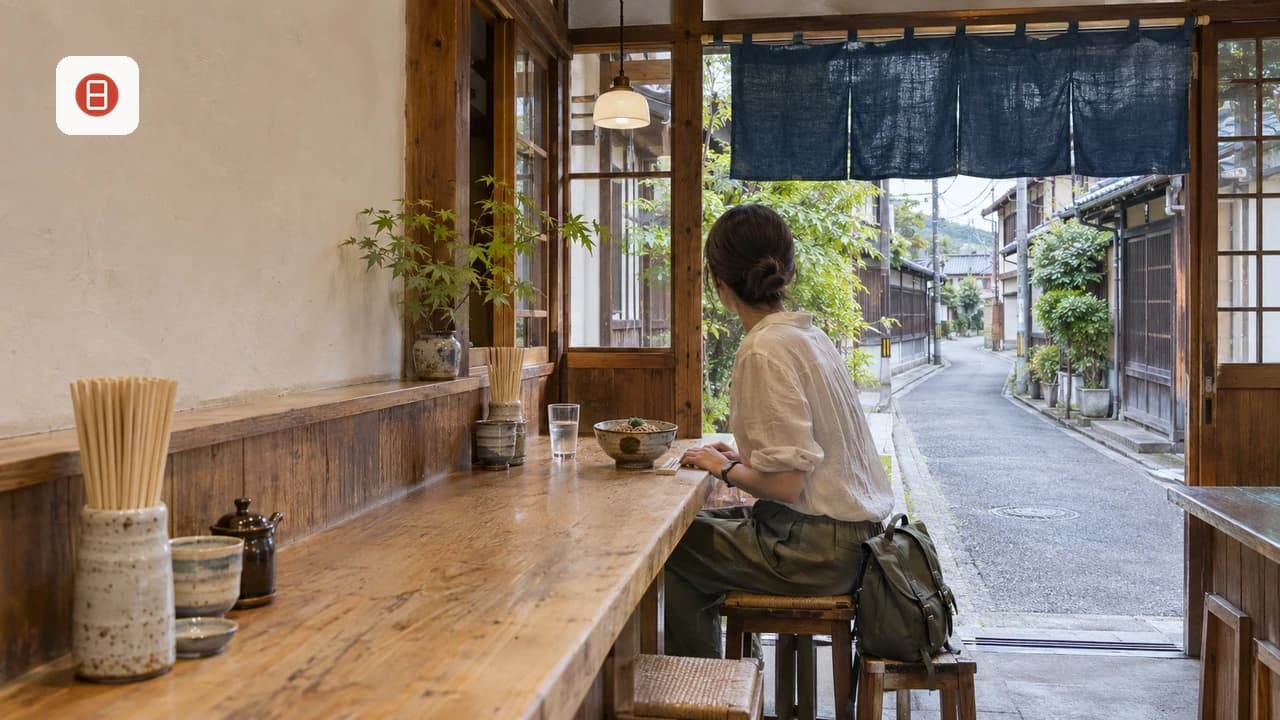
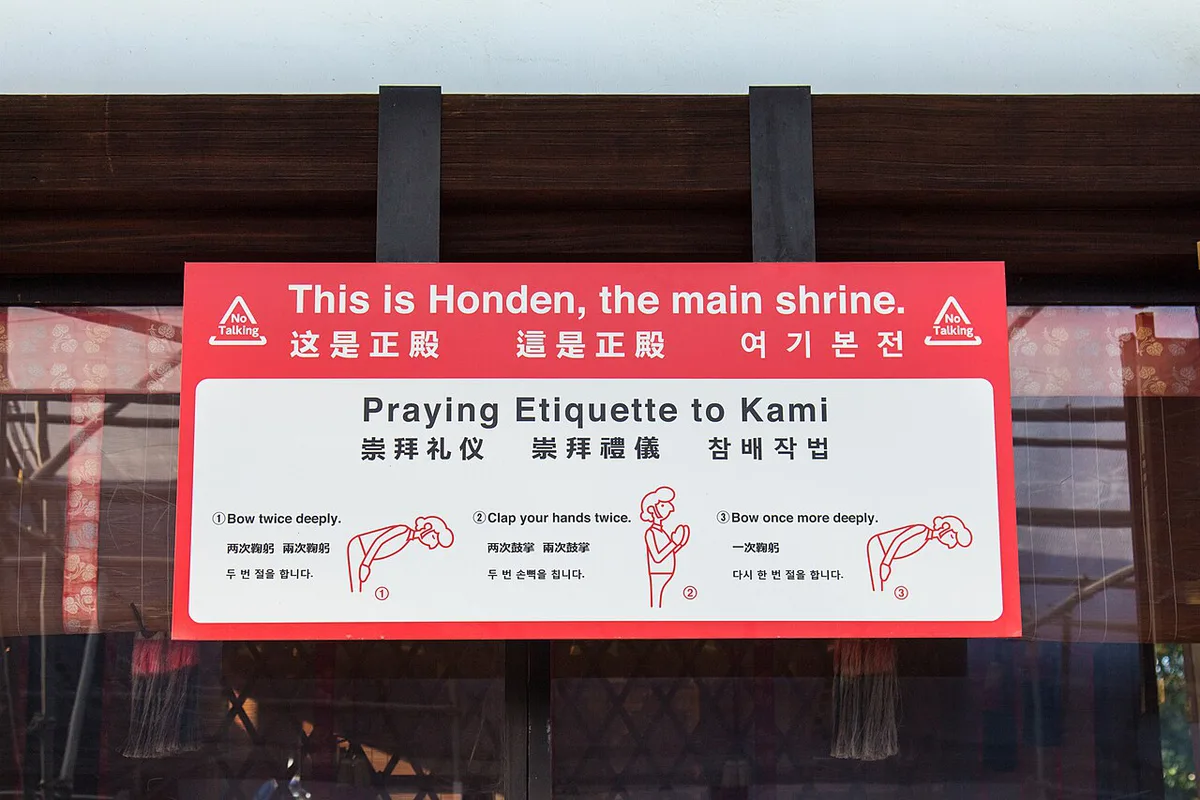
Eating alone is routine in Japan. Many casual restaurants have counter seats, and some shops serve a single set meal to one diner at a time. Convenience stores and station food halls cover quick meals without any conversation. Some restaurants, especially popular evening spots, prefer parties of two or more or take reservations only. Ask the front desk to phone ahead, or choose counter-style places when you are unsure. Look for ticket machines at the entrance, which let you order by pointing at a picture. Expect each venue to differ, so verify seating rules on the venue's own listing.
Where to Stay Solo
Single-occupancy rooms are common, but the pricing structure differs by lodging type. Compare trade-offs rather than chasing the lowest rate.
| Type | Solo-friendliness | What to verify before booking |
|---|---|---|
| Business hotel | High | Distance to the nearest station, luggage storage |
| Capsule hotel | Moderate | Gender policy, locker size, noise rules |
| Hostel | High | Mixed or female-only dorm options, curfew |
| Ryokan | Varies | Single-guest acceptance, dinner start time |
- Business hotels: compact single rooms, often near stations, practical for a first base.
- Capsule hotels: compact and social-light; check whether the property accepts your gender and how luggage is stored.
- Hostels: common areas make conversation easy, and some offer private rooms.
- Ryokan: many price per person on a shared-room basis, so confirm single-occupancy policy before booking.
Getting Around Alone: Trains, IC Cards and Luggage
A base within walking distance of a major station reduces solo stress more than any other choice. Trains run on clear signage, and IC cards of the Suica and ICOCA family let you tap through gates without buying tickets. Verify current card availability and rules on the operator's official site before you travel. Tokyo works as a learning example. Our guide to the Yamanote Line loop shows how a single circular line anchors orientation. For heavy bags, takkyubin luggage forwarding can send suitcases between hotels. Check each operator's current policy, cut-off times and fees on its official page. If you plan to buy a rail pass, confirm eligibility and current terms on the official JR site first.
Language and Communication Without Fear
Think of a ladder. At the bottom, zero Japanese is enough for tapping an IC card, using ticket machines and buying from convenience stores. In the middle, a few phrases help with greetings, thanks and ordering. At the top, translation apps handle menus, pharmacies and anything involving medical or safety detail. Use a short list such as our travel phrase primer to learn the middle rung. Japan's tourism authority also offers a page of official language help for visitors. English support is usually weaker in rural areas, so download offline translation packs before leaving a city.
Safety and Solo Female Travel
Japan is widely regarded as a low-risk destination, but no place is risk-free. Use ordinary city habits. Keep valuables close, choose well-lit routes at night and pick lodging near a station. Women travelling alone may prefer female-only capsule floors or hostel dorms where available. Confirm the policy when you book. Japan's national tourism authority publishes official visitor safety guidance that includes disaster and emergency information. Check your own government's travel advisory shortly before departure, and note the emergency numbers from an official source rather than memory. Buy travel insurance that covers medical care before you fly.
Meeting People Without Forcing It
Company is optional, and you can add it in small doses. Hostel common rooms produce easy conversation with other solo guests. Food tours and walking tours put you in a group for a few hours, then leave your evening free. Counter seats at casual restaurants sometimes lead to short exchanges with staff or neighbors. Pick one or two scheduled social activities per week rather than filling every day. That keeps your solo flexibility while avoiding long silent stretches.
Solo Trip Friction Points and Workarounds
Being alone changes a few logistics. Use this table when planning.
| Situation | What changes | Workaround | What to verify before you go |
|---|---|---|---|
| Eating alone | Some tables are set for pairs or more | Choose counter seating or ticket-machine shops | Restaurant seating and reservation rules |
| Booking single rooms | Rates may be per person or per room | Filter for single occupancy | Ryokan single-guest policy |
| Luggage in transit | No travel partner to watch bags | Forward large bags between hotels | Provider cut-off times and fees |
| Rural or low-English areas | Fewer English signs | Download offline maps and translation packs | Bus and train times for the day |
| Evenings out | Late transit may be limited | Return before the last train | Last-train times on the route |
How Long and Where to Start
A shorter trip with one base is gentler than a multi-city rail circuit. Single-base trips cut packing and transit decisions. Multi-city trips show more of the country but add daily luggage and booking choices. Our Japan trip planning hub helps you sort regions first.
Keep a 7-day route on one base near a major station, and use takkyubin for heavy bags if a hotel move is unavoidable.
- Single base: fewer transfers, easier to relax, good for a first solo week.
- Multi-city rail: more variety, more planning, better after a first visit.
- A 7-day route fits first-timers who want a compact trip.
- A 10-day plan suits travellers who want extra rest days between moves.
- A two-week route fits confident solo travellers comfortable with several moves.
Common Solo Mistakes
Most first solo problems come from overplanning and unchecked assumptions. Avoid these.
- Overpacking the itinerary, with a new city every day.
- Booking a hotel far from a station.
- Assuming every restaurant seats single diners.
- Assuming cash and IC card acceptance without checking.
- Skipping travel insurance.
Frequently Asked Questions
Is Japan good for first-time solo travel?
Yes, for most travellers. Rail, counter dining and single rooms suit one person. Plan a compact first trip with a base near a station.
Is it safe for a woman to travel alone in Japan?
Japan is widely considered a low-risk destination, but standard precautions still apply. Choose well-located lodging and consider female-only options. Check your government's advisory and Japan's tourism authority before you go.
Is it awkward to eat alone in Japan?
Not usually. Counter seats and ticket-machine shops are built for solo diners. Some popular restaurants prefer groups, so choose another venue if seated badly.
Do I need to speak Japanese to travel solo?
No. Transit, convenience stores and many hotels work with little Japanese. Learn a few phrases and keep a translation app ready for menus and medical needs.
Is a solo trip or a small-group tour better for a first visit?
Solo suits independent planners. A small-group tour suits anxious first-timers. A hybrid with one or two day tours works for most people.
How many days do I need for a first solo trip?
Our itinerary guides start at 7 days and run to 2 weeks. A week with one base is a calm starting point. Add days once you feel confident with the trains.
Free guide: Japan's Hidden Gems
12 under-the-radar places beyond Tokyo & Kyoto — with the best season to visit each and a local tip you won't find in the guidebooks.
You might also like


Continue reading
More guides you'll find useful