Shinjuku Golden Gai Guide: Tokyo's Tiny Bar Alleys (2026)
Explore Shinjuku Golden Gai with this practical 2026 guide: the 200+ tiny bars, cover charges, photography rules, and how to navigate the six alleys.
On this page
Last updated July 2026, Shinjuku Golden Gai remains one of the few pockets of Tokyo where the postwar cityscape survives almost unchanged. Its six narrow alleys are packed with roughly 200 shanty-style bars that rarely seat more than five or six people at once. Because the area runs on unwritten etiquette as much as posted hours, first-time visitors tend to either fall in love with it or find it bewildering within the first ten minutes. This guide walks through how Shinjuku Golden Gai actually works today, from seat charges and cash norms to which bars welcome non-Japanese speakers and which are effectively members-only.
What Is Shinjuku Golden Gai? Tokyo's Architectural Time Capsule
Shinjuku Golden Gai is a small district inside Kabukicho, Shinjuku, made up of six narrow interconnected alleys lined with tiny two-story shanty-style buildings, most just a few feet wide. Over 200 bars, clubs, and eateries are squeezed into an area a few minutes' walk from Shinjuku Station's East Exit, between the Shinjuku City Office and Hanazono Shrine. Before prostitution was outlawed in 1958, the area operated as a red-light district. Afterward it evolved into the drinking quarter it is today, and some of its current bars trace their roots back to the 1960s. In the 1980s, when land speculation and yakuza-linked arson fires reshaped much of Tokyo, Golden Gai survived because supporters organized night watches to protect the buildings from being burned out and redeveloped. That resilience is part of why it still looks like a slice of pre-economic-miracle Tokyo, surrounded now by the wider roads and high-rises of modern Shinjuku.
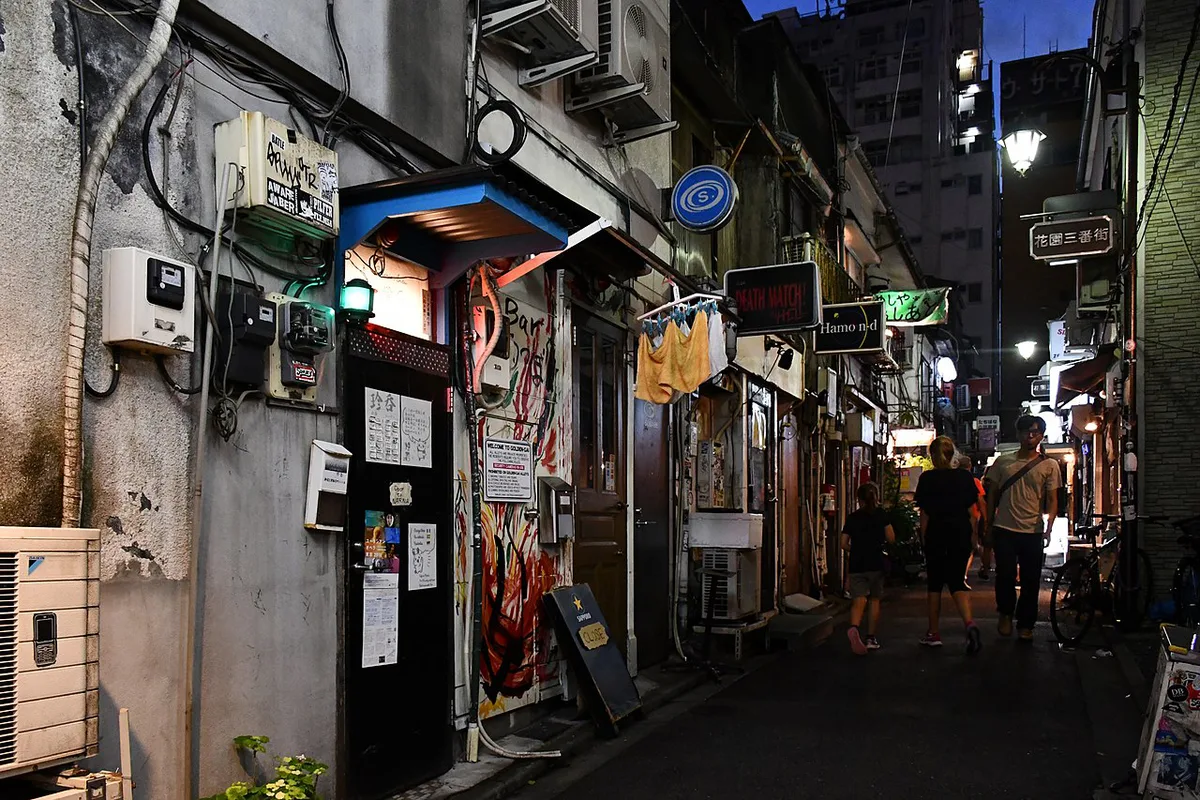
Navigating the Alleys: Layout, Day vs Night
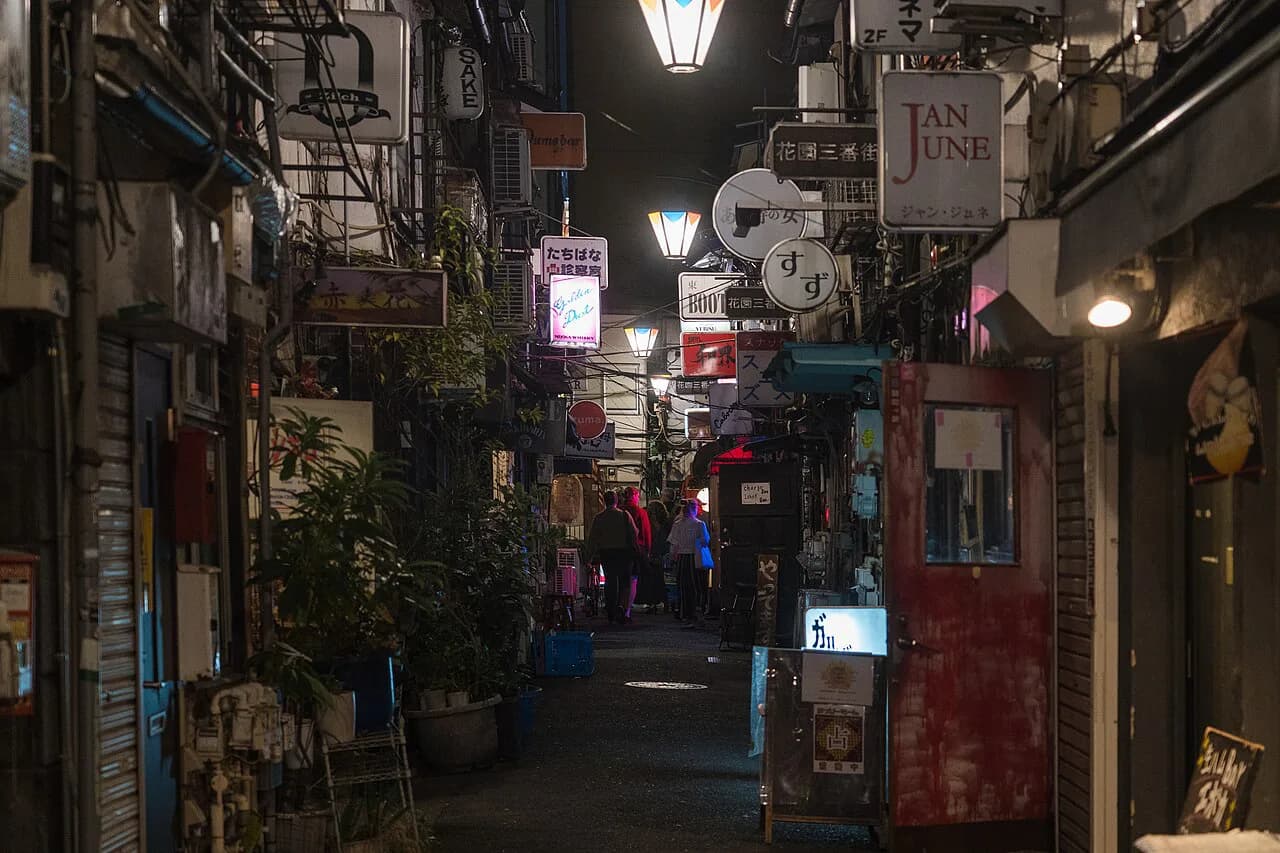
The six alleys, including streets such as Akarui Hanazono Ichiban and Akarui Hanazono Sanban, are connected by passageways narrow enough that only one person can pass through at a time. During the day, Golden Gai looks scruffy and half-abandoned: dim lighting, shuttered doorways, and almost no activity, since most bars don't open until 9:00 or 10:00 p.m. After dark, the same alleys light up with neon signage, hand-painted bar placards, and movie and concert posters plastered across ramshackle walls, and the crowds of regulars, bartenders, and curious visitors fill in fast. One corner of the district houses the Shinjuku Golden Street Theatre, a tiny venue that mostly stages comedy shows. It adds to the area's reputation as a longtime haunt for musicians, writers, directors, and artists.
Inside a Golden Gai Bar: Seating, Themes, and Etiquette
Space is the defining constraint of a Golden Gai bar. Many venues fit only around five to ten customers at a time. As a result, a party of two or three is realistic while larger groups will struggle to find a table together, if they find one at all. Themes vary wildly from bar to bar: jazz, R&B, karaoke, punk rock. Flamenco sit alongside niche interests like go, exploitation films, and horse racing, and the décor usually reflects the theme in posters, records, and memorabilia crammed onto every wall.
Most Golden Gai bars seat only five to ten people and charge an otoshi (cover charge) on top of drink prices. For this reason, solo travelers and pairs have far better success than large groups—and plan for this to be an expensive evening, not a budget stop.
- Some bars are effectively members-only, expecting new customers to be introduced by an existing regular
- Others actively welcome tourists, posting English-language signs and price lists at the entrance
- A small number employ foreign bartenders, which generally signals an English-friendly, visitor-comfortable spot
- Reading the door before entering, checking for posted prices, English signage, or an open curtain, is the fastest way to gauge whether a bar wants walk-in visitors
Golden Gai Costs: Seat Charges, Drink Prices, and Payment
Despite its scruffy appearance, Golden Gai is not a cheap place to drink, and its clientele has traditionally skewed toward well-off regulars rather than budget travelers. Most bars charge an otoshi, a seating or cover charge applied on top of drink prices. The true cost of a visit is higher than the price of a single beer or highball suggests. Because many of these bars are family-run operations with decades of history. Some still favor cash over card, and a first-time visitor should plan to carry yen rather than assume every venue takes contactless payment. Budgeting for two or three drinks across one or two bars, cover charges included, gives a more realistic picture of an evening here than pricing from a standard izakaya.
Essential Rules and Mistakes to Avoid in Shinjuku Golden Gai
Golden Gai's alleys are private roads, not public streets, and that status carries real weight: photography and video for any purpose are prohibited without explicit permission from the area's business promotion association. This is stricter than most travelers expect from an open-air nightlife district, and ignoring posted no-photography signage is one of the most common missteps visitors make.
Golden Gai survived 1980s redevelopment through community night watches, and its continued existence depends on visitors respecting its private-road status. Follow posted no-photography rules, keep noise down, and respect the residential character—these unwritten etiquette standards protect the historic Showa-era buildings that make it unique.
- Do not photograph or film in the alleys without permission from the local business association; signs marking this are posted throughout the district
- Keep groups small; venues seating five to ten people cannot accommodate large parties, and most bars expect that if you take a seat, you order at least one drink rather than just looking around
- Bar-hop deliberately rather than camping in a doorway; the standard etiquette is one drink minimum per stop before moving on if the bar is full or you're ready to switch scenes
- Keep noise down in the alleys themselves; small flats sit directly above many bars, and the historic, residential character of the area is part of what has kept it intact
Getting to Shinjuku Golden Gai: Access and Nearby Landmarks
Golden Gai sits a few minutes' walk from the East Exit of Shinjuku Station, one of the world's busiest rail hubs. Hanazono Shrine and the Shinjuku City Office serve as the easiest visual anchors for finding the entrance alleys once you're on foot. Because the district is compact, a phone map or the official Shinjuku transit signage at the station exit is generally enough to navigate the last stretch. Given its late opening hours, Golden Gai works best as a nightcap stop for travelers already based in or near Shinjuku. This lets a night out end with a short walk back rather than a late train connection across the city.
Beyond Golden Gai: Planning the Rest of Your Tokyo Trip
Golden Gai pairs naturally with a wider Tokyo itinerary built around contrasting neighborhoods and nightlife styles. Travelers drawn to its subculture bar scene often also enjoy the secondhand shops and live-music venues of the Shimokitazawa neighborhood guide. At the same time, those after a more polished, modern evening out should look at the Nakameguro nightlife guide for a canal-side alternative to Golden Gai's shanty-bar grit. For daytime plans around the same trip, the Ghibli Museum visiting guide, the Gotokuji lucky cat temple guide, and the Kichijoji neighborhood guide. Together, they round out a well-paced Tokyo itinerary that balances Golden Gai's after-dark energy with quieter cultural stops earlier in the day.
Who Should Visit Golden Gai, and Who Should Skip It
Golden Gai works best for solo travelers, pairs, and visitors who want a slow, conversational night rather than a standard bar crawl. The best fit is someone interested in Showa-era architecture, music or film-themed bars, and the subculture side of Kabukicho around Hanazono Shrine. If you are comfortable reading the door, choosing a bar with an English menu or welcome sign. Ordering one drink before moving on, the district can be one of Shinjuku's most memorable stops.
| Venue | Character | What to Expect | Best For |
|---|---|---|---|
| Golden Gai | Tiny themed bars in Showa-era architecture, private alleys | Jazz, film, music, niche hobbies; cover charges on top of drinks; cash preferred | Subculture enthusiasts, solo travelers, pairs seeking conversational nights |
| Shimokitazawa | Subculture bar scene | Secondhand shops, live-music venues | Music and film lovers |
| Nakameguro | Polished, modern | Canal-side setting, cocktail bars, hotel lounges | Travelers wanting a polished evening out |
| Omoide Yokocho | Casual, food-focused | Yakitori and quick food, stand-and-eat atmosphere | Budget travelers preferring casual dining |
It is a poor match for large groups, loud party circuits, travelers looking for the cheapest drinks near Shinjuku Station, or anyone mainly hoping to take photos. For yakitori, quick food, and a more casual stand-and-eat atmosphere, Omoide Yokocho is usually a better choice. For polished cocktail bars or hotel lounges, look elsewhere in Shinjuku or nearby Nishi-Shinjuku.
For trip-planning details, see Golden Gai - Wikipedia and Tokyo/Shinjuku - Wikivoyage.
For the wider city context, see our complete Tokyo tourism attractions guide.
Continue planning with Tokyo Trip Planner 2026: Attractions, Neighborhoods and Itineraries.
Frequently Asked Questions
What is Shinjuku Golden Gai known for?
Shinjuku Golden Gai is known for its network of six narrow alleys in Kabukicho, Shinjuku, packed with over 200 tiny shanty-style bars. Many are themed around music, film, or niche hobbies, and for preserving a rare glimpse of pre-economic-miracle Tokyo architecture.
Is Shinjuku Golden Gai the same as Omoide Yokocho?
No. Golden Gai and Omoide Yokocho (sometimes called Piss Alley) are separate districts near Shinjuku Station with different characters. Golden Gai is a bar district built around tiny themed drinking spots. At the same time, Omoide Yokocho is more focused on yakitori and small eateries. Travelers often confuse the two, but they sit in different parts of Shinjuku.
Can you take photos in Shinjuku Golden Gai?
Not without permission. The alleys are private roads. Photography and video for any purpose are prohibited without explicit approval from the area's business promotion association, with signage posted throughout the district reminding visitors of this rule.
How much does it cost to drink in Golden Gai?
Golden Gai is not a cheap place to drink. Most bars charge an otoshi, or seat/cover charge, on top of drink prices. Many smaller, family-run bars still lean on cash rather than card, so budgeting beyond just a drink price is wise.
What time do Golden Gai bars open?
Most bars in Golden Gai don't open until 9:00 or 10:00 p.m., which means the area is quiet and largely closed-looking during the day and early evening. Plan a visit as a late-evening stop rather than an afternoon wander.
Is Golden Gai suitable for large groups?
Not really. Many bars seat only around five to ten people at a time, so groups larger than two or three will struggle to find seating together. Solo travelers and pairs generally have a much easier time getting in.
Free: The Tokyo Essentials guide
Top things to do, where to stay, a perfect day plan, getting around, and the best time to go — a Tokyo mini-guide you can take offline.
You might also like


Continue reading
More guides you'll find useful