Shimokitazawa Guide: Best Vintage Shops & Curry in Tokyo
Shimokitazawa's best vintage shops and curry spots, plus how to reach it from Shibuya in minutes and what's new with Mikan and Reload. Updated July 2026.
On this page
Last updated July 2026, Shimokitazawa remains one of Tokyo's most distinct neighborhoods. This former farming community turned bohemian enclave where narrow backstreets full of vintage racks sit a few train stops from the polish of Shibuya and Shinjuku. Locals still call it Shimokita for short, and the appeal has never really been about postcard sights. It is the density of secondhand clothing, record crates, curry shops, and small live houses packed into a walkable, largely pedestrianized grid. This guide breaks the neighborhood into the old backstreet Shimokita and the newer developments built along the former train tracks, so you can plan a visit around what you actually want to do.
What Is Shimokitazawa? The Two Shimokitas
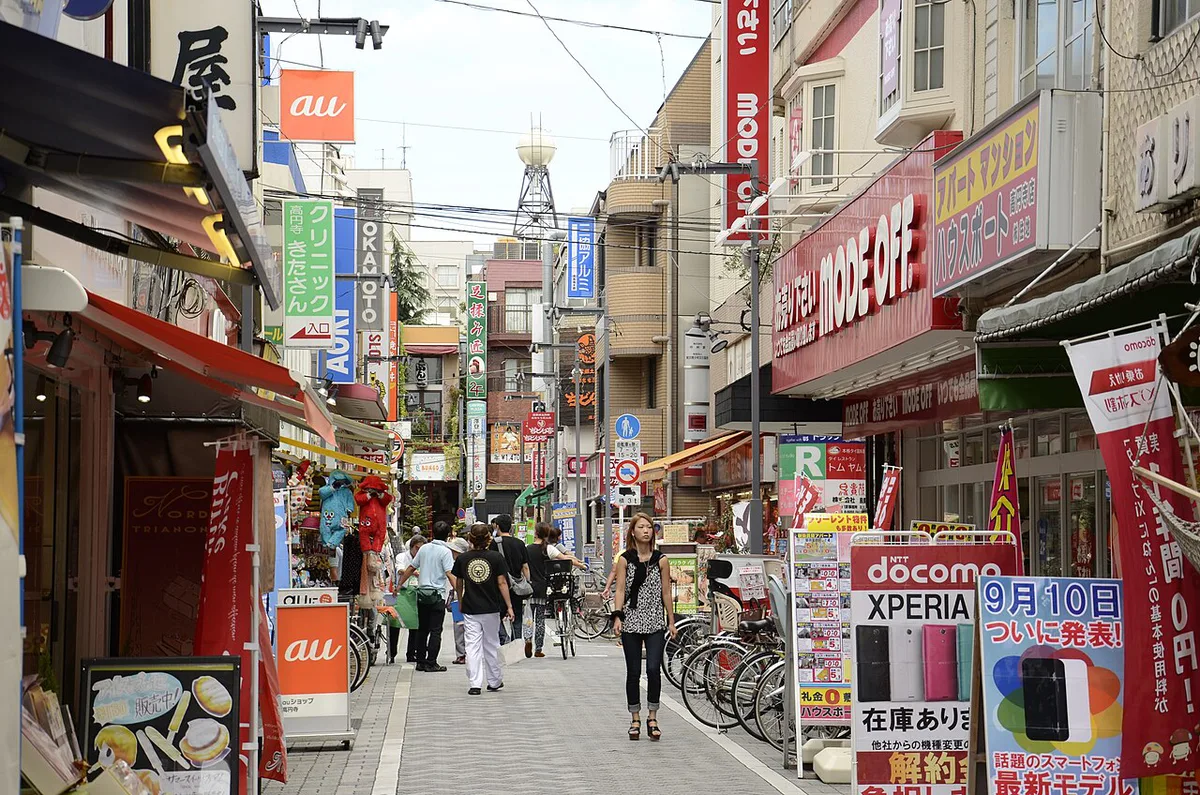
Shimokitazawa sits in Setagaya Ward, a large residential area west of Shibuya, and it is best understood as two overlapping neighborhoods sharing one station. Old Shimokita is the tangle of narrow alleys around the north and south exits that has hosted vintage shops, record stores. Independent theaters for decades — a laid-back, unpretentious version of Tokyo fashion built on band tees and worn-in denim rather than the high-end labels found in Ginza or Aoyama. New Shimokita is the wave of redevelopment built on and around the site of the old Odakyu train lines. This were moved underground after the station's renovation: shopping and dining complexes like Mikan Shimokita, Reload, and Bonus Track now sit where tracks used to run. Understanding this split matters for planning, because the old backstreets and the new developments have different rhythms, price points, and opening hours.
Understanding Shimokitazawa's split—Old Shimokita's narrow alleys of vintage shops, record stores, and theaters versus New Shimokita's polished developments like Mikan and Reload—helps shape visits. Curated browsing suits shorter stops, while dense backstreets reward full-day exploration.
Shimokitazawa Station Access: Getting There and Navigating the Layout
Shimokitazawa Station is served by two separate operators, the Odakyu Line and the Keio Inokashira Line. Because they are owned by different railway companies, they use different entrances, exits, and ticket gates — worth double-checking on arrival so you exit toward where you actually want to go. From Shinjuku Station, the Odakyu Line reaches Shimokitazawa in about seven minutes on express services. From Shibuya Station, the Keio Inokashira Line takes roughly three to five minutes on express trains, making Shimokitazawa an easy add-on to a day that starts in either district. From further out, budget around 60 minutes by train from Haneda Airport and about 105 minutes from Narita Airport. The station itself was recently renovated, with the old surface-level tracks relocated underground, and the area immediately outside still has a construction-in-progress feel as new developments continue to fill in around it. Navigate by the north, south, and east exits, and note that Mikan Shimokita sits attached directly to the station building. This makes it a useful landmark for reorienting yourself.
The New Shimokita: Mikan, Reload, and Bonus Track
The redevelopment along the former rail corridor has given Shimokitazawa a second, more polished layer without erasing the old backstreets. These three projects are the ones to know before you arrive.
- Mikan Shimokita: A complex built directly outside the station with food stalls and restaurants serving cuisine from around the world, a Tsutaya bookstore, and co-working space; it is also home to a cluster of Thai, Korean, and Vietnamese restaurants and a popular bakery.
- Reload: A minimalist, stroll-through mall built on the old Odakyu track site, mixing specialty coffee shops, stationery stores, and a gallery-like bookstore, designed with benches and open spaces to encourage lingering rather than quick shopping trips.
- Bonus Track: A community-focused development with small independent stalls, greenery, and outdoor seating, built with the same interactive, slow-down philosophy as Reload.
Shimokitazawa Vintage Shopping: Thrift Finds vs. Curated Racks
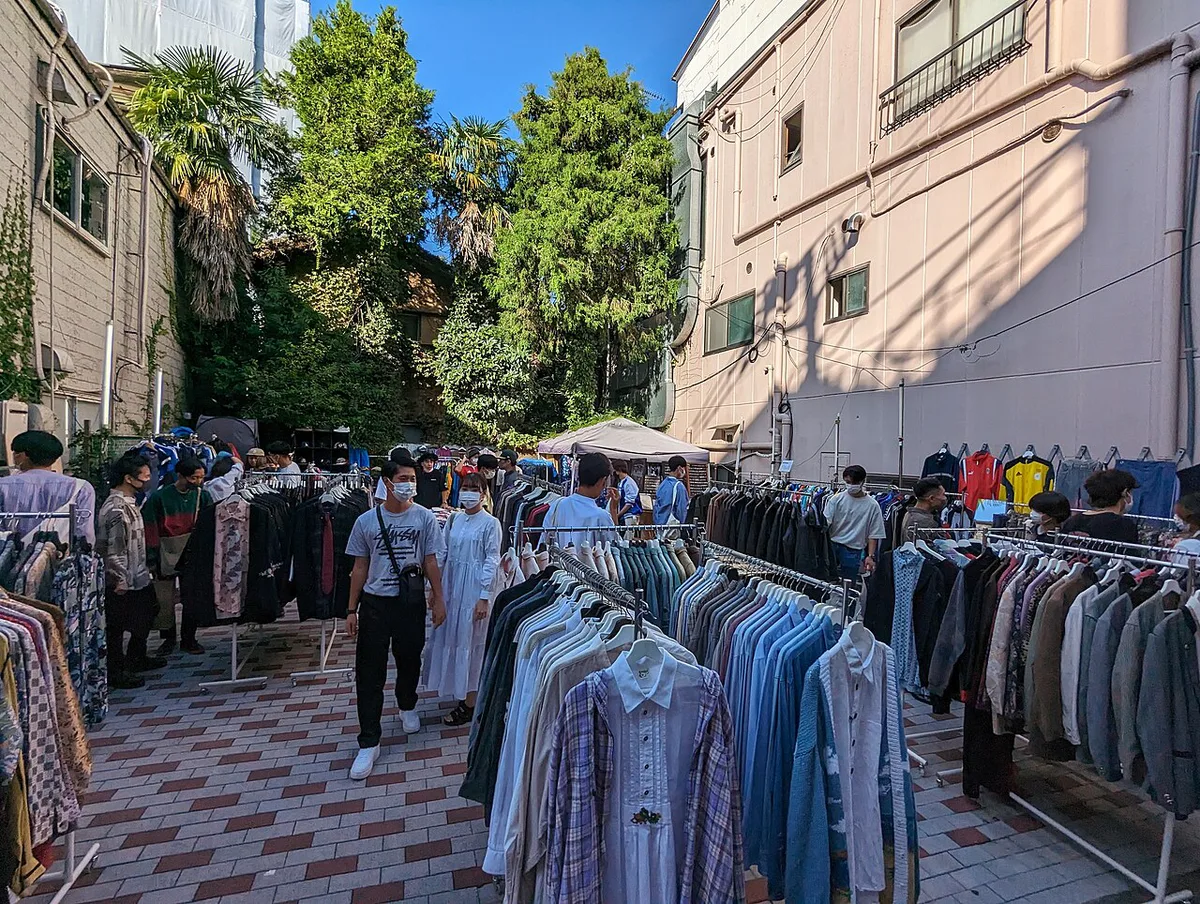
Vintage is the reason most visitors come to Shimokitazawa, and the neighborhood's shops split cleanly into two budget categories worth knowing before you start digging. Chain thrift stores like Chicago and Flamingo offer higher volume and lower prices for readers willing to spend time flipping through racks. At the same time, independents like Jarmusch and Link Ray lean more curated, with tighter edits and higher price points for designer or rare pieces. New York Joe Exchange, housed in a building that used to be a public bath, is one of the neighborhood's best-known stops for browsing secondhand clothing racks. Pay-per-pound stores such as Straight From LA have also opened recently, giving budget shoppers a bulk-buy option alongside the curated boutiques. For antiques, knick-knacks, and souvenir-worthy secondhand items, Antique Life Jin and Tokyo Retro AMA are reliable stops, alongside Tokyo Recycle and Bibibi for furniture, books, and trinkets.
- Thrift and bulk: Chicago, Flamingo, Straight From LA (pay-per-pound)
- Curated and independent: Jarmusch, Link Ray, New York Joe Exchange
- Antiques and knick-knacks: Antique Life Jin, Tokyo Retro a.m.a., Tokyo Recycle, Bibibi
Record Shopping and Bookstores: Shimokitazawa's Streets of Words and Sounds
Beyond clothing racks, Shimokitazawa has a dense cluster of used record shops and independent bookstores that locals describe as the neighborhood's literary and music backbone. Disk Union and Jet Set are the established go-tos for vinyl digging, and NAT Records, which relocated from Shinjuku, has recently moved in near the station, adding to the crate-digging density. On the book side, B&B is known for pairing a curated shelf of selected titles with a cold beer. It is part of a broader scene of small, independent bookstores and stationery shops scattered through the backstreets and inside Reload.
Shimokitazawa Curry Culture and Craft Coffee
Once known primarily as a sushi town, Shimokitazawa has rebranded itself around curry. The neighborhood now hosts an annual curry festival each October celebrating everything from traditional Indian and Nepalese curry to Japanese katsu curry and soup curry. Mikan Shimokita adds an international layer to the food scene with its Thai, Korean, and Vietnamese restaurants clustered under one roof. Coffee is the other constant: independent coffee shops sit on nearly every corner, most of them small and better suited to solo visits or pairs rather than groups. For anyone needing more room, Sidewalk Coffee at Mustard Hotel and Brooklyn Roasters near the station both offer more generous indoor and outdoor seating. On weekends, Senrogai Open Space fills with food trucks serving everything from Cuban sandwiches to taco rice and Japanese sweets like dango.
Shimokitazawa Nightlife: Live Houses and Backstreet Bars
Shimokitazawa's nightlife is quieter and smaller-scale than Shibuya or Roppongi, built around narrow-street izakaya, cocktail bars, and music bars rather than large clubs. The neighborhood has a genuine live house culture, with small music venues, fringe theaters clustered around Honda Gekijo and The Suzunari, and karaoke spots tucked into the backstreets. Readers who want a different flavor of small-bar culture, built around tiny standing-room izakaya rather than live music, can compare notes with the Golden Gai bar alleys in Shinjuku, a short Odakyu ride away.
Most shops and cafes don't open until 11 AM or noon, creating a concentrated evening culture. Plan afternoons for vintage browsing and curry, then stay for small live houses and independent music venues that fill the backstreets.
Shimokitazawa Festivals and Independent Theater
Shimokitazawa's underground theater scene runs year-round, with independent stages regularly loading in new productions and comedians rehearsing sets in backstreet venues. The neighborhood's calendar of seasonal events is dense, and several are worth building a visit around.
- Shimokitazawa Awa Odori Festival: a summer street-dance festival, with 2026 dates worth confirming closer to the event
- Shimokitazawa Bon Dance Festival: a traditional summer bon-dance event reflecting the area's farming-community roots
- Moon Art Night Shimokitazawa: an art installation festival running from mid-September to early October, featuring large-scale illuminated works
- Shimokitazawa Curry Festival: an October celebration of the neighborhood's signature food
Planning Your Visit: Timing, Itinerary, and Common Mistakes
Shimokitazawa is a late-start neighborhood: most shops, cafes, and restaurants do not open until 11:00 AM or noon, so arriving early means standing in front of shuttered storefronts. A smarter morning strategy is to visit a nearby sight first and arrive in Shimokitazawa once it wakes up. The lucky cat temple in Setagaya is a practical morning add-on before the neighborhood's shops open. As for whether to base a stay here, Shimokitazawa's easy access to both Shinjuku and Shibuya makes it appealing. However, the trade-off is a shortage of hotels and hostels compared to central Tokyo, plus street noise in the busiest backstreets. A half-day plan works for browsing New Shimokita's developments and one or two vintage stops. A full day allows time to also dig through record shops, grab a soup curry lunch, and stay into the evening for a live house or backstreet bar.
- Do not arrive before late morning — most shops and cafes open at 11:00 AM or noon
- Avoid trying to drive or taxi through the narrow pedestrian backstreets; walking is the only practical way through Old Shimokita
- Do not skip second-floor and upper-level shops, which are easy to miss from street level but common in this neighborhood
- Confirm which station exit you need in advance, since Odakyu and Keio Inokashira use separate entrances and ticket gates
How Shimokitazawa Compares to Kichijoji, Nakameguro, and Koenji
Shimokitazawa is often mentioned alongside a handful of other Tokyo neighborhoods with similar indie credentials, and each offers a slightly different version of that vibe. Kichijoji's park-side indie scene pairs a similar density of small shops and cafes with Inokashira Park's greenery, making it a good comparison for readers who want nature alongside the browsing. Nakameguro's canal-side cafes lean more polished and trendy, a useful contrast for anyone deciding between Shimokita's rawer backstreets and a more curated riverside setting. Travelers based in western Tokyo who want to pair a Shimokitazawa afternoon with a cultural stop. They should consider the Ghibli Museum day trip, which sits within reach of the same side of the city.
Shimokitazawa vs. Koenji: Which Indie Neighborhood Should You Visit?
Koenji is Shimokitazawa’s closest rival for travelers chasing Tokyo’s indie side, but the two neighborhoods work differently in an itinerary. Shimokitazawa is easier to combine with Shibuya or Shinjuku because it sits on the Keio Inokashira and Odakyu lines. Its vintage shops, curry restaurants, record stores, and live houses are packed tightly around one station. It is the better choice if you want a compact half-day with minimal transit friction.
Koenji, on the JR Chuo Line west of Shinjuku, feels less polished and more residential. Its appeal is in punk-leaning bars, used clothing shops around Koenji Pal Shopping Street, small music venues, and the covered Koenji Junjo Shotengai arcade. It is especially strong in the evening, when izakaya and live venues fill up. Choose Shimokitazawa for first-time, easy-access browsing; choose Koenji if you have already seen Shimokita or want a rougher, more local nightlife scene.
For the wider city context, see our complete Tokyo tourism attractions guide.
Planning sources: GO TOKYO Shimokitazawa guide · JNTO Shimokitazawa guide. Further reading: Tokyo on Wikivoyage · Tokyo on Wikipedia
Continue planning with Tokyo Trip Planner 2026: Attractions, Neighborhoods and Itineraries.
Frequently Asked Questions
Where is Shimokitazawa located?
Shimokitazawa is a neighborhood in Setagaya Ward, a residential area of Tokyo to the west of Shibuya. It sits a few stops from both Shibuya, via the Keio Inokashira Line, and Shinjuku, via the Odakyu Line.
Is Shimokitazawa walkable?
Yes. The old backstreets around the station are largely pedestrianized and best explored on foot, and the newer developments like Reload and Bonus Track are designed as stroll-through spaces rather than drive-to destinations.
Is Shimokitazawa expensive?
It varies widely. Chain thrift stores and pay-per-pound shops keep vintage shopping affordable, while curated independent boutiques and designer secondhand pieces push prices higher. This gives the neighborhood a reputation for strong value overall for shoppers willing to dig.
What is the best time to visit Shimokitazawa?
Afternoon through late evening is best, since most shops, cafes, and restaurants do not open until 11:00 AM or noon. Mornings are better spent nearby before the neighborhood properly wakes up.
How do you get to Shimokitazawa from central Tokyo?
From Shinjuku Station, take the Odakyu Line, about seven minutes by express train. From Shibuya Station, take the Keio Inokashira Line, roughly three to five minutes by express. Note that the two lines use separate station entrances and ticket gates.
Free: The Tokyo Essentials guide
Top things to do, where to stay, a perfect day plan, getting around, and the best time to go — a Tokyo mini-guide you can take offline.
You might also like


Continue reading
More guides you'll find useful