Gotokuji Temple Guide: Tokyo's Lucky Cat Temple
Plan your visit to Gotokuji Temple with tips on the Cat Train, Maneki-neko legends, buying figurines, and pairing your trip with Shimokitazawa.
On this page
Last updated July 2026. Tucked into the quiet residential streets of Setagaya Ward, Gotokuji Temple is the Soto Zen sanctuary most often credited as the birthplace of the maneki-neko, the beckoning lucky cat figurine recognized worldwide. Where central Tokyo's temples draw crowds, Gotokuji temple rewards travelers willing to ride a slower local line out to a corner of the city still shaped by Edo-period history and unhurried neighborhood life. This guide covers the legend, the logistics, and how to fold a visit into a half-day loop with Shimokitazawa or the Ghibli Museum.
The Legend of Daikeizan Gotokuji: Why the Lucky Cat?
The temple's formal name is Daikeizan Gotokuji, a Buddhist temple of the Soto Zen school. According to temple legend, in the early 17th century Ii Naotaka, the second lord of the Omi-Hikone Domain, was caught outside the temple gate in a sudden thunderstorm. A cat living at the temple beckoned him inside, sheltering him from the storm. In gratitude, Naotaka became a patron of the struggling temple and dedicated it to the Ii clan; after his death it was renamed Gotokuji, taken from his posthumous Buddhist name. The cat that saved him was later deified as the Shofuku Kannon, or Fortune-Inviting Kannon, and became known as the shou-fuku byou-ji, the original maneki-neko. Worshippers have donated lucky cat figurines to the temple ever since, and the tradition has never really stopped.
Essential Logistics for Visiting Gotokuji Temple: Location, Hours, and Costs
Gotokuji temple sits in a residential pocket of Setagaya Ward, a district of low-rise houses and small shops rather than high-rise Tokyo. Entry to the temple grounds is free. This is because it remains an active place of worship rather than a paid attraction. Only the individual maneki-neko figurines, omikuji fortunes, and ema plaques carry a cost, sold from the Shofuku-den building near the cat corner. Because it is a working Zen temple, treat opening hours as daylight hours rather than a strict ticketed window. Note that the Shofuku-den sales counter and the cat corner keep shorter hours than the grounds themselves. Confirm current hours on the temple's official site before visiting, since Buddhist temples periodically adjust hours around seasonal observances.
- Entry to the temple grounds: free
- Maneki-neko figurines and omikuji: sold on-site for a small fee
- Best visiting window: morning, before the smallest figurines sell out
How to Get to Gotokuji Temple: Odakyu Line vs. the Tokyu Setagaya "Cat Train"
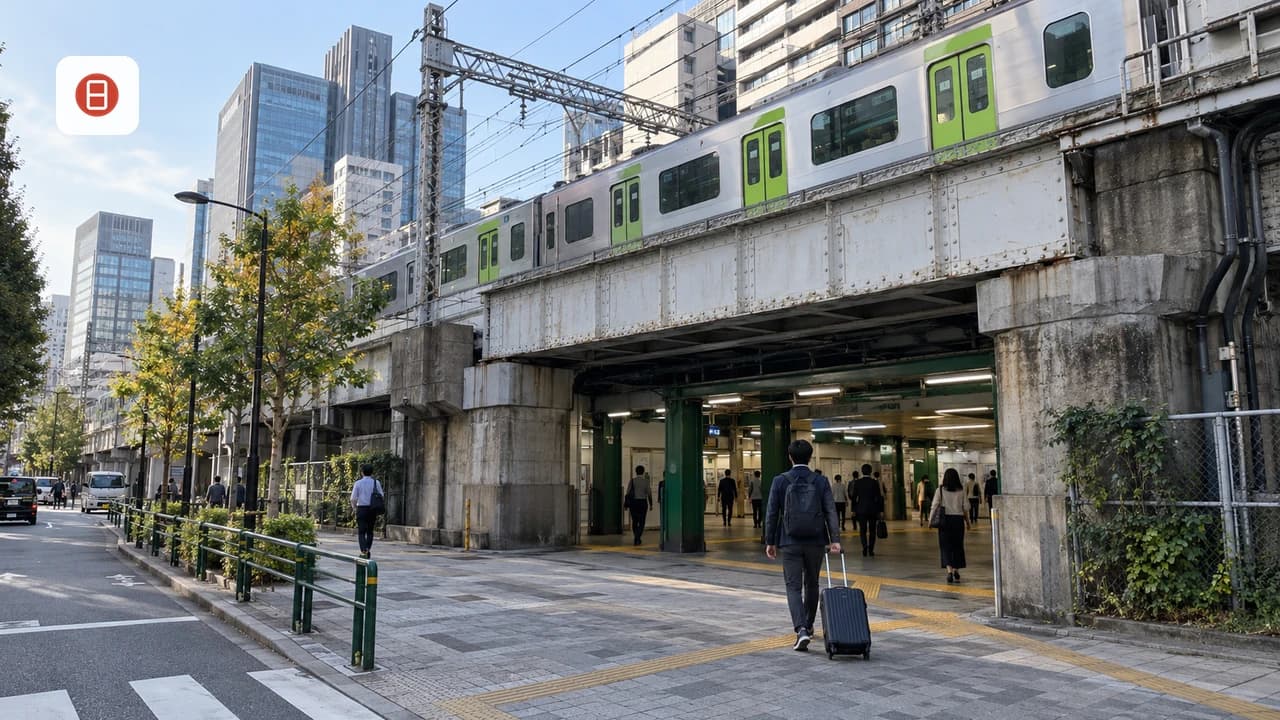
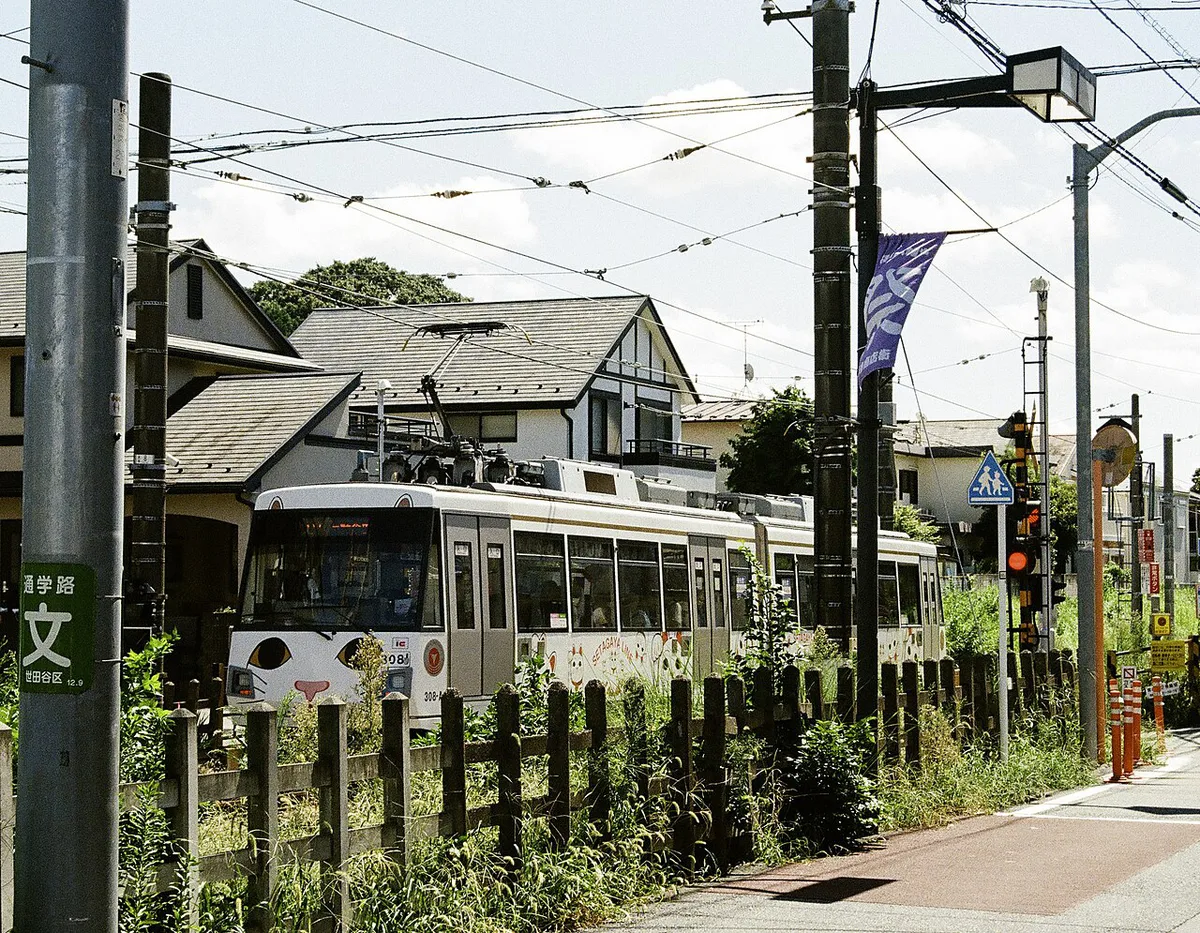
There are two practical routes into Gotokuji, and the choice comes down to speed versus experience. The Odakyu Line runs directly from Shinjuku's transit hub to Gotokuji Station, the faster option for travelers short on time. The alternative is the Tokyu Setagaya Line, a local tram line to Miyanosaka Station, a short walk from the temple. This line is nicknamed the Cat Train by enthusiasts because some of its trams carry maneki-neko branding and imagery tied to the temple's fame. However, the themed trams do not run on a fixed, guaranteed schedule. Riders hoping to catch one should check Tokyu Corporation's own service information rather than assume a themed tram will be waiting, and treat any sighting as a bonus rather than the plan.
Choose the Odakyu Line for speed or the Tokyu Setagaya tram for the experience, but time either arrival for the morning; smallest figurines sell out earliest, and themed Cat Train cars lack guaranteed schedules.
- Odakyu Line to Gotokuji Station: faster, better for time-limited itineraries
- Tokyu Setagaya Line to Miyanosaka Station: slower local tram, the route enthusiasts ride for the Cat Train branding
- Cat Train tip: schedules are not fixed — check Tokyu Corporation's site rather than count on a themed tram appearing
What to See at Gotokuji Beyond the Maneki-Neko Statues
The cat corner draws most visitors, but Gotokuji's grounds hold more than figurines. A three-story pagoda stands on the grounds, a structure worth slowing down for on the way to or from the cat area. The main hall remains the working center of temple life and worship. At the back of the grounds is a cemetery, notable because it holds graves connected to the Ii clan. These include Ii Naosuke, a major figure in Edo-period history whose story is often skipped by cat-photo-only guides. The cemetery is open to visitors, unlike many Japanese cemeteries that stay locked to outsiders, and it rewards a few quiet minutes even for travelers who came only for the cats.
The temple's cat legend and its patronage by Ii Naotaka echo in the cemetery, where the Ii clan's graves remain accessible. These include Ii Naosuke, an overlooked historical figure whom cat-focused visitors often skip.
- Three-story pagoda
- Main hall
- Ii clan cemetery, including the grave of Ii Naosuke
The Maneki-Neko Experience: Buying and Placing Figurines
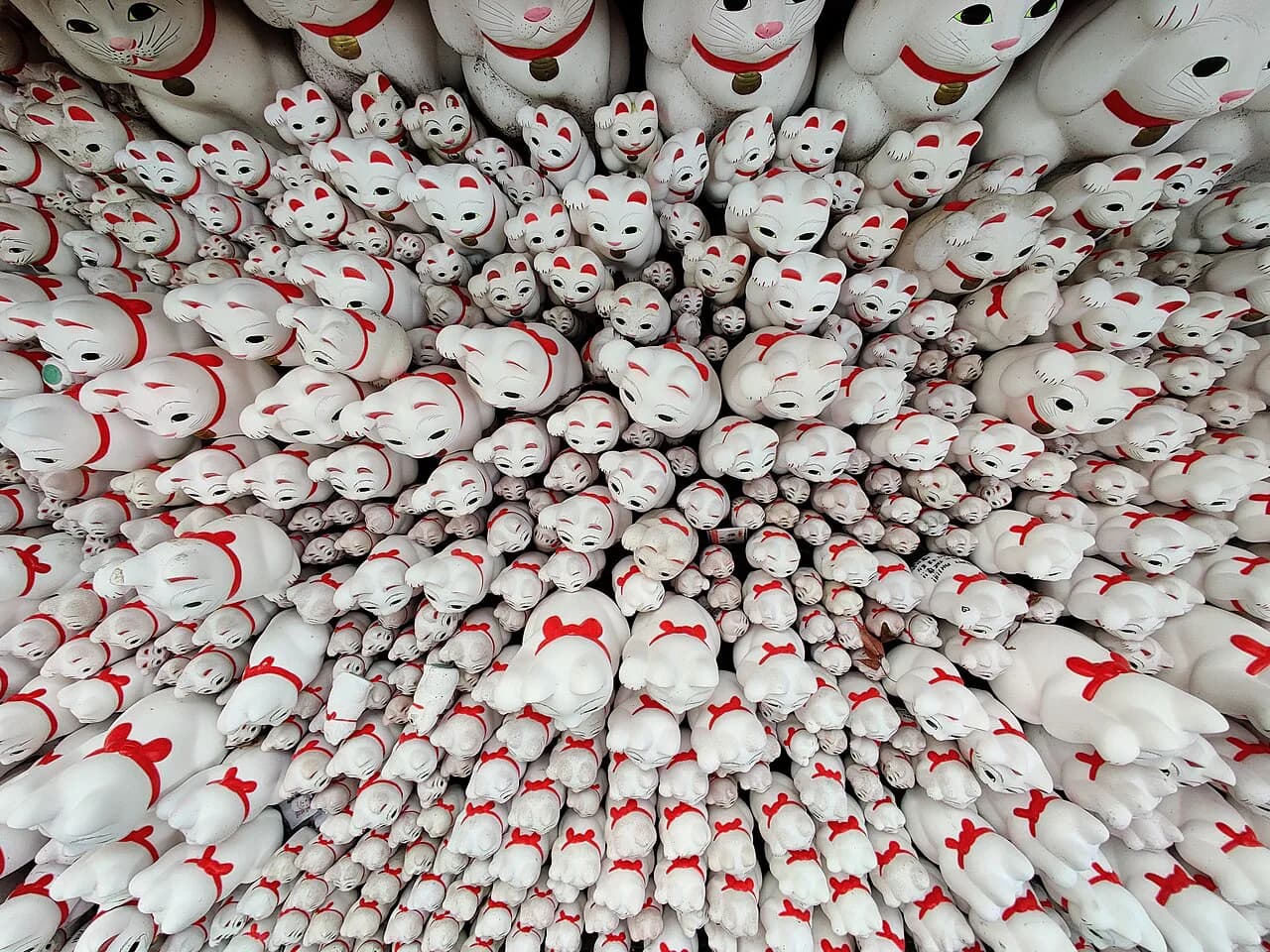
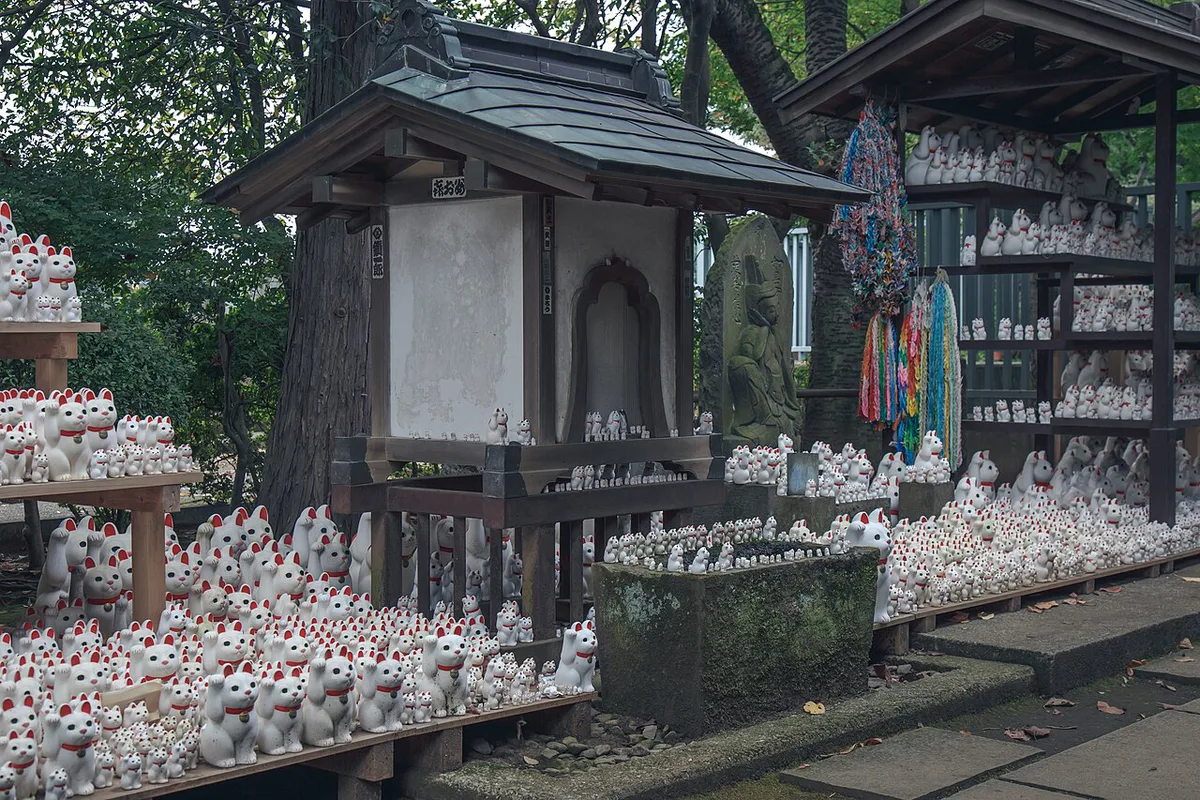
The cat figurines cluster in a dedicated corner of the temple grounds, arranged in the dozens by size. All raise the right paw rather than the left and lack the coin, or koban, that many commercial lucky cats hold. Figurines are purchased at the Shofuku-den building nearby. The customary ritual is to buy a figurine and make a wish. You can leave it at the temple immediately or take it home, then return it to Gotokuji in thanks after the wish comes true. Because the smallest and most popular figurine sizes are the first to sell out, plan a morning visit if buying and dedicating a figurine is the goal. Avoid arriving in the afternoon and finding the preferred size unavailable.
- Right-paw cats only, without a coin, distinct from commercial maneki-neko designs
- Buy at the Shofuku-den building near the cat corner
- Ritual: wish, keep or leave the figurine, then return it to the temple once the wish is fulfilled
- Morning visits are safer for buying popular smaller sizes
Temple Etiquette and Photography Rules at Gotokuji Temple
Gotokuji is a religious site and an active Zen temple, not a cat cafe. It should not be treated as a place to see or handle live cats, though a few strays may wander the grounds. Keep voices low near the main hall and cemetery, stay on marked paths around the graves, and be mindful that worshippers may be present for genuine prayer. Photography of the cat figurines themselves is generally welcomed given how iconic the display has become, but treat the main hall and cemetery with the same restraint expected at any working temple.
How to Plan Your Itinerary: Half-Day Trip Pairings Near Gotokuji Temple
Gotokuji's location away from central Tokyo makes it worth combining with a nearby neighborhood rather than visiting in isolation. The most natural pairing is Shimokitazawa's vintage shopping streets, only a few stops away and a natural lunch-and-browsing stop before or after the temple. Travelers building a whimsical, offbeat Tokyo day can extend the loop to the Ghibli Museum's Mitaka grounds. For a different pace of neighborhood entirely, both Kichijoji's local backstreets and Nakameguro's canal-side cafes work as alternative local-vibe stops on the same day. Shinjuku or Shibuya make the most logical overnight base for this itinerary, since both sit on the Odakyu/Setagaya transit corridor without the detour a Ginza base would add.
Who Should Visit Gotokuji Temple (and Who Should Skip It)
Gotokuji rewards a specific kind of traveler more than a first-time Tokyo itinerary. Cat lovers, offbeat-neighborhood explorers, and photographers drawn to the visual density of the figurine corner get the most out of the trip. Travelers on a tight 48-hour Tokyo whirlwind who have not yet seen headline sights such as Senso-ji should generally prioritize those first and treat Gotokuji as a second-trip or slower-paced addition.
- Go: cat lovers, offbeat explorers, photographers
- Skip for now: anyone on a 48-hour Tokyo sprint who hasn't covered Senso-ji and other headline sights yet
Mistakes to Avoid When Visiting Gotokuji Temple
A handful of avoidable mistakes shape most disappointing visits to Gotokuji temple. Do not treat it as a cat cafe or a guaranteed place to pet live cats; it is a working Buddhist temple where the figurines, not animals, are the draw. Do not assume entry requires a ticket or fee, since the grounds are free and open to the public. Do not count on catching a themed Cat Train tram on the Setagaya Line without checking Tokyu Corporation's schedule information first. Finally, do not arrive in the afternoon expecting full stock of the smallest figurines, since those sell out earliest in the day.
- Treating it as a cat cafe rather than a working temple
- Assuming a paid entry ticket is required
- Assuming a themed Cat Train tram will be waiting without checking beforehand
- Arriving late in the day expecting the smallest figurines still in stock
For trip-planning details, see Gotoku-ji - Wikipedia and Tokyo - Wikivoyage.
Pair this with our broader Tokyo tourism attractions guide for the full city overview.
Continue planning with Tokyo Trip Planner 2026: Attractions, Neighborhoods and Itineraries.
Frequently Asked Questions
Is entry to Gotokuji Temple free?
Yes. The temple grounds are free to enter since Gotokuji remains an active Buddhist place of worship. Only the maneki-neko figurines, omikuji fortunes, and ema plaques carry an individual cost at the Shofuku-den building.
How much time should travelers plan for a visit to Gotokuji Temple?
A visit to the cat corner, main hall, pagoda, and cemetery can comfortably be covered in an hour or so. However, the journey time from central Tokyo on either the Odakyu Line or the Tokyu Setagaya Line should be factored into a half-day plan, especially when pairing it with Shimokitazawa.
What is the difference between the Odakyu Line and the Tokyu Setagaya "Cat Train" route to Gotokuji?
The Odakyu Line runs to Gotokuji Station and is the faster route from Shinjuku. The Tokyu Setagaya Line runs to Miyanosaka Station on a local tram nicknamed the Cat Train for its occasional maneki-neko branding. However, its themed trams do not run on a guaranteed fixed schedule.
Why do Gotokuji's lucky cats raise their right paw?
Gotokuji's maneki-neko figurines raise the right paw, which is associated with inviting fortune and money. They also lack the coin, or koban, held by many commercial lucky cats.
Can visitors take a Gotokuji figurine home instead of leaving it at the temple?
Yes. Visitors may buy a figurine, make a wish, and either leave it at the temple or keep it at home. Once the wish is fulfilled, custom calls for returning the figure to Gotokuji in thanks.
Is the cemetery at Gotokuji Temple open to visitors?
Yes, unlike many Japanese cemeteries that stay closed to outside visitors, Gotokuji's cemetery at the back of the grounds is accessible. It holds graves connected to the Ii clan, including Ii Naosuke, a significant Edo-period historical figure.
Free: The Tokyo Essentials guide
Top things to do, where to stay, a perfect day plan, getting around, and the best time to go — a Tokyo mini-guide you can take offline.
You might also like


Continue reading
More guides you'll find useful