

Hokkaido Autumn Leaves: Best Spots and When Each One Peaks (2026)
See where and when Hokkaido autumn leaves peak in 2026, from Daisetsuzan in September to Hakodate in November, plus routes, temps, and costs.
On this page
Last updated September 2026, Hokkaido autumn leaves already tint the peaks above Sounkyo Gorge, while Sapporo stays green for weeks longer. The koyo front drops about 1,600 meters (5,249 feet) from Asahidake's summit to the lowland parks, so timing depends on altitude, not a fixed date. This guide ranks the best spots by when their color actually peaks, from Daisetsuzan's high country in mid-September to Hakodate's gardens in early November.
Why Hokkaido Has Japan's Earliest Autumn Leaves
Hokkaido sits at Japan's northern edge, so its mix of Ezo spruce, birch, and maple turns color weeks before Honshu does. Japan's seasonal color moves south as a wave called the koyo zensen, or red-leaf front, and the Japan Meteorological Agency tracks its progress every autumn. Color starts at altitude in central Hokkaido, then works down through valley onsen towns before reaching coastal cities weeks later. Official listings from the Hokkaido tourism guide place Daisetsuzan among the first spots in the country to turn red each year. This guide pairs well with Hokkaido's autumn overview, which covers festivals and seasonal food alongside foliage. Travelers still weighing seasons can check a season-by-season comparison before locking in dates.
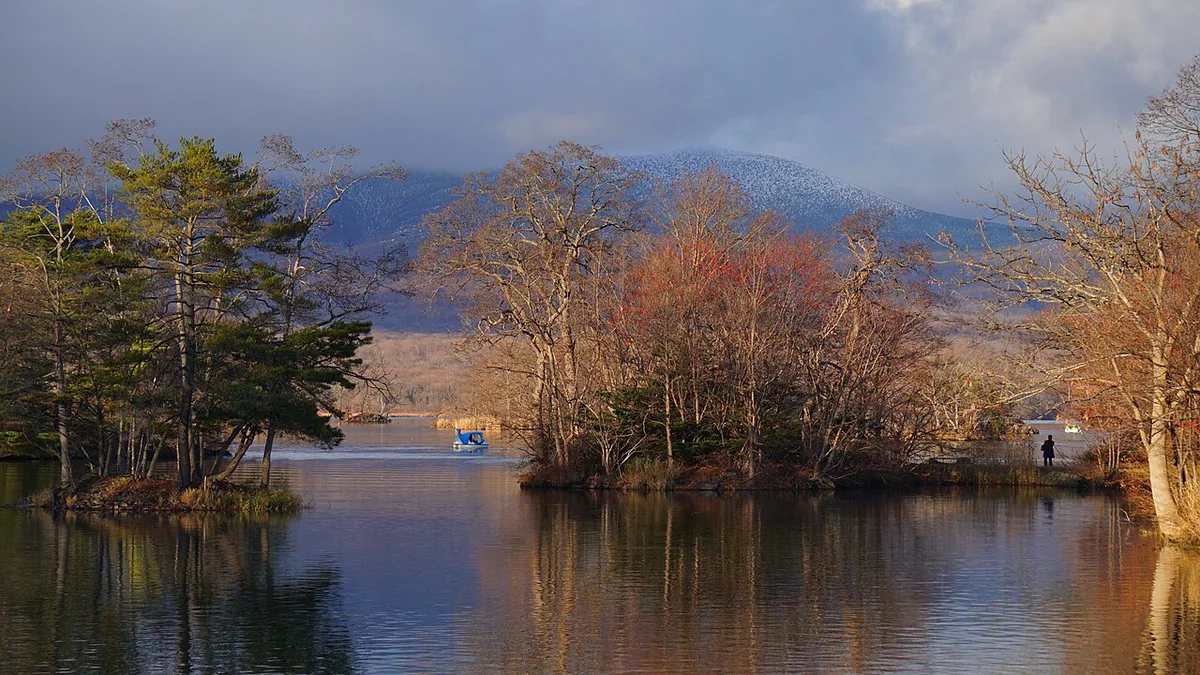
When Do Hokkaido Autumn Leaves Peak? A Region-by-Region Timeline
Color does not arrive across Hokkaido on one date. It drops in three broad phases tied to elevation and latitude, moving from Daisetsuzan's high peaks in mid-September to Hakodate's sea-level gardens by early November. This table groups the island's marquee spots by typical peak window, so you can match travel dates to a region instead of guessing. Anyone flying in during the back half of October should start with the October color guide for week-by-week notes. Travelers arriving after Halloween can check the November color guide, which also flags the season's first snow risk.
| Phase | Region & Spot | Typical Peak Window | Access Note |
|---|---|---|---|
| Phase 1 | Daisetsuzan & Sounkyo Gorge (Central Hokkaido) | Mid-September to early October | Ropeway to 1,600 m (5,249 ft); car recommended |
| Phase 2 | Lake Akan, Shiretoko Goko, Jozankei Onsen | Early to mid-October | Koyo Gondola runs late Sept-mid Oct; car helpful |
| Phase 3 | Sapporo (Hokkaido University, Nakajima & Maruyama Parks) | Late October | Subway or city bus; no car needed |
| Phase 3 | Onuma Quasi-National Park & Noboribetsu | Mid-to-late October | Onuma about 20 min from Shin-Hakodate-Hokuto Station |
| Phase 3 | Hakodate (Goryokaku, Kosetsuen) | Late October to early November | JR plus city tram from Hakodate Station |
Central Hokkaido: Daisetsuzan and Sounkyo Gorge (Mid-to-Late September)
Asahidake is Hokkaido's highest peak at 2,291 meters (7,516 feet), and it is usually the first spot in Japan to show color each year. A ropeway climbs to roughly 1,600 meters (5,249 feet), putting hikers near Sugatami Pond without a full mountain ascent. Daytime highs near the ropeway's upper station typically hover around 10°C (50°F) in mid-to-late September, and mornings at that elevation can dip toward 3°C (37°F). Sounkyo Gorge, at the base of the same mountain range, pairs waterfalls and sheer cliffs with the same early color and adds an onsen town for an overnight stop. Hikers wanting a slower route than the ropeway can head to Ginsendai on Mount Aka, where red and yellow spread across the slopes from mid-September. Daisetsuzan forms the core of Hokkaido's largest protected area, covered in more depth in the national park deep dive. Most visitors stage from Asahikawa, and Asahikawa's own sights fill a day before or after the ropeway. Those extending the trip to Furano can find that side trip mapped in the Furano flower-field guide.
Sapporo and Jozankei Onsen: Urban Gold and Valley Color (Early to Late October)
Hokkaido University's ginkgo avenue turns gold along Kita 13-jo Street, where roughly 70 ginkgo trees line the walk and usually peak in late October. Its campus sits an easy walk from Sapporo Station, so it needs no car or bus. Nakajima Park draws fewer visitors than the university avenue, with maple and ginkgo reflected in Iris Pond and reached directly from Nakajima Koen subway station. Maruyama Park adds a quieter, tree-lined option nearby, useful when Nakajima Park feels crowded on weekends. Jozankei Onsen, roughly an hour from central Sapporo, has drawn bathers for more than 150 years and today counts 56 spring sources feeding its ryokan. Its red Futami-tsuribashi Suspension Bridge, along the Futami-Jozan Road, frames the valley's ravine in red and yellow through most of October. An eight-seater Koyo Gondola at the adjoining ski resort runs for a limited window from late September to mid-October, lifting riders roughly 1,100 meters up the slope. Hoheikyo Dam, deeper in the same valley, only allows access by a hybrid electric bus that protects the surrounding parkland. Sapporo's own daytime highs typically sit near 11°C (52°F) by late October, dropping toward 4°C (39°F) after dark. A full breakdown of the city's park-by-park timing lives in Sapporo's color calendar. Travelers building a longer city day can pair the ginkgo walk with wider Sapporo sightseeing.
The Sapporo Autumn Festival runs September 12 to October 4, but peak color comes in late October—time visits accordingly.
Southern Hokkaido: Onuma, Hakodate, and Noboribetsu (Late October to Early November)
Onuma Quasi-National Park sits about 20 minutes by car from Shin-Hakodate-Hokuto Station, an easy stop for anyone connecting through the Hokkaido Shinkansen. It spans roughly 9,083 hectares (22,448 acres) around three lakes, and its best photograph pairs the reddening shoreline with Mount Komagatake's silhouette across the water. Hakodate Kosetsuen, inside Miharashi Park, was designated a nationally protected Place of Scenic Beauty in 2001 and remains the only garden in Hokkaido with that status. Its maple-lined path runs about 100 meters (328 feet) through roughly 7,000 trees across some 150 varieties, usually peaking from late October into early November. Goryokaku Park colors more subtly, since its star-shaped moat is better known for spring cherry blossoms, but its roughly 1,600 cherry trees still turn red and yellow by late October. Climbing the nearby 107-meter (351-foot) Goryokaku Tower gives the clearest view of the fort's star shape against that color. Noboribetsu, inland from Hakodate, typically peaks a little earlier, from mid-to-late October, with its trails and onsen options covered in the soaking section below. Full routing from the shinkansen platform sits in the step-by-step Onuma routing guide. Sightseeing beyond the two gardens is rounded up in the Hakodate's wider sights guide.
Eastern and Northern Frontiers: Lake Akan, Shiretoko, and the Blue Pond
Lake Akan, in eastern Hokkaido's Akan-Mashu National Park, typically peaks from early to mid-October. Its clearest view sits at Takimi Bridge, about 4 kilometers (2.5 miles) from the lakeshore, where the Akan River rushes between rocks lined with red and yellow leaves. Shiretoko Goko Lakes, farther northeast, offer two separate trail systems. An elevated wooden path takes about 20 minutes and loops one lake, while ground-level paths connect the other four. Color there usually peaks in mid-October, with a chance of spotting deer or birds along the boardwalk. Blue Pond, near Biei, turns a different kind of color: larch and birch reflect gold in its blue-tinted water through early October, before the site switches to winter illumination in November. None of these three spots sit close enough together for one day, so a rental car and an overnight stop are worth budgeting into any itinerary that includes them. A full island-wide roundup once the leaves fade sits in an island-wide attractions roundup.
Soaking Views: Best Onsen for Hokkaido's Autumn Color
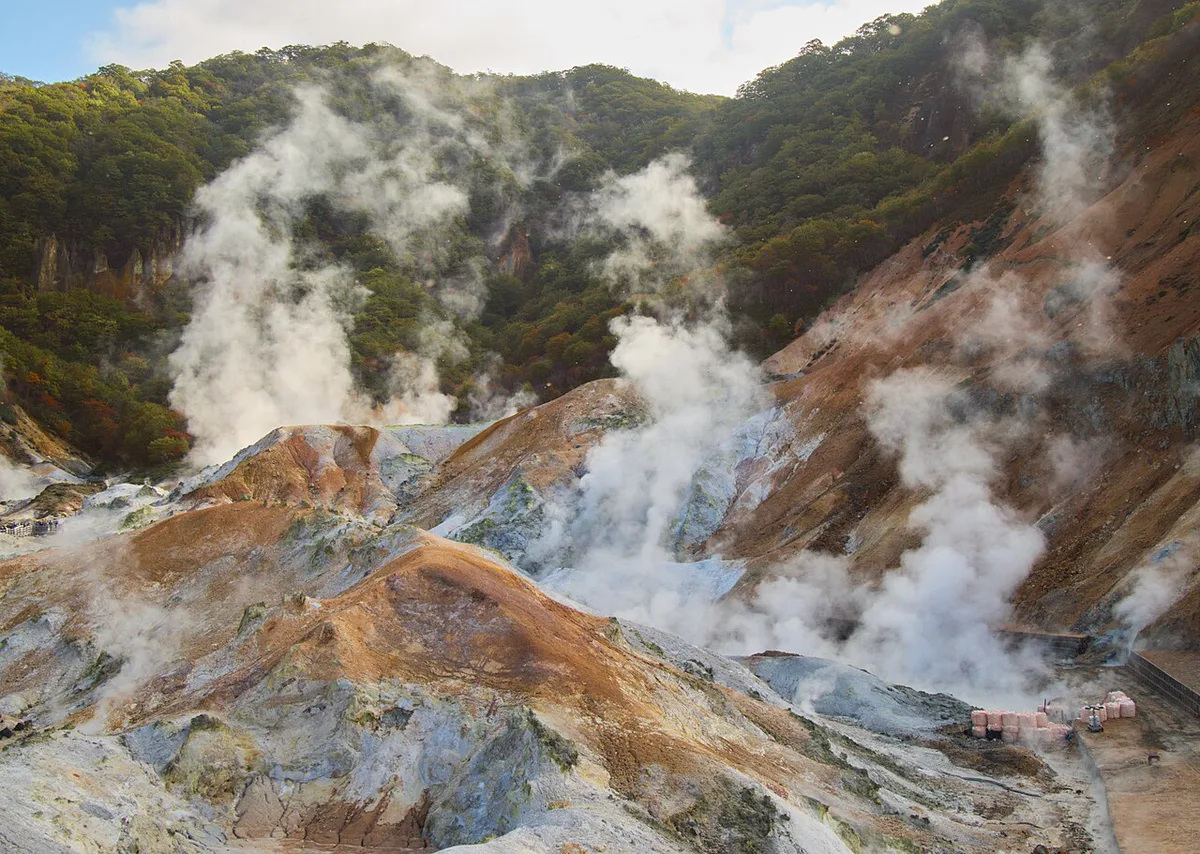
Noboribetsu draws its hot spring water from Jigokudani, a volcanic valley that has vented steam for roughly 10,000 years. It now supplies about 10,000 tons of water a day to the town's ryokan. White sulfur steam rising against red maple gives Noboribetsu's open-air baths a backdrop few other onsen towns can match. Jozankei, described above for its suspension bridge and gondola, offers a calmer valley setting, with color visible from footpaths, guest rooms, and open-air baths alike. Choosing between them mostly comes down to atmosphere: Noboribetsu pairs color with volcanic drama, while Jozankei pairs it with a quieter river valley closer to Sapporo. Both towns light walking paths after dark in autumn, though neither runs an illumination show on the scale of Hakodate's gardens. Noboribetsu's wider hot-spring district, including the Jigokudani observation deck and footbath, is detailed in the Noboribetsu's hot-spring district guide.
Beyond Sightseeing: Ropeways, Horseback Rides, and Fruit Picking
Two ropeways offer contrasting views of the same season. Asahidake Ropeway climbs into alpine terrain above the tree line. Sapporo's Mt. Moiwa Summit Ropeway rises only to a 531-meter (1,742-foot) summit inside the city, pairing color with a skyline view below. Riders wanting scenery without a hike tend to prefer Moiwa; those chasing the earliest color in Japan still need Asahidake. In the Jozankei area, Wild Mustang's horseback riding facility runs Western-style trail rides at the foot of Mt. Hakkenzan, where color usually turns from mid-October. Nearby, Jozankei Farm's Hoheikyo-area orchards add tree trekking and zip-lining to standard fruit picking, and the Hakkenzan side offers fruit picking, barbecues, and fishing on the same afternoon. Odori Park's Sapporo Autumn Festival, a harvest food event, runs from September 12 to October 4 this year, overlapping with the city's early color. Lake Akan also hosts the Marimo Matsuri from October 8 to 10, timed to the lake's peak foliage window.
Planning Logistics: Trains, Rental Cars, and What to Pack
Sapporo and Hakodate work well on the JR network. Both cities' marquee spots sit within walking distance of a train or subway stop, and neither Goryokaku nor the university ginkgo avenue needs a car. Daisetsuzan, Jozankei's Hoheikyo Dam, and the eastern lakes are a different story. Hoheikyo only allows entry by hybrid electric bus, and Sounkyo sits well outside easy transit range. Lake Akan and Shiretoko Goko run more than three hours from Sapporo by any public route, so a rental car is close to essential for that leg. Jozankei's tourist board listed a daytime reading of 16°C (61°F) in mid-September this year, a reminder that valley towns still feel mild even as mountain color has already passed peak. Pack for a wider swing than that number suggests: mountain mornings can sit close to freezing while city afternoons stay comfortable in a light jacket. Guided six-day autumn itineraries from Western tour operators are commonly listed from $3,660. Operators note that the same package costs more once travel dates fall inside a region's narrow peak-color window. Booking lodging before a color forecast firms up usually costs less than waiting. Sequencing every region into one loop is easier with a route already mapped, and the multi-day route planner lays out a version stop by stop.
Mountain mornings reach 3°C (37°F), but Sapporo city afternoons stay near 11°C—pack layers for both extremes.
Common Mistakes to Avoid When Chasing Hokkaido's Autumn Leaves
A few planning errors repeat across trip reports every year.
- Booking for late November arrives too late in most years, since color has already dropped from Daisetsuzan through Sapporo by then. Check how fast winter follows before locking in dates that late.
- Underestimating distance causes trouble too. Sapporo to the Shiretoko area is a multi-hour drive, not a same-day add-on to a Daisetsuzan or Jozankei visit.
- Skipping the evening visit misses half of Hakodate's appeal, since Kosetsuen and Goryokaku both light their gardens after dark in autumn.
- Assuming one date works everywhere is a common mistake. A single week can catch peak color in Sapporo while Daisetsuzan is already bare and Hakodate has not turned yet.
Jozankei Nature Luminarie After Dark
Jozankei offers a more immersive evening option than a simple lit footpath. Jozankei Nature Luminarie is an outdoor light-and-sound walk staged around Futami Park and the riverside near Futami-tsuribashi Suspension Bridge. It turns the forest, rocks, and water into part of the display.
The route is best treated as a short after-dinner outing from an onsen ryokan. Wear proper walking shoes, since paths can be damp and uneven after rain. Bring a light outer layer, because the valley cools quickly once the sun sets.
The program’s operating dates, entry rules, and hours vary by season. Confirm them with your accommodation or the Jozankei tourism office before planning a late arrival. Pairing the evening walk with a daytime visit to Hoheikyo Dam or the Koyo Gondola gives Jozankei a fuller foliage experience than a quick bridge stop alone.
Frequently Asked Questions
When is peak season for hokkaido autumn leaves?
Peak color depends on where you look. Daisetsuzan and Sounkyo Gorge usually peak from mid-to-late September. Valley spots like Jozankei and Lake Akan follow in early-to-mid October. Sapporo and Hakodate finish the sequence from late October into early November.
Is Hokkaido or Kyoto better for autumn leaves?
Each destination offers a different kind of color. Hokkaido's leaves turn first, weeks before other parts of Japan, and its foliage pairs with hot springs, national parks, and open landscapes rather than temple grounds. Kyoto's autumn color centers on historic gardens and temples such as Eikando and Kiyomizu Temple. Choosing between them comes down to whether early mountain and onsen scenery, or a slower, temple-centered season, fits your travel dates better.
Do you need a rental car to see Hokkaido's autumn leaves?
It depends on which regions are on the itinerary. Sapporo and Hakodate's main spots, including the Hokkaido University ginkgo avenue and Goryokaku Park, sit on train or subway routes and need no car at all. Daisetsuzan, Jozankei's Hoheikyo Dam, and the eastern lakes around Akan and Shiretoko are far harder to reach without one. Hoheikyo specifically only allows access by a dedicated hybrid electric bus.
What should you pack for Hokkaido in autumn?
Plan for a bigger temperature swing than the calendar suggests. Mountain mornings near Daisetsuzan's ropeway station can sit close to 3°C (37°F) even while Sapporo afternoons stay comfortable near 11°C (52°F). Bring a warm layer, a windproof shell, and shoes with grip for gravel trails like the Futami-Jozan Road. Local tourism staff recommend flat-soled sneakers or comfortable walking shoes there.
Can you see autumn leaves and early snow on the same Hokkaido trip?
Occasionally, yes, especially late in the season. Daisetsuzan can carry leftover snow patches on its upper slopes even while color still holds lower down in September. Hakodate and Sapporo, by contrast, can see their first flakes shortly after color fades in November, so finishing the trip before mid-November avoids that overlap for most travelers.
Which Hokkaido autumn spots are less crowded?
Nakajima Park draws far fewer visitors than the Hokkaido University ginkgo avenue, even though both sit within central Sapporo. Onuma Quasi-National Park and the Blue Pond near Biei also see lighter crowds than Goryokaku Park or Jozankei's Futami-tsuribashi Bridge, since both require a car or a longer transit connection. Visiting Sapporo's main spots on a weekday morning is the simplest way to avoid the heaviest weekend crowds at the more photographed locations.
Free guide: Japan's Hidden Gems
12 under-the-radar places beyond Tokyo & Kyoto — with the best season to visit each and a local tip you won't find in the guidebooks.
You might also like


Continue reading
More guides you'll find useful


