Kyoto Weather by Month: Temps, Rain & Seasonal Tips
Kyoto weather by month: average temperatures, rainfall and humidity, what to pack, and why mid-April to early May and late October are best.
On this page
The best time to visit Kyoto is during the shoulder months of mid-April to early May or late October. Knowing the kyoto weather by month helps you avoid the worst humidity and the biggest crowds. Kyoto sits in a natural bowl surrounded by mountains on three sides, which creates a specific microclimate that makes summers more intense and winters colder than nearby coastal cities. Whether you want cherry blossoms or autumn leaves, timing your trip around this climate is essential. Check out this Best Time to Visit Kyoto: Monthly & Seasonal Guide guide for a broader overview of peak and off-peak strategy.
This guide covers each month individually with average high and low temperatures, rainfall patterns, major festivals, and crowd levels. Use the monthly breakdowns below to match your travel style to the right window.
Understanding the Kyoto Basin Effect
Kyoto is surrounded by mountains on three sides which significantly impacts the local climate patterns. Locals call this the 'basin effect' because the mountains trap air within the city limits. During summer, this prevents breezes from cooling the streets and leads to extreme humidity. In winter, cold air settles at the bottom of the valley and stays there for weeks.
Kyoto runs 3–4°C hotter in July than nearby Osaka because of the basin effect. In summer, budget extra breaks in air-conditioned spaces and plan outdoor sightseeing before 09:00 or after 17:00.
The practical result is that Kyoto runs noticeably hotter and colder than Osaka, which sits just 15 km away on open coastal plains. In July, Kyoto's heat index can feel 3–4°C higher than Osaka on identical forecast days. The trapped humid air also means that a 32°C afternoon in Kyoto feels closer to 38°C once you factor in moisture. If you are comparing summer options between the two cities, budget extra breaks in air-conditioned spaces for Kyoto days. Understanding this geography is the first step in planning your trip around the kyoto weather by month data below.
Kyoto Weather in January
January is one of the coldest and quietest months in Kyoto. Average high temperatures reach around 9°C / 48°F and lows can drop to 1°C / 34°F at night. The skies are often clear and crisp, making this one of the better months for photography without crowds. Snow is possible but rarely sticks in the city center — the surrounding hills see more accumulation.
Most businesses close from 29 December through 3 January for the Shogatsu New Year holiday. After that, crowds thin considerably and hotel prices drop. The main January event is Toshiya on 15 January, a famous archery contest at Sanjusangen-do Temple that draws large domestic audiences. If cold weather doesn't deter you, January offers the most accessible version of Kyoto's major temples — no queues, no tour groups. See the Kyoto in Winter: 8 Best Things to Do & Travel Guide guide for specific cold-weather temple routes.
Kyoto Weather in February
February remains firmly in winter, with average highs around 10°C / 50°F and lows near 2°C / 34°F. Rain or light snow appears a few times during the month but rarely accumulates. This is a good month to visit if you dislike crowds and want temples largely to yourself. The low visitor volume also means accommodation is significantly cheaper than peak season.
The standout February event is Setsubun Matsuri on 2–4 February at Yoshida-jinja Shrine on Yoshida-yama hill. A large bonfire festival is held after nightfall — one of the most atmospheric winter events in the city. According to AccuWeather Kyoto, February is also statistically the driest month of the first quarter, making outdoor exploration more reliable than March or April despite the cold.
Kyoto Weather in March
March is a transitional month. Temperatures climb from around 4°C / 39°F at night to 13°C / 56°F during the day by mid-month. Early March is still cold and uncrowded. The last week of March sees a sharp increase in domestic tourists as cherry blossom season begins to approach. Plum blossoms typically peak in mid-March at Kitano Tenmangu Shrine, offering a quieter preview of the spring bloom season.
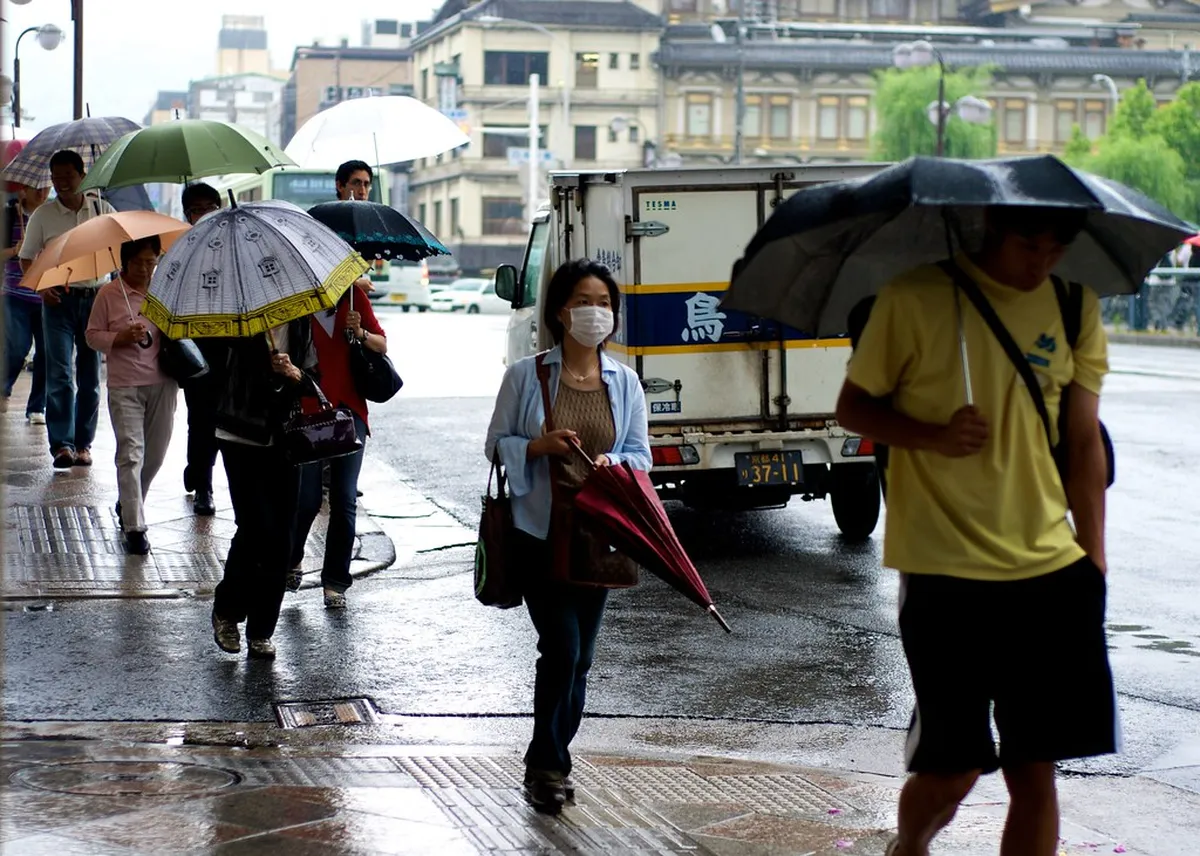
Rain increases in March compared to January and February, so a compact waterproof layer is useful. Most years, the first cherry blossoms appear in central Kyoto around 25–28 March, though this shifts by up to a week in either direction depending on the winter. Early arrivals aiming to catch sakura while avoiding April crowds sometimes target the final five days of March — a solid strategy when the bloom cooperates.
Kyoto Weather in April
April brings the most famous two weeks in Kyoto's calendar. Average highs reach 19°C / 67°F and lows settle around 9°C / 48°F. Cherry blossoms typically peak during the first week of April at top spots including Maruyama-koen Park, the Kamo River banks, and Gion's Shimbashi district. These days draw enormous crowds — some riverside paths become genuinely difficult to walk during peak weekend afternoons.
After the second week, crowds drop considerably as petals fall and new green growth takes over. The second half of April is arguably one of the best windows in the entire year: warm, lush, post-blossom calm with far fewer visitors and spring prices on accommodation. Golden Week begins at the very end of April (29 April) and runs into early May, spiking crowds and hotel rates again. If you land between 15–25 April, you catch the sweet spot.
Kyoto Weather in May
May is one of the two best months to visit Kyoto. Average highs reach 24°C / 76°F and lows stay around 14°C / 57°F. Humidity is still low enough to make temple-hopping comfortable. The fresh greenery across Arashiyama and the mountain shrines looks exceptionally vivid during this month. Days are long, evenings are pleasant, and rainfall is moderate.
The main crowd spike in May comes from Golden Week (late April to early May), when Japanese workers take holidays and popular sightseeing spots fill quickly. Book accommodation six months ahead if you plan to travel during Golden Week. Outside that window, May delivers near-ideal conditions. The Aoi Matsuri on 15 May is one of Kyoto's three great festivals — a large procession from the Imperial Palace to Kamigamo Shrine that starts at 10:00 and reaches Kamigamo by 15:30. It's free to watch from the street.
Kyoto Weather in June and the Tsuyu Rainy Season
June marks the start of Tsuyu, Japan's rainy season, which typically runs from mid-June through late July in the Kansai region. Average highs reach 27°C / 82°F and lows around 18°C / 65°F. It does not rain every day — afternoon showers are the typical pattern, often clearing by evening. Crowds are low and hotel rates drop significantly compared to spring peak.
The Tsuyu season gets a bad reputation, but it is genuinely manageable for travelers. Hydrangeas bloom across several temple gardens during June, particularly at Mimurotoji Temple in Uji, which draws visitors specifically for the display. The main practical issue is high humidity — the basin effect means Kyoto's rainy season feels heavier than Tokyo's. Carry a compact umbrella daily and schedule indoor activities such as tea ceremony or textile workshops for the afternoon rain window. The Kyoto Itinerary: See Kyoto Perfectly guide has a rainy-day variation with covered-route options.
Kyoto Weather in July
July is hot, humid, and festival-dominated. Average highs reach 31°C / 88°F and lows stay around 23°C / 73°F overnight, which prevents meaningful cooling. The Tsuyu rainy season typically ends in the final week of July, after which days become sunny and intensely hot. The basin effect pushes the actual felt temperature well above the forecast figure.
The Gion Matsuri is the defining event of the Kyoto calendar and takes place across the entire month of July. The main float procession (Yamaboko Junko) runs on 17 July through central Kyoto. On the three preceding evenings, the streets around Shijo and Karasuma close to traffic and become pedestrian night markets where locals wear yukata. Attending is a non-negotiable Kyoto experience despite the heat. Plan outdoor sightseeing for before 09:00 or after 17:00 to manage the conditions.
There is a useful planning window that most guides miss: late July, after Tsuyu ends around 20–25 July, offers sunny days with lower crowds than August and hotel rates that haven't yet climbed to full summer peak. This 7–10 day window combines festival energy with post-rain freshness before the August heat settles in fully.
Kyoto Weather in August
August is the most intense month weather-wise. Average highs reach 33°C / 91°F and overnight lows stay near 24°C / 75°F, offering no real relief. Rainfall is lower than June and July but humidity remains very high. Most outdoor walking between 11:00 and 15:00 is genuinely uncomfortable without shade. The basin geography means that even a light breeze rare on August afternoons.

Despite the heat, August has low crowd levels at temples (most summer visitors cluster around the festival week in July). The Daimon-ji Fire Festival on 16 August is one of the most dramatic spectacles in Japan — huge bonfires lit in the shapes of kanji characters on the mountains surrounding the city, beginning at 20:00. Watching from Yoshida-yama or the Kamo River banks is free. Plan around the heat by visiting Philosopher's Path and Nanzen-ji before 08:30, retreating to covered dining for lunch, and returning to Gion district in the evening. A portable battery-powered fan and UV-protection umbrella are non-negotiable items for August. Refer to the 20 Best Kyoto Attractions in 2026 page for indoor options during midday.
Kyoto Weather in September
September is an underrated month. Temperatures moderate from August's peak, with average highs around 28°C / 83°F and lows near 20°C / 68°F. The beginning of the month is still warm and occasionally humid, but by the final week conditions shift to something comfortable. Typhoon risk peaks in September — Japan's typhoon season runs August through October, with September seeing the most direct impacts. Check the Japan Meteorological Agency forecast a few days before travel and be flexible on outdoor plans.
September is typhoon season. Check the Japan Meteorological Agency forecast a few days before travel and have flexible outdoor plans in case of closures or transport disruptions.
Crowds are at their yearly low in September, making it possible to walk Fushimi Inari's upper gates in near-solitude. Hotel rates are among the lowest of the year. The combination of manageable heat (compared to August), low crowds, and budget pricing makes late September a strong choice for travelers who prioritize value over perfect conditions. Hydrangeas are long gone but the first subtle color changes in maple leaves appear in mountain areas by the end of the month.
Kyoto Weather in October
October consistently delivers some of the best weather of the year. Average highs sit around 22°C / 73°F and lows around 13°C / 56°F. Sunny, clear days dominate, evenings are refreshing without being cold, and the landscape begins its color shift toward the end of the month. It is also one of the best months for hiking the trails around Kurama and Arashiyama.
Two major festivals fall on 22 October. The Jidai Matsuri (Festival of the Ages) is a large historical costume procession from the Kyoto Imperial Palace to Heian Shrine. The Kurama no Himatsuri (Kurama Fire Festival) takes place in the small mountain village of Kurama — young men carry huge flaming torches through narrow streets from dusk, with the climax around 22:00. Both on the same day make 22 October one of the most event-dense dates in the Kyoto calendar. Accommodation books out early; reserve at least three months ahead if you are targeting this date.
Kyoto Weather in November
November rivals May for the title of the best month to visit Kyoto. Average highs are around 17°C / 62°F and lows near 8°C / 46°F. The autumn foliage (koyo) typically peaks in mid-to-late November, turning Tofuku-ji Temple's gardens and the Arashiyama hillsides into dense orange and red canopies. These views attract very large crowds — comparable to April cherry blossom season in volume and intensity.
Crowd levels at the most popular autumn-leaf sites (Tofuku-ji, Eikan-do, Rurikoin) reach their maximum in the third week of November. Entry queues at Eikan-do can run 90 minutes on peak weekends. If you want the colors without the crush, target the first week of November when early color appears in higher-elevation areas around Kurama, or visit lesser-known spots like Jojakko-ji Temple in Arashiyama. Book accommodation for mid-November at least four months in advance. Data from InsideKyoto confirms November as the most demand-pressured booking month of the year.
Kyoto Weather in December
December marks the transition back to winter. Average highs are around 11°C / 52°F and lows drop to 3°C / 37°F. Skies are often clear, making this a photogenic month for temple interiors and garden architecture. The last autumn leaves typically remain through the first week of December, bridging the gap between koyo season and full winter.
Holiday closures are the main operational issue. Most businesses and many temple offices shut from 28–29 December through 3 January. If you arrive in late December expecting normal access, plan carefully. Christmas is not a public holiday in Japan, but Kyoto does have a handful of illumination events at shrines during December evenings. New Year's Eve sees large crowds at major temples for the midnight bell ringing — Chion-in and Kurodani Temple are popular spots. Early January access resumes from 4 January.
Best Time to Visit Kyoto: A Seasonal Summary
For most first-time visitors the clearest recommendation is late October or the second half of April. Both windows offer mild temperatures, low rain risk, and meaningful scenery without the extreme crowds of peak bloom or peak foliage. Late May is nearly as good, with warm stable conditions and far fewer tourists than Golden Week. The table below maps each major travel window against the key decision factors.
| Window | Avg Temp (°C) | Crowds | Prices | Key Events |
|---|---|---|---|---|
| Late March – early April | 10–19 | Extreme | High | Cherry blossoms |
| 15–25 April | 15–20 | Low–moderate | Mid | Post-sakura calm |
| May (ex. Golden Week) | 14–24 | Low | Mid | Aoi Matsuri |
| June | 18–27 | Low | Low | Hydrangeas, Tsuyu |
| July | 23–31 | Moderate | Mid | Gion Matsuri |
| August | 24–33 | Low | Mid | Daimon-ji Festival |
| September | 20–28 | Very low | Low | Typhoon risk |
| October | 13–22 | Low–moderate | Mid | Kurama Fire Festival |
| Mid–late November | 8–17 | Extreme | High | Autumn foliage |
| December – February | 1–11 | Low | Low | Winter calm |
Budget travelers who can tolerate some weather compromise should target June or September — both months offer the lowest hotel rates and the thinnest crowds at major temples. Families with limited schedule flexibility often do best in May outside of Golden Week, where weather, logistics, and crowd levels all align at acceptable levels simultaneously.
Packing Essentials for Every Kyoto Season
Packing for Kyoto requires a layering approach regardless of the season. Temples consistently require shoe removal, so bring high-quality socks without holes — you will be removing shoes five or six times per day at major sites. A compact waterproof layer covers sudden rain in spring and typhoon season. Here is a practical breakdown by season.
- Spring (March–May): Light jacket for morning and evening, sun protection for midday walks, compact umbrella, comfortable walking shoes with slip-on access for temple visits.
- Summer (June–August): Moisture-wicking fabrics only, UV-protection umbrella (doubles as sun shield and rain cover), portable battery fan, electrolyte tablets or sports drinks for hydration on long walking days, wide-brim hat.
- Autumn (September–November): Layers — mornings and evenings in October and November require a mid-weight jacket while afternoons can be warm enough for a light shirt alone. Compact rain layer for typhoon season in September.
- Winter (December–February): Thermal base layers are essential because Kyoto's basin cold is damp and penetrating. Warm gloves, a hat, and wind-resistant outer layer. Slip-on shoes remain useful at temples but prioritise warmth over convenience.
Year-round items worth packing for any Kyoto trip: slip-on footwear, portable battery charger, an IC card (Suica or Icoca) pre-loaded for buses, and a small day bag that can compress when you need to move quickly between temple sites. The summer humidity means synthetic fabrics dry overnight in most air-conditioned rooms — cotton takes far longer and accumulates quickly if you are moving hotels every two or three nights.
What's Closed in Low Season
While Kyoto is a year-round destination, some services change during the colder months. Many outdoor beer gardens and river-deck dining options close from October to April. Specific temple gardens may undergo maintenance during the quiet weeks of January and February. You should check a Kyoto Itinerary: See Kyoto Perfectly to confirm seasonal opening hours.
Some seasonal bus routes to remote mountain shrines operate on a reduced winter schedule. Traditional cormorant fishing demonstrations on the river only take place during the summer months. Most major museums and temples remain open but may close earlier in the winter. Always verify the status of specific 20 Best Kyoto Attractions in 2026 before traveling in the off-season.
For seasonal planning, see our Kyoto in summer guide and 3-day Kyoto itinerary.
Frequently Asked Questions
What is the rainiest month in Kyoto?
June is typically the rainiest month in Kyoto due to the Tsuyu season. Expect frequent light rain and high humidity throughout the month. Carry a sturdy umbrella for daily sightseeing.
Does it snow in Kyoto during the winter?
Snow falls occasionally in Kyoto during January and February but rarely stays long. The surrounding mountains see more snow than the city center. It creates a beautiful atmosphere for temple photography.
Is August too hot to visit Kyoto?
August is extremely hot and humid with temperatures often exceeding 35°C / 95°F. Most travelers find outdoor walking difficult during midday. Plan indoor activities or early morning visits during this month.
Understanding the kyoto weather by month is the key to a successful Japanese adventure. Whether you brave the summer heat or the winter chill, Kyoto remains a magical city. Plan your packing carefully and always leave room for seasonal changes in your schedule. Enjoy the unique beauty that each month brings to this historic cultural capital.
Free: The Kyoto Essentials guide
Top things to do, where to stay, a perfect day plan, getting around, and the best time to go — a Kyoto mini-guide you can take offline.
You might also like

Continue reading
More guides you'll find useful