Japan Christmas Illumination Guide: Best Winter Light Festivals for 2025-2026
Plan a Japan Christmas illumination trip with 2025-2026 dates, prices, and access for Tokyo, Nagoya, Kobe, Sapporo, Sendai, and Kyushu light festivals.
On this page
Last updated September 2026, this Japan Christmas illumination guide sorts the free city displays that switch off by December 25 from the paid winter illuminations that run into spring. Tokyo's Marunouchi district strings roughly 1.2 million champagne-gold LEDs along Nakadori Street through February 15, 2026, while Nabana no Sato's illuminated flower fields near Nagoya stay lit until May 31, 2026. Each event below lists its own season, so a trip can be built around the ones still running when you land.
Christmas Lights vs Winter Illuminations: What This Japan Christmas Illumination Guide Covers
Japan's winter light displays split into two categories. Short 'Christmas illumination' events are timed to the holiday itself. Larger 'winter illumination' events keep glowing long after the tree comes down. Marunouchi and Tokyo Midtown both switch on in mid-November, but Tokyo Midtown's display ends December 25, 2025, while Marunouchi continues through February 15, 2026. Storefront lighting has deep roots in Japan: a Ginza shop called Meidi-ya first decorated its windows for the season in 1904, and Osaka staged the country's earliest electric light display in 1903 with roughly 6,700 bulbs. Kobe Luminarie added a third pattern, a fixed-date memorial event covered in detail further down. Organizers publish each season's exact dates in early autumn, so treat the 2025-2026 details below as the pattern to expect and confirm specifics closer to a trip. For broader cultural background, see the Christmas in Japan overview and Japan's Christmas traditions guide.
Hokkaido and Tohoku: Sapporo, Hakodate, and Sendai's Pageant of Starlight
Sapporo's White Illumination dates back to 1981, making it one of the country's oldest seasonal displays. Odori Park stays lit from sunset until midnight, and admission is free. A German-style Christmas market runs alongside the lights near Odori Station. See the Japan Christmas markets guide for what the stalls typically sell. Hakodate stages its own Christmas Fantasy illumination on a separate calendar. Check the dedicated Hakodate illumination guide for current dates and hours. Sendai's Pageant of Starlight wraps roughly 160 keyaki trees along Jozenji-dori Street in more than half a million LED lights, running December 5 to 28, 2025. Lighting runs 19:00 to 22:00 on weekdays, with earlier 18:00 starts and a small ice rink on weekends. The site sits about a 20-minute walk from JR Sendai Station, and admission is free. Full route and timing details sit in the dedicated Sendai Starlight guide.
Tokyo's Free City-Center Illuminations
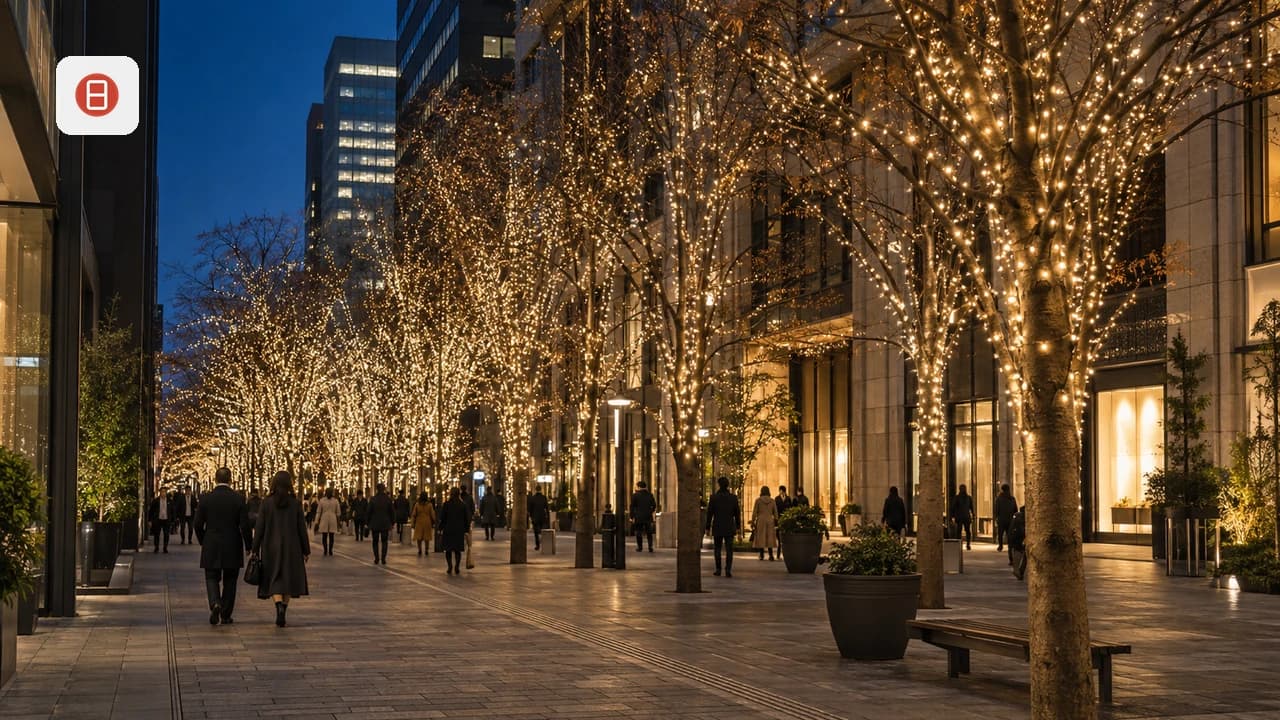
Marunouchi's holiday display strings roughly 1.2 million champagne-gold LED bulbs across about 360 trees along Nakadori Street. The season runs November 13, 2025, to February 15, 2026, lit 16:00 to 23:00, until midnight in December, and it is free to walk through. Tokyo Midtown's Starlight Garden switches on the same week but closes earlier, running November 13 to December 25, 2025, from 17:00 to 23:00. A paid ice rink opens beside it from November 21, and both displays sit within walking distance of Tokyo Station and Roppongi Station. Shinjuku's own display uses about 170,000 LED bulbs around the station area, and Tokyo Dome City's lighting often tops 2 million LED lights across the dome and its amusement park. Both are free and sit beside their namesake stations, useful first stops when a jet-lagged itinerary rules out a longer day trip.
Free Marunouchi closes February 15, 2026, but paid Nabana no Sato continues through May 31, 2026. Spring visitors planning late visits need ¥3,000 for the extended illumination.
Kanagawa and Tochigi: Paid Winter Illuminations Near Tokyo
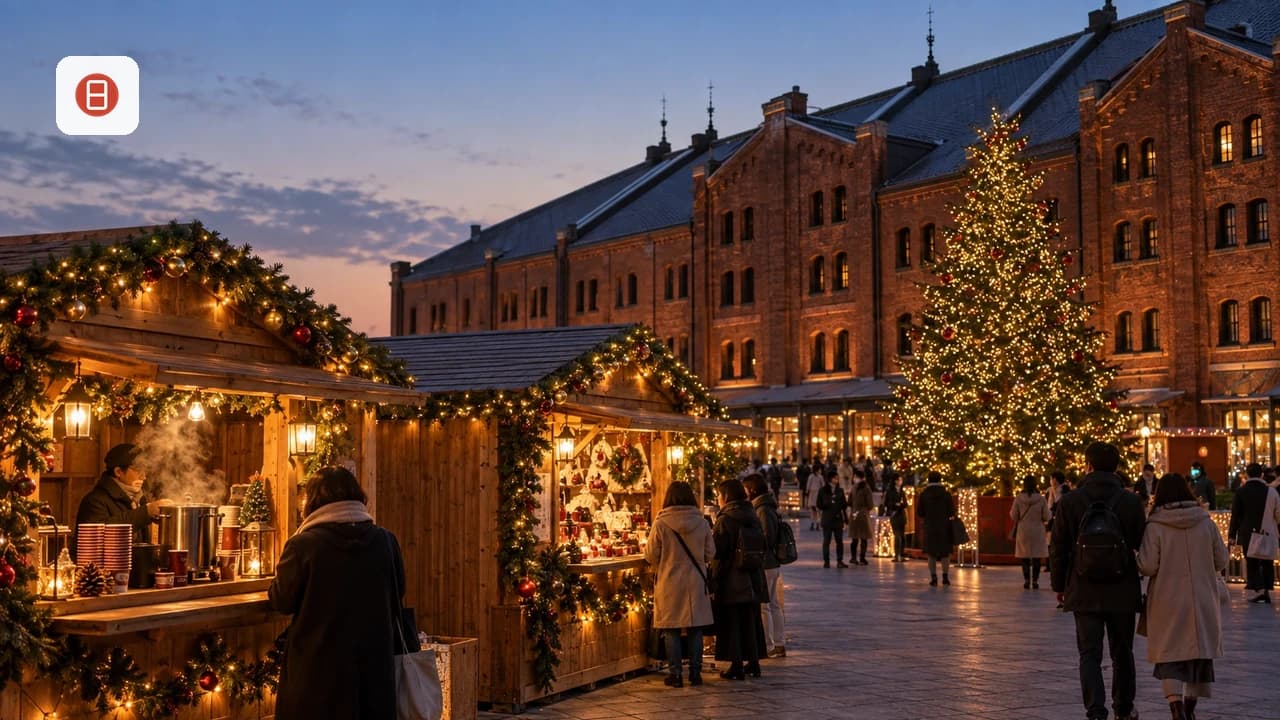
Three paid parks anchor the Kanto region's biggest winter illuminations, and each runs well past Christmas. Yokohama pairs its own lights with the Red Brick Warehouse Christmas Market, running November 21 to December 25, 2025, around a lit Christmas tree and German-style food huts. Many stalls sell the same festive fare families pick up at home. That includes Japan's well-known KFC Christmas dinner tradition. The chain confirms its holiday buckets each December on the KFC Japan official site. Full dates and access details for Yokohama's illuminations and market sit in the Yokohama winter illumination guide.
- Sagamiko Illumillion at Lake Sagami Resort Pleasure Forest: November 15, 2025 to May 10, 2026, 16:00-20:00 (later on select days), ¥2,000, about 6 million LEDs across the hillside plus a chairlift ride over the lights, an 8-minute bus ride from JR Sagamiko Station.
- Yomiuri Land Jewellumination: October 23, 2025 to April 5, 2026, 16:00-20:30, ¥1,800, includes a 180-meter Love Tunnel and a timed fountain light show, reached via Keio or Odakyu Yomiuriland Station.
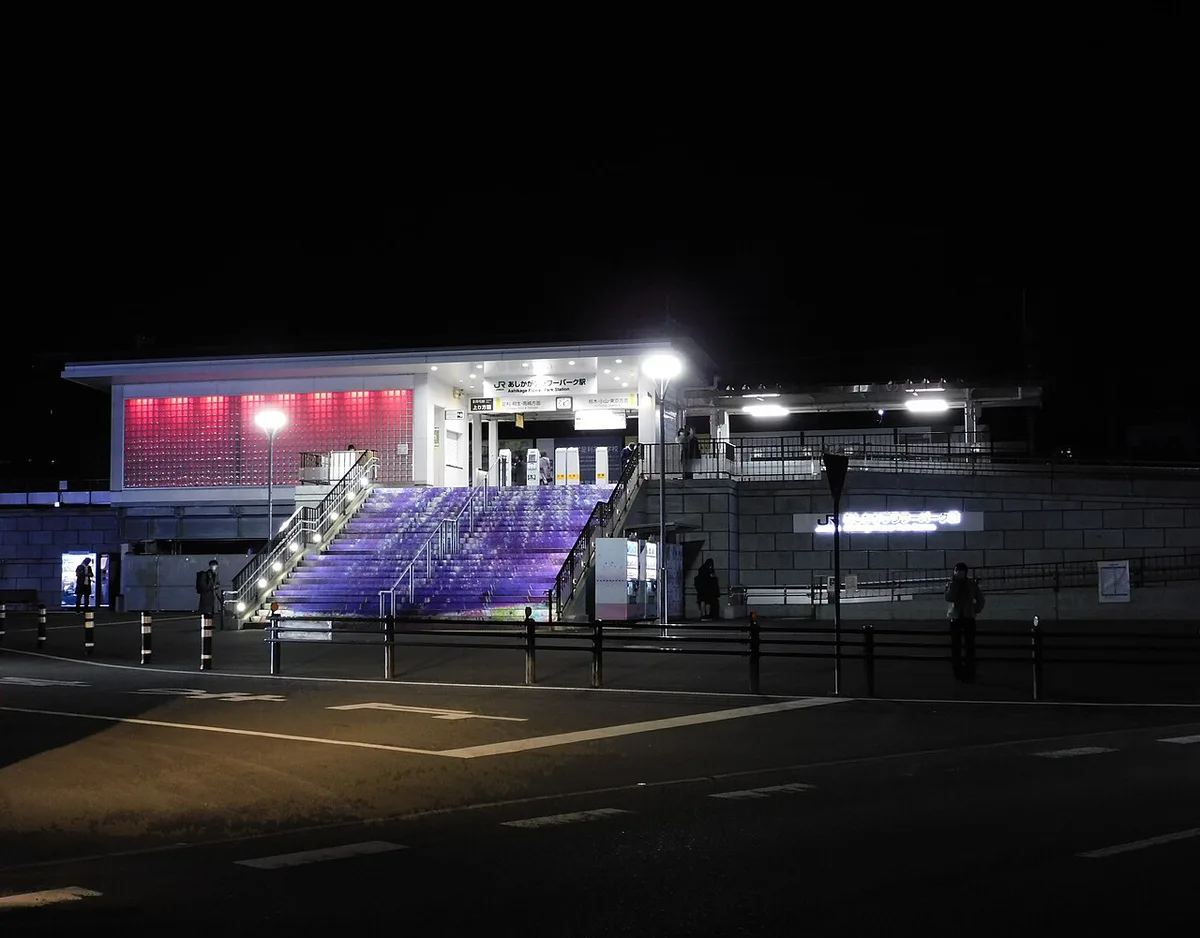
- Ashikaga Flower Fantasy at Ashikaga Flower Park, Tochigi: October 18, 2025 to February 15, 2026 (closed December 31), 15:30-20:30, ¥1,400, more than 5 million LEDs including lights shaped like the park's wisteria, a short walk from JR Ashikaga Flower Park Station.
Nagoya's Nabana no Sato: A Sea of Lights Through Spring
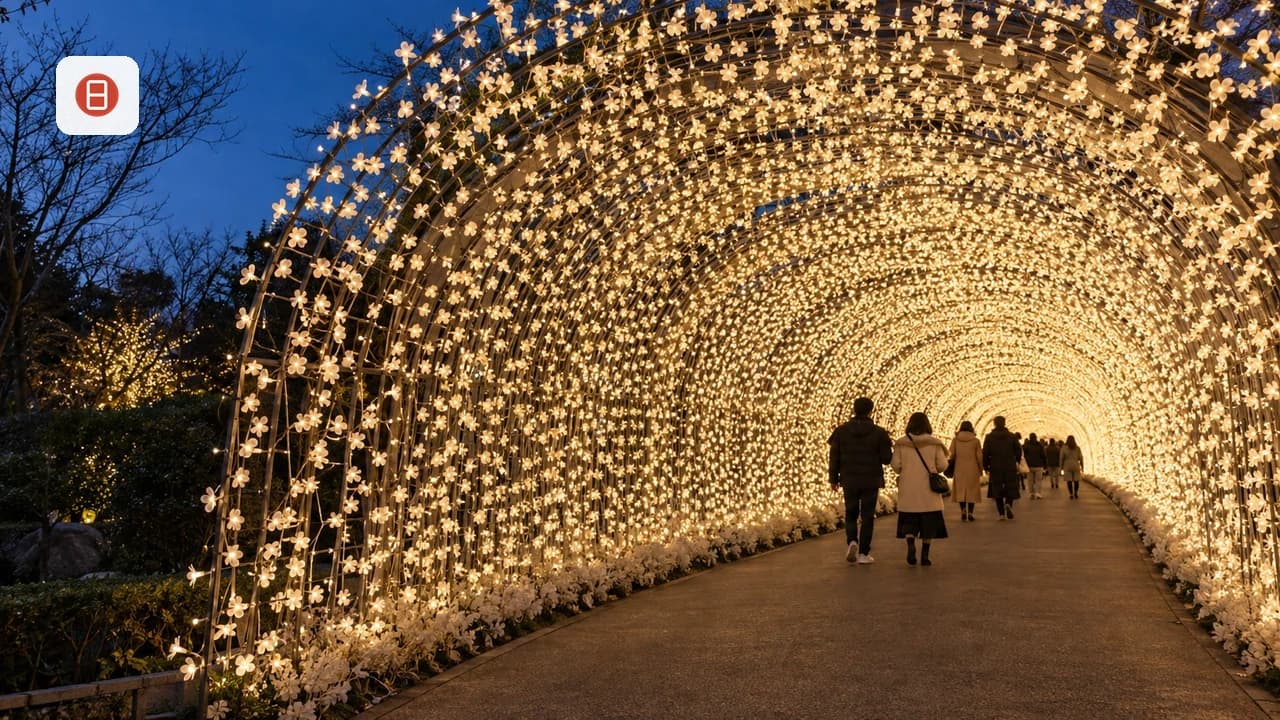
Nabana no Sato turns a flower park outside Nagoya into a wide field of lights, often described as a sea of lights, running October 18, 2025, to May 31, 2026, with closures on select days. Lighting runs from sunset to 21:00, extending to 22:00 on busier nights. Entry costs ¥3,000, discounted to ¥2,500 before November 21 and again from March 1 onward. An observation deck lifts visitors above the illuminated flower field, and light tunnels wind through the main grounds. The park sits about 30 minutes from central Nagoya by bus and train, reachable by Shinkansen from Tokyo or Osaka.
Kansai: Kobe Luminarie's Memorial Origins and Osaka's Midosuji Illumination
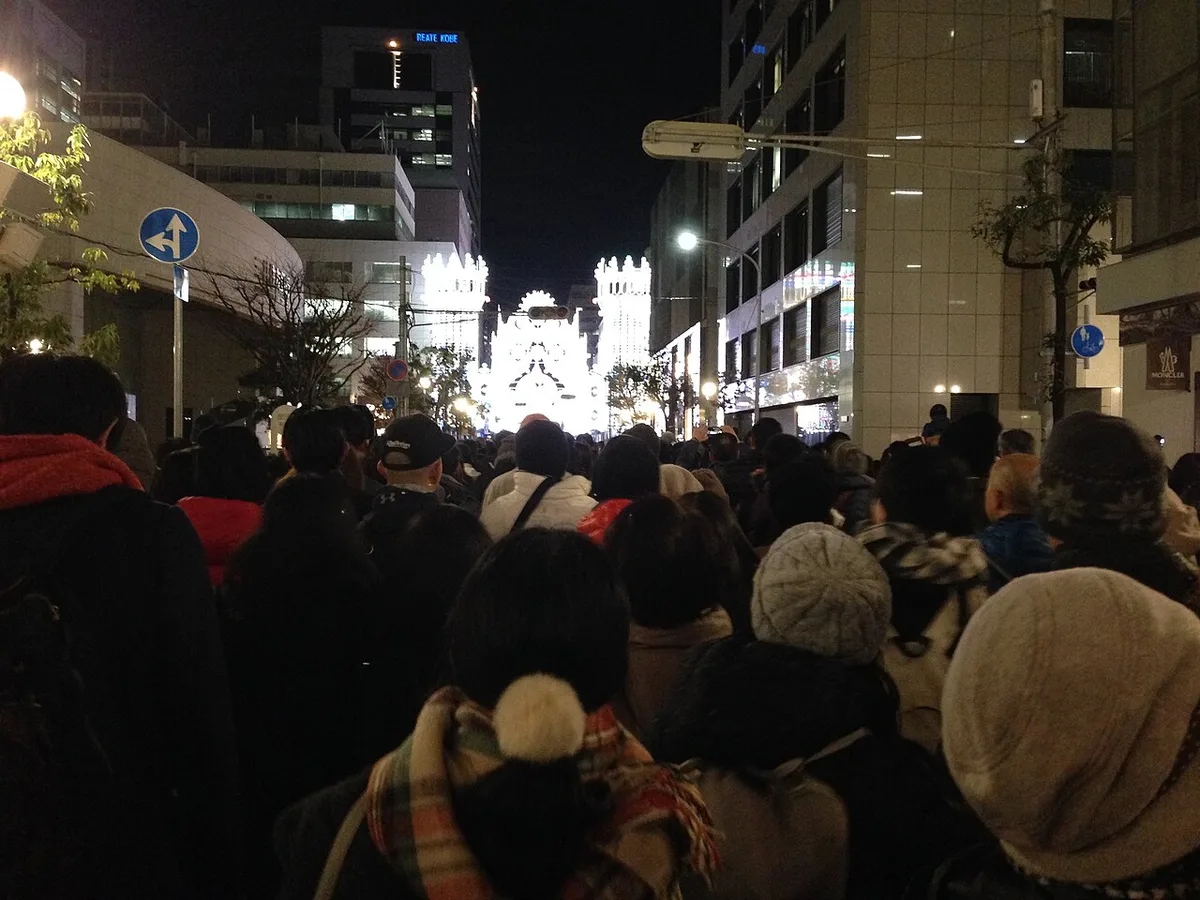
Kobe Luminarie began in 1995 as a memorial to victims of the Great Hanshin Earthquake, and it remains one of Japan's oldest winter light events. Since 2024 the event has shifted from December to late January, and the 2026 dates run January 30 to February 8, 17:30 to 21:30. Most of the route is free, spread across Kobe East Park, the Kitano-cho district, and Meriken Park. Meriken Park itself has a paid section: ¥1,000 on weekdays, ¥1,500 on weekends, with a 50 percent discount for tickets bought in advance. The full route map and history sit in the full Kobe Luminarie guide. Osaka runs two separate displays each winter. Midosuji Illumination lights roughly 4 kilometers of Midosuji Street between Umeda and Namba, a run credited with setting a world record for illuminated street length in 2015. Osaka's Hikari Renaissance lights up Nakanoshima Island from December 14 to 25, 2025. Both events are free to walk through.
Kyushu and Nagasaki: Huis Ten Bosch's Kingdom of Light
Huis Ten Bosch, a Dutch-themed park in Nagasaki Prefecture, runs its Kingdom of Light illumination year-round rather than on a seasonal calendar. Entry after 3pm costs ¥5,600, while a full-day passport runs ¥7,400. Seasonal light themes rotate in on top of the permanent display. Current hours and ticket tiers are confirmed on the Huis Ten Bosch official site. The full itinerary for Kingdom of Light sits in the dedicated Kingdom of Light guide. Fukuoka runs its own combined Christmas market and illumination elsewhere on Kyushu. The Fukuoka Christmas market guide covers current dates. Beppu pairs illuminated streets with a Christmas fireworks display. See the Beppu Christmas fireworks guide for viewing spots and timing.
Shirakawa-go's Reservation-Only Winter Light-Up
Shirakawa-go's gassho-zukuri farmhouses sit under heavy winter snow, and the village lights them up on four dates in early 2026: January 12, 18, 25, and February 1. Lighting runs 17:30 to 19:30, and admission is free. Because the event draws large crowds, organizers cap the number of visitors let in at a time. Reserve a spot in advance rather than arriving without one. Access is near the Shirakawago Bus Terminal.
Shirakawa-go's four restricted dates (January 12, 18, 25, and February 1) run 17:30 to 19:30 with advance reservations, unlike nightly Marunouchi which operates until February 15, 2026.
Decision Matrix: Choosing by Vibe, Effort, and Budget
Cross-reference vibe, effort, and cost before locking a route. Free city walks suit a single evening, while paid parks reward a full day trip.
| Event | Vibe | Effort | Cost | Runs Through |
|---|---|---|---|---|
| Marunouchi (Tokyo) | City stroll | City center | Free | Feb 15, 2026 |
| Tokyo Midtown Starlight Garden | Date night | City center | Free (paid ice rink) | Dec 25, 2025 |
| Sendai Pageant of Starlight | City stroll | City center | Free | Dec 28, 2025 |
| Sagamiko Illumillion | Family/theme park | Day trip | ¥2,000 | May 10, 2026 |
| Yomiuri Land Jewellumination | Family/theme park | Day trip | ¥1,800 | Apr 5, 2026 |
| Ashikaga Flower Fantasy | Date night | Day trip | ¥1,400 | Feb 15, 2026 |
| Nabana no Sato | Date night/scenic | Day trip | ¥3,000 (¥2,500 off-peak) | May 31, 2026 |
| Kobe Luminarie | Memorial/city stroll | City center | Free (paid area ¥1,000-¥1,500) | Feb 8, 2026 |
| Midosuji Illumination (Osaka) | City stroll | City center | Free | Dec 31, 2025 |
| Huis Ten Bosch Kingdom of Light | Family/theme park | Day trip | ¥5,600-¥7,400 | Year-round |
| Shirakawa-go Winter Light-Up | Scenic/reservation-only | Day trip | Free | Feb 1, 2026 (4 dates) |
Practical Planning: Timing, Layers, and Transit
December 24 and 25 draw the heaviest crowds at every free city display, especially Tokyo Midtown's Starlight Garden, where couples traditionally share champagne under the lights. Visiting on a weeknight in late November or early December avoids most of that crush. Rural venues run colder than the cities; pack kairo, the disposable heat packs sold at every convenience store, for evenings at Ashikaga Flower Park or Nabana no Sato. A Suica or Pasmo IC card covers the local buses to venues like Sagamiko and Ashikaga Flower Park Station. A JR Pass covers the Shinkansen legs into Nagoya or Sendai, worth calculating against single-ticket fares before buying. For general seasonal trip planning, the Japan National Tourism Organization publishes current winter travel notices. Build the rest of a winter itinerary around these stops using the broader Japan travel guide.
Common Mistakes to Avoid at Japan's Winter Illuminations
A few planning slips repeat across trip reports every season.
- Assuming every display stays lit after Christmas: Tokyo Midtown ends December 25, 2025, while Nabana no Sato and Yomiuri Land Jewellumination run into spring.
- Underestimating rural cold: Tochigi and the Nagoya countryside run noticeably colder than central Tokyo after sunset.
- Arriving right at closing time: many paid parks stop admitting new visitors 30 to 60 minutes before the lights switch off.
- Skipping the reservation at Shirakawa-go: the event only runs four dates in 2026, and organizers cap attendance.
- Skipping IC card top-ups: local buses to Sagamiko and Ashikaga Flower Park run smoother with a pre-loaded Suica or Pasmo instead of coins.
Plan Your Return From Remote Illumination Parks
Large parks can be harder to leave than to reach. Nabana no Sato is outside central Nagoya, and its evening lighting schedule may outlast convenient rail connections. Check the final return bus and train before entering, especially on weekdays or during quieter spring dates.
For Nabana no Sato, confirm the park’s current bus timetable and the last connections from the Nagashima area toward Nagoya, Kuwana, or nearby accommodation. Do not assume a late-night service runs because the illumination remains open.
- Save the final departure times and your stop name offline.
- Allow time to walk from the light displays to the exit and bus queue.
- Choose a Nagoya hotel or pre-arranged taxi plan if the return connection is too tight.
The same rule applies at Sagamiko Illumillion and Ashikaga Flower Park. Arrive early enough to enjoy the lights without turning the final train into the evening’s main event.
Frequently Asked Questions
When do Japan's winter illuminations run in 2025-2026?
Most displays switch on between mid-October and mid-November, and closing dates vary widely. Marunouchi in Tokyo runs November 13, 2025, to February 15, 2026. Nabana no Sato near Nagoya runs even longer, from October 18, 2025, to May 31, 2026. Check each event's specific end date before booking travel around it.
Do all Japan Christmas illuminations turn off after December 25?
No, only some of them do. Tokyo Midtown's Starlight Garden ends on December 25, 2025, and Osaka's Hikari Renaissance ends the same day. Nabana no Sato, Yomiuri Land Jewellumination, and Ashikaga Flower Fantasy all keep running into spring 2026. Kobe Luminarie is different again, running January 30 to February 8, 2026, after Christmas rather than during it.
How much do Japan's winter illuminations cost?
Street displays such as Marunouchi, Tokyo Midtown, and Sendai's Pageant of Starlight are free. Sagamiko Illumillion costs ¥2,000, and Yomiuri Land Jewellumination costs ¥1,800. Ashikaga Flower Fantasy costs ¥1,400, and Nabana no Sato costs ¥3,000, discounted to ¥2,500 in the off-peak weeks. Kobe Luminarie is mostly free, but its paid area at Meriken Park runs ¥1,000 on weekdays and ¥1,500 on weekends, with a 50 percent discount for advance tickets.
Do any of these events require a reservation?
Yes, Shirakawa-go's winter light-up is the clearest example. It runs on just four dates in 2026. Those are January 12, 18, 25, and February 1. Organizers cap the number of visitors let in at a time because the event draws large crowds. Reserve ahead rather than showing up without a booking.
What should you wear to an outdoor illumination in Japan?
Dress in layers, since even a mild city evening drops fast once the sun sets. Bring kairo, the disposable heat packs sold at convenience stores, for parks like Ashikaga Flower Park or Nabana no Sato. Rural Tochigi and the Nagoya countryside run colder than central Tokyo. Waterproof boots help too, since December and January evenings can be damp or icy underfoot.
Is a JR Pass worth buying just for illumination day trips?
It depends on how many long-distance legs are planned. A JR Pass covers Shinkansen travel to cities like Nagoya or Sendai, worth it if two or more such day trips are planned. For Sagamiko, Ashikaga Flower Park, or Yomiuri Land, a Suica or Pasmo IC card covers the local trains and buses instead. Compare single-ticket Shinkansen fares against the pass price before deciding.
Free guide: Japan's Hidden Gems
12 under-the-radar places beyond Tokyo & Kyoto — with the best season to visit each and a local tip you won't find in the guidebooks.
You might also like


Continue reading
More guides you'll find useful