Midosuji Illumination Guide: 2026 Dates, Walking Routes & Photo Spots
Plan the 2026 Midosuji Illumination: dates and hours, the 7 color zones, a free 4km route, walking plans, and Midosuji Line transit tips from Umeda to Namba.
On this page
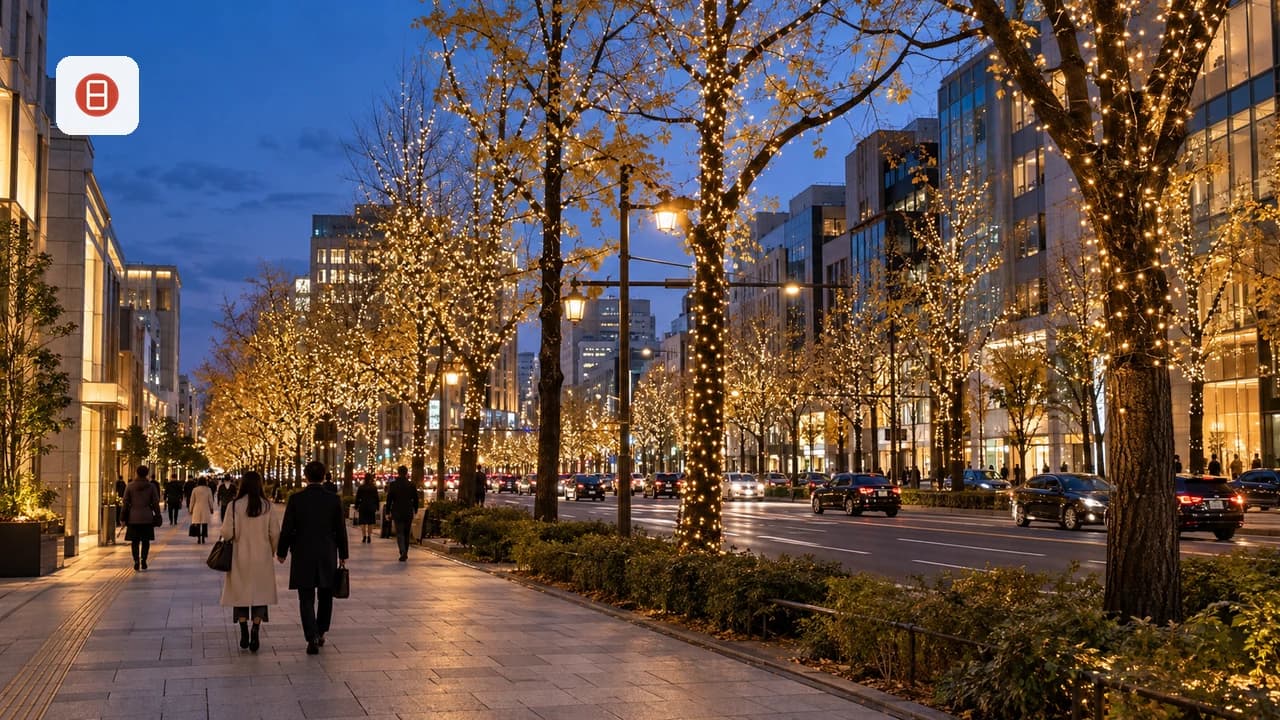
Last updated September 2026, the Midosuji Illumination lights about 4 kilometers (2.5 miles) of ginkgo-lined boulevard between Umeda and Namba every winter. Free to walk, the display runs nightly from November 3 through December 31, with seven color zones tied to the history of each neighborhood along the route. This guide covers two walking plans, the Midosuji Line stations that connect to each zone, and the building facades worth a stop.
Midosuji Illumination 2026: Dates, Hours, and Quick Facts
Midosuji Illumination is one of two core programs in the citywide Festival of the Lights in Osaka, alongside the Nakanoshima-based Hikari-Renaissance. In January 2015, organizers earned a Guinness World Record for the most illuminated trees along a single street. Growth has continued each season since. For 2026, event listings show the lights running November 3 through December 31, roughly 5 PM to 1 AM. That stretch covers Midosuji between the Hanshin-mae intersection near Umeda and the Namba-nishiguchi intersection. Entry is free. Hours have shifted in past seasons, sometimes ending closer to 10 PM or 11 PM, so confirm current-season timing through the Osaka Official Travel Guide before finalizing plans. Because the route sits directly above the Midosuji Line, a tired visitor can duck underground and resurface at the next zone rather than backtrack on foot. Osaka Castle Park runs its own seasonal lighting separate from Midosuji. Check the Osaka Castle official site for current dates. See the Osaka in winter overview for that display alongside the Umeda Sky Building lights and other seasonal spots. Midweek evenings typically draw fewer crowds than weekends. For broader trip timing, compare seasons using the best time to visit Osaka.
| Detail | 2026 Information |
|---|---|
| Dates | November 3 - December 31, 2026 |
| Hours | About 5:00 PM to 1:00 AM nightly (verify current season) |
| Route | Hanshin-mae intersection (Umeda) to Namba-nishiguchi intersection |
| Distance | About 4 km (2.5 miles) |
| Cost | Free |
| Color zones | 7 sections, each with its own palette |
The Seven Color Zones Along Midosuji Avenue
Midosuji's 4-kilometer route is not one continuous look. Organizers assign each of the seven zones its own color palette tied to that stretch's history. Blue and white tones open the walk near Umeda, a nod to Osaka's past as a canal-trading hub. Purple and gold lighting follows through Kitashinchi, echoing that district's after-dark reputation. Check Osaka nightlife listings for what else the area offers once the lights are on. Around Yodoyabashi and Honmachi, white and gold lighting reflects the financial district's ties to prosperity. That color shift is deliberate. Cooler, formal tones mark the banking corridor, and warmer, playful tones take over toward the shopping streets further south. Near Shinsaibashi and Namba, the palette shifts to pink and a five-color mix inspired by Hanamachi entertainment culture. That stretch is also the liveliest for Osaka after-dark photos. In 2025, organizers added tree-base uplighting between Kitahama 3-chome and Shinbashi-kita for extra ground-level glow. Watch for whether that detail returns in 2026. As of the 2025 season, the Minami stretch added purple to its pastel-pink palette for a bolder look. Confirm whether that combination continues for 2026.
| Zone Colors | Section of Midosuji | Theme |
|---|---|---|
| Blue x White | Hanshin-mae to Umeda Shinmichi | Aqua Metropolis water theme |
| Purple x Gold | Umeda Shinmichi to Oebashi-kitazume | Kitashinchi nightlife elegance |
| White x Gold | Kitahama 3-chome to Fushimimachi 3-chome | Financial district prosperity |
| Gold x Mix | Fushimimachi 3-chome to Senbachuo 3-chome | Business and culture crossover |
| Mix | Kyutaromachi 3-chome to Shinbashi-kita | Work, living, and leisure blend |
| Pink x 5-Color Mix | Midosuji-Unagidani to Dotonboribashi-kitazume | Hanamachi entertainment energy |
| 5-Color Mix x White | Dotonboribashi-minamizume to Namba-nishiguchi | Merchant-to-youth culture handoff |
Two Walking Plans: Full Route or Minami Highlights
Few visitors walk the entire display end to end. Two practical options cover most itineraries. Either plan can start or end at a Midosuji Line station, since trains run beneath the full route. Photographers chasing every zone should budget the full evening. Families or shoppers get a similar visual payoff from the shorter Minami stretch.
The 1 kilometer (0.6 miles) Minami walk from Shinsaibashi offers a 20-minute tour, and arriving before 7 PM yields calmer crowds near Dotonbori's busy restaurants.

- Full 4km route (2.5 miles): Start at Umeda and walk south to Dotonbori. Budget 60 to 90 minutes to see all seven zones with stops for photos. Finish with dinner in the Namba-Dotonbori area.
- Minami Highlights, short walk: Start at Shinsaibashi Station and cover about 1 kilometer (0.6 miles) to Namba. This section covers only the pink and five-color zones. It suits travelers staying near Minami-area hotels or short on time.
- Open-top bus option: The OSAKA SKY VISTA double-decker bus operates on select dates from November 1 through December 31, with a guide narrating festival highlights along the route. This option suits visitors with limited mobility.
Getting There: Midosuji Line Stations and Connecting Subways
Midosuji Line trains run directly beneath the illumination for their full length. That makes the subway a practical shortcut for a tired visitor. Key sections sit roughly a 10-minute walk from Midosuji Line stations, per Japan Travel's coverage of the event. Midosuji itself is flat and fully paved, with wide sidewalks that make the whole route stroller and wheelchair-friendly. Every station listed below also connects to Osaka's other attractions, so the walk pairs easily with daytime sightseeing earlier the same day.
The 10-minute walk from Midosuji Line stations means subway access to any zone, convenient if arriving late since the display runs 5 PM to 1 AM.
- Umeda Station: entry point for the Blue x White zone. Also connects to onward JR and private-rail lines.
- Yodoyabashi Station: entry point for the Purple x Gold and White x Gold zones.
- Honmachi Station: mid-route stop in the financial district. Also served by the Chuo Line.
- Shinsaibashi Station: gateway to the Pink zone. Also served by the Nagahori Tsurumi-ryokuchi Line.
- Namba Station: southern endpoint near Dotonbori. Also served by the Sennichimae Line.
Building Facades, the My Message Tree, and Interactive Displays
Beyond the ginkgo trees, eight designated buildings add their own facade lighting alongside Kita-Mido Temple and the Umeda Air Intake Tower, all running from November 3 through December 31. Kita-Mido Temple's formal name is Honganji Tsumura Betsuin. Osaka Gas Building lights its second floor in gold. Hotel Nikko Osaka illuminates its entire facade in pink. Urban Net Midosuji Building runs a two-color pink-and-yellow display across its full glass surface. At the Umeda end, the Umeda Air Intake Tower runs a shifting light program that responds to sound and touch, part of the festival's interactive Play with Light component. Along the boulevard, ginkgo trees also carry the My Message Tree: personal notes from donors to the Midosuji Illumination Fund, engraved in five different colors. A related Supporters' Tree carries messages from sponsoring companies and organizations. The lighting season overlaps with Christmas events across Osaka, so many facades stay lit through the holiday week.
Osaka Hikari-Renaissance: The Nakanoshima Sister Event
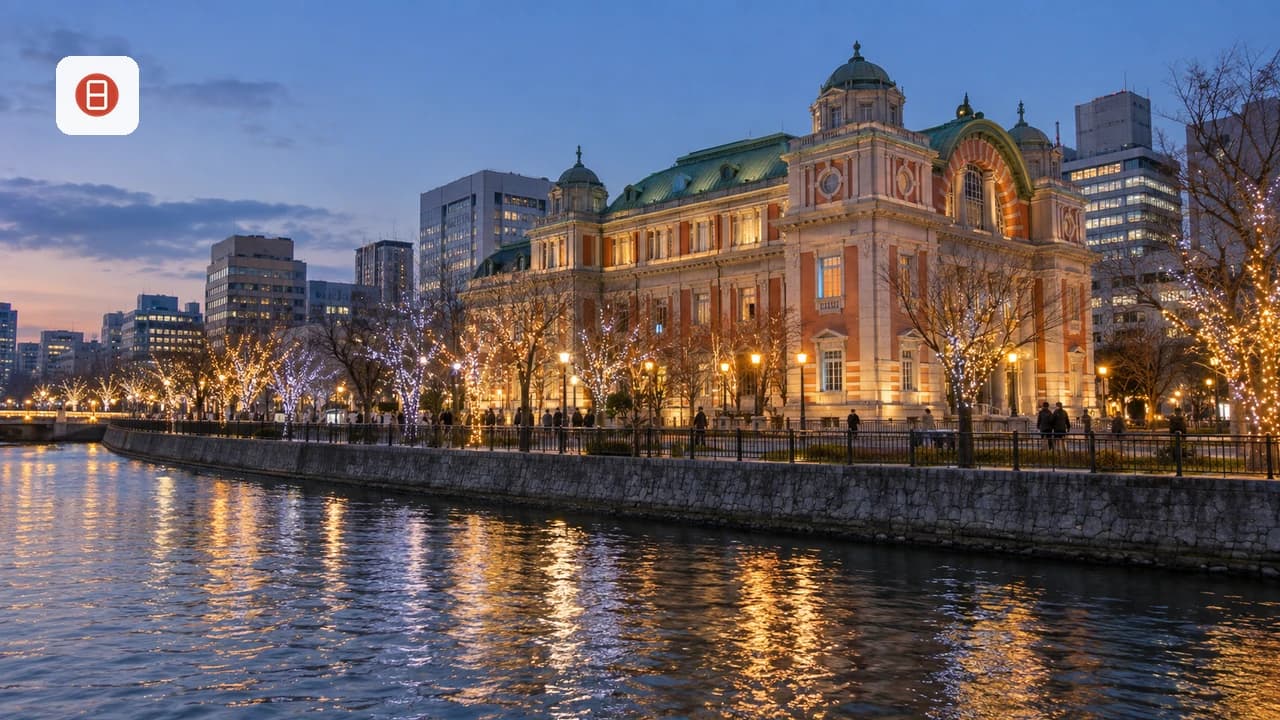
Midosuji Illumination is the core tree-and-building program, but the Festival of the Lights in Osaka runs a second core program too. Osaka Hikari-Renaissance brings light art and projection mapping to Nakanoshima instead of trees and facades. Where Midosuji lights a 4-kilometer boulevard, Hikari-Renaissance centers on Nakanoshima's riverside. Both programs trace back to Osaka's history as a canal-trading merchant city, a theme carried through the Blue x White zone near Umeda and into the Nakanoshima waterfront. It typically runs a shorter window in mid-December rather than the full November 3 to December 31 span. From the Yodoyabashi zone of Midosuji, Nakanoshima is a walkable add-on rather than a separate outing. Confirm the current year's Hikari-Renaissance dates through Osaka's event calendar before building it into a single evening, since the two programs do not always share a schedule.
Practical Tips for Visiting the Midosuji Illumination
A few adjustments make the walk more comfortable and improve the photos.
- Weather: Osaka's winter is milder than northern Japan, but standing outside after sunset feels cold and damp. Pack a disposable heat pack, or kairo, sold at any convenience store. Check Osaka's month-by-month weather guide before deciding how many layers to bring.
- Timing: Weekends draw the largest crowds, especially around Shinsaibashi. A weeknight visit before 7 PM feels calmer. See Osaka in December: Weather, Events, and Where to Stay for that month's conditions. The display itself ends December 31, so use Osaka in January: Weather, Events, and What's Actually Open only for trip planning beyond the festival dates.
- Photos: The best wide shots come from pedestrian overpasses crossing Midosuji, not street level. A phone or camera that handles low light well works best, since the trees are the main light source after dark.
- Dining: Restaurants in Shinsaibashi and Namba fill quickly once the festival starts, particularly on weekends. Reserve a table before setting out, especially near the Pink zone by Dotonbori.
Frequently Asked Questions
What are the 2026 Midosuji Illumination dates and hours?
Dates for 2026 run November 3 through December 31, with hours generally from about 5 PM to 1 AM. Hours have shifted in past seasons, sometimes ending earlier around 10 PM or 11 PM. Confirm current end times through the Osaka Official Travel Guide close to your visit.
How long is the Midosuji Illumination walking route?
Midosuji Illumination runs about 4 kilometers (2.5 miles), from the Hanshin-mae intersection near Umeda to the Namba-nishiguchi intersection. Walking the entire route takes roughly 60 to 90 minutes with stops for photos. A shorter Minami stretch between Shinsaibashi and Namba covers about 1 kilometer (0.6 miles) and takes closer to 20 minutes.
Is the Midosuji Illumination free?
Yes, walking the Midosuji Illumination is free. An open-top OSAKA SKY VISTA bus tour is a paid alternative for visitors who prefer not to walk. It operates on select dates between November 1 and December 31.
What's the difference between the Midosuji Illumination and Osaka Hikari-Renaissance?
Midosuji Illumination lights trees and building facades between Umeda and Namba for the full November 3 to December 31 season. Osaka Hikari-Renaissance is a separate light-art and projection-mapping event in Nakanoshima, reachable on foot from the Yodoyabashi zone. It typically runs a shorter window in mid-December rather than the full two-month span.
Which subway stations connect to the Midosuji Illumination?
Five Midosuji Line stations line up with the route. Umeda, Yodoyabashi, and Honmachi cover the northern and midtown zones. Shinsaibashi and Namba cover the Minami zones to the south. Honmachi also connects to the Chuo Line, Shinsaibashi to the Nagahori Tsurumi-ryokuchi Line, and Namba to the Sennichimae Line.
Free: The Osaka Essentials guide
Top things to do, where to stay, a perfect day plan, getting around, and the best time to go — a Osaka mini-guide you can take offline.
You might also like


Continue reading
More guides you'll find useful