Osaka in January: Weather, Events, and What's Actually Open
Plan Osaka in January with real weather averages, New Year closure dates, an honest in-city vs. day-trip events guide, and cost and logistics tips.
On this page
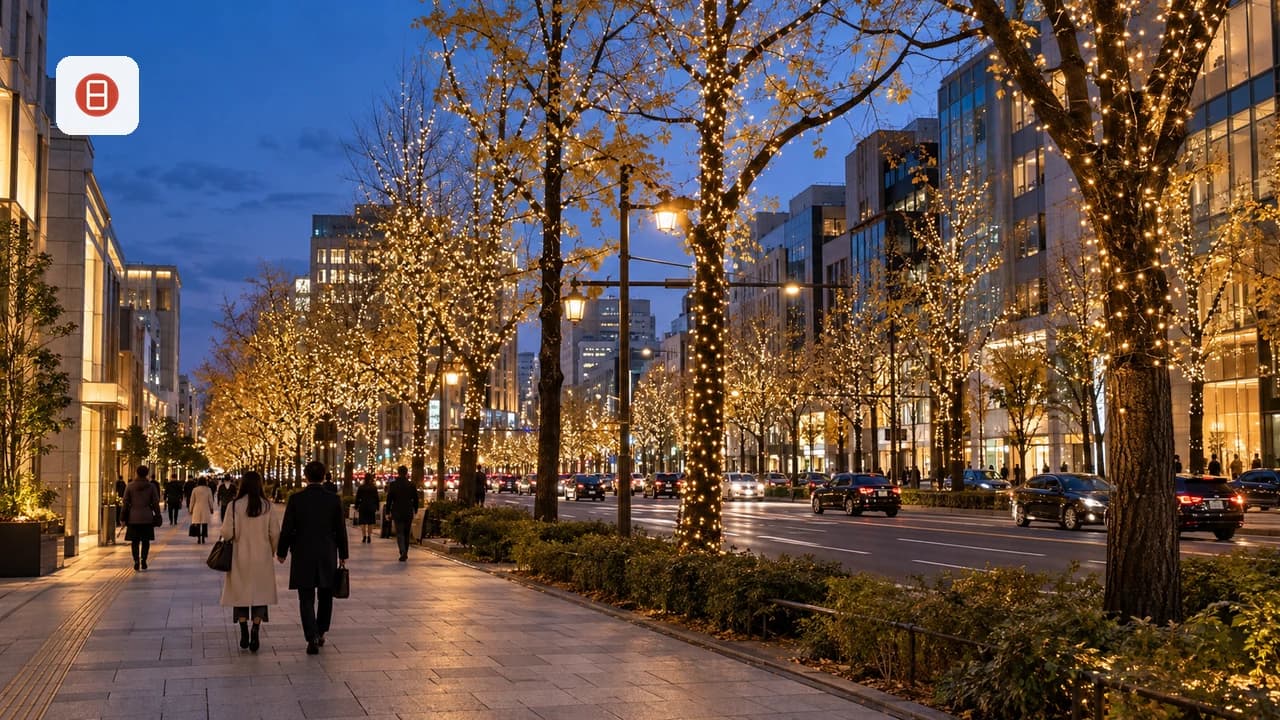
Last updated September 2026: Osaka in January brings cold, mostly dry days and thin winter crowds. Most businesses shut for five days, from December 29 through January 3, for the New Year holiday. Average highs sit near 9.5°C (49°F) and lows near 3°C (37°F), cold enough for a coat but rarely disruptive to sightseeing.
Osaka in January: Is It Worth the Trip?
Yes, with a caveat: build the itinerary around the New Year closures rather than against them. Our Best Time to Visit Osaka: Seasonal Guide & Monthly Weather guide ranks fall and spring higher for pure weather. January still wins on crowds and on cultural access other months don't offer, from Sumiyoshi Taisha hatsumode to Toka Ebisu's lucky bamboo branches near Namba. Expect near-freezing mornings, several closures from December 29 through January 3, and shorter daylight than a spring trip. Inside those constraints, January rewards travelers who want thin crowds and a genuinely local New Year.
Osaka Weather in January: What to Expect and Pack
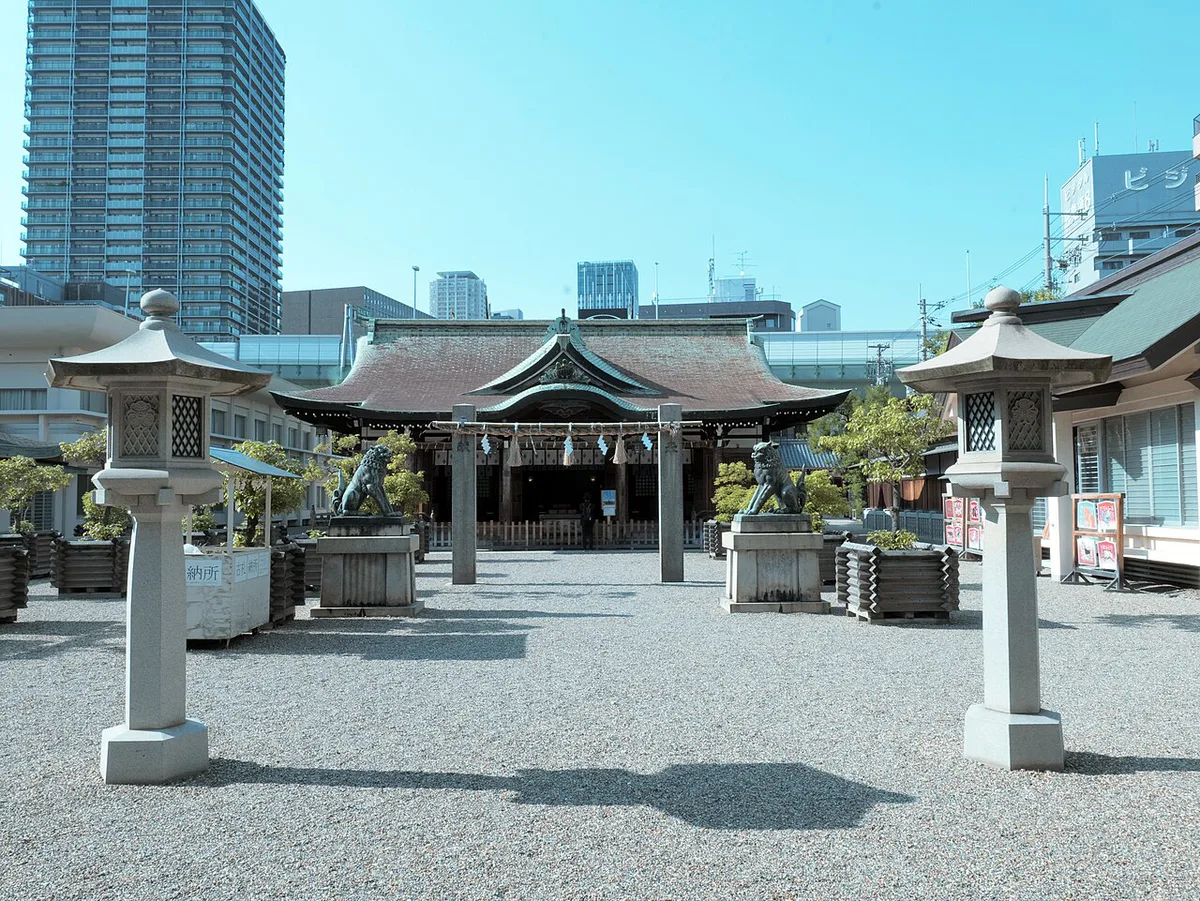
January is Osaka's coldest month, with average highs near 9.5°C (49°F) and average lows near 3°C (37°F). Days are usually clear, but rain and light snow both show up occasionally; when snow falls, it typically melts within an hour rather than settling. For the fuller cold-season picture across December through February, see our Osaka in Winter (2026): Weather, Illuminations, Food, and Day Trips guide. A month-by-month breakdown across the year, in our Osaka Weather By Month Travel Guide guide, shows how January compares to the shoulder seasons.
- Winter coat or heavy jacket
- Scarf and gloves
- Layers you can remove indoors
- Waterproof shoes for occasional rain or light snow
New Year Closures: What's Shut December 29 to January 3
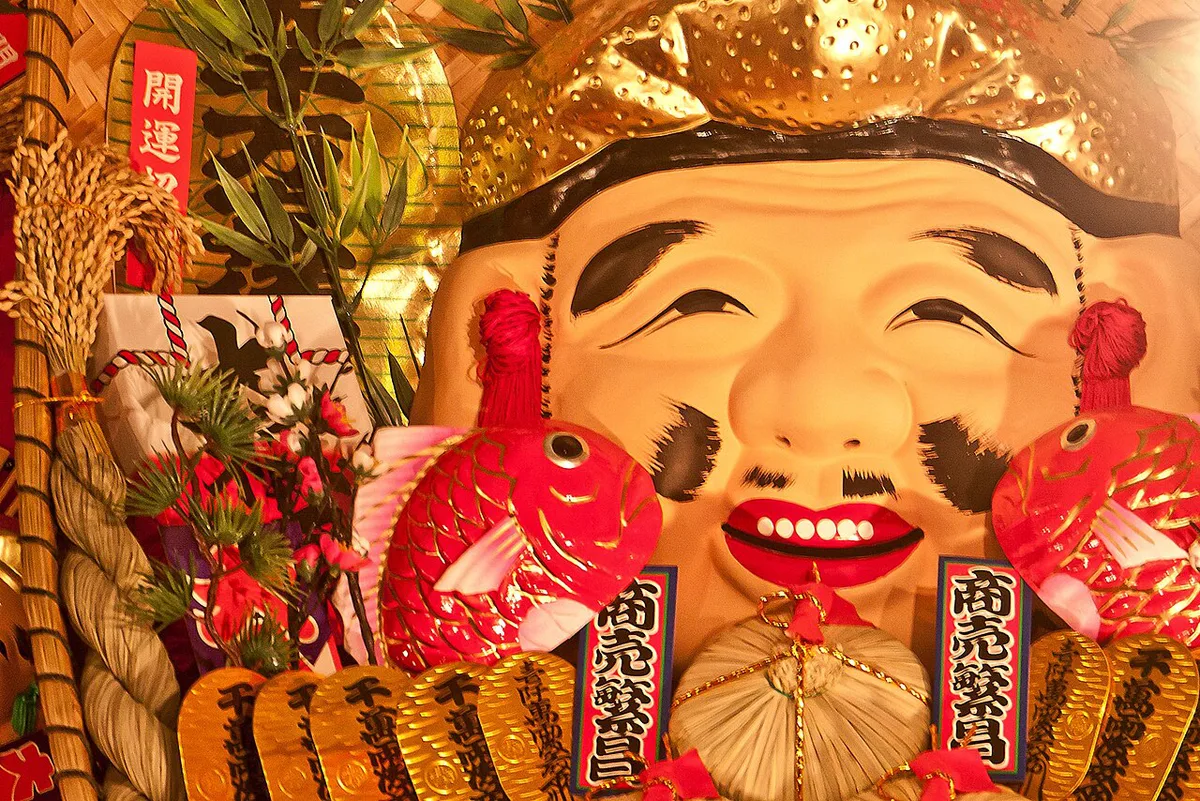
Most restaurants, shops, and some attractions close from December 29 through January 3 for shogatsu, the New Year holiday. Families stay home for a special meal, then visit a shrine together sometime in the first three days of January. Banks and ATMs may also run limited hours during the closure, so withdraw cash beforehand. Build in a flexible day or two if a trip overlaps this window, since even convenience stores can run reduced hours. Our Osaka in December: Weather, Events, and Where to Stay guide covers the run-up to the shutdown. Holiday illuminations and markets wind down right before it, a period covered in our Osaka Christmas 2026: Illuminations, Markets & Where to Go guide. Arrivals on January 4 or later get uninterrupted access to restaurants and shops, trading a quieter, more local New Year for full opening hours.
How Many Days Do You Need in Osaka in January?
Three full days cover the core January picks without rushing. Add a fourth day if a Kobe or Nara day trip is on the list, since Nembutsu Oni Hashiri alone eats most of a day once transit is factored in. Treat any days inside the December 29–January 3 closure window as lighter sightseeing days, not full activity days. Shift festival-heavy plans to January 4 onward instead. Extend to five or six days to comfortably fit both a Kobe evening and a Nara day trip alongside the in-city calendar.
- Day 1: hatsumode and central sightseeing
- Day 2: Toka Ebisu or Doyadoya, depending on dates
- Day 3: illuminations or an indoor option like Ukiyo-e Immersive Art
Best Things to Do in Osaka in January
January's calendar splits into three groups, covered below in turn. Osaka's events guide tracks the fuller year-round festival calendar if the picks below don't fill every day of a trip.
- Religious and cultural: hatsumode, hatsuhinode, Toka Ebisu, Shitennō-ji Doyadoya
- Winter light and entertainment: Illuminage, Kaiyukan Namima, Sky Kotatsu Ferris Wheel, USJ Countdown
- Indoor and practical: Ukiyo-e Immersive Art, New Year's sales
Hatsumode and Toka Ebisu: Osaka's Core January Traditions
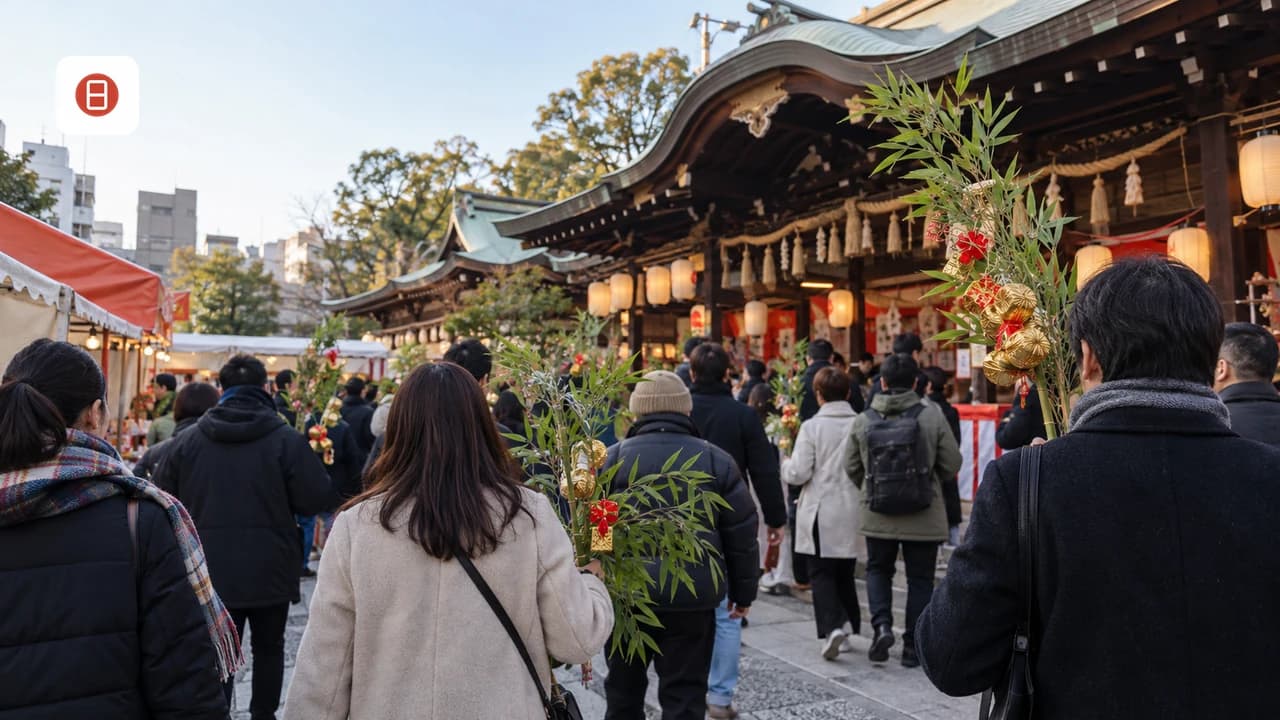
Hatsumode, the year's first shrine visit, is the single most-practiced tradition in Osaka each January. Families typically go sometime between January 1 and January 3, praying for health, prosperity, and success in the year ahead. Sumiyoshi Taisha is the city's most popular hatsumode venue, so expect real crowds if visiting on January 1 itself. Many shrines also sell charms and amulets for the new year, along with warm amazake, a sweet, non-alcoholic rice drink. Toka Ebisu runs January 9 through 11 at Imamiya Ebisu Shrine near Namba, drawing merchants and visitors who come to pray for business prosperity. Entry is free, and the shrine grounds fill with food stalls, live performances, and visitors carrying lucky bamboo branches decorated with charms. Toka Ebisu's name literally means "tenth-day Ebisu," a reference to the god of commerce the event honors.
Toka Ebisu runs January 9 through 11, which falls after the December 29–January 3 closure, so restaurants and shops will be operating normally.
- Dates: January 9–11
- Location: Imamiya Ebisu Shrine, near Namba
- Cost: Free entry
- Highlights: lucky bamboo branches, food stalls, live performances
Hatsuhinode: Watching the First Sunrise
Hatsuhinode, the first sunrise of the New Year, is a smaller but distinctly local tradition worth flagging as a decision point rather than a must-do. Namihaya Ohashi, a bridge connecting Minato and Taisho wards over Osaka's dockside, is a genuine local viewing spot, roughly a 15-minute walk from Osakako Station on the Chuo Line. Sunrise falls around 5am on January 1, and at that hour nearly everything is closed and train service runs on a reduced overnight schedule. Free admission and open access make it easy in theory, but the pre-dawn timing is the real obstacle.
Viewing around 5am involves standing outside in lows near 3°C (37°F) with reduced train service, requiring careful timing and preparation.
- Cost: Free
- Time: around 5am, January 1
- Access: about a 15-minute walk from Osakako Station (Chuo Line)
- Best fit: early risers and photographers
- Weak fit: families with young children or late arrivals
Shitennō-ji Doyadoya Festival
Shitennō-ji Doyadoya Festival takes place January 14 at one of Japan's oldest Buddhist temples, a short walk from JR Tennoji Station. Admission costs nothing, and the event typically runs from around 2pm into the early evening. Teams of participants in loincloths compete in a boisterous, water-soaked ritual contest that marks the formal end of the New Year worship period. Arrive early if a clear viewing spot matters, since the temple grounds fill quickly once the contest starts.
Coming of Age Day: A Different Kind of Crowd
Coming of Age Day falls on the second Monday of January each year, marking a national holiday for young adults reaching adulthood. Ceremonies happen at local government offices, and many attendees continue on to a nearby shrine afterward, women typically in kimono and men increasingly in Western-style suits. Japan lowered the legal age of adulthood to 18 in 2022, though the ceremony's format has stayed largely the same. It's not a ticketed event, but a shrine near a ward office on this date will be busier than usual, worth knowing if quiet is the goal.
Winter Illuminations and the Sky Kotatsu Ferris Wheel
Three light-focused attractions overlap with a January visit, each running well past New Year. Osaka Castle Park hosts Illuminage, one of Kansai's largest winter light displays. Tempozan Harbor Village runs Kaiyukan's seaside Namima illumination, and Redhorse Osaka Wheel wraps its gondolas in heated kotatsu tables for the season. Our Midosuji Illumination Guide: 2026 Dates, Walking Routes & Photo Spots guide maps out the full seasonal lineup, including dates that shift year to year. Evening visits pair naturally with dinner and a longer night out, a combination covered in our Osaka at Night: Neon, Last Trains, and Where to Go guide.
| Event | Location | Runs Through | Hours | Price |
|---|---|---|---|---|
| Illuminage | Osaka Castle Park | Feb 1, 2026 | 5pm–10pm | ¥1,000–¥2,000 |
| Kaiyukan "Namima" | Tempozan Harbor Village | Mar 1, 2026 | After sunset | Free |
| Sky Kotatsu Ferris Wheel | Redhorse Osaka Wheel | Feb 28, 2026 | 11am–8pm (9pm weekends/holidays) | ¥1,600–¥2,600 |
USJ New Year's Eve: NO LIMIT! Countdown
Universal Studios Japan runs an all-night countdown event from 7pm on December 31 through 9pm on January 1, with live entertainment, parades, and extended ride access. A Party Pass is required, with prices starting around ¥16,900 and rising depending on the date and package. It's one of the only late-night, ticketed options in the city on New Year's Eve itself. For other ways to spend the evening hours, our Osaka Nights: Nightlife Guide guide covers bars and late-night areas beyond the theme park.
Indoor Options for Cold or Rainy Days
Ukiyo-e Immersive Art opens January 17, 2026, and runs through March 14, 2026, using large-scale digital projections to animate classic woodblock prints by artists such as Hokusai and Hiroshige. It's open 10am to 8pm daily, with tickets between ¥1,300 and ¥2,000. Advance booking is worth considering on weekends, when indoor attractions tend to draw bigger crowds during cold weather. On a genuinely cold or wet January day, an indoor option like this is a reasonable swap for an outdoor festival.
New Year's Sales in Namba and Dotonbori
New Year's sales begin January 4, right after the shutdown ends, and run through most of the month at department stores across Shinsaibashi, Namba, and Umeda. Shinsaibashi is the strongest pick for fashion, while nearby Den-Den Town covers electronics and duty-free tech. Shinsaibashi and Dotonbori's shopping streets get fuller coverage in our Namba Dotonbori Area Guide. Sales pricing varies by store and item, so treat January 4 as a starting point rather than a guaranteed bargain date.
Day Trips Worth It in January (Not Osaka City)
Several January events get listed as Osaka activities but actually sit outside city limits. Weigh the round-trip travel time honestly against whatever else is on a day's plan before committing to any of the three below.
Nembutsu Oni Hashiri: A Full Day Outside Osaka
Nembutsu Oni Hashiri, a demon-chasing ritual, takes place at a temple sandwiched between Nara and Wakayama prefectures, not in Osaka city itself. Reaching it takes about 1 hour and 50 minutes one-way from JR Osaka Station via Yamato Futami Station on the JR Wakayama Line. From the station, it's a 35-minute walk to the temple, or a free shuttle bus from the nearby Ueno Park parking area. Numerous parades fill the afternoon, and a torchlight procession closes the event around 9pm. Entry is free, but the day-long commitment makes it a poor fit for a tight one-day Osaka itinerary and a strong fit for travelers with a fully open day.
- Cost: Free
- Travel time: about 1 hour 50 minutes one-way from JR Osaka Station
- Route: Yamato Futami Station (JR Wakayama Line), then a 35-minute walk or free shuttle
- Best fit: a fully open day; not viable alongside a packed Osaka itinerary
Wakusa Yamayaki: Nara's Mountain-Burning Festival
Wakusa Yamayaki sets an entire hillside in Nara Prefecture alight, with fireworks timed behind the blaze, on the last Saturday of January. It's roughly an hour from Osaka and free to watch. The burn is weather-dependent and can be postponed or cancelled, so keep a backup plan for that evening rather than anchoring an entire day around it.
Nankinmachi Lantern Fair: A Kobe Evening Add-On
Nankinmachi Lantern Fair lights up Kobe's Chinatown district in red lanterns each evening after sunset, a short walk from JR Motomachi Station near Sannomiya. Entry is free, but the lanterns only come on after dark, so it pairs best with a Kobe dinner rather than a daytime stop. Treat it as a Kobe add-on to a trip, not an Osaka-city pick, and weigh the round-trip train time against the rest of the day's plan.
Costs, Tickets, and Opening Hours Snapshot
Here's a quick reference for what costs money in January and what's free, plus roughly when each experience happens. Festival food stalls and small vendors often run cash-only, so carry yen in small bills for Toka Ebisu and Doyadoya purchases. Prices and hours shift year to year, so confirm specifics close to a trip date via each event's own site or the Osaka Official Travel Guide.
| Experience | Cost | When |
|---|---|---|
| Hatsumode (Sumiyoshi Taisha) | Free | Jan 1–3 |
| Hatsuhinode (Namihaya Ohashi) | Free | ~5am, Jan 1 |
| Toka Ebisu | Free | Jan 9–11 |
| Shitennō-ji Doyadoya | Free | Jan 14, ~2pm–evening |
| USJ NO LIMIT! Countdown | Party Pass from ¥16,900 | Dec 31, 7pm–Jan 1, 9pm |
| Ukiyo-e Immersive Art | ¥1,300–¥2,000 | From Jan 17 |
| Nembutsu Oni Hashiri (day trip) | Free | Jan 14 |
| Wakusa Yamayaki (day trip) | Free | Last Saturday of Jan |
| Nankinmachi Lantern Fair (day trip) | Free | Evenings, through Jan 9 |
Where to Stay and How to Get Around in January
Namba and Umeda stay central and walkable for a January trip, with subway and JR access to most of the picks above. An Icoca or similar IC card covers subway, JR, and bus fares without needing individual tickets for each ride. Our Best Areas To Stay In Osaka Travel Guide guide breaks down the trade-offs between those two hubs and Osaka's quieter districts. Regular subway and JR service resumes its normal schedule outside the pre-dawn hours around January 1, when trains run on a reduced overnight timetable. Layer a coat over indoor-friendly clothing, since hotel lobbies, trains, and shops run warm even when the street temperature sits near freezing. Beyond the January-specific calendar, Osaka's attractions guide covers castles, museums, and neighborhoods worth a visit regardless of season.
Mistakes to Avoid When Visiting Osaka in January
Arriving between December 29 and January 3 without a backup plan is the single most common misstep, since restaurants, shops, and even some transit services scale back. Treating Kobe's Nankinmachi Lantern Fair or Nara's Wakusa Yamayaki as an in-city Osaka stop is another, since both require a separate train trip outside Osaka. Skipping a coat because "Japan" sounds mild is a mistake too; January lows average 3°C (37°F), cold enough to matter for hours outdoors at a festival. Showing up to Toka Ebisu or Doyadoya at the advertised start time, rather than earlier, often means missing a clear viewing spot once the crowd fills in.
Osaka in January vs. December vs. February
December, January, and February share cold, mostly dry weather, but each month has a distinct character.
| Month | Avg High | Avg Low | Key Notes |
|---|---|---|---|
| December | 12°C (54°F) | 5°C (41°F) | Illuminations ramp up; shutdown begins Dec 29 |
| January | 9.5°C (49°F) | 3°C (37°F) | Coldest month; hatsumode and Toka Ebisu; shutdown through Jan 3 |
| February | 10°C (50°F) | 3°C (37°F) | Similarly cold; fewer festivals; Valentine's chocolate season begins |
Frequently Asked Questions
Is January a good time to visit Osaka?
Yes, if quiet streets and cultural traditions matter more than warm weather. Average highs run near 9.5°C (49°F), and a five-day New Year shutdown from December 29 to January 3 limits some options. Outside that window, January delivers hatsumode, Toka Ebisu, and thinner crowds than spring or autumn.
What is the weather like in Osaka in January?
January is Osaka's coldest month, averaging highs of 9.5°C (49°F) and lows of 3°C (37°F). Skies are usually clear, though light rain or snow shows up occasionally. Snow rarely settles for more than an hour.
Is Osaka closed for New Year (December 29–January 3)?
Most restaurants, shops, and some attractions close during this five-day window for the shogatsu holiday. Families use the time for a home meal and a shrine visit. Plan for reduced hours, or arrive January 4 or later for full access to restaurants and shops.
What festivals happen in Osaka in January?
Toka Ebisu runs January 9 through 11 at Imamiya Ebisu Shrine near Namba. Hatsuhinode, the first sunrise, falls around 5am on January 1. Shitennō-ji Doyadoya happens January 14, and hatsumode shrine visits run January 1 through 3.
Which January events are actually in Osaka city versus a day trip?
Hatsumode, hatsuhinode, Toka Ebisu, and Shitennō-ji Doyadoya all happen inside Osaka city. Nankinmachi Lantern Fair sits in Kobe, a short trip from Sannomiya. Wakusa Yamayaki and Nembutsu Oni Hashiri both take place in Nara, with the latter stretching to the Nara-Wakayama border.
What should first-time visitors avoid when planning Osaka in January?
Avoid arriving between December 29 and January 3 without a backup plan, since many businesses close. Don't count Kobe or Nara day-trip events as in-city Osaka activities when building a tight itinerary. Bring a real winter coat. Lows average 3°C (37°F), cold enough to matter at outdoor festivals.
What should I pack for Osaka in January?
Pack a winter coat, scarf, and gloves for lows near 3°C (37°F). Add layers you can remove indoors, since trains, shops, and hotel lobbies run warm. Waterproof shoes help too, since rain and occasional light snow both show up during the month.
Free: The Osaka Essentials guide
Top things to do, where to stay, a perfect day plan, getting around, and the best time to go — a Osaka mini-guide you can take offline.
You might also like


Continue reading
More guides you'll find useful