Osaka at Night: Neon, Last Trains, and Where to Go
Plan osaka at night with a guide to Dotonbori, Shinsekai, and Umeda, plus last-train timing, food rules, and where to stay after dark.
On this page
Last updated September 2026, this guide treats osaka at night as a year-round plan, not a seasonal illumination stop. Dotonbori's neon canal, Shinsekai's retro tower lights, and Umeda's skyline views each run on a different nightly clock. What follows maps the neighborhoods, the last-train math, and the late-night food rules that shape a typical Osaka evening.
Why Osaka at Night Feels Different From Tokyo
Osaka's after-dark identity centers on eating and drinking in public, at street level, rather than in exclusive lounges. Locals call this food-first culture kuidaore, roughly eat until you drop, and it shapes how late kitchens stay open across the city. Dotonbori, Shinsekai, Umeda, and Amerikamura each carry a distinct version of that same evening, from neon and street food to skyline views. None of it requires a reservation or a dress code, and cover charges stay the exception rather than the rule. This guide covers the year-round version of osaka at night, separate from seasonal light displays. A dedicated winter illuminations guide covers those seasonal displays in full. Month-specific planning lives in the visiting in December guide. A parallel visiting in January guide covers the coldest stretch of the year. For the rest of the calendar, check the best time to visit guide to match crowds and weather to your dates.
The Last Train Decision: Stay Out or Head Back by 12:30 AM
Most Osaka Metro and JR lines run their last services between around midnight and 12:30 AM, though the exact cutoff depends on the line and station. Missing that train is not a crisis; it just changes the shape of the night. First trains typically resume around 5 AM, so the gap runs roughly four to five hours, not an entire night. Three realistic options cover most situations, each with a different cost in time, money, or sleep. For up-to-date line-by-line last train times, cross-check the official Osaka travel guide before you commit to a plan.
Multiple attractions close before the 12:30 AM last train—river cruises at 9 PM, observatories at 10:30 PM—requiring early evening planning for complete coverage.
- Catch the last train: leave Dotonbori or Namba by roughly 12:00-12:30 AM depending on your line, and confirm the exact time on the platform departure board.
- Take a taxi: fares run higher than the subway, but it is the fastest way back to a hotel in Umeda or anywhere off the last-train grid.
- Stay out until first trains: a 24-hour karaoke room, an all-night izakaya, or a late kushikatsu counter bridges the gap until service resumes around 5 AM.
Dotonbori: The Neon Canal and Its Landmark Signs
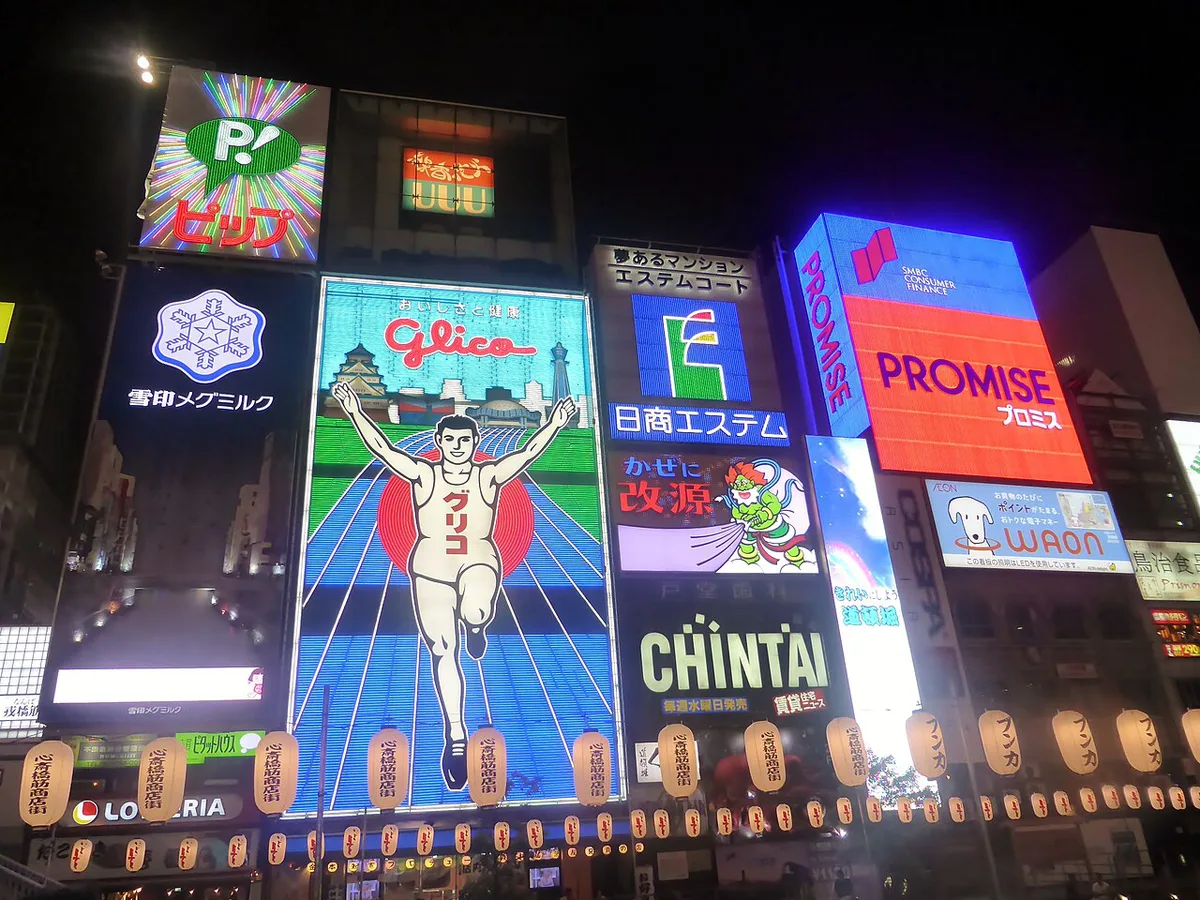
Dotonbori is the canal-side strip most travelers picture first, a corridor of animated signage above the Tombori River. The running Glico Man billboard has marked the canal since 1935, and it remains the default photo stop above Ebisubashi Bridge. Nearby, a giant mechanical crab sign marks one of the canal's oldest restaurant fronts. A 3D billboard above the bridge shows an animated Akita Inu bounding between two screens, a newer addition to the canal's sign lineup. The puffer-fish sign that once marked a Shinsekai storefront has since been taken down, so do not plan a stop around finding it there. Evening river cruises run along the canal, with the last boat departing around 9 PM, so plan the Dotonbori portion of the night before then if a cruise is on the list. For the surrounding blocks, bars, and side streets, the Namba-Dotonbori area guide goes deeper than sign-spotting. Around the holidays the canal gets extra decoration, and the holiday season in Osaka guide covers that layer separately.
Shinsekai: Retro Neon Around Tsutenkaku Tower
Shinsekai reads older and rougher than Dotonbori, in a neighborhood built up in the early 1900s around Tsutenkaku Tower. The current tower dates to 1956, replacing an original structure from 1912 that was damaged in 1943, and its observation deck sits roughly 295 feet up. Neon signage covers the kushikatsu restaurants and pachinko parlors below, giving the streets a lived-in, unpolished character. Older locals and longtime kushikatsu fans outnumber first-time visitors here after dark, and the pace runs slower than the canal strip. Pair an evening walk through Shinsekai with a broader Osaka attractions guide if daytime sightseeing is also on the itinerary.
Umeda: Skyline Views and a Business-District Pace
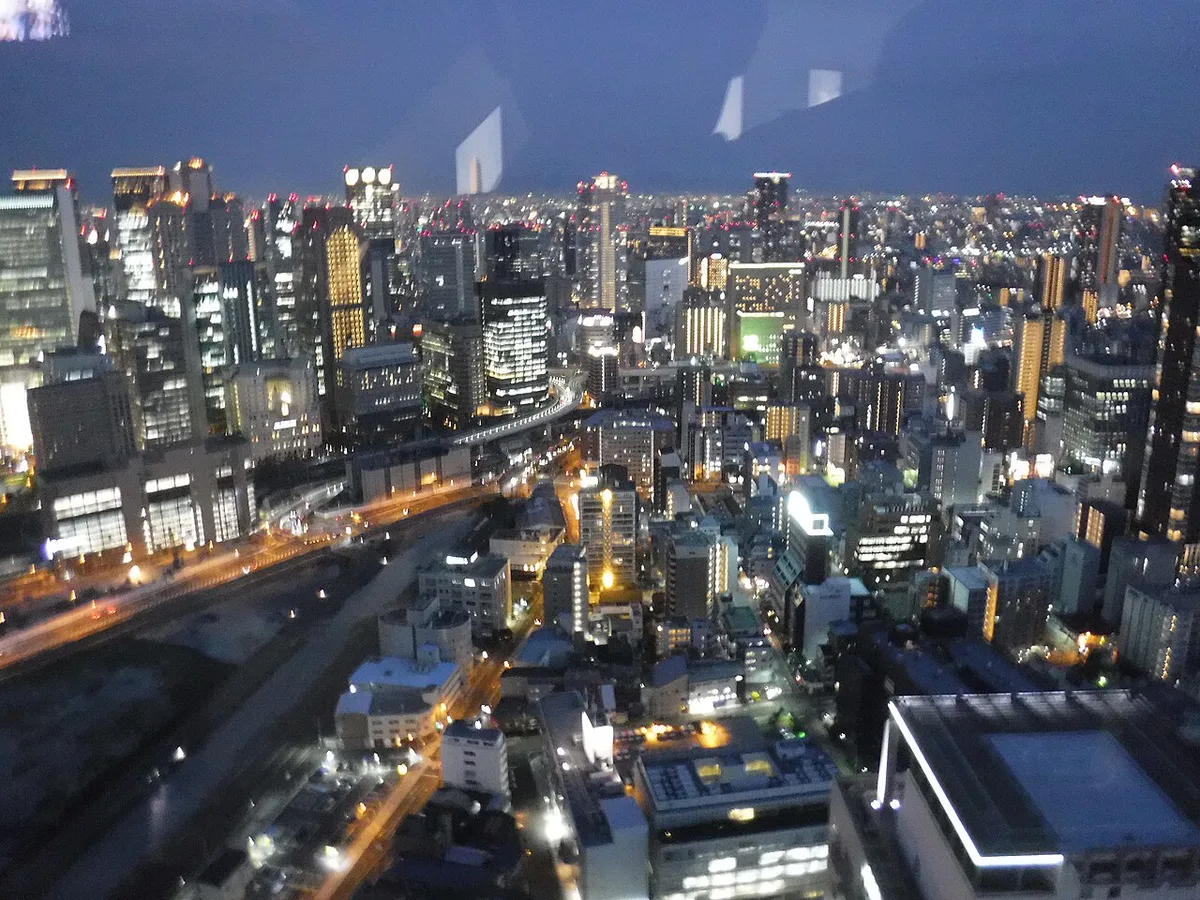
Umeda, Osaka's northern business hub, trades neon density for skyline views and a more subdued crowd of office workers and couples. The Umeda Sky Building's Kuchu Teien Observatory sits roughly 560 feet up, spanning the 39th and 40th floors. It stays open until 10:30 PM, with last entry at 10 PM. Tickets start from around ¥2,000, and a yukata dressing-up option is available for photos at the top. Bars near the station skew toward whisky and cocktails rather than standing-room izakayas, and the crowd thins out earlier than in Namba. Booking the observatory deck ahead of a visit avoids a line at the ticket counter on busy evenings.
Umeda's 560-foot Kuchu Teien Observatory towers over Shinsekai's 295-foot Tsutenkaku observation deck, reflecting each neighborhood's contrasting architectural identity.
Amerikamura and Den Den Town: Youth Culture and Otaku Nightlife
Amerikamura, known locally as Ame-mura, is Osaka's youth and streetwear district, packed with vintage shops by day and clubs by night. Triangle Park, a small plaza at its center, becomes an informal gathering spot once the shops close, before groups move on to basement clubs nearby. Den Den Town, the city's electronics and anime district, layers arcades, gachapon machines, and karaoke lounges into the same few blocks. Round1 Stadium Sennichimae, one of the area's largest arcades, stays open 24 hours, which makes it a reliable stop regardless of how late the night runs. Once a year, on the spring equinox, Den Den Town hosts the Nipponbashi Street Festa cosplay event, and it is worth checking the Osaka events calendar if the dates overlap with a trip.
Hozenji Yokocho: A Quieter, Lantern-Lit Alley
Hozenji Yokocho sits a five-minute walk from Ebisubashi Bridge, but it feels removed from Dotonbori's crowds almost immediately. Stone-paved lanes lead past a moss-covered Fudo Myoo statue, lit by paper lanterns rather than digital signage. Small kushikatsu counters and izakayas line both sides of the alley, most seating fewer than a dozen people at once. Evening is the better time to walk through, since the lantern light and quieter foot traffic suit the alley more than daytime sightseeing does.
Late-Night Eating: Kushikatsu Rules, Okonomiyaki, and 24-Hour Chains
Kushikatsu, breaded and deep-fried skewers, comes with one firm rule in Shinsekai: no double-dipping. Each skewer gets one pass through the shared sauce pot, since a second dip after biting is considered unsanitary toward the next customer. Cabbage on the table is free and meant for clearing the palate between skewers, or for scooping extra sauce instead of re-dipping. Okonomiyaki, Osaka's savory grilled pancake, mixes all its ingredients into the batter before cooking, unlike the layered Hiroshima version, and several spots stay open into the early hours for a post-bar plate. A handful of chains fill the gap when sit-down restaurants close. Kura Sushi also gamifies the meal: every five empty plates earns a free spin at an in-restaurant game.
- Matsunoya: tonkatsu sets from ¥590, with select branches, including one near Dotonbori, open 24 hours.
- Kura Sushi: conveyor-belt sushi from ¥110 a plate, open until midnight at most branches.
- Don Quijote: snacks, drinks, and instant meals around the clock at select 24-hour branches, including the Umeda Honten location.
Bars, Comedy, and Karaoke: How Osaka's Night Rituals Work
Tachinomi, standing bars, are Osaka's cheapest and fastest way into a night out, with most drinks priced under ¥500. There are no seats, so turnover is quick. The unwritten etiquette is to finish two or three rounds before giving up your spot to the next group waiting outside. English-language stand-up runs most nights at ROR Comedy Club in Dotonbori. It is closed on Thursdays, so check the schedule before building a night around it. Karaoke rooms from chains including Jankara and Pasela stay open into the early morning. Most travelers use them to close out a night, or to bridge the gap before first trains. Cat Cafe Mocha in Shinsaibashi offers a quieter, alcohol-free alternative. It closes at 8 PM, so treat it as an early-evening stop before the rest of the night gets going. For club listings and DJ lineups in Amerikamura and beyond, see the full nightlife guide.
Where to Stay for Osaka Nightlife: Namba vs. Umeda vs. Amerikamura
Namba and Shinsaibashi put you within walking distance of Dotonbori, Amerikamura, and Hozenji Yokocho, which matters if the plan includes bar-hopping until first trains. Umeda trades that walkability for easier airport and shinkansen transit, plus a higher concentration of business-hotel and upscale options. Amerikamura itself skews toward budget guesthouses and hostels, aimed at a younger crowd that spends more time in clubs than in hotel rooms. For a full lodging comparison across these and other neighborhoods, see the best areas to stay guide.
| Neighborhood | Vibe | Best For | Stay Here? |
|---|---|---|---|
| Dotonbori / Namba | High-energy, neon-lit | Street food, photos, walkable bars | Yes, if nightlife access matters most |
| Shinsekai | Retro, unpolished | Kushikatsu and Tsutenkaku Tower views | Better for an evening visit than an overnight base |
| Umeda | Modern, business-district | Skyline views, transit, upscale hotels | Yes, for transit and luxury |
| Amerikamura | Youth-driven, alternative | Clubs, vintage shopping, budget stays | Yes, for a younger, budget-focused trip |
Practical Logistics: Transport, Safety, and Timing Mistakes
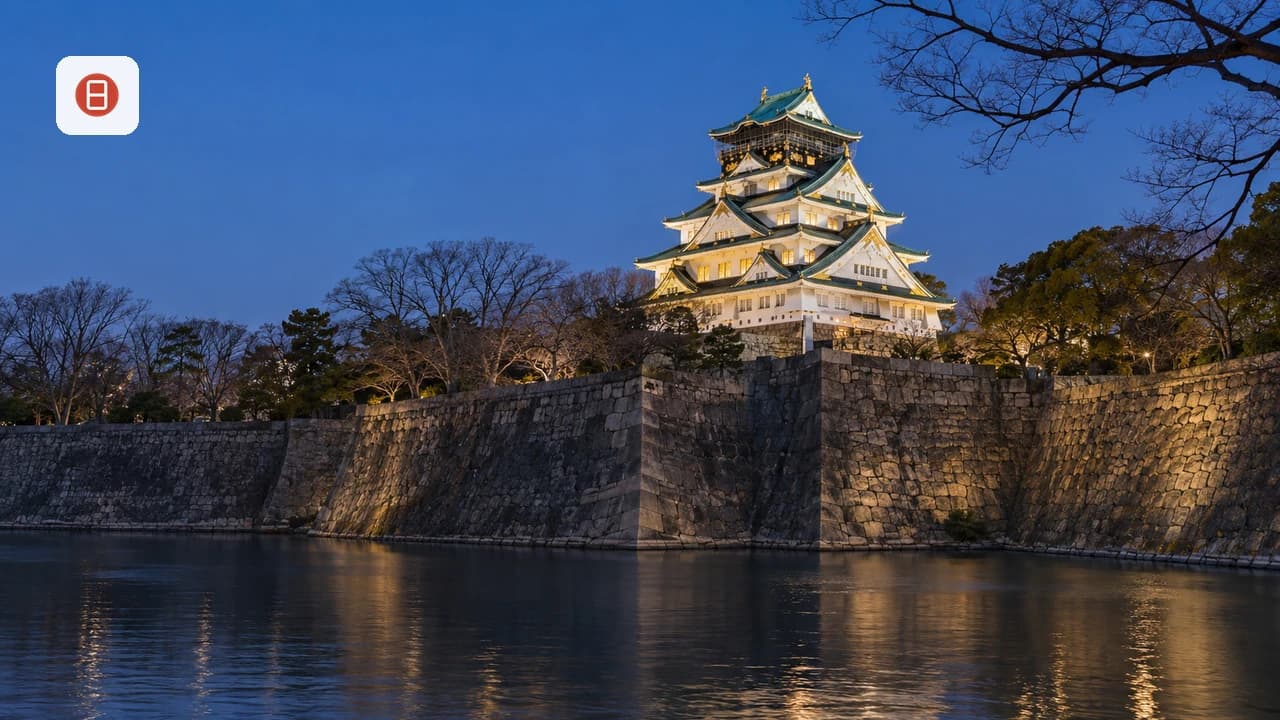
Taxis are the most reliable fallback after the last train, though fares run well above the cost of a subway ride. That gap widens on longer routes, like Umeda to Namba. Walking covers most short hops well, since Dotonbori, Amerikamura, and Hozenji Yokocho all sit within about a 10-15 minute walk of each other. Touts working the main strips in Shinsaibashi and parts of Dotonbori sometimes steer visitors toward bars with steep hidden cover charges, known as otoshi. Walking into places that post prices at the door avoids this problem entirely. Following someone who approaches you on the street rarely ends well financially. Dotonbori river cruises are worth booking ahead rather than showing up, since the last boat departs around 9 PM and popular slots fill first. If winter dates are on the table, start with the winter planning guide for weather and crowd context. The month-by-month weather breakdown helps decide how many outdoor hours to plan into a single night. Osaka Castle's grounds stay illuminated into the evening. Confirm current hours on the Osaka Castle's official site before adding a walk there. Universal Studios Japan sometimes runs evening programming on top of standard park hours. Check the Universal Studios Japan official site for current hours before building it into a night.
Don Quijote Ferris Wheel: A Short Ride Above Dotonbori
The Don Quijote Dotonbori store has one of Osaka’s oddest night landmarks: the Ebisu Tower Ferris wheel attached to its canal-facing facade. Its narrow, oval shape rises beside the river rather than above a fairground. A ride gives a brief elevated view of Dotonbori’s signs, Ebisubashi Bridge, and the Tombori River below.
It works best as an early-evening stop, before a river cruise or dinner nearby. The entrance is inside the Don Quijote store, so allow time to find it among the crowded floors and checkout lines. Views are strongest after the neon signs have fully lit up, while the ride itself is better for atmosphere than a wide city panorama.
Opening dates and operating hours can change, including occasional closure days. Check the store’s official listing on the day of your visit, especially if the Ferris wheel is a priority. If it is unavailable, the Glico Man viewpoint on Ebisubashi Bridge remains only a short walk away.
Frequently Asked Questions
What time does the last train run in Osaka?
Most Osaka Metro and JR lines stop service between roughly midnight and 12:30 AM. The exact cutoff depends on the specific line and station, so confirm the departure board before a night that runs late. First trains typically resume around 5 AM the next morning.
What is tachinomi and how much do drinks cost?
Tachinomi are standing bars with no seating, built for quick, cheap drinks between other stops. Most drinks run under ¥500. The unwritten rule is to finish two or three rounds before giving up your spot to the next group waiting outside.
What is the no double-dipping rule at kushikatsu restaurants?
Kushikatsu skewers get dipped once into a shared sauce pot before eating, never twice. Re-dipping after a bite is considered unsanitary, since the sauce pot is shared by every table. Free cabbage on the table is meant for scooping extra sauce instead of re-dipping a used skewer.
Should you stay in Namba or Umeda for nightlife?
Namba and Shinsaibashi put you within walking distance of Dotonbori, Amerikamura, and Hozenji Yokocho, which suits a bar-hopping night. Umeda trades that walkability for easier transit connections and a higher concentration of upscale hotels. Choose Namba for access on foot, and Umeda for transit convenience and a quieter base.
Is Dotonbori worth visiting at night outside winter?
Dotonbori's neon signage, including the Glico Man and the animated 3D dog billboard, runs year-round regardless of season. Winter adds seasonal illuminations on top of that permanent signage, covered separately in a dedicated winter guide. Canal-side bridges and the river cruise all operate on the same evening schedule in every season, weather permitting.
Free: The Osaka Essentials guide
Top things to do, where to stay, a perfect day plan, getting around, and the best time to go — a Osaka mini-guide you can take offline.
You might also like


Continue reading
More guides you'll find useful