New Year's Eve in Kyoto: Traditions, Closures & Survival Guide
Plan New Year's Eve in Kyoto: Joya-no-Kane bell ringing, Hatsumode shrine visits, and what stays open during Shogatsu holiday closures.
On this page
Last updated September 2026. New Year's Eve in Kyoto blends centuries-old temple ritual with a citywide shutdown, so the days around Shogatsu reward planning more than any other week of the year. This guide compares the crowded headline sites against quieter local alternatives and maps out exactly what stays open between December 31 and January 3.
Is New Year's Eve in Kyoto Right for You?
New Year's Eve in Kyoto splits into two very different experiences depending on where you stand. Away from the shrines, the streets feel quiet. Kyoto's own residents often travel to family hometowns for the holiday, thinning out neighborhoods that stay busy the rest of the year. Shops shutter early, traffic thins, and much of the city settles into a quieter rhythm. At the handful of major bell-ringing temples and hatsumode shrines, crowds build for hours before midnight and stay thick through January 3. Culture-focused travelers, photographers, and anyone drawn to a once-a-year ritual tend to leave satisfied. Few other weeks pack this much ceremony into a few square miles of Higashiyama and Gion. Travelers who want the ritual without the biggest crowds can choose a local-feel option like Kurodani over headline sites such as Fushimi Inari. Shoppers chasing specific boutiques, or diners hoping for a particular reservation, usually find the December 31-January 3 window frustrating, since many independent businesses close for the holiday. Weigh that trade-off against your priorities before locking in these dates. For a broader comparison of seasons, see this guide to the best time to visit Kyoto.
Joya-no-Kane: The 108 Bells of New Year's Eve
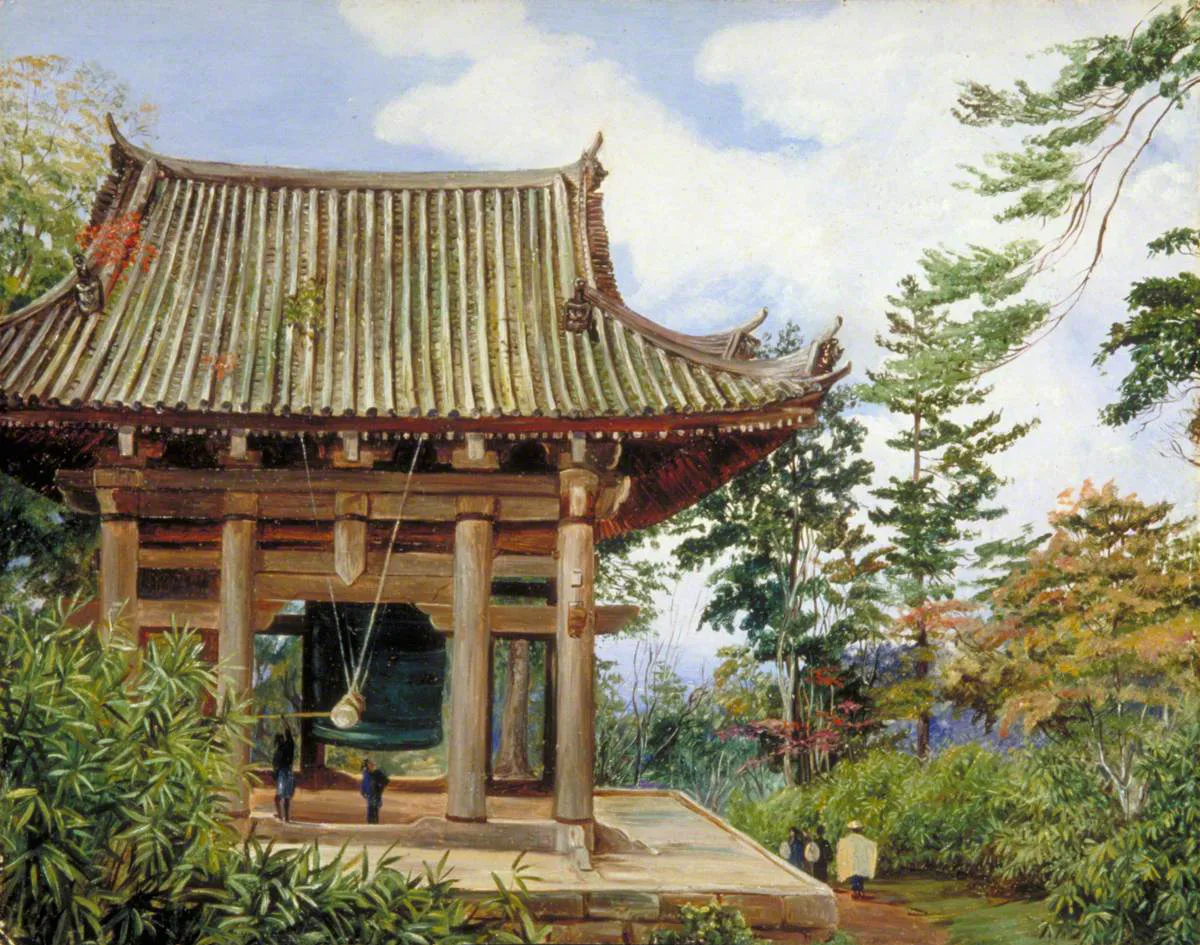
Joya-no-kane is Kyoto's signature New Year's Eve ritual. Temple bells toll 108 times through midnight. Each strike represents one worldly desire that Buddhist teaching says people carry into the new year. At many temples, visitors can join the queue to pull the rope themselves instead of just watching from a distance. For up-to-date ceremony times, check the seasonal events calendar on Kyoto's official tourism site before you go. These four temples anchor Kyoto's Joya-no-kane scene, each part of the city's wider roster of historic temples and shrines:
- Chion-in: Kyoto's largest temple bell, rung by a team of 17 monks who throw their weight onto the ropes together. Arrive by around 8:00 PM if you want to watch. The crowd builds fast, and the wait can run close to 3 hours in the cold.
- Nanzen-ji: Line up at this Zen temple's bell tower if you want to ring the bell yourself instead of just watching.
- Kurodani (Konchi-in): A hilltop temple with citywide night views. Arrive roughly an hour before midnight for a chance to ring the bell alongside local residents.
- Shinyodo: A Sakyo-ku temple popular with Kyoto's expat community. Monks here serve hot medicinal tea to visitors waiting in line to ring the bell.
Hatsumode: Your First Shrine Visit of the Year
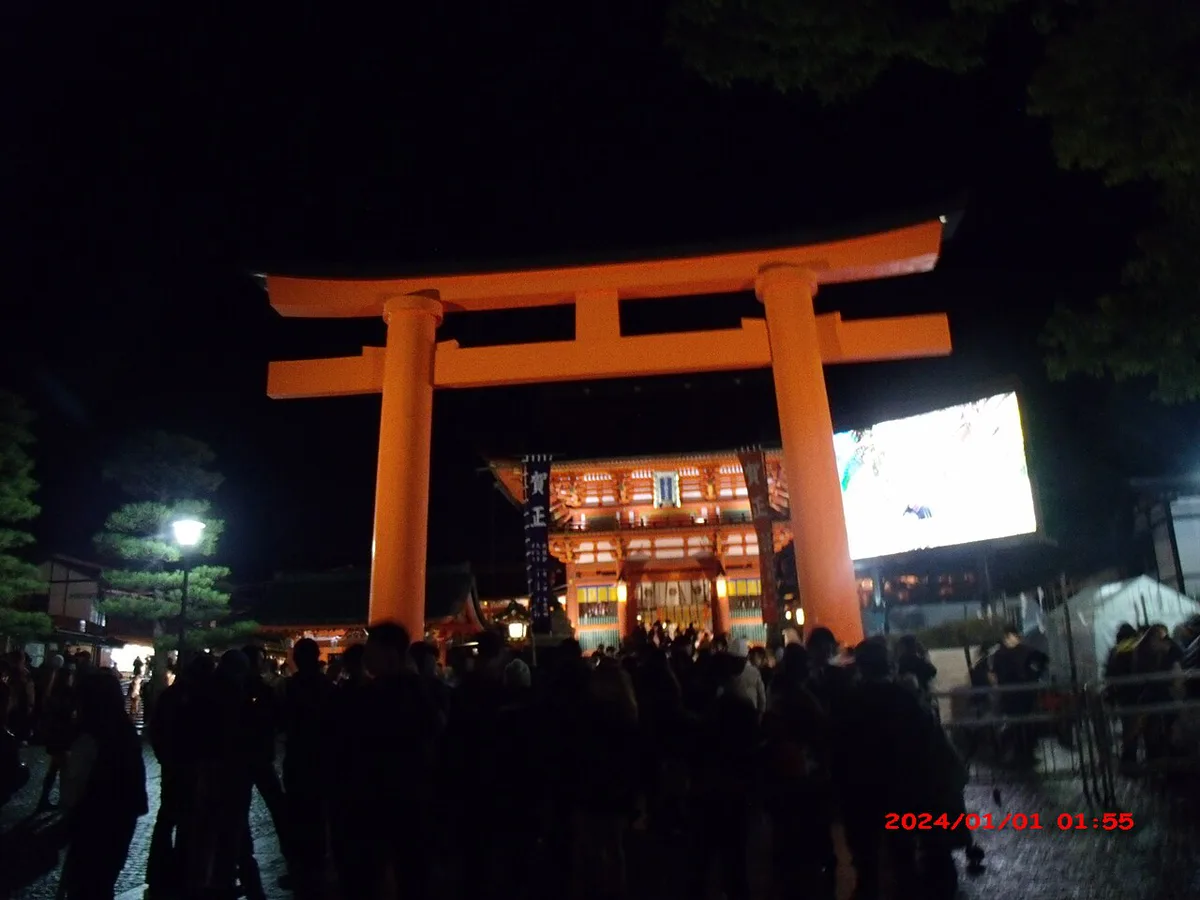
Hatsumode is the year's first shrine visit, traditionally made between December 31 and January 3. Visitors draw a numbered stick from a container, hand the number to a waiting attendant, and receive a matching omikuji fortune slip, usually for ¥100. Many shrine-goers also buy protective charms for the coming year and return the previous year's charms to be ritually burned. Some shrines serve amazake, a sweet, low-alcohol rice drink, to visitors waiting in the cold. Expect to queue for more than an hour at any of the city's most popular sites. Confirm current hatsumode hours on the official site for Fushimi Inari Taisha ahead of your visit. Here's how three of Kyoto's grand shrines compare:
- Fushimi Inari Taisha: Kyoto's most-visited hatsumode site, drawing more than a million visitors over the first few days of January. The approach up toward the torii gates can feel like a slow-moving human conveyor belt rather than a quick visit.
- Yasaka-jinja: Set above Gion, this shrine hosts Okera Mairi, where visitors light a rope from a sacred flame and carry the ember home for good luck. Space along the approach is tight, and it fills fast after dark.
- Heian-jingu: A large courtyard gives this Northern Higashiyama shrine more room than Fushimi Inari or Yasaka-jinja, though it still fills up during peak hours.
What's Open and Closed During Shogatsu
Kyoto's New Year closures follow a fairly consistent pattern each year, though it's worth confirming exact dates for 2026 before you travel. Banks, post offices, public offices, and most independent shops and restaurants close from around December 31 through January 2, and sometimes January 3. Independent boutiques and specialty shops tend to follow the same pattern, closing for several days around the turn of the year. Museums and galleries typically close for several days too, though the exact dates vary site by site. Temples and shrines never close for the holiday, since they're the destinations for Joya-no-kane and hatsumode. Confirm same-year hours before visiting, since individual sites can shift their schedule without much notice. Cross-check your dates against Kyoto's calendar of festivals and events if your trip overlaps other celebrations. Here's a quick reference for what typically closes and what stays open around Shogatsu:
| Site or Service | Status | Typical Dates |
|---|---|---|
| Ninomaru Palace, Nijo Castle | Closed | Dec 26-28 and Jan 1-3 |
| Banks, post offices, public offices | Closed | Dec 31-Jan 2, sometimes Jan 3 |
| Museums and galleries (general) | Closed, varies by site | Multiple days, roughly Dec 29-Jan 4 |
| Independent shops and restaurants | Mostly closed | Dec 31-Jan 2, especially Jan 1 |
| Temples and shrines | Open | No holiday closures |
| Convenience stores (konbini) | Open | No holiday closures |
| Department store basement food halls (Takashimaya, Daimaru) | Closed Jan 1, reopens Jan 2 | Jan 2 onward |
Where to Eat During the New Year Shutdown
Many family-run restaurants close for several days so staff can spend the holiday at home, which can catch visitors off guard. Department store basement food halls, known as depachika, sell ready-made o-sechi ryori, the traditional New Year's dish, alongside other prepared meals. Takashimaya and Daimaru are two department stores that carry this food, and both currently close on January 1 but reopen their basement floors on January 2. Boxed o-sechi sets range from modest single servings to elaborate multi-tier trays, and even the smallest option costs more than a convenience-store meal. Neighborhood supermarkets typically stay closed longer than department stores and reopen around January 3 or 4, so don't count on them for the first days of a trip. Hotels with an on-site restaurant are a reliable backup, since these kitchens typically stay open through the holiday when independent restaurants do not. Properties such as the Hyatt Regency Kyoto and the Westin Miyako Hotel Kyoto are examples that keep dining service running on New Year's Eve. Convenience stores remain open every day of the year, making them the simplest fallback for January 1 specifically, when even department stores are closed.
Where to Stay and How to Get Around
Kyoto Station and Higashiyama serve two different strategies for a New Year's trip. Basing near Kyoto Station keeps you close to trains and buses, useful if you're arriving or departing during the holiday's busiest travel days. Hotel Granvia Kyoto, connected to the station itself, is one option for that transit-first strategy. Staying in Higashiyama instead puts you within walking distance of Chion-in, Yasaka-jinja, and other bell-ringing and hatsumode sites. A room within walking distance means skipping a taxi search after a ceremony ends near or after midnight, when demand for rides spikes. Some train lines run later than usual between December 31 and January 1 to handle hatsumode crowds. Several operators, though, have reduced or stopped this extended late-night service since the coronavirus pandemic. Confirm current holiday timetables with JR West or the Kyoto City Bus before finalizing plans. Domestic travel also peaks hard around the holiday. In 2026, the rush is expected to run December 29-31 as residents leave for hometowns. It reverses January 2-4, with January 3 typically the busiest return day. Reserve shinkansen seats well ahead of December 29 and January 2 if a day trip factors into the plan, since unreserved cars fill quickly during the peak.
Fushimi Inari expects over a million visitors during early-January hatsumode, overlapping with January 3's peak domestic travel-return day, intensifying crowds sharply.
Mistakes to Avoid and Practical Tips
Cold is the most underestimated part of a Kyoto New Year's Eve. Late-December and early-January nights routinely sit near freezing, so pack disposable heat packs, called kairo, sold at any konbini. Layering matters more than any single item. A fuller packing list appears in the guide to Kyoto's winter travel guide. Cross-reference it against the month-by-month weather breakdown for exact December and January conditions. Hotels near the major shrines, including well-known properties like Kyoto Hotel Okura, often fill 6 or more months ahead of New Year's Eve. Book accommodation as soon as travel dates are set. The Emperor's New Year greeting takes place at the Imperial Palace on January 2, but that's in Tokyo, not Kyoto, so don't build a Kyoto itinerary around it. A day-by-day breakdown of the lead-up appears in the guide to Kyoto in December 2026: Weather, Illuminations, Markets, and Year-End Closures. Coverage for the days right after New Year's continues in the guide to Kyoto in January: Winter Travel Guide, Events & Weather Tips.
Witnessing Chion-in's bell-ringing requires arriving by 8:00 PM and waiting roughly 3 hours in the cold; book nearby hotels 6 or more months ahead.
Frequently Asked Questions
Is Kyoto worth visiting for New Year's Eve?
Kyoto rewards a New Year's Eve visit if temple ritual and hatsumode crowds interest you more than shopping or restaurant variety. Expect banks, post offices, and many independent restaurants to close between December 31 and January 2, sometimes January 3. An earlier December visit may work better if reliable dining and retail hours matter more to the trip.
What is Joya-no-kane and where can you see it in Kyoto?
Joya-no-kane is the New Year's Eve bell-ringing ritual, where temple bells toll 108 times through midnight. Chion-in has the city's largest bell, rung by a team of 17 monks, though arriving by around 8:00 PM and waiting near 3 hours is typical. Nanzen-ji lets visitors ring the bell themselves instead of just watching. Kurodani offers hilltop views with a more local crowd, and Shinyodo serves hot medicinal tea to those waiting in line.
Are restaurants and shops open in Kyoto on January 1?
Most independent restaurants and shops close on January 1, along with banks and post offices. Convenience stores and hotel restaurants stay open every day, making them the most reliable fallback. Department store basement food halls, like those at Takashimaya and Daimaru, typically close on January 1 as well but reopen on January 2.
How far ahead should you book a hotel for New Year's Eve in Kyoto?
Book as early as possible. Rooms near the major shrines and temples often fill 6 or more months ahead of New Year's Eve. Waiting until a few weeks before the holiday usually limits options to properties farther from Higashiyama and Gion.
Is the Emperor's New Year greeting held in Kyoto?
No, the Emperor's New Year greeting takes place at the Imperial Palace in Tokyo, usually on January 2. Kyoto has no equivalent public event, so don't plan a Kyoto trip around it. Its own New Year traditions center on Joya-no-kane and hatsumode instead.
What should you wear for a night of bell-ringing or shrine visits in Kyoto?
Plan for several hours outdoors after dark, since lines at Chion-in and the busiest shrines move slowly. Layered clothing, warm socks, and disposable heat packs sold at any konbini make the wait manageable. Some years bring snow to the evening ceremonies, so waterproof footwear is worth packing too.
Do you need a reservation to watch Joya-no-kane in Kyoto?
No reservation is required at any of the temples covered here. Arrival time determines your spot, since space near the bell fills on a first-come basis. Arriving hours early, as described above for Chion-in, is the only way to guarantee a close view.
What is o-sechi ryori and where can you buy it in Kyoto during New Year?
O-sechi ryori is Japan's traditional New Year's meal, served in stacked boxes with symbolic dishes meant to bring luck for the year ahead. Department store basement food halls at Takashimaya and Daimaru sell ready-made versions through late December. Sets range from single-portion trays to elaborate multi-tier boxes, and both stores currently close on January 1 before reopening their food floors on January 2.
Free: The Kyoto Essentials guide
Top things to do, where to stay, a perfect day plan, getting around, and the best time to go — a Kyoto mini-guide you can take offline.
You might also like
Continue reading
More guides you'll find useful