
Japan New Year's Eve: What to Expect and How to Plan
What New Year's Eve in Japan is really like: Joya no Kane bell ringing, hatsumode timing, countdown parties, and Dec 31 closures and travel logistics.
On this page
Last updated September 2026, New Year's Eve in Japan is a quiet, family-centered night, not a countdown-party spectacle. Expect toshikoshi soba, hushed streets after dark, and temples ringing their bells 108 times to mark Joya no Kane, the ritual that closes out the year. The New Year in Japan: 10 Things to Know Before You Visit (2026 Guide) guide covers the full holiday season; this guide focuses on the evening of December 31 itself.
What New Year's Eve in Japan Is Actually Like
New Year's Eve in Japan does not center on a public countdown. Streets empty out well before midnight as families gather at home and finish end-of-year cleaning. Shops and offices shut for the holiday, and trains run a reduced daytime schedule. Fireworks are rare nationally, so most neighborhoods stay dark rather than lighting up the sky. Temple bells, not crowd countdowns, usually provide the loudest moment of the night. Expect the volume to stay low even in normally busy districts like Shinjuku or Shibuya, since most residents have already left for family visits. Convenience stores stay open as usual, offering a reliable fallback for a late-night snack or drink. Japan's national tourism site frames the New Year holiday as the country's most significant annual family occasion, which explains the hush. Anyone new to planning a Japan trip can start with the Japan Travel Guide: Plan Your Trip with Expert Tips & Itineraries for broader logistics before narrowing in on this one night.
Traditional Ways to Spend the Night
Japanese households mark the evening with a short list of rituals passed down through generations. Food, television, and a late walk to a shrine or temple form the backbone of a typical night. Otoshidama cash gifts, nengajo postcards, and other customs get fuller treatment in the Japan New Year Traditions: A Traveler's Guide to Oshogatsu Customs guide. Three traditions stand out for travelers staying in a homestay, ryokan, or hotel room.
- Toshikoshi soba: buckwheat noodles eaten just before midnight, served in a soy-based broth or dipped in sauce; the name translates loosely to year-crossing noodles.
- Osechi ryori: a multi-tiered box of preserved and symbolic dishes prepared in advance and eaten over the first days of January; the Osechi Ryori Guide: Japan's New Year Food, Explained breaks down what's inside dish by dish.
- Ozoni: a mochi soup eaten on New Year's Day itself, with broth that differs by region, soy-based around Tokyo and miso-based in parts of western Japan such as Fukuoka.
- Kohaku Uta Gassen: NHK's New Year's Eve music broadcast, still a fixture in many households; travelers can catch it on a hotel or ryokan TV as background to the evening.
Temple Bell Ringing (Joya no Kane): Where and How to Experience It
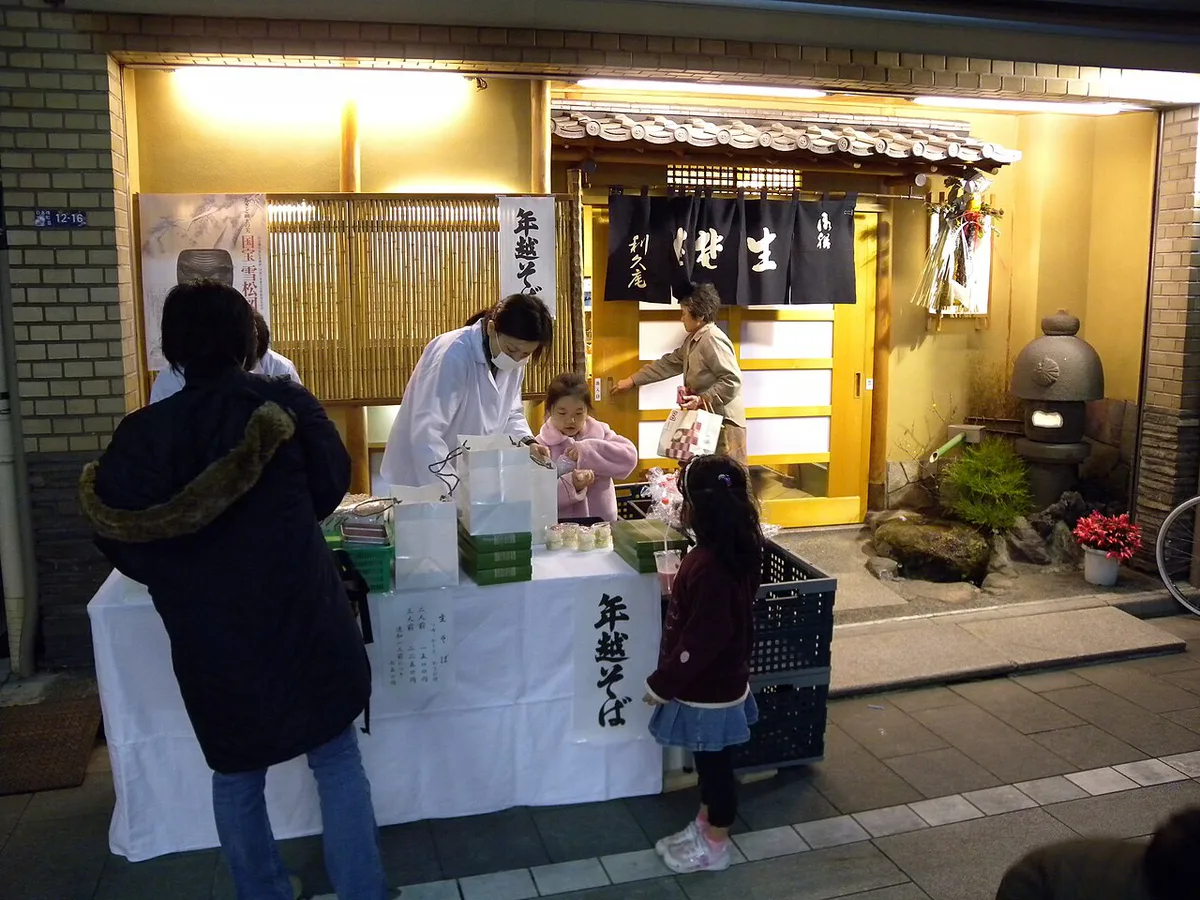
Joya no Kane is the ritual most likely to define the evening for a visitor. Buddhist temples across the country ring their bells 108 times, once for each worldly desire in Buddhist belief. 107 tolls fall before midnight, and the final one comes just after. The practice is public and typically free to watch, and at many neighborhood temples visitors can queue to strike the bell themselves. Kyoto's Chion-in, a major temple in the city's Higashiyama district, is one of the better-known places to see the ritual, drawing a line of both local and visiting participants. Arrive by around 11 p.m. to find a spot near the bell tower. Smaller neighborhood temples tend to have shorter lines and a calmer atmosphere than famous ones. Bundle up. Temple courtyards are unheated, and the wait can stretch past midnight in cold weather. This is a low-cost way to be out and participating at midnight without joining a club countdown.
Midnight Hatsumode vs. Waiting Until Morning
Hatsumode, the year's first shrine or temple visit, is the other major midnight option. Some travelers head straight to a shrine right after the bell ringing, while others wait until January 1 or 2, when crowds are just as thick but the weather has warmed slightly. Major sites such as Tokyo's Meiji Shrine draw enormous crowds in the first days of January. Kyoto's Fushimi Inari Taisha is another example, and popular sites like these each draw well over a million visitors during that window. Lines to the main hall can run over an hour at peak times. Hatsumode itself is free, aside from optional charm or fortune-slip purchases at the shrine. Many shrines also sell omikuji, paper fortune slips that visitors tie to a rack if the luck is poor rather than take home. A smaller local shrine on January 2 or 3 offers a shorter wait and a closer look at the ritual. Major train lines serving popular hatsumode sites sometimes run later than usual into the new year, though service has been reduced at some operators in recent years. Confirm the current schedule before planning a late-night ride. Visitors who want to see the ritual firsthand are often better served by January 1 through 3 than by the evening of December 31 itself. Hatsumode etiquette, timing, and site picks get full coverage in the Hatsumode: A Traveler's Guide to Japan's New Year Shrine Visit.
Well over a million visitors flood major shrines during January 1-3. This overlaps with the return-travel rush from January 2-4, compounding competition for both shrine access and train seats.
- Toss a coin into the offering box.
- Ring the bell, if there is one.
- Bow twice, clap twice, and pray.
- Bow once more before stepping away.
Modern Countdown Options: Parties and the Rare Fireworks Spots
A traditional evening is not the only option. Tokyo's club districts, particularly Shibuya and Ebisu, host organized countdown parties every December 31, with DJ sets and live acts running past dawn. Expect a queue outside popular clubs well before doors open, especially in Shibuya. As of the most recent countdown season, cover charges at these events typically ran from around ¥2,000 to ¥8,000 depending on venue and arrival time. Confirm current listings before booking, since lineups and prices change every year. Advance tickets for larger club events typically go on sale weeks ahead and sell out close to the date, while a shrine visit needs no reservation at all. Fireworks are the exception rather than the rule at Japanese New Year, but two spots outside Tokyo make a point of it. Yokosuka runs a free countdown show with around 500 fireworks blasts plus live performances along the waterfront. Yokohama times its regular fireworks display to hit midnight, a roughly five-minute burst launched from two piers. Chinatown adds its own countdown events nearby, at Kuan Ti Miao and Mazu temples. A club countdown suits travelers who want a Western-style New Year without leaving Japan. A shrine visit suits those who want to see how most Japanese households actually mark the night.
Yokosuka breaks the national pattern with around 500 fireworks blasts at midnight, making it a rare exception to Japan's typically dark New Year's Eve sky.
New Year's Eve vs. Lunar New Year in Japan
Japan's New Year runs on the Gregorian calendar, with January 1 fixed as New Year's Day since 1873. Before that switch, the holiday followed a lunisolar calendar, the same broad family as the Lunar New Year still celebrated elsewhere in Asia. Okinawa and the Amami Islands once kept a separate lunar new year tradition of their own, though the practice is now rare there too. Only a few pockets of the country keep a distinct Lunar New Year custom today, and Kobe's Nankinmachi district is the most visible example for travelers. The Nankinmachi Chinese New Year celebration in Kobe follows the lunar calendar, so it typically falls in late January or February, weeks after Japan's own December 31 and January 1 holiday. Anyone hoping to catch both should plan two separate trips rather than one, since the dates rarely overlap.
Logistics: Closures, Crowds, and Cash Around Dec 31
Two travel-congestion windows bracket New Year's Eve, and timing a trip around them matters more than any single attraction. Departures from major cities peak between December 29 and 31 as residents head to hometowns, then reverse between January 2 and 4, with January 3 typically the busiest return day. Book long-distance trains and flights for those windows well ahead, or travel a day or two outside them for a calmer ride. Accommodation in popular areas books out weeks ahead of December 31, so confirm lodging well before the holiday rush. Because so much closes and travel costs rise, weigh this week against other options using the Best Time To Visit Japan: A Seasonal & Monthly Travel Guide guide before locking in dates. Carry more cash than usual. Otoshidama envelopes for children commonly hold more than ¥5,000, and temple offerings are coin-based. A closed ATM on January 1 can leave a traveler short without planning ahead. IC cards such as Suica and Pasmo keep working over the holiday for trains, convenience stores, and vending machines, even when a bank branch is closed. Confirm ATM and currency exchange hours at the airport before arrival if landing right around the holiday. The Japan money and IC card guide covers where to withdraw yen and how IC cards fit into holiday spending. Pack for cold, dry weather too; the Japan Packing List: Seasonal & Essential Travel Guide has specifics. For the fuller day-by-day closures and congestion picture beyond just December 31, see the Japan in January: Weather, Events, New Year Traditions & Travel Tips guide.
- Shops: most close on January 1; a smaller number in modern shopping districts and malls stay open.
- Restaurants: many close for one or more days, especially January 1; fast-food chains and hotel restaurants are the most reliable fallback.
- Banks and ATMs: closed on January 1 and often for part of the surrounding days, so plan cash needs ahead.
- Museums: typically closed for multiple days over the holiday; shrines and temples stay open throughout.
Mistakes to Avoid
A few assumptions trip up first-time visitors more than anything else about this holiday. Planning around these four points does more to shape the night than any single venue choice.
- Expecting countdown culture everywhere: most of Japan is quiet on December 31, and a loud public countdown is the exception outside a handful of Tokyo venues and Yokosuka or Yokohama.
- Assuming shops and restaurants run normally on January 1: plan meals around fast-food chains, hotel restaurants, or a stocked hotel room instead.
- Ignoring the congestion windows: booking travel for December 29-31 or January 2-4 without an advance reservation often means sold-out trains or inflated last-minute fares.
- Skipping small bills: ATMs close over the holiday, so withdraw cash before December 31 rather than relying on card payments everywhere.
Frequently Asked Questions
Does Japan have fireworks on New Year's Eve?
Generally, no. Fireworks are considered more of a summer activity in Japan, and most of the country marks midnight without a public display. Yokosuka and Yokohama are the notable exceptions, each running a free show on December 31. Yokosuka's runs around 500 blasts along its waterfront, and Yokohama's is a roughly five-minute midnight display.
Is New Year's Eve a big deal in Japan?
It is the most significant family holiday of the year, but it does not look like a big public event. Most people spend it at home with relatives rather than out celebrating. Hatsumode and the days that follow generate the visible energy of the season, not midnight itself. Visitors who want to see it firsthand are often better served by January 1 through 3 than by the evening of December 31 itself.
Can tourists visit a shrine at midnight on New Year's Eve?
Yes. Popular shrines and temples stay open through the night for hatsumode and Joya no Kane, and visitors are welcome alongside local worshippers. Expect a line at famous sites, and consider a smaller neighborhood shrine or temple for a quicker, calmer visit.
Is New Year's Eve in Japan the same as Lunar New Year?
No. Japan's New Year holiday follows the Gregorian calendar and centers on December 31 into January 1. Lunar New Year is a separate occasion still marked in a few places, most visibly at Kobe's Nankinmachi district, and it usually falls weeks later, in late January or February.
What's open on New Year's Eve and New Year's Day in Japan?
Shrines and temples stay open throughout the holiday, and convenience stores generally keep normal hours. Shops, restaurants, and banks are a different story. Many shops and restaurants close on January 1, and banks and ATMs close for at least that day. Museums are typically shut for multiple days around the holiday. Confirm hours for any specific attraction or restaurant before December 31, since patterns vary by business and by city.
What should you pack for New Year's Eve in Japan?
Cold-weather layers, comfortable shoes for standing in line, and small yen bills top the list. The Japan packing list guide has the full winter checklist.
How cold is Japan on New Year's Eve?
Winter evenings are cold nationwide in late December, so warm layers matter if you plan to be outside near midnight. Conditions vary by region, so check a current forecast for your specific destination before heading out.
Free guide: Japan's Hidden Gems
12 under-the-radar places beyond Tokyo & Kyoto — with the best season to visit each and a local tip you won't find in the guidebooks.
You might also like


Continue reading
More guides you'll find useful


