Kushikatsu in Shinsekai Osaka: The Complete Guide to Skewers, Etiquette, and Where to Eat
A 2026 guide to kushikatsu in Shinsekai Osaka: where to queue, the no-double-dipping rule, doteyaki pairings, and how to reach Tsutenkaku's skewer district.
On this page
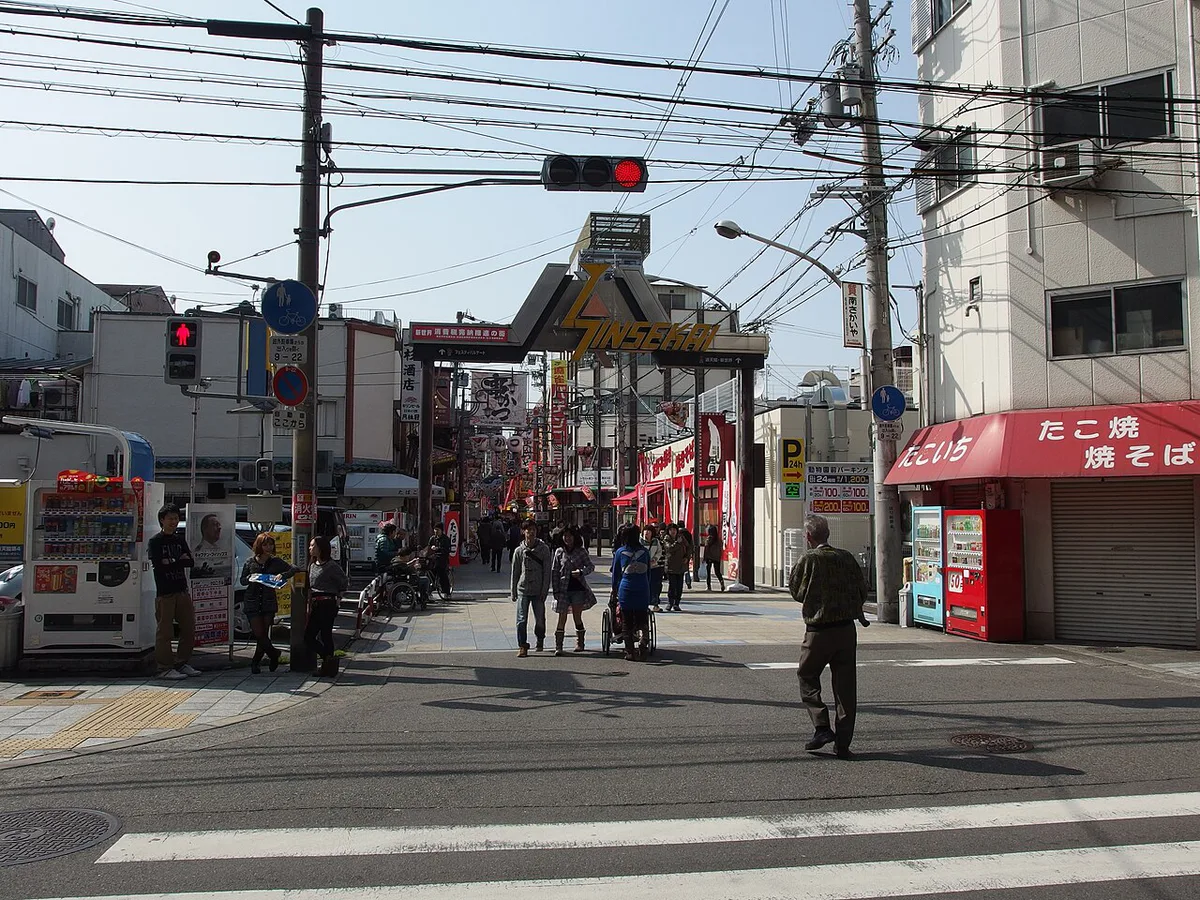
Last updated August 2026, this guide covers kushikatsu in Shinsekai Osaka, the retro Showa-era district under Tsutenkaku Tower where the deep-fried skewer format began. Shinsekai packs a dense run of specialist skewer counters into a few blocks, from Kushikatsu Daruma's 1929 original branch to newer arrivals like Kushikatsu Taisho. Expect a strict shared-sauce etiquette, mostly cash-friendly counters, and queues that reward arriving before the 11:00 AM opening rush.
Kushikatsu in Shinsekai Osaka: Why This District Started It All
Kushikatsu began as cheap, filling food for laborers in the 1920s, and Shinsekai is where it stuck. Skewered ingredients get a light panko coating, a quick deep fry, then a dip in a shared sauce tin. Locals call this genre of food B-kyu gurume, or B-grade gourmet. It's filling, inexpensive, and built around a round of drinks rather than a formal sit-down meal. Kushikatsu Daruma's Shinsekai Sohonten traces back to 1929, making it one of the neighborhood's oldest kushikatsu shops. Tsutenkaku Tower anchors the district, with Janjan Yokocho tucked nearby as its quieter counterpart. Decades later, Shinsekai still concentrates a dense run of specialist skewer counters around that same stretch. For the wider street-food context, see the Osaka food guide.
The Golden Rule: No Double-Dipping in Shinsekai
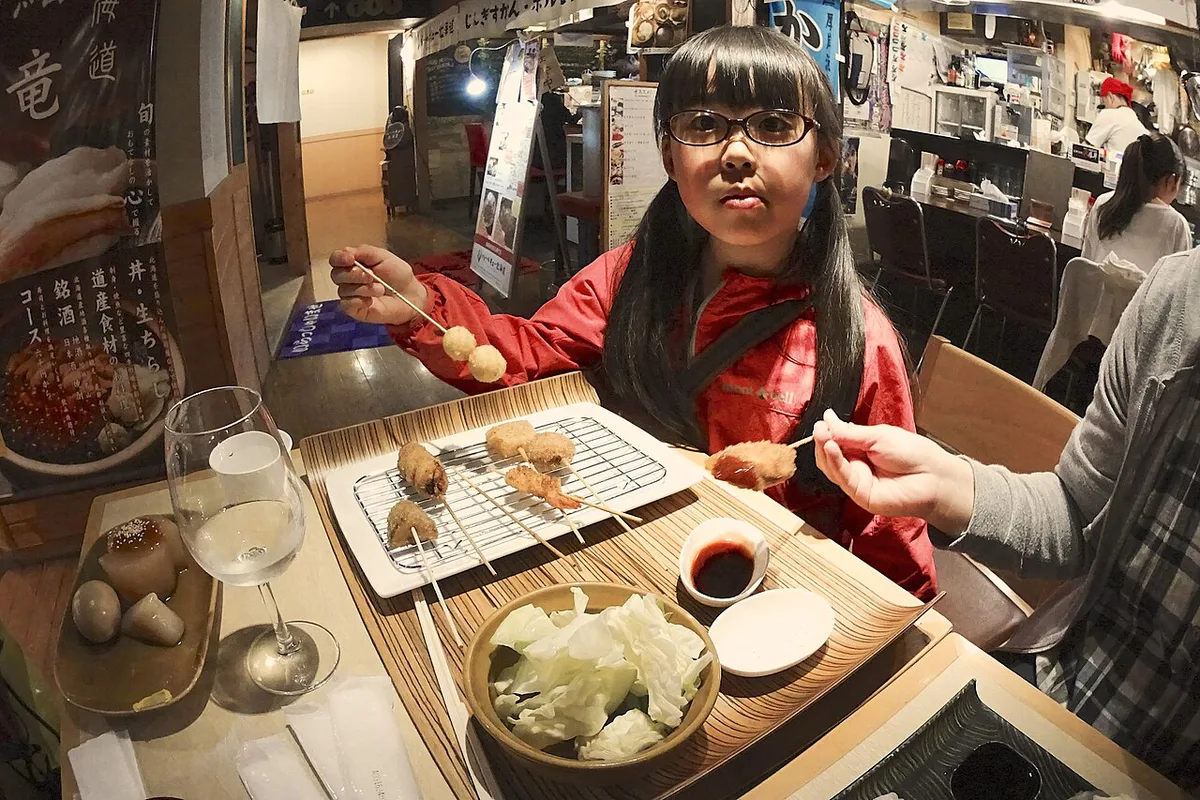
Shinsekai's single non-negotiable rule is nido-zuke kinshi, or no second dip. Every counter shares one sauce tin among all diners, and dipping a bitten skewer back in risks contaminating it for everyone else. Kushikatsu Daruma is credited with creating both the rule and its fix: a small dish of shredded cabbage sits on every table. Scoop extra sauce onto a piece of cabbage first, then use that to coat your skewer again instead of double-dipping. Some counters, including Kushikatsu Taisho, now pour sauce from a bottle at the table rather than sharing one tin, which sidesteps the issue entirely. Ordering is straightforward. Pick individual skewers a la carte; at Kushikatsu Taisho these run roughly ¥250 to ¥480 apiece. Or order a set: Daruma's Shinsekai Set bundles doteyaki with nine skewers for ¥1,760.
The Heavy Hitters: Where to Queue
Three names dominate any list of kushikatsu in Shinsekai Osaka, and each rewards a different kind of visit. The table below breaks down the trade-offs before you commit to a line. Kushikatsu Daruma's Shinsekai Sohonten is the original, dating to 1929, with only 12 counter seats and a signboard figure of the fourth-generation owner glaring down at diners. Waits can run past an hour at peak times. Weigh that against the trade-off: several Daruma branches elsewhere in Shinsekai serve the same menu with more seats and shorter lines. Purists choose the Sohonten for the atmosphere. Everyone else usually does fine at a branch. Yaekatsu has operated in Shinsekai since 1949, and its batter has a lighter, almost fluffy texture that keeps regulars coming back. Tengu draws a mixed crowd of locals and visitors. It's known in particular for a thick, long-simmered doteyaki. Prioritize it if the beef tendon side is your main draw. Yakko, also in Shinsekai, fries in beef tallow instead of the more common lard-and-oil blend, which changes the flavor of every skewer. If solo dining and a fast bite matter most, Kushikatsu Taisho or Osho Club generally move lines faster than Daruma's original branch or Yaekatsu. For a broader citywide comparison beyond Shinsekai, cross-reference the best Osaka restaurants guide.
| Restaurant | Best For | Vibe | Wait Time | Key Feature |
|---|---|---|---|---|
| Daruma (Original Sohonten) | Purists | Gritty, cramped, 12 seats | High (60+ min) | The fourth-generation owner's signboard figure |
| Yaekatsu | Foodies | High-energy, popular counter | Medium | Light, fluffy batter |
| Tengu | Locals | Traditional, no-frills | Medium | Known for thick doteyaki |
| Kushikatsu Taisho | Modernists | Casual, reggae soundtrack | Low | Cod roe and other creative skewers |
| Osho Club | History buffs | Retro, Showa-era | Low | Housed in a former shogi (chess) club |
Local Favorites in Janjan Yokocho and Beyond
Janjan Yokocho is a narrow, covered alley running behind Shinsekai's main strip. Expect cheap izakaya, standing bars, and a heavier local crowd than the flashier Tsutenkaku-facing storefronts. Osho Club sits inside this alley, in a wooden building that once operated as a shogi (Japanese chess) club. That building ran as a chess club from 1947, then reopened as a kushikatsu restaurant in 2019. Old fee lists and a chess-board tabletop are still on display upstairs. Its signature is a roughly 25cm emperor shrimp skewer for ¥1,780. Salmon skewers topped with roe run ¥550. Local sake by the 90ml pour ranges ¥500 to ¥2,400. Osho Club is a 3-minute walk from Dobutsuen-mae Station. Kushikatsu Taisho opened in 2019 at the foot of Tsutenkaku Tower. Reggae plays over the counter, and the approach is more modern than most Shinsekai counters. Cod roe skewers run ¥320 each. The sasami shiso maki is ¥250. Hours run 11:00 to 23:00, with last order at 22:00, and Wednesdays are the weekly closure. Hige Katsu is a long-established counter that opened after World War II. Food connoisseurs come here for ingredient quality over spectacle. A few minutes further on, Sousaku Kushi-Age Enjiro opened in June 2024 inside the new Ebisu Yokocho alley. Staff there fry ingredients bought fresh each morning from the Osaka City Central Wholesale Market. Shin-Imamiya Station is a 2-minute walk away, right beside OMO7 Osaka by Hoshino Resorts. If Shinsekai's counters are full, Popular Kushikatsu Bar Kei is a vegetable-forward alternative worth knowing about. Midoribashi Station is roughly a 5-minute walk away, outside Shinsekai proper. Its ¥902 tasting set is a good way to sample vegetable skewers there.
What to Order Beyond the Beef Skewers
Beef remains the standard kushikatsu skewer, but the format extends far beyond it. Typical menus mix in quail egg, lotus root, and seasonal seafood alongside creative options like cod roe or salmon roe. Lotus root brings a crunchy texture that contrasts with the softer meat and seafood skewers. Quail eggs are a common one-bite order for anyone trying the format for the first time. Doteyaki, beef tendon simmered in a miso-based broth, is the dish's standard companion rather than an optional side. At Kushikatsu Taisho, the tendon simmers for 8 to 10 hours until it turns tender enough to eat with chopsticks alone. Order it alongside your skewers, not instead of them; most locals treat the two as a single course. For drinks, a cold highball or draft nama beer is the everyday pairing, and most counters also stock a short list of local sake. Frying oil at many Shinsekai counters blends lard with canola oil; some counters use beef tallow instead. Vegetarians and vegans should plan around this rather than assume a vegetable skewer is meat-free. Check the vegetarian and vegan Osaka guide before building a Shinsekai stop into a plant-based itinerary. For the fuller regional picture on this dish, the doteyaki and horumon guide covers it city-wide.
Getting to Shinsekai and Practical Planning
Two stations put you inside Shinsekai. Dobutsuen-mae Station, on the Midosuji and Sakaisuji subway lines, sits closest to Janjan Yokocho and Osho Club. Shin-Imamiya Station, served by both JR and Nankai lines, sits closer to the newer Ebisu Yokocho alley and OMO7 Osaka. Most counters open around 11:00 AM, and the busiest ones, Yaekatsu and Daruma among them, can build 60-minute queues within the first hour. Arrive by 10:45 AM to beat the opening rush. Or shift your visit to the 3:00 to 5:00 PM window, when lines thin out considerably. Online travel forums, including Reddit's Osaka community, often note that Shinsekai's counter-heavy seating makes it one of the easier neighborhoods for solo diners to walk into without a reservation. English menus are inconsistent at the older counters, so pointing at photos on the wall or at a neighbor's tray works as a reliable fallback. Shinsekai has a reputation as Osaka's grittier district, with peeling signage and a Showa-era look that some first-time visitors read as unsafe. In practice it's a well-trodden dining strip, just a more worn-in one than Dotonbori. Café Causerie 1947, a French-inspired café that other guides list as a nearby stop, works well for a coffee break after the fried food. If you'd rather stay within walking distance, OMO7 Osaka by Hoshino Resorts sits beside the Ebisu Yokocho alley. See the best areas to stay guide for the fuller citywide picture. Public transit elsewhere in the city works the same way. Check the Getting Around Osaka: The Complete Transportation Guide guide for the subway and rail network in full. Shinsekai fits comfortably into a single afternoon. That's useful context if you're weighing one day in Osaka against a longer stay. It also feeds into the broader question of how many days to spend in Osaka. Tsutenkaku Tower itself is worth pairing with the meal. It's covered alongside the city's other sights in the 20 Top Osaka Attractions guide. Once you're full, the food crawl continues elsewhere. Dotonbori is next if you want more. The Dotonbori Food Guide: What to Eat and Where to Queue in Osaka covers that strip in full. Kuromon Ichiba suits a slower, market-style graze; its own Kuromon Ichiba market guide has the details.
Common Mistakes to Avoid in Shinsekai
A few missteps show up again and again among first-time visitors to Shinsekai's kushikatsu counters.
- Queuing an hour at Daruma's original Sohonten when a nearby branch or Kushikatsu Taisho offers a similar meal with no wait.
- Assuming every counter takes cards; many traditional Shinsekai shops still lean cash-only, so carry yen before you sit down.
- Double-dipping your own skewer back into the shared sauce tin, even on your second bite, breaks the same shared rule.
- Treating doteyaki as an optional extra instead of the standard side dish that most locals order with every round of skewers.
- Ignoring the cabbage on the table; it exists to scoop extra sauce, not as a garnish to leave untouched.
- Skipping Shinsekai entirely because of its reputation, then missing the dish that helped define Osaka's B-grade gourmet scene.
Choosing a Kushikatsu Counter for Solo Diners and Groups
Shinsekai’s older kushikatsu shops were designed for quick meals at compact counters. That layout suits solo diners but can make group seating difficult.
Daruma’s original Sohonten has only 12 counter seats. Couples may be seated together, but larger parties could wait longer or be split up. Nearby Daruma branches offer more seating, faster turnover, and touch-screen ordering. They are usually the more practical choice for families and groups.
Kushikatsu Taisho and Osho Club are useful alternatives when the famous counters have long queues. Taisho offers a relaxed setting near Tsutenkaku, while Osho Club adds a distinctive former shogi-club interior in Janjan Yokocho.
- Solo diners: choose a counter seat at Taisho, Osho Club, Yaekatsu, or Tengu.
- Families and groups: favor a larger Daruma branch over the cramped original.
- Visitors needing ordering support: look for touch screens or menu photographs, since English menus vary.
Keep the party together before joining a queue. Small counters may not hold empty seats while other diners arrive.
For trip-planning details, see Tsutenkaku.
Frequently Asked Questions
What exactly is kushikatsu, and where did it come from?
Kushikatsu is skewered meat, seafood, or vegetables coated in panko and deep-fried, then dipped in a shared sauce. The format started in Shinsekai in the 1920s as cheap, filling food for laborers, and Kushikatsu Daruma's original branch there dates to 1929.
Why can't you double-dip the sauce in Shinsekai?
Every counter shares one sauce tin among all diners, so a bitten skewer going back in risks contaminating it for everyone else. Use the cabbage on the table to scoop extra sauce instead of re-dipping.
Is the original Kushikatsu Daruma Sohonten worth the wait, or should you pick a branch?
The Sohonten has only 12 counter seats and dates to 1929, so waits can pass 60 minutes at peak hours. If atmosphere matters more than time, queue there. Otherwise, a nearby Daruma branch serves the same menu faster.
How do you get to Shinsekai from central Osaka?
Dobutsuen-mae Station, on the Midosuji and Sakaisuji subway lines, sits closest to Janjan Yokocho. Shin-Imamiya Station, served by JR and Nankai lines, is closer to the newer Ebisu Yokocho alley.
Can vegetarians or vegans eat kushikatsu in Shinsekai?
It's difficult. Most counters fry in oil blended with lard, or in some cases beef tallow, so a vegetable skewer isn't automatically meat-free.
When is the best time to visit Shinsekai to avoid a long line?
Arrive by 10:45 AM, just before most counters open at 11:00. If mornings don't work, the 3:00 to 5:00 PM window also sees shorter waits at Yaekatsu and Daruma.
How much does a typical kushikatsu meal in Shinsekai cost?
Individual skewers at Kushikatsu Taisho run roughly ¥250 to ¥480 each, and Daruma's Shinsekai Set bundles nine skewers with doteyaki for ¥1,760. A few skewers plus a drink is a reasonable target for a casual stop.
What else is worth seeing near Shinsekai besides the kushikatsu counters?
Tsutenkaku Tower is the district's visual landmark and sits within walking distance of most kushikatsu counters. Janjan Yokocho itself is worth a slow walk even between meals, for its retro Showa-era storefronts.
Free: The Osaka Essentials guide
Top things to do, where to stay, a perfect day plan, getting around, and the best time to go — a Osaka mini-guide you can take offline.
You might also like


Continue reading
More guides you'll find useful