What to Eat in Osaka: 7 Essential Dishes for 2026
What to eat in Osaka in 2026: 7 essential dishes, the neighborhoods that serve them best, and practical tips for a kuidaore-style food trip.
On this page
Last updated August 2026, this guide covers what to eat in Osaka, from street-stall classics to sit-down regional dishes. Osaka's kuidaore philosophy, eat until you drop, shapes a food scene built around stalls, market counters, and izakaya rather than formal tasting menus. Use this pillar as the map, then follow the links below to five deeper guides on individual dishes and neighborhoods.
Osaka's Kuidaore Food Culture
Kuidaore is the Osaka saying behind this guide: eat until you drop. Locals use it to describe a city built around food-first outings rather than sightseeing checklists. Stalls, market counters, and izakaya stand in for formal restaurants across much of the city. Visitors chasing every dish on this list in one afternoon often run out of time before they run out of stalls. Check a single day in Osaka to see whether that pace fits your priorities. For a slower trip, Osaka trip-length planning covers pacing beyond one afternoon. Pair the food stops with sightseeing through the Osaka sightseeing guide to round out a full day.
7 Dishes You Must Eat in Osaka
Osaka's food identity rests on three dishes that show up on nearly every stall and menu: takoyaki, okonomiyaki, and kushikatsu. Street stalls suit a quick bite between sights, while seated counters suit a slower meal with table-side cooking or skewer service. A stall works best when the goal is variety across a short walk. A seated restaurant works best when the goal is one dish done well with a seat to enjoy it. The list below covers those three, plus four regional specialties worth searching out beyond the main strip.
Shinsekai's kushikatsu counters maintain traditions established around 70 years ago, and etiquette matters: dip each skewer once in communal sauce, then use cabbage leaves for additional sauce—not the skewer itself.
- Takoyaki (Octopus Balls)
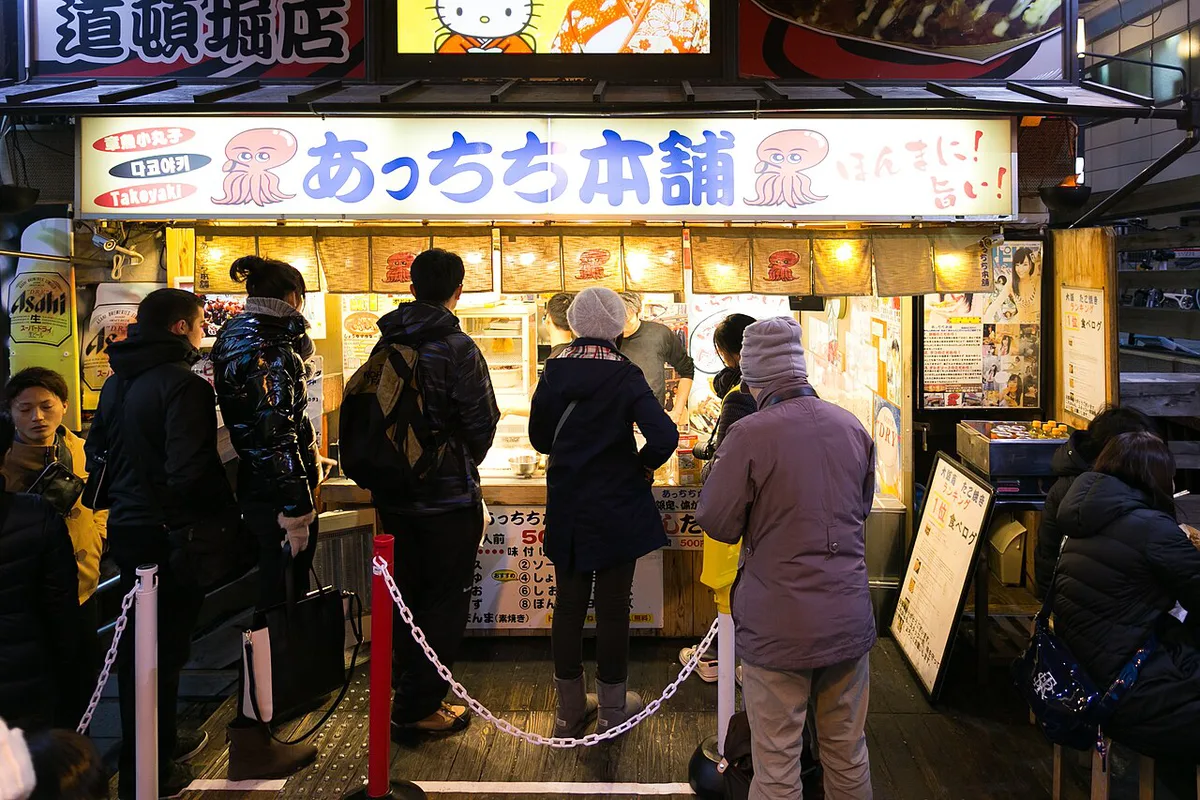
- Takoyaki are ball-shaped snacks made from a wheat-and-dashi batter with diced octopus inside, cooked in a molded griddle until crisp outside and soft in the center.
- Takoyaki Doraku Wanaka's Dotonbori branch serves a classic sauce-and-bonito version for ¥650, and smaller family-run stalls nearby often sell a similar recipe with a shorter line.
- Order it fresh and let it sit for a minute before biting in, since the center holds heat longer than it looks.
- Okonomiyaki (Savory Pancake)
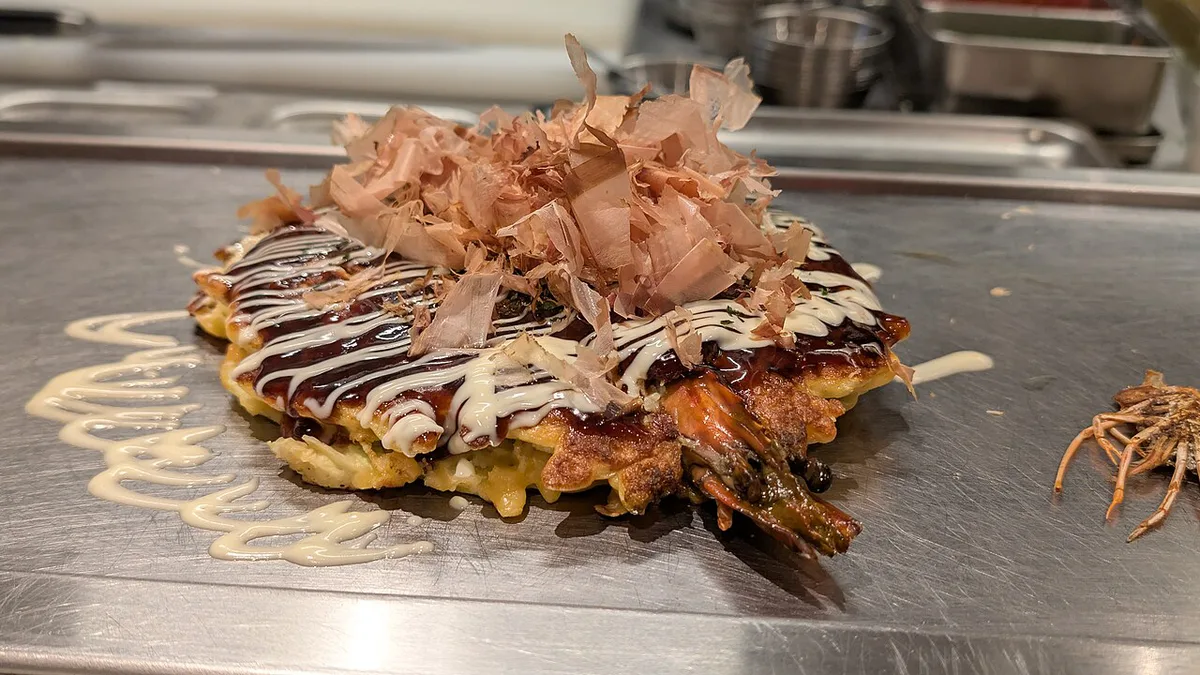
- Okonomiyaki is a savory pancake of cabbage, batter, and a chosen protein, grilled and finished with a Worcestershire-style sauce, mayonnaise, and bonito flakes.
- Osaka-style mixes every ingredient into the batter before cooking, unlike Hiroshima-style, which layers noodles and cabbage separately.
- Chibo's Dotonbori branch runs 11:00 AM to 11:00 PM, last order 10:00 PM, and lists a mixed pork-shrimp-squid version at ¥2,200 and a mentaiko-cheese version at ¥1,800; Fukutaro offers a similar dish in a room geared toward regulars rather than tour groups.
- Kushikatsu (Fried Skewers)
- Kushikatsu is deep-fried, panko-breaded meat, seafood, or vegetables on a stick, and it originated as a working-class dish in Shinsekai.
- Kushikatsu Daruma is the neighborhood's best-known counter, and most Shinsekai skewer shops share one strict house rule.
- Dip each skewer once into the communal sauce before the first bite, then stop; use a cabbage leaf on the table to scoop extra sauce instead of dipping a bitten stick again.
- Kitsune Udon
- Kitsune udon is a bowl of thick wheat noodles topped with a sheet of sweet, simmered fried tofu.
- Osaka's broth leans on kombu dashi rather than the bonito-heavy broths common in Tokyo, so the flavor stays lighter and clearer.
- It works well as a calmer meal between heavier stops like kushikatsu or okonomiyaki.
- Butaman (Steamed Pork Buns)
- Butaman are steamed buns filled with seasoned pork, sold at train stations, convenience stores, and specialty counters across the city.
- 551 Horai is the name to know, with stands inside Namba and other transit hubs that make it a practical stop between trains rather than a sit-down meal.
- Buy one to eat on the platform rather than building a stop around it.
- Doteyaki (Beef Sinew Stew)
- Doteyaki is beef sinew and offal stewed slowly in a miso-based sauce until the meat turns soft.
- The dish sits closer to Osaka's working-class izakaya roots than the neon-lit stalls of Dotonbori.
- A full breakdown continues in the doteyaki and horumon deep dive.
- Hakozushi (Pressed Box Sushi)
- Hakozushi is Osaka's pressed box sushi, made by layering seasoned rice and toppings inside a wooden mold and slicing the result into rectangles.
- It predates the hand-formed nigiri associated with Tokyo and reflects the city's older merchant-town food traditions.
- Look for it at specialty sushi counters rather than the conveyor-belt chains that dominate Dotonbori's main strip.
Where to Eat: Dotonbori, Shinsekai, and Kuromon Ichiba Market
Choosing a neighborhood matters as much as choosing a dish, since each area rewards a different pace and budget. Dotonbori suits a first visit, with everything from takoyaki stalls to sit-down crab restaurants inside a few blocks. Shinsekai suits travelers who want an older, slower version of the city built around retro kushikatsu counters. Kuromon Ichiba Market rewards an early visit for fresh seafood before stalls start closing for the day. Guided tours are another option for visitors short on time, pairing a local guide with a fixed route of stalls. Deeper coverage continues in the Dotonbori street food breakdown. Skewer etiquette and top counters get their own detail in the Shinsekai skewer guide. Morning stall picks for the market are in the Kuromon Ichiba stall guide.
- Dotonbori
- Best for a first visit, with stalls and sit-down spots packed into a few walkable blocks near Namba Station.
- Kani Doraku's crab meat bun and Kinryu Ramen's late-night standing counter sit within a few minutes of the Glico Running Man sign, Dotonbori's main landmark.
- Stays lively well after dark, so it fits an evening visit better than a quiet lunch.
- Shinsekai
- Best for an older, slower-paced food scene built around Tsutenkaku Tower and its surrounding kushikatsu counters.
- Some shops here have run the same recipe for around 70 years, and the district sits roughly 25 minutes from Osaka Station via Shin-Imamiya Station.
- Expect fewer English menus and more plastic food displays to point at instead.
- Kuromon Ichiba Market
- Best for a morning or early-lunch visit rather than dinner.
- Grilled scallops, fatty tuna, and seasonal fruit are the stalls' strongest items.
- Most stalls close by 5:00 PM, so plan to arrive before mid-afternoon.
Osaka Food for Vegetarians and Vegans
Traditional takoyaki and okonomiyaki both lean on animal-based ingredients. Octopus goes into takoyaki, and bonito flakes and fish-based dashi flavor both batters. A small number of Osaka kitchens now make konjac-based takoyaki or egg-free okonomiyaki batter for vegetarian and vegan diners. English signage for these options stays limited outside a handful of dedicated restaurants. Specific restaurants that mark ingredients clearly are listed in the plant-based Osaka dining guide. Calling ahead or using a translation app before ordering is still the safer approach at stalls without posted allergen information.
Practical Logistics for Osaka Food Trips
A few practical details shape the day more than any single dish choice. Cash still rules at legacy stalls, and hours vary enough between districts to plan around. Namba and Dotonbori sit close together on foot, but reaching them from elsewhere in the city depends on the fastest line. Subway and JR routes citywide are covered in the Osaka transit guide. Basing a stay near the food districts also cuts down on evening travel time. Namba, Umeda, and other base options are compared in the best areas to stay guide. For a sit-down list beyond street stalls, reservation-worthy picks are in the sit-down Osaka restaurant picks.
Eating in both Dotonbori (minutes from central transit) and Shinsekai requires deliberately routing, since Shinseaki sits roughly 25 minutes away via Shin-Imamiya Station—the extra travel time means choosing one neighborhood or allocating significant time for both.
| Detail | What to Know |
|---|---|
| Payment | Izakaya Toyo and Takoyaki Umaiya are confirmed cash-only; carry coins and small bills for stalls without card readers. |
| Dotonbori hours | Chibo's Dotonbori branch runs 11:00 AM to 11:00 PM, with last order at 10:00 PM. |
| Kuromon Ichiba hours | Most stalls close by 5:00 PM, so treat it as a morning or lunch stop. |
| Getting to Dotonbori | 3 to 5 minutes on foot from Osaka Metro Namba Station, or about 8 minutes from JR Namba Station. |
| Getting to Shinsekai | Roughly 25 minutes from Osaka Station via Shin-Imamiya Station. |
Mistakes to Avoid When Eating in Osaka
A handful of avoidable mistakes eat up time that could go toward food instead. These four come up most often for first-time visitors.
- Waiting Out a Viral Line
- Izakaya Toyo gained attention through a Netflix street food feature, and lunch waits can run close to two hours around opening time.
- A similar tuna and seafood spread is often available at a less-featured counter nearby with a shorter line.
- Missing Last Order Times
- Many restaurants stop taking orders 30 to 60 minutes before the posted closing time.
- Chibo's last order falls a full hour before its 11:00 PM close, so check the cutoff before sitting down late.
- Double-Dipping at Kushikatsu Counters
- Shinsekai's kushikatsu shops post signs warning against reusing a dipped skewer in the shared sauce.
- Dip once per fresh skewer, and use the cabbage on the table to add extra sauce instead.
- Showing Up Without Cash
- Cash-only stalls like Izakaya Toyo and Takoyaki Umaiya will not take a card, even for a larger tab.
- Keep a coin purse on hand for smaller purchases throughout the day.
How to Choose a Takoyaki Style in Dotonbori
Takoyaki texture varies by stall, so the longest queue does not automatically signal the best choice. Juhachiban adds tenkasu, or tempura crumbs, to create a crisper surface with extra crunch. Takoyaki Doraku Wanaka serves a more traditional version with a soft, creamy center beneath a lightly cooked shell.
Choose Juhachiban if you prefer stronger texture and toppings that remain noticeable under the sauce. Choose Wanaka for the classic contrast between a delicate exterior and molten batter. Both have locations near Dotonbori and Namba, making comparison easy without crossing the city.
Watch each batch before joining a line. A busy stall with takoyaki moving directly from the griddle usually offers a fresher result than a famous counter holding finished trays. Visit between lunch and dinner for lighter crowds. Let every serving cool briefly before eating because the dashi-rich center retains intense heat.
For trip-planning details, see Osaka Travel Guide.
Explore food in other cities
Frequently Asked Questions
What is the most famous food in Osaka?
Takoyaki is usually named first, since the octopus-filled batter balls originated in the city and are sold at stalls throughout Dotonbori. Okonomiyaki and kushikatsu follow closely, and together the three make up what most guides call Osaka's big three dishes.
Is Dotonbori better for lunch or dinner?
Dotonbori works for both, but its neon signage and stalls like Kinryu Ramen's late-night standing counter are strongest after dark. For shorter lines, an early lunch before the evening crowds arrive is the calmer window.
What are the must-eat stalls in Kuromon Ichiba Market?
Grilled scallops, fatty tuna, and seasonal fruit are the market's standout picks, and stall quality stays fairly consistent throughout the covered arcade. Visit before the early afternoon, since most stalls close by 5:00 PM.
How do you avoid the longest lines in Dotonbori?
Stalls that have gone viral, like Izakaya Toyo, can mean waits close to two hours around opening time. Arriving well outside peak lunch and dinner hours, or choosing a similar dish at a less-featured stall nearby, usually cuts the wait.
What is the no double-dipping rule in Osaka?
Kushikatsu restaurants, especially in Shinsekai, share communal sauce containers for dipping fried skewers. Etiquette calls for one dip per fresh skewer only, so use the cabbage on the table to add extra sauce instead of dipping a bitten stick again.
Explore Osaka's Food Scene
Work through Osaka's best-known food districts and dishes, then check the practical guides for dietary needs and trip planning.
Food Streets & Markets
- Osaka attractions hub: tickets, hours & maps
- Dotonbori Food Guide: What to Eat and Where to Queue in Osaka
- Kuromon Ichiba Market Food Guide: What to Eat, Prices & Hours (2026)
- Kushikatsu in Shinsekai Osaka
Iconic Osaka Dishes
Dietary Needs & Dining
- Vegetarian and Vegan Food in Osaka
- Best Restaurants In Osaka Travel Guide
- 2026 Specialty Coffee & Kissaten Guide
- Osaka Food Tour Guide
- A 2026 Muslim-Friendly Dining Guide
- 10 Best Izakaya in Osaka
- Michelin Star Restaurants Osaka
- 12 Best Places for an Osaka Street Food Guide
- Osaka Takoyaki and Okonomiyaki Guide
Free: The Osaka Essentials guide
Top things to do, where to stay, a perfect day plan, getting around, and the best time to go — a Osaka mini-guide you can take offline.
You might also like


Continue reading
More guides you'll find useful