Kuromon Ichiba Market Food Guide: What to Eat, Prices & Hours (2026)
A 2026 Kuromon Ichiba Market food guide covering what to eat, prices, opening hours, Nippombashi Station access, etiquette, and budget hacks in Osaka.
On this page
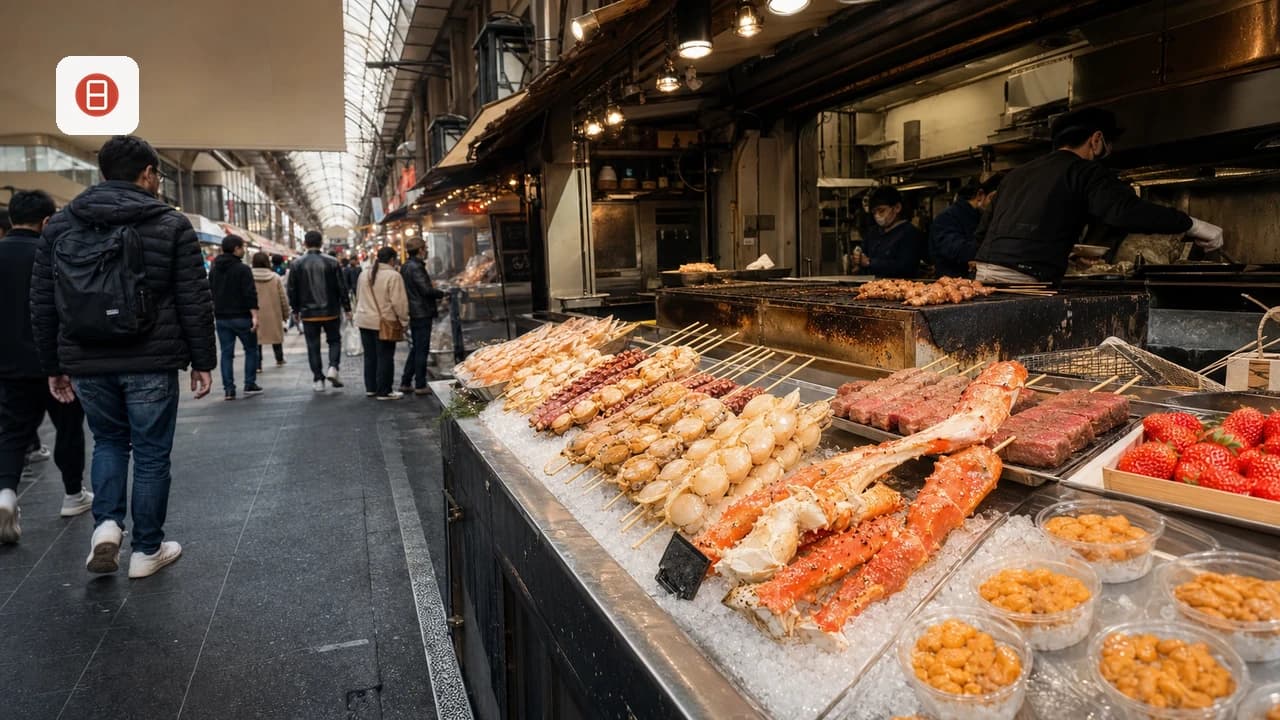
Last updated August 2026, this Kuromon Ichiba Market food guide is built for grazing rather than sitting down for one big meal. Osaka's covered arcade near Nippombashi Station packs roughly 150 stalls into a 600-meter stretch, from grilled scallops to bluefin tuna and Kobe beef skewers. Expect crowds by late morning, cash-only counters mixed with card readers, and a few rules about where you can actually eat what you buy.
Getting to Kuromon Ichiba Market: Nippombashi Station and Timing
Kuromon Ichiba sits a three-minute walk from Nippombashi Station, on the Sakaisuji and Sennichimae subway lines. Leave via Exit 10 and the covered arcade in Chuo Ward starts almost immediately. Walking from Namba Station instead takes about 10 minutes through Shinsaibashi's shopping streets, a route that pairs well with a stop in Dotonbori. Locals often call the market Osaka's Kitchen, since many of the city's restaurants still source ingredients here wholesale. Timing matters more than the walk. The getting around Osaka guide covers subway passes and IC card top-ups for reaching Nippombashi from anywhere else in the city. Most visitors base themselves near Namba or Shinsaibashi for exactly this kind of walkability, and the best areas to stay in Osaka guide breaks down those neighborhoods in detail.
- 8:00 AM: a handful of stalls start prepping and serving before the main rush.
- 9:00 AM–11:00 AM: the calmest window, ahead of the mid-morning tour groups.
- 3:00 PM–4:00 PM: some seafood stalls discount stock they want to clear before closing.
- Most stalls run roughly 9:00 AM–5:00 PM, and many family-run counters close on Sundays or Wednesdays, so a Sunday visit means fewer options.
The Kuromon Ichiba Market Food Guide Hit List: What to Eat
Kuromon Ichiba anchors a good chunk of the wider Osaka food guide, and grazing here rewards flexibility over a fixed meal plan. Records date the market's formal opening to 1902, when it took the 'Black Gate' nickname from the nearby Enmyoji Temple's black gate, which burned down in 1912. Bluefin tuna is the signature draw, sold as akami, the leaner deep-red cut, and toro, the fattier belly cut, at counters such as Maguroya Kurogin. Grilled scallops are popped open, seasoned with butter and soy sauce, and cooked to order on a tabletop grill. Uni, served raw in the shell, sits at the pricier end of the seafood counters and is best eaten within minutes of purchase. Wagyu and Kobe beef skewers are the market's clearest splurge item. Takoyaki stalls, including the well-known Takoyaki Wanaka chain, sell a full tray fresh off the griddle. A few finds sit outside the seafood-and-meat core: tako tamago, a skewered baby octopus stuffed with a quail egg, seasonal white strawberries, and a Hokkaido-cream-filled croissant sold from a corner stall near one of the market's intersections.
The splurge items—Wagyu or Kobe beef skewers (¥3,000–¥4,000)—need a place to sit while you eat, since the market prohibits eating while walking through the arcade.
- Grilled scallops: ¥400–¥600 each, cooked to order with butter and soy sauce.
- Bluefin tuna (akami and toro): sold by the piece or as a sashimi tray, including at Maguroya Kurogin.
- Wagyu or Kobe beef skewers: roughly ¥3,000–¥4,000, the market's clearest splurge item.
- Takoyaki: about ¥400–¥500 for a full tray, including from the Takoyaki Wanaka stall.
- Oden: about ¥800 per bowl, a rare hot, broth-based option in a mostly grilled-and-raw market.
- Tako tamago, seasonal white strawberries, and a Hokkaido-cream croissant, for something outside the seafood-and-meat core.
Splurge vs. Save: A Price Decision Matrix for Kuromon Ichiba
Prices at Kuromon Ichiba swing hard between a ¥400 snack and a ¥4,000 skewer, so it helps to decide upfront where the splurge is worth it. Quick snacks under ¥1,000 cover most of the market's street-food identity: takoyaki, a single grilled scallop, a bowl of oden. Mid-range tastes between ¥1,000 and ¥3,000 usually mean sitting briefly at a counter, such as a sashimi tray or a seat at Maguroya Kurogin. Anything over ¥3,000 is a deliberate splurge, and Wagyu or Kobe beef skewers are the clearest example of that category.
Visitors seeking fresh seafood should arrive between 9:00 AM and 11:00 AM, but those prioritizing prices can shop 3:00 PM–4:00 PM when some stalls discount stock before closing, though selection shrinks and crowds remain—a timing choice between quality and savings.
| Category | Examples | Typical Price |
|---|---|---|
| Quick snacks (under ¥1,000) | Takoyaki tray, single grilled scallop, oden bowl | ¥400–¥800 |
| Mid-range tastes (¥1,000–¥3,000) | Sashimi tray, a seat at Maguroya Kurogin | ¥800–¥3,000 |
| Sit-down splurges (over ¥3,000) | Wagyu or Kobe beef skewers | ¥3,000–¥4,000 |
Market Etiquette: No Walking While Eating and the Information Center
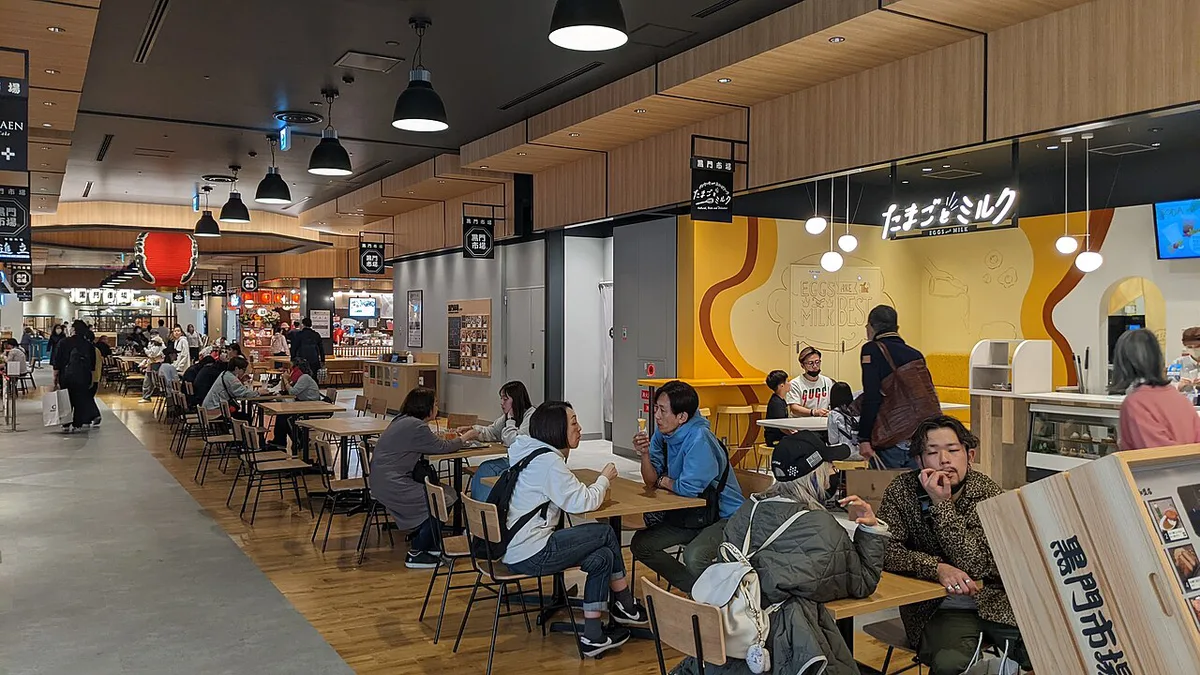
Kuromon Ichiba enforces one clear rule: finish your food before you keep moving. Buy from a stall, step to the side, and eat there rather than walking the arcade with food in hand. A few stalls, including Maguroya Kurogin, keep a handful of counter seats for exactly this reason. When no stall-side seating is free, head to the market's Information Center, which has communal tables for food bought anywhere in the arcade. That same Information Center doubles as a rest stop, with restrooms and a place to regroup between stalls. Few public trash cans line the walkway, so plan to carry wrappers and skewer sticks until a bin turns up.
Budget Hacks: The Market Supermarket and the Late-Afternoon Window
Street-facing stalls are not the cheapest way to eat at Kuromon Ichiba. A supermarket inside the arcade, commonly signed as Kuromon Ichiba Pantry or Nakagawa, sells pre-packaged sashimi trays and fruit boxes for less than the counters facing the main walkway. Grabbing a box there is a practical way to eat well without paying stall prices, then carrying it to the Information Center to sit. Timing shifts prices too: some seafood stalls start discounting stock between 3:00 PM and 4:00 PM as they clear the day's catch before closing, though the fullest selection is still in the morning. Layout matters as well. The busiest single stretch runs along the main covered walkway between the market's two ends, while the quieter side alleys branching off it often carry similar seafood at gentler prices with shorter queues.
Dietary Navigation: Vegetarian and Vegan Realities at Kuromon Ichiba
Kuromon Ichiba is built around fresh seafood and grilled meat, so vegetarian and vegan travelers should expect a genuinely difficult market to navigate. Even dishes that look plant-based, such as oden broth, are typically built on a fish-based dashi stock. Produce stalls sell fruit and vegetables outright, and pickle shops sell traditional Japanese pickles without meat or fish, which gives non-meat-eaters a narrow but real path through the arcade. For a fuller list of where to eat reliably in Osaka without meat or fish, the vegetarian and vegan food in Osaka guide covers specific restaurants and dishes beyond the market.
Where to Go Next: Dotonbori, Shinsekai, and the Rest of Osaka's Food Scene
Treat Kuromon Ichiba as one stop inside a longer day of eating around Osaka, not the whole day itself. Dotonbori is within easy walking distance and makes a natural dinner stop after an afternoon of grazing at the market. The Dotonbori Food Guide: What to Eat and Where to Queue in Osaka lays out where to eat there. Travelers chasing Osaka's grilled and stewed beef specialties can follow up with the doteyaki and horumon guide, which covers dishes the market does not really serve. Kushikatsu fans should head to Shinsekai next. The Kushikatsu in Shinsekai Osaka: The Complete Guide to Skewers, Etiquette, and Where to Eat details that district's deep-fried skewer culture. When a sit-down restaurant meal appeals more than stall food on a given night, the best restaurants in Osaka guide has options citywide. Kuromon Ichiba also sits close enough to central Osaka's sightseeing to pair with a stop on the Osaka attractions guide.
Frequently Asked Questions
Is Kuromon Ichiba too touristy to be worth visiting?
Kuromon Ichiba draws heavy foot traffic, especially after mid-morning, but it keeps a working wholesale trade with Osaka restaurants alongside the tourist crowds. Visiting close to the 9:00 AM opening avoids the busiest window and still catches the freshest seafood of the day.
Can you pay by credit card at Kuromon Ichiba?
More stalls now accept cards and IC transit cards such as ICOCA or Suica than in past years. Many small, family-run vendors remain cash-only, though, so carry yen as backup for smaller purchases.
Are there vegan or vegetarian options at Kuromon Ichiba?
Options are limited, since most dishes center on seafood, meat, or a fish-based dashi broth. Produce stalls and pickle shops offer a narrow path through, and the vegetarian and vegan food in Osaka guide lists more reliable spots citywide.
What is the best time to visit Kuromon Ichiba Market?
Arrive between 9:00 AM and 11:00 AM for the calmest browsing and the freshest seafood, since tour groups tend to build up by midday. A handful of stalls open as early as 8:00 AM, and some close on Sundays or Wednesdays, so weekday mornings offer the widest selection.
How much time should you set aside for Kuromon Ichiba?
An hour to 90 minutes covers a solid grazing loop through the market's main stalls. See the one day in Osaka guide for how that fits alongside Dotonbori and other sightseeing on a tight schedule.
How does Kuromon Ichiba fit into a longer Osaka trip?
On a multi-day trip, it works well as a first-morning stop before heading into Namba or Shinsaibashi for the rest of the day. Check the how many days in Osaka guide for where a market visit like this fits across a longer itinerary.
Free: The Osaka Essentials guide
Top things to do, where to stay, a perfect day plan, getting around, and the best time to go — a Osaka mini-guide you can take offline.
You might also like


Continue reading
More guides you'll find useful