

Kochi Katsuo no Tataki: Where to Eat and How to Sear Your Own Bonito
A 2026 guide to Kochi katsuo no tataki: the salt-and-garlic way to eat it, top restaurants, and where to sear your own bonito over straw fire.
On this page
Last updated August 2026, this guide covers Kochi katsuo no tataki, the straw-seared bonito dish that anchors Tosa cuisine. Kochi eats it differently than the rest of Japan, favoring salt and thick-cut raw garlic over the ponzu sauce found elsewhere. The sections below cover ordering etiquette, the best restaurants and DIY dojos, and which bonito season fits your palate.
What Makes Kochi Katsuo no Tataki Different
Katsuo no tataki starts with thick-cut bonito sashimi, seared only on the outside over an open flame. The center stays rare, so each slice carries the char of the sear next to the texture of raw fish. In Kochi, that sear comes from a fire fed by dried rice straw, a method locals call warayaki. Straw burns at roughly 1,470 to 1,830 degrees Fahrenheit, hot enough to crisp the surface in seconds while the inside stays cool. Restaurants elsewhere in Japan sometimes finish bonito over gas instead. Gas chars the fish but skips the smoke that straw adds, so a gas-seared version is not quite the same dish. Tataki itself refers to the seasoning step, not the fire. The word comes from tataku, meaning to hit or pound, describing how salt and garlic get worked into the seared surface by hand. One often-repeated account credits Sakamoto Ryoma, the Kochi-born samurai of the late Edo period, with bringing open-flame searing home after seeing similar cooking in Nagasaki. A second, more practical origin story holds that Kochi fishermen seared and pounded bonito aboard their boats. Beating in salt masked the smell of fish losing freshness before refrigeration existed. Kochi fishers still catch bonito with ipponzuri, a centuries-old pole-and-line method that lands each fish individually rather than by net, sometimes hauling in fish up to £11 each. This dish anchors the broader Kochi Food Guide: Best of Tosa, Japan, and it earns a closer look on its own.
How to Eat Katsuo no Tataki Like a Local
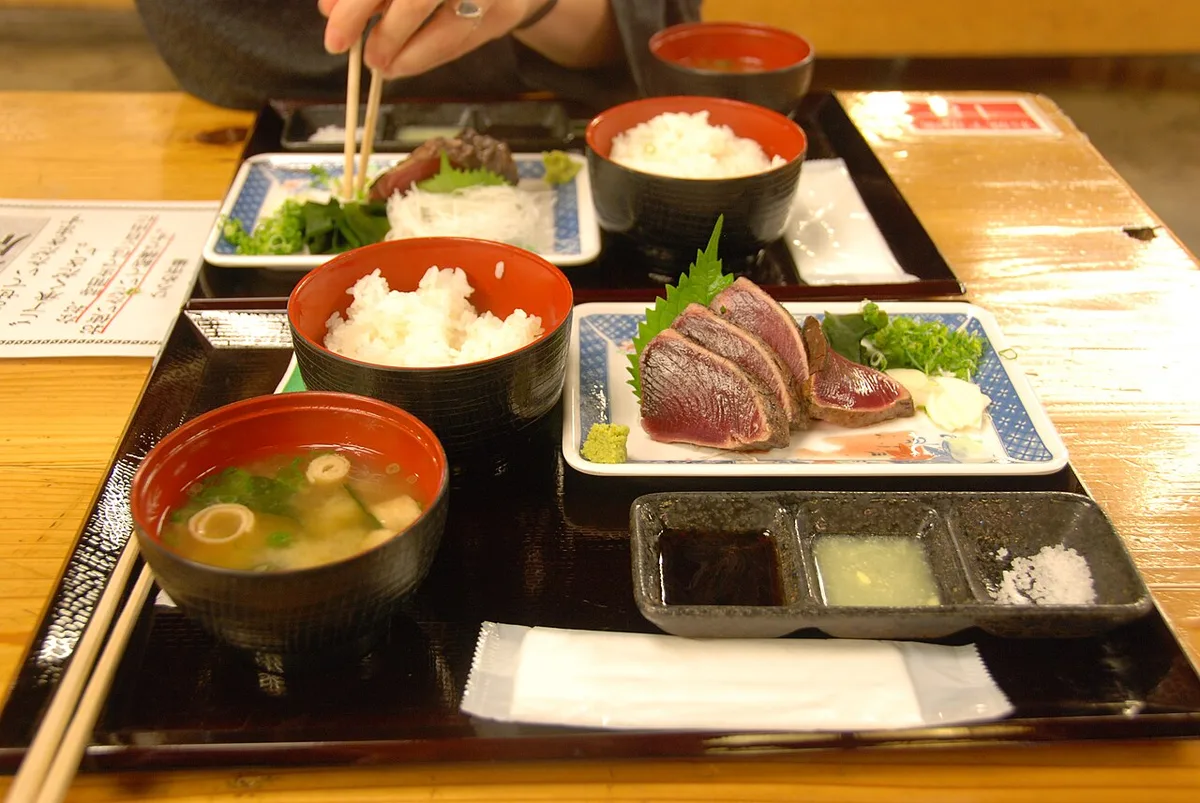
Order katsuo no tataki with salt first, the way Kochi eats it. Ponzu, a citrus soy sauce, is the norm elsewhere in Japan. Kochi's version, called shio-tataki, uses salt alone and lets the smoke from the straw speak for itself. Myojinmaru, a Kochi restaurant group, is generally credited as the restaurant that turned shio-tataki into the standard way Japan now eats bonito. The salt itself is often sourced from Kuroshio-cho on Kochi's coast. Condiments do the rest of the work. Press a thick slice of raw garlic onto the seared fish, add a pinch of salt, and eat it in one bite. Some restaurants, including Sake Brewery Izakaya Horikawa, also plate Tosa nuta, a garlic-leaf and white-miso paste, as a fourth way to taste the same fish. Tataki describes this hands-on seasoning step, not the fire. Diners and cooks alike pound salt and garlic into the seared surface, working flavor into the flesh instead of dipping the fish into a sauce. Katsuo no tataki often appears as one course inside a full sawachi cuisine spread, the shared banquet-style meal Kochi is known for. When a restaurant serves the sauce version instead of salt, it is usually a yuzu ponzu made from Kochi-grown citrus. The yuzu and Tosa sake guide covers that citrus and its sake pairings in more depth.
At 1,470 to 1,830 degrees Fahrenheit, straw creates a crisped exterior perfect for pounding in salt, which explains why Kochi tataki uses hand-pounded seasoning rather than sauce-dipping—the heat has already created the ideal textured surface.
- Salt (shio) - the Kochi default, sprinkled directly onto the seared fish
- Raw garlic - thick-sliced and pressed onto each piece
- Ginger - sliced thin, milder than the garlic
- Green onion - chopped and scattered over the plate
- Tosa nuta - a garlic-leaf and white-miso paste at select restaurants
- Yuzu ponzu - the citrus-soy option some restaurants offer instead of salt
Where to Eat: Hirome Market, Sit-Down Restaurants, and Sake Pairings
Hirome Market sits next to Kochi Castle and packs roughly 65 stalls under one roof, with shared tables where strangers eat side by side. Myojinmaru and Yairo-tei both run tataki stalls inside the market. Locals are known to drink at these tables even in daylight hours. The Hirome Market guide breaks down individual stalls in more detail. Three sit-down restaurants offer a calmer alternative, each with its own focus, compared in the table below. Myojinmaru Hanare sits about 18 minutes on foot, or 8 minutes by car, from JR Kochi Station. It opens 17:00 to 23:00 and closes Wednesdays. Sake Brewery Izakaya Horikawa's tasting covers salted tataki, sauce tataki, Tosa nuta, and silver-skin sashimi in one order. It opens 17:30 to 23:30 on weekdays, and 17:00 to 22:30 on Sundays and holidays. It closes Mondays plus the second and fourth Sunday of each month. Tosa Ryori Tsukasa Kochi Honten, open since 1917, selects bonito in the £5.5–£7.7 range for consistent fat content and keeps a cheaper set-meal tataki on its lunch menu. Weekend evenings get crowded at all three, so calling ahead is worth the extra step.
| Venue | Atmosphere | Price | Must-Order |
|---|---|---|---|
| Hirome Market | Food hall, roughly 65 stalls, shared tables | Roughly ¥500-¥1,500 per stall plate | Tataki from the Myojinmaru or Yairo-tei stalls |
| Myojinmaru Hanare | Sit-down restaurant near Kochi Castle | ¥1,958 for 12 salt-and-sauce slices; ¥2,728 for the self-grill Experience | Katsuo Tataki with Salt and Sauce |
| Sake Brewery Izakaya Horikawa | Retro izakaya inside an 80-year-old sake brewery | From ¥968 per person; ¥2,380 for a 3-person tasting | Bonito eating comparison, four preparations |
| Tosa Ryori Tsukasa Kochi Honten | Traditional restaurant, open since 1917 | ¥1,480 evening bonito tataki | Bonito Tataki |
Sear Your Own Bonito: Tosa Tataki Dojo and Kuroshio Kobo
Tosa Tataki Dojo, also known as Katsuobune, serves exactly one dish: bonito you sear yourself. Staff hand over a skewered fillet and point you toward a fire built from dried rice straw. Plunge it in, hold it for about ninety seconds, and a staff member slices the fillet once it is done. Add garlic, ginger, and salt yourself, then eat it standing at the counter. The dojo sits roughly 10 minutes by car or taxi from Katsurahama Beach, one of the stops in the Kochi attractions guide. It opens 10:30am to 3:00pm daily and closes early whenever that day's bonito runs out. A single seared dish costs ¥1,500. A set meal with rice and sides costs ¥1,800. Instructions are posted in English and Chinese for visitors who don't read Japanese. No reservation has typically been required here, but confirm that policy is still current before building a day around it, since walk-in rules can change without notice. Kuroshio Kobo, in Nakatosa Town on Kochi's western coast, runs the same straw-searing experience from April through October. Reservations are required there, unlike at the dojo near Katsurahama. It opens 10:30am to 2:00pm during that window and closes on the second Thursday of each month. The experience itself costs ¥800 per group, on top of the bonito's market price that day. Seating overlooks the ocean, and the on-site ryokan, Kuroshio Honjin, adds a hot spring bath for anyone staying longer.
Tosa Tataki Dojo charges ¥1,500, matching high-end Hirome Market plates and actually exceeding Sake Brewery Izakaya Horikawa's from ¥968—proving hands-on experiences command premium prices.
Other Bonito Dishes to Try Alongside Tataki
Katsuo no tataki is the headline dish, but Kochi's bonito menu goes further. Several other preparations show up on the same izakaya and market menus, each using a different part or cut of the same fish.
- Tosa-maki - a sushi roll filled with seared bonito, raw garlic, and perilla leaf
- Harambo - the fatty bonito belly, broiled with salt; only one piece comes from each fish
- Bonito sashimi - raw slices, sometimes served with the silver skin left on
- Chichiko - bonito heart, stewed in ginger and soy or grilled with salt
- Shuto - a fermented paste made from salted bonito organs, usually ordered alongside sake
Hatsu-Katsuo vs Modori-Katsuo: Choosing Your Season
Kochi restaurants serve bonito throughout the year, but the fish itself changes with the season. Hatsu-katsuo, the spring catch, runs roughly April through June. It swims north still lean from winter, giving it a lighter, cleaner texture. Order it with extra ginger, which cuts through the milder flavor without overwhelming it. Modori-katsuo, the autumn catch, runs roughly September through November as the fish heads south again and builds fat reserves. That fat gives modori-katsuo a richer texture, closer to fatty tuna, and it pairs well with garlic and salt, or with the Tosa nuta served at izakayas like Horikawa. Early summer and late fall are generally the two peak windows for flavor, so travelers with flexible dates can plan around either season.
| Season | Months | Texture | Best Pairing |
|---|---|---|---|
| Hatsu-katsuo (spring catch) | April-June | Leaner, lighter | Ginger and salt |
| Modori-katsuo (autumn catch) | September-November | Fattier, richer, closer to fatty tuna | Garlic and salt, or Tosa nuta |
Planning Your Visit: Access, Where to Stay, and Mistakes to Avoid
Kochi Ryoma Airport connects to central Kochi by shuttle in roughly 30 to 40 minutes. Most bonito restaurants cluster downtown near JR Kochi Station, especially around the Harimayabashi arcade. Hirome Market and several sit-down restaurants sit within walking distance of that same downtown core. For a place to stay, OMO7 Kochi by Hoshino Resorts and Dormy Inn Kochi both keep travelers close to the downtown food scene and its night markets. Dried bonito flakes, known as katsuobushi, are made in Kochi and sold at souvenir shops around the city. They make a compact way to bring the same fish home. If the trip falls on a Sunday, add the Kochi Sunday Market Travel Guide to the same day's plans, before or after a tataki lunch. Hours and prices above reflect 2026 listings; confirm them before visiting, since seasonal closures and small price updates happen without much notice.
- Ordering plain sashimi when the tataki version sits on the same menu
- Skipping the raw garlic - it is part of the dish, not a garnish to set aside
- Arriving at Hirome Market after 7pm on a weekend with no seating plan, since tables fill fast
Frequently Asked Questions
What's the difference between katsuo no tataki and regular bonito sashimi?
Regular sashimi is raw on every surface. Katsuo no tataki is seared on the outside first, usually over a straw fire, so the outer layer is cooked and smoky while the center stays rare.
Should you order katsuo no tataki with salt or ponzu in Kochi?
Order it with salt first. Kochi calls this shio-tataki, and it is the local default, paired with raw garlic. Ponzu is more common in the rest of Japan, though some Kochi restaurants also offer it.
Do you need a reservation to sear your own bonito in Kochi?
Tosa Tataki Dojo near Katsurahama Beach has typically not required one, though it's worth confirming before you go. Kuroshio Kobo in Nakatosa Town does require a reservation, and it only runs the experience from April through October.
When is the best season for katsuo no tataki in Kochi?
Hatsu-katsuo, the leaner spring catch, runs roughly April through June. Modori-katsuo, the fattier autumn catch, runs roughly September through November. Neither is wrong, so pick based on whether you prefer a lighter or richer bite.
How much does katsuo no tataki cost in Kochi?
Prices vary by venue and format, but stay in a fairly narrow band. Sake Brewery Izakaya Horikawa's tasting starts from ¥968 per person, Tosa Ryori Tsukasa's evening tataki runs ¥1,480, and the DIY dojo near Katsurahama charges ¥1,500 to ¥1,800 per serving.
Free guide: Japan's Hidden Gems
12 under-the-radar places beyond Tokyo & Kyoto — with the best season to visit each and a local tip you won't find in the guidebooks.
You might also like


Continue reading
More guides you'll find useful


