Where To Stay in Kochi, Japan: 2026 Guide
Discover where to stay in Kochi, Japan — area breakdowns, hotel types, and booking tips for Kochi City, Shikoku, covering the castle district and beyond.
On this page
Figuring out where to stay in Kochi comes down to which part of this Shikoku city matches your travel style. The compact center clusters around the castle, the covered arcades, and the beloved Hirome Market. Most visitors settle into one of three zones: the castle district, the JR Station area, or the quieter coastal side near scenic Katsurahama.
Kochi rewards walkers more than most Japanese cities of its size. The Tosa Electric Railway streetcar network ties the central zones together, so moving between neighborhoods takes under fifteen minutes. Knowing which area fits your pace and priorities saves a lot of unnecessary backtracking during your stay.
Where to Stay in Kochi at a Glance
Three main zones handle most visitor accommodation in Kochi City. Each sits in a different relationship to the main sights, the tram network, and the evening food scene. Picking the right one depends on your pace, your budget, and how many days you have.
Kochi's accommodation market is smaller than in major cities like Kyoto or Osaka, so rooms fill faster during peak season. Choosing your zone early is a practical step, not just a planning preference. The festival and holiday calendar shapes supply noticeably more than in larger Japanese cities.
The Tosa Electric Railway streetcar connects the station and the castle district with frequent departures throughout the day. A single ride costs roughly 200 yen, and a day pass is worth buying if you plan to cross the city more than twice. For a complete picture of getting between zones, our Kochi getting around guide covers trams, buses, and the airport connector. Budget travelers often gravitate toward the station area for value, while culture-seekers favor the castle district for atmosphere.
- Castle District — Obiyamachi and Harimayabashi
- Walking distance to Kochi Castle and the famous Hirome Market awaits here.
- The covered Obiyamachi and Harimayabashi arcades sit just outside most hotels in this zone.
- First-time visitors who want Tosa nightlife and local izakaya culture feel most at home here.
- A mix of ryokan, small guesthouses, and mid-range business hotels fills this neighborhood.
- JR Kochi Station Area
- Around ten minutes north of the castle by tram or on foot via a direct route.
- Business hotel chains cluster here, making quick arrivals and early departures straightforward to manage.
- A practical pick for transit-focused travelers or those catching early buses and trains.
- Rates run slightly lower than the castle district, which matters on multi-night stays.
- Katsurahama and the Coastal Side
- About twelve kilometres south of the city center, so a bus journey is always needed.
- The area suits travelers seeking quieter and more scenic surroundings away from urban crowds.
- Katsurahama Beach and the Sakamoto Ryoma statue are within easy walking reach from here.
- Accommodation runs mostly to resort-style inns and smaller guesthouses rather than chain hotels.
Kochi Castle District and the Arcades
Staying close to historic Kochi Castle puts you within easy walking distance of the city's best-known landmarks. The castle grounds open early, allowing a quiet stroll before most tourists arrive for the day. Harimayabashi, the small red bridge made famous by a local folk song, sits within the same walkable corridor.
Kochi Castle is one of only twelve original castles still standing in Japan, making it a genuine highlight. Staying nearby lets you arrive before the tour groups and enjoy the donjon views over the city in calm. Our Kochi Castle guide covers entry times, seasonal highlights, and the best angles for clear-day views.
The real evening draw is the Hirome Market, just a few minutes' walk south of the castle. This indoor food hall fills with locals most nights of the week and stays buzzing well into the evening. It remains one of the most authentic spots in Kochi to eat katsuo no tataki straight from the kitchen.
The Obiyamachi and Harimayabashi covered arcades extend east and west through this neighborhood, offering shelter from Kochi's frequent rain. Evening along the arcades brings yakitori counters, sake bars serving Tosa-brewed rice wine, and the cup-passing ritual known as enjohin. The nightlife here skews local and genuine rather than tourist-facing, giving the district real atmosphere even on quieter weeknights.
JR Kochi Station: A Transit-Friendly Base
JR Kochi Station anchors the northern end of the tram corridor, roughly ten minutes from the castle district by streetcar. Business hotel chains cluster here, making it a practical choice for travelers arriving by Limited Express from Okayama. Checking in here after a long journey means your room is seconds from the platform.
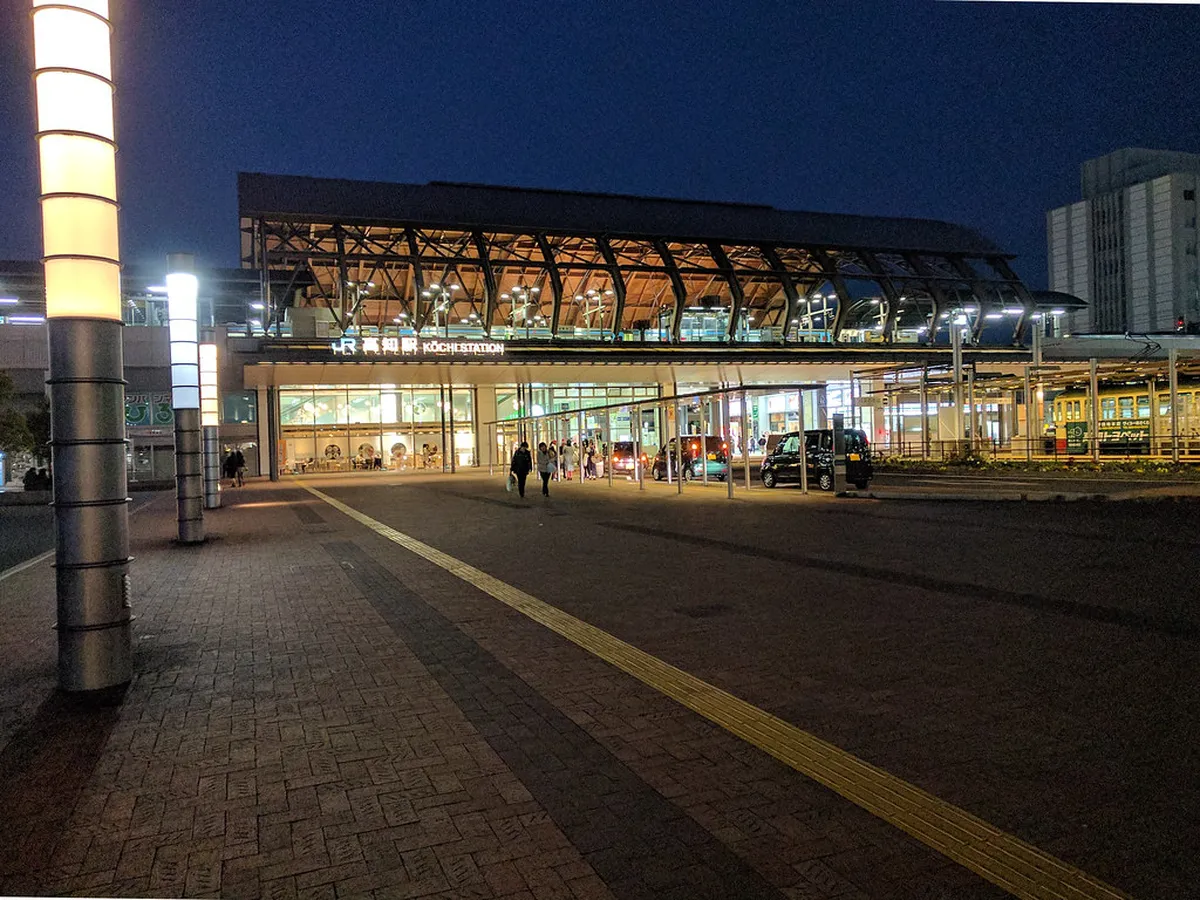
The station area has fewer atmospheric restaurants than the castle district, but convenience stores and small ramen shops fill the gap. Buses to Katsurahama and the Ryoma Airport liner also depart from stops close to the station, simplifying multi-day planning. Our Kochi itinerary guide shows how to structure days effectively from this north-of-center base.
Budget and mid-range business hotels dominate this zone, with compact rooms, fast Wi-Fi, and coin laundry at reliable prices. Rates tend to run slightly lower than equivalent options in the castle district, which adds up on longer stays. Solo travelers and business visitors make up a large share of guests in this part of the city.
Katsurahama and the Coastal Side
Katsurahama lies roughly twelve kilometres south of central Kochi, facing the Pacific along a sheltered rocky cove. The beach is known for its curved dark-sand shore, the Sakamoto Ryoma statue, and the Tosa dog breeding centre. Staying near the coast means quieter mornings and better access to this stretch of southern Shikoku scenery.
Buses run from the Harimayabashi stop in central Kochi out to Katsurahama in around 30 to 40 minutes. Plan your city excursions in advance if you base yourself here, since the last buses back run in the early evening. The Katsurahama Beach guide covers bus access, entry points, and nearby draws such as Ryugado Cave further east.
Accommodation near the coast leans toward resort-style inns and smaller guesthouses rather than large chain hotels. The trade-off is genuine: you gain quiet and coastal scenery but give up tram convenience and the evening market atmosphere. This base works best for travelers on a longer stay who have already spent time exploring the city center.
Business Hotels and Ryokan in Kochi
Business hotels dominate Kochi's accommodation scene, with clean, compact rooms, fast Wi-Fi, and coin laundry at reliable prices. Most are two to four-star properties following the standard Japanese business hotel format: efficient, well-equipped, and consistent. They make the most sense for travelers who plan to spend their days out exploring and just need a solid base.
Ryokan in the Kochi area often serve Tosa-style kaiseki meals featuring katsuo no tataki and local river fish. A ryokan stay adds genuine cultural texture, especially if you choose the half-board rate and use the communal bath. Our Kochi Food Guide: Best of Tosa, Japan covers the same local ingredients you will find both at ryokan dinners and the Sunday market.
Smaller guesthouses and family-run inns fill the middle ground, particularly in the castle district and near Harimayabashi. Prices across all types drop noticeably outside the Yosakoi Festival window in August, when demand spikes across the city. Booking six to eight weeks ahead is wise if your dates overlap with the festival or a national holiday.
See our Kochi tourism attractions guide for the broader city overview.
Frequently Asked Questions
Which area in Kochi is best for first-time visitors?
The castle district, centered on Obiyamachi and Harimayabashi, gives first-time visitors the strongest base. You can walk to Kochi Castle, lively Hirome Market, and the Sunday market without needing any transport. The lively evening scene along the arcades also provides an immediate sense of local Tosa culture and nightlife.
Is the JR Kochi Station area a good place to stay?
Yes, the station area works well for travelers who value quick transport connections above all else. Business hotels here are often a step more affordable than castle district options, and trams run frequently into the center. It also sits close to the airport bus stop, simplifying arrivals and early departures.
How far is Katsurahama from central Kochi?
Katsurahama sits roughly twelve kilometres south of central Kochi, taking around 30 to 40 minutes by bus from the Harimayabashi stop. Staying near the coast is quieter and scenic but requires planning your city trips in advance. It suits travelers who prioritise seaside atmosphere over walkability to the main attractions.
When should I book accommodation in Kochi?
Book well in advance if you are visiting during the Yosakoi Festival in August, when hotels across the city fill quickly and prices rise. The Best Time To Visit Kochi, Japan: 2026 Guide for a balance of good weather and available rooms is late spring or early autumn. Outside peak periods, booking two to four weeks ahead is usually sufficient.
Do ryokan in Kochi include meals?
Many ryokan in and around Kochi offer half-board rates covering dinner and breakfast, typically featuring Tosa-style cuisine such as katsuo no tataki and seasonal river fish. Some properties also offer room-only rates at lower prices, so confirm the meal plan when booking. The cultural experience of a ryokan dinner adds real value to any stay here.
Kochi rewards those who choose their base thoughtfully, since the three main zones offer genuinely different daily rhythms. First-time visitors gain the most from the castle district, where the city's best food, nightlife, and landmarks cluster within walking distance. Those prioritising transit ease should choose the station area, and anyone seeking a slower coastal pace will find it at Katsurahama.
Book as early as reasonably possible if your stay overlaps with a major festival or national holiday. Kochi is a mid-sized city with limited accommodation inventory compared to larger Japanese cities, so rooms fill faster than many travelers expect. Whichever neighborhood you choose, the city's distinctive Tosa culture and extraordinary food scene make the planning effort entirely worthwhile.
Free guide: Japan's Hidden Gems
12 under-the-radar places beyond Tokyo & Kyoto — with the best season to visit each and a local tip you won't find in the guidebooks.
You might also like


Continue reading
More guides you'll find useful