Kochi Sunday Market Travel Guide
Discover Kochi's Sunday Market — 300+ years of stalls selling yuzu, Tosa knives, and imoten on Otesuji Street. Hours, tips, and what to buy in 2026.
On this page
Every Sunday since 1690, vendors have lined Otesuji Street in Kochi City with baskets of citrus, handmade knives, and fresh seasonal produce. The Kochi Sunday Market — locally called Nichiyō-ichi — stretches roughly one kilometre directly below the ramparts of historic Kochi Castle. With up to 20,000 visitors on a busy Sunday, it ranks among the largest street markets in Japan.
The market draws a notably local crowd compared with Tokyo's or Kyoto's tourist-heavy food halls. Farmers from the surrounding Tosa plain bring seasonal vegetables rarely found in supermarkets, from thumb-sized sweet tomatoes to oversized buntan citrus. That mix of everyday commerce and genuine regional character is what makes exploring Kochi's top attractions so rewarding.
This guide covers the market's 300-year history, what to eat and buy, how to get there, and the weekday markets most visitors never discover. Whether you have two hours or a full morning, the tips below help you plan a smoother visit.
Three Centuries of Sunday Trading
The Kochi Sunday Market traces its roots to 1690, when YAMAUCHI Toyomasa, the fourth lord of the Tosa Domain, authorized fixed-date markets along the city's roads. Originally known as Higiri-ichi, these markets transitioned to a weekly Sunday schedule from 1876 when Sunday became a public holiday for government offices. By 1926, the full weekly structure — Sunday, Tuesday, Thursday, and Friday — was formally organized and has continued ever since.
The Sunday Market runs along Otesuji Street, a wide east-west boulevard that stretches directly below Kochi Castle. On a typical Sunday, roughly 350 stalls occupy the road, selling everything from fresh produce to pottery and forged cutlery. City officials describe it as an open-air department store, and the comparison holds — there is almost nothing you cannot find here.
Kochi City is often called the 'City of Markets' precisely because the gairoichi (street markets) remain central to daily life here. These are not heritage events staged for tourists; they are working markets that local families rely on each week. That everyday quality sets the Sunday Market apart from more polished, tourist-oriented market experiences elsewhere in Japan.
What to Eat at the Kochi Sunday Market
Food is the main reason most visitors come, and the range is genuinely impressive for a street market. Start near the eastern entrance, where stalls pile up seasonal vegetables: small sweet tomatoes, knobby fresh ginger, and the famous yuzu citrus. Buy yuzu raw, sip it as a pressed juice, or pick up a jar of yuzu-kosho paste to take home.
The crowd favourite is imoten — bite-sized sweet potato pieces coated in crunchy tempura batter, sold piping hot from the fryer. Queues build quickly, so join the line before 10:00 for the freshest batch. Another local staple is inakazushi, a country-style vegetable sushi that offers a lighter alternative to raw fish. Our Kochi Food Guide: Best of Tosa, Japan covers more of the region's distinctive dishes in full detail.
Citrus of every shape fills produce stalls from autumn through spring. The buntan — a Japanese pomelo that grows as large as a grapefruit but tastes notably sweeter — is a Kochi signature worth trying. Vendors are generous with samples, so it is easy to taste before committing to a whole bag.
- Imoten (sweet potato tempura)
- Hot, crispy sweet potato bites sold by dedicated street vendors near the market entrance.
- Best enjoyed fresh from the fryer before the queue peaks around mid-morning.
- A small serving costs roughly 100 to 200 yen, making it ideal for a market snack.
- Yuzu and buntan citrus
- Kochi produces some of Japan's finest yuzu and oversized buntan pomelo varieties.
- Sample free slices at produce stalls before deciding how much to buy.
- Yuzu-kosho paste packs flat and makes one of the most practical souvenirs to carry home.
- Inakazushi (country vegetable sushi)
- A regional sushi style made entirely with pickled and cooked vegetables, not raw fish.
- Sold pre-packed at several stalls along the middle stretch of Otesuji Street.
- Light and filling enough to keep energy up through a full morning of browsing.
- Katsuo tataki (seared bonito)
- Kochi's signature dish is best eaten at the nearby Hirome Market after the Sunday stroll.
- Bonito is seared over rice straw for a smoky crust and a tender, pink centre.
- Order the traditional version with salt and raw garlic for the most authentic flavour.
What to Buy: Crafts, Knives, and Produce
Beyond food, the market is a working showcase of Tosa craftsmanship that surprises most first-time visitors. The most talked-about stalls sell Tosa cutlery — knives, axes, and agricultural tools hand-forged in Kochi's eastern districts using a free-forging technique called jiyu-tanzo. Foreign visitors in particular gravitate toward the red-boxed blade sets, which are distinctive enough to recognise from the street.

Tosa pottery and ceramics appear in clusters along the western half of Otesuji Street. Pieces range from simple everyday cups to intricate glazed bowls; prices generally reflect the maker's experience and reputation. Several vendors also sell handmade copper gardening tools, wooden crafts, and antiques sourced from rural homes across the prefecture.
For practical souvenirs, look for tanuki oil — a traditional Kochi balm with a reputation similar to tiger balm — and small packs of locally dried herbs. Plants, potted seedlings, and cut flowers also appear in volume, reflecting the prefecture's exceptional agricultural climate. Arriving early gives you the widest selection before popular stall items sell out mid-morning.
Kochi's Other Weekly Markets
Most visitors plan around the Sunday Market, but Kochi runs three other weekly markets that offer an even more purely local feel. The Tuesday Market is held along a roughly two-metre-wide waterway, with stalls set up on boards stretched directly across the channel. It attracts fewer tourists than the Sunday edition and leans more heavily toward fresh produce from the surrounding countryside.
The Thursday Market takes place in front of the Kochi Prefectural Office, making it the second-largest market and a lunchtime staple for office workers in the area. The Friday Market runs beneath a JR railway overpass in a residential neighbourhood, drawing almost exclusively local shoppers. If your schedule only allows a weekday visit, Thursday is the most accessible option for travelers staying in central Kochi.
Many visitors find the weekday markets worth seeking out precisely because there is no tour-group competition for the best produce. The four markets share similar categories of goods — citrus, vegetables, ceramics, and crafts — so each visit still feels worthwhile. Together they reinforce why locals call Kochi the City of Markets, a title earned over more than three centuries.
How to Get There and When to Arrive
The market runs along Otesuji Street, which you can reach by boarding Kochi's street tram to the Kochi Castle stop. From Harimayabashi Tourist Bus Terminal, it is a short walk or tram ride east to the main market entrance. Follow Otesuji Street westward and the stalls will guide you naturally toward the castle.
Opening hours run from dawn until approximately 15:00, though stalls at the western end near the castle sometimes pack up earlier. Arriving before 10:00 gives you the freshest imoten, fully stocked produce stalls, and manageable crowd levels. The market operates every Sunday without a scheduled closure day, though individual vendors may occasionally take a break around public holidays.
For navigating the wider city, the Kochi transport guide covers the tram network, day-use passes, and useful stops. Find the full stretch of stalls on the Sunday Market Google Maps listing, which pins the entire length of Otesuji Street. Cash is essential — the vast majority of vendors do not accept IC cards or credit payment.
Nearby Stops to Pair With the Market
The Sunday Market ends naturally at Kochi Castle Travel Guide 2026, a well-preserved Edo-period fortress ranked among the twelve original pre-modern castles still standing in Japan. The main keep was rebuilt in August 1747, and unusually, the full ensemble — keep, palace, and connecting corridor bridge — all survive intact with the original stone walls. Entry costs around 420 yen, and views from the top floor reach over the city toward the Pacific coastline.
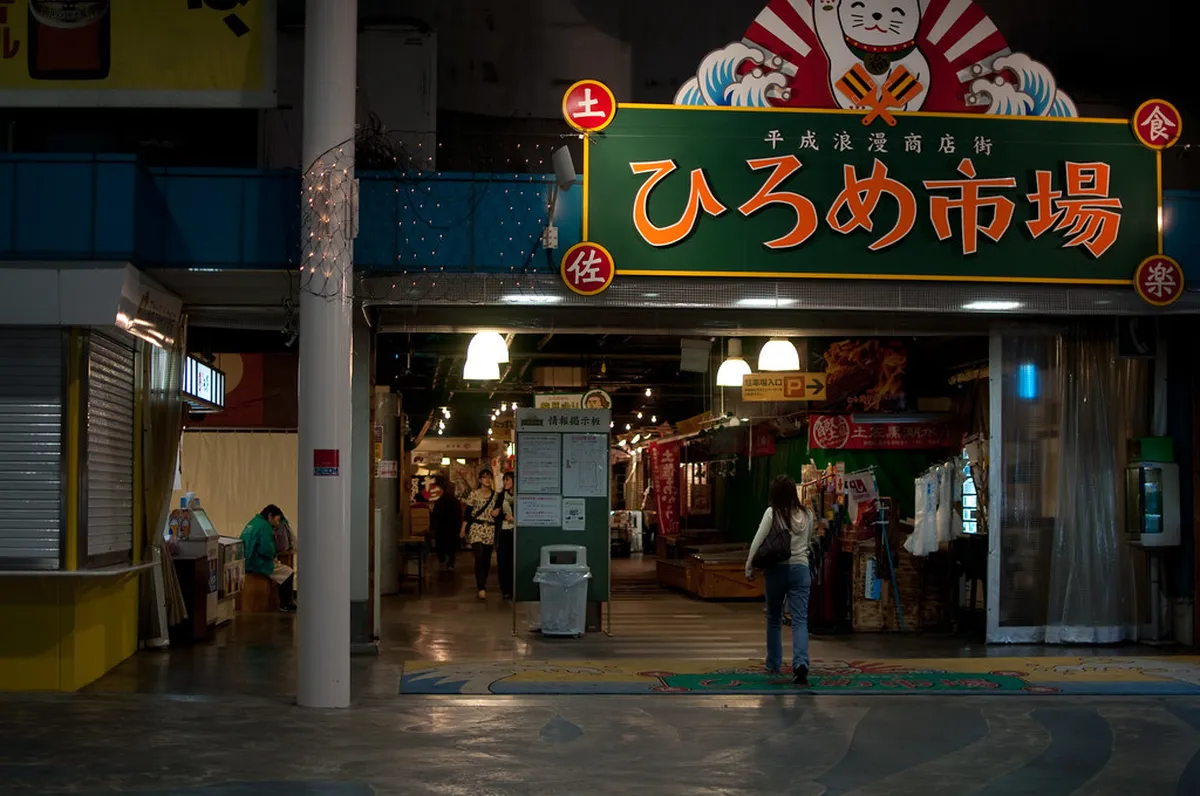
A five-minute walk from the castle sits the Hirome Market, a covered food hall with around 40 small restaurants under one roof. This is the best place to eat katsuo no tataki after the morning market: fresh bonito, flame-seared over straw at the counter, served with salt and raw garlic. Sharing tables with strangers is common and encouraged — the hall's energy at midday is a Kochi experience in itself.
From Hirome, the Obiyamachi Shopping Arcade offers a fully roofed option for souvenir browsing in any weather. The Kochi Yosakoi Information Center at the southern end of the arcade runs a small museum on the Yosakoi festival — launched in Kochi in 1954 — and lets visitors try on dancer costumes. A morning at the Sunday Market, lunch at Hirome, and an afternoon at the castle makes for one of Shikoku's strongest half-day combinations.
Frequently Asked Questions
What time does the Kochi Sunday Market open and close?
The Kochi Sunday Market runs from dawn — typically around 06:00 — until approximately 15:00. Stalls near the castle end tend to pack up earliest, so arrive before 10:00 for the best selection of fresh produce, imoten, and popular craft items. The market operates every Sunday, rain or shine.
Is the Kochi Sunday Market worth visiting?
Yes — the Kochi Sunday Market offers a genuine, low-tourism window into Shikoku's agricultural and craft traditions. With around 350 stalls spanning roughly a kilometre of Otesuji Street, it is one of Japan's largest street markets. The combination of regional food, Tosa knives, and local vendors makes it a highlight of any stay in Kochi.
What is the main market in Kochi?
The Sunday Market (Nichiyō-ichi) on Otesuji Street is Kochi's largest and best-known market, drawing up to 20,000 visitors on busy days. Kochi also runs three other weekly markets: the Tuesday waterway market, the Thursday market near the Prefectural Office, and the Friday market beneath the JR railway overpass.
What should I buy at the Kochi Sunday Market?
Top picks include Tosa cutlery (hand-forged knives in distinctive red boxes), yuzu and buntan citrus, imoten sweet potato tempura, Tosa pottery, and yuzu-kosho paste. For non-edible souvenirs, handmade copper tools, ceramics, and traditional tanuki balm oil are all locally made and easy to pack into a bag.
Can I visit the Kochi Sunday Market if it rains?
Yes — the market runs every Sunday regardless of weather and has done so for over 300 years. Most vendors set up tarps or awnings for shelter, and a light rain often means shorter queues at popular stalls. Bring an umbrella and comfortable waterproof footwear for the most relaxed wet-season visit.
The Kochi Sunday Market is one of those rare experiences that rewards both early risers and casual strollers alike. A dawn arrival gets you the freshest imoten and the warmest welcome from vendors still setting up their stalls. Come mid-morning and you'll find the street in full swing, with the castle's white walls visible from any point along the route.
Pair the market with Hirome Market for lunch and Kochi Castle for the afternoon, and you have one of Shikoku's most satisfying single-day loops. The weekday markets — especially Thursday near the Prefectural Office — are worth noting if your schedule extends beyond Sunday. Plan the rest of your time in the region with our guide to the best day trips from Kochi.
Free guide: Japan's Hidden Gems
12 under-the-radar places beyond Tokyo & Kyoto — with the best season to visit each and a local tip you won't find in the guidebooks.
You might also like


Continue reading
More guides you'll find useful