

Matsuyama Mikan Desserts: Dogo Onsen to Okaido (2026 Guide)
Matsuyama mikan desserts by neighborhood and season: Dogo Onsen soft serve, juice taps, Ehime Taruto, and citrus-picking farms near the city.
On this page
Last updated August 2026. Matsuyama mikan desserts turn Ehime's citrus harvest into soft serve, mochi, and sponge rolls across two shopping districts with different hours. Dogo Onsen keeps its dessert shops near the bathhouse and closes by early evening, while Okaido and Gintengai run later with tap juice and gelato.
Matsuyama's Place in Ehime's Citrus Scene
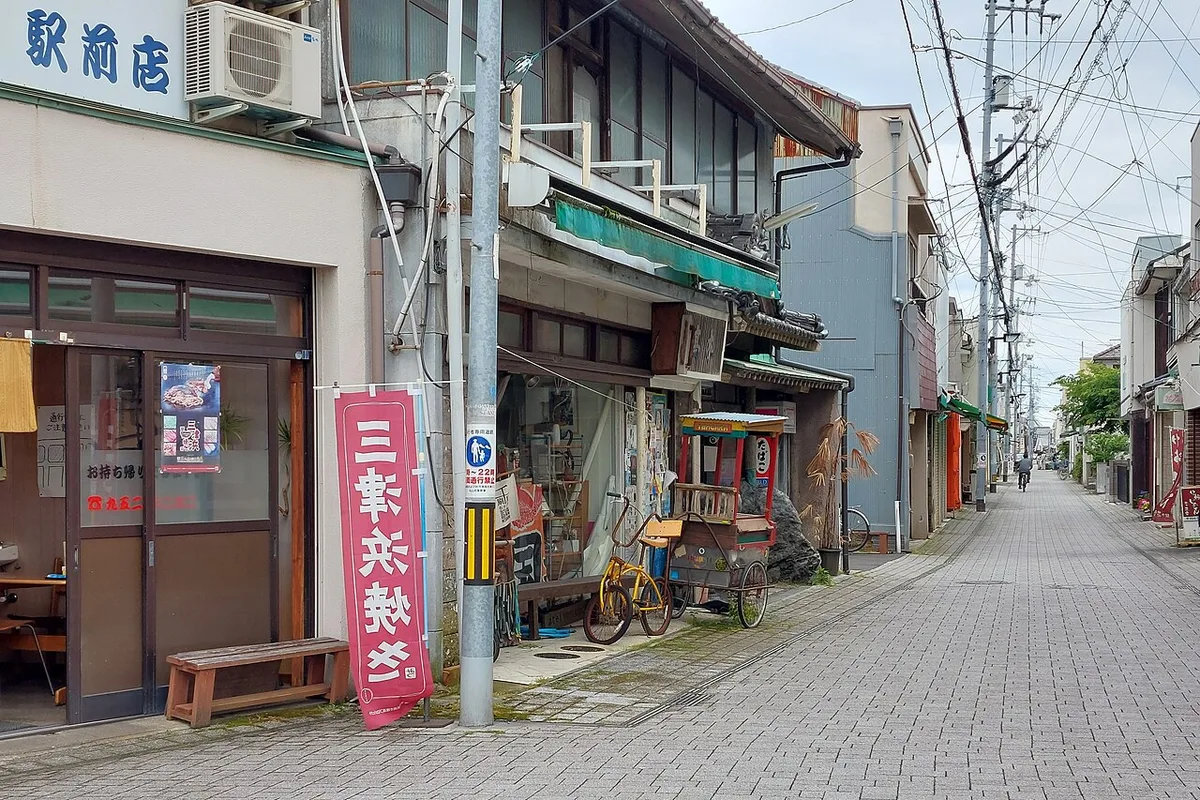
Ehime Prefecture grows more than 40 citrus varieties and produces roughly 200,000 tonnes of fruit each year. Matsuyama, the prefectural capital, sits at the center of that harvest. Mikan appears everywhere here, from roadside honesty stalls to dessert case labels. Ehime's mascot, Mikyan, is a mikan crossed with a dog. His mock rival, Dark Mikyan, appears on packaging and shop signage around the city. Commercial citrus growing in the prefecture goes back more than 100 years. That history is part of why dessert shops treat mikan as a default flavor rather than a novelty. For a broader introduction to the city's food scene, start with the Matsuyama Food Guide: What to Eat in 2026 before narrowing in on citrus sweets.
Ehime's prefectural flag even features the mikan blossom, underscoring how central citrus is to local identity. That identity shows up on dessert menus across Matsuyama, from soft serve counters near Dogo Onsen to bakery cases on the Okaido arcade. The next sections break down which desserts to try, where to find them, and when specific varieties peak.
Matsuyama Mikan Desserts to Try First
Matsuyama mikan desserts fall into four main categories, and each shows up in different neighborhoods at different price points. Start with these before exploring niche shops.

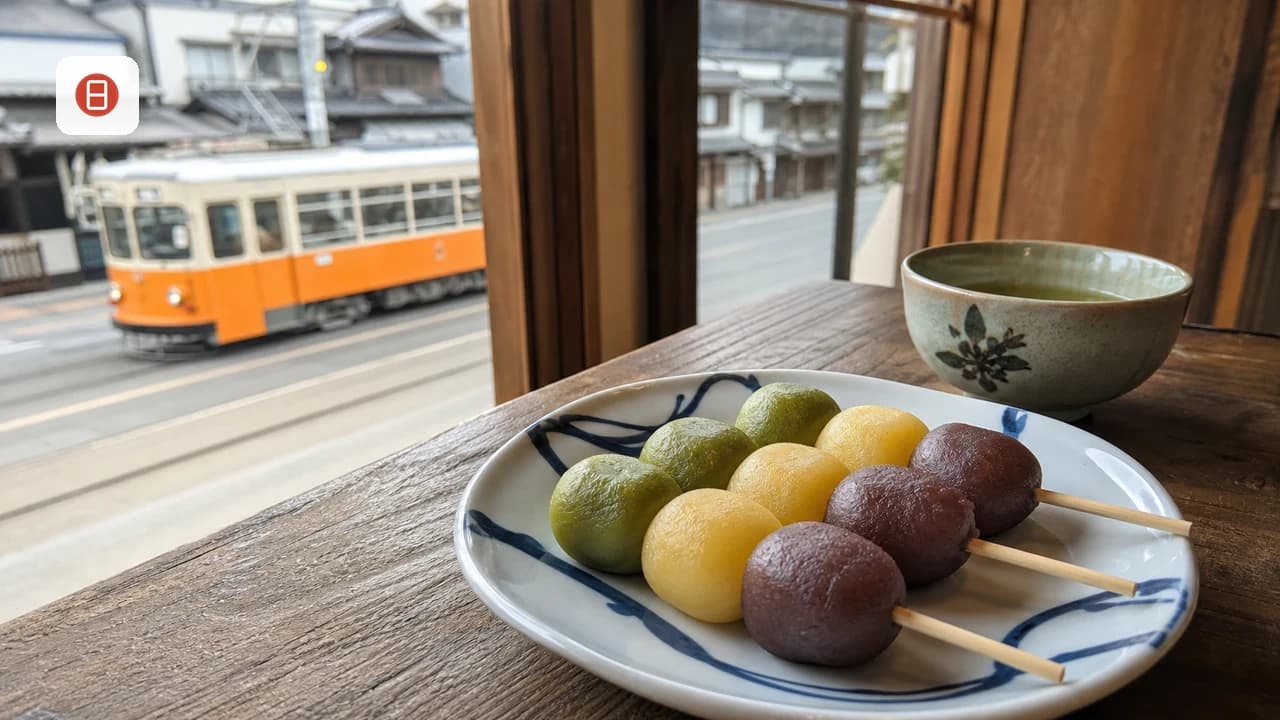
Matsuyama mikan soft serve typically twists two flavors together, plain milk and citrus, creating an orange-and-white swirl in the cone. Souvenir shops also sell mikan jam and marmalade in small jars, with flavor intensity ranging from mild to distinctly sweet depending on the producer. These make an easy add-on to a dessert stop, since they travel well and do not need refrigeration until opened. Mikan Daifuku sits alongside other Matsuyama wagashi, including botchan dango skewers, which use azuki and matcha instead of citrus.
- Mikan soft serve and gelato — Ehime Kajitsu Club Mikan no Ki in Dogo, a Tabelog top-20 Matsuyama sweets shop rated 3.34.
- Mikan juice from the tap — coin-operated dispensers at Matsuyama Airport and souvenir shops; a paid tasting, not a free sample.
- Ehime Taruto — a rolled sponge cake with citrus bean paste, not a crusted Western tart; Rokujiya is one of the shops known for it.
- Mikan Daifuku — a mikan segment wrapped in mochi and white bean paste, sold at wagashi counters citywide.
The Mikan Juice Tap, Explained
Novelty taps show up at Matsuyama Airport and along souvenir shop counters, dispensing single-variety mikan juice into a small cup for a set price. Feed the coin box, and the tap pours automatically. These work well as a quick sample between flights or train connections.
A small number of shops instead run a tasting flight. Two or three citrus varieties are poured side by side so you can compare sweetness and acidity directly. That format suits travelers who want to understand variety differences, rather than grab a single quick cup. Expect to pay within the same ¥300 to ¥1,000 band as other mikan desserts for either format.
Where to Find Them: Dogo Onsen vs. Okaido and Gintengai
Matsuyama's dessert scene splits across two hubs, and the choice affects both what's available and how late shops stay open. Dogo Onsen is walkable and traditional, built around the bathhouse district. Most shops there close by 7:00 PM or 8:00 PM. Okaido and Gintengai form the modern shopping arcade downtown, with later hours and more souvenir-focused stores. Tabelog's Matsuyama sweets ranking, updated daily and current as of August 2026, gives a rough read on which citrus-focused shops draw the most repeat visits.
Several other Tabelog-ranked shops, including Dogo Pudding and Esprit, mix citrus flavors into a broader Western-style sweets menu rather than specializing in mikan alone. Both hubs sit within walking distance of sights covered in the Matsuyama attractions guide. Pair a dessert stop with sightseeing instead of a separate trip.
| Tabelog Rank | Shop | District | Known For | Price Range | Tabelog Score |
|---|---|---|---|---|---|
| #1 | Kiri no Mori Kashi Kobo Matsuyama ten | Okaido / Gintengai | Matcha and citrus wagashi fusions | ¥300–¥999 | 3.66 |
| #2 | Rokujiya Dogo ten | Dogo Onsen | Ehime Taruto rolls | ¥300–¥999 | 3.55 |
| #4 | Dogo Milk Cheese Cake | Dogo Onsen | Citrus-topped cheesecake | ¥300–¥999 | 3.52 |
| #7 | Rokujiya Honten | Near Kamiichiman | Ehime Taruto rolls | ¥300–¥999 | 3.45 |
| #14 | Ehime Kajitsu Club Mikan no Ki Honten | Dogo Onsen | Citrus gelato and soft serve | ¥300–¥999 | 3.34 |
Seasonal Citrus Calendar: What to Order When
Mikan varieties change by the month, so the dessert case looks different in January than it does in May. Use this calendar to match what is fresh with what shops are likely to feature. Ehime also grows Ponkan, Harehime, and several other varieties less common outside the region. Dessert shops sometimes rotate a limited flavor around a single fruit for only a few weeks.
Greenhouse Unshu Mikan sustains dessert availability year-round between ¥300 and ¥1,000 per item, so summer and autumn travelers can budget for mikan treats beyond the October–March peak.
Winter visitors should look for Setoka and Kanpei on dessert menus. Kiyomi and Kawachi Bankan appear in spring. Greenhouse Unshu Mikan keeps soft serve and juice supplied through summer and autumn, when field-grown varieties are out of season. Greenhouse cultivation is why some fresh mikan and mikan-based desserts are available even outside the traditional October-to-March harvest window.
| Variety | Season | Notes |
|---|---|---|
| Harehime | Mid-December–early January | Combines an orange scent with mikan sweetness |
| Kanpei | January–March | Thin-skinned and juicy; called locally the Queen of Ehime citrus |
| Iyokan | January–March | Large fruit with a sharp, juicy flavor |
| Ponkan | Mid-January–early March | Small fruit with a strong, sweet scent |
| Setoka | February–early April | Thin skin, fragrant, prized for desserts |
| Kiyomi | March–May | Strong scent; parent variety to several hybrids |
| Kawachi Bankan | April–mid-June | Pale and sweet, nicknamed Japan's grapefruit |
| Unshu Mikan | Late May–March; greenhouse fruit year-round | The standard mikan used in soft serve and juice taps |
Mikan Picking Day Trips Beyond the Plate
Picking mikan directly from the tree adds a farm visit to the dessert trail, and three farms cover different parts of Ehime. Expect an easy half-day trip, not a full day, if transit connections line up. Across all three farms, plan on one to two hours for the actual picking, plus travel time to and from Matsuyama. Minami Shikoku Farm's flat terrain suits families with strollers, while Okano Farm's island setting and chickens underfoot make for a slower, more solo-friendly visit.
Minami Shikoku Farm's ¥1,100 package (picking plus 3 kg fruit to take home) rivals a dessert crawl's cost while delivering an experience and edible souvenir in one half-day trip.
Combine a farm visit with a savory stop back in the city. Most farms wrap up by mid-afternoon, leaving time for the Matsuyama Tai Meshi Guide: Two Styles, Best Spots & How to Eat for dinner.
- Okano Farm, Iwagi Island: eco-friendly growing with no wax or preservatives. Open October through March, 08:00–16:30. ¥1,500 per person, mikan included. Access is via the Sankoh Line ferry from Sunoe Ferry Port to Okogi Ferry Port.
- Minami Shikoku Farm: flat orchard land, good for families and visitors with mobility needs. Open mid-October to late November, 09:00–16:00. A 15-minute walk from Tachima Station on the JR Yosan Line. ¥660 per adult to pick only, ¥1,100 with 3kg to take home; children ¥440 and ¥770.
- Tomoura Garden, Oshima Island: sea-view slopes, no pesticides used. Reservations required three days ahead. ¥1,200 for Unshu mikan, ¥1,500 for other varieties.
Traveler Logistics: Timing, Budget, and Mistakes to Avoid
Most mikan desserts cost between ¥300 and ¥1,000. That covers a soft serve cone, a tap juice cup, and a boxed taruto roll for travel. A two-stop dessert crawl, one soft serve and one taruto box, typically runs ¥600 to ¥1,800 per person before souvenirs. Budget an afternoon snack window. Many Dogo Onsen shops close by 7:00 PM or 8:00 PM, so a late dessert run often fails. Pair a citrus dessert stop with something savory from the street food and budget eats guide. Unwind afterward with a pour from the Dogo beer and Ehime sake guide.
Choose the route that matches your itinerary rather than defaulting to the cheapest option, since bus journeys run longer than trains. Day-trippers from Osaka can fly into Matsuyama in about 50 minutes from Itami Airport. A train via Okayama and the Limited Express Shiokaze costs roughly ¥10,600. From Hiroshima, the train takes about 3.5 hours and costs just over ¥10,000 for an unreserved seat. The Shimanami Kaido highway bus to Imabari runs ¥2,600 to ¥3,800. A final leg from Imabari to Matsuyama costs about ¥1,000.
| Origin | Mode | Time | Price |
|---|---|---|---|
| Osaka (Itami) | Flight | ~50 minutes | Fare varies by carrier |
| Osaka | Shinkansen to Okayama + Limited Express Shiokaze | ~4 hours | ¥10,600 |
| Osaka | Overnight highway bus | ~7 hours | ¥5,000–¥7,000 |
| Hiroshima | Shinkansen to Okayama + Limited Express Shiokaze | ~3.5 hours | Just over ¥10,000 (unreserved) |
| Hiroshima–Imabari | Highway bus via Shimanami Kaido | ~3 hours | ¥2,600–¥3,800 |
| Imabari–Matsuyama | Train or bus | ~1 hour | ~¥1,000 |
- Two hours: stay in the Dogo Onsen station area for a soft serve stop near the bathhouse.
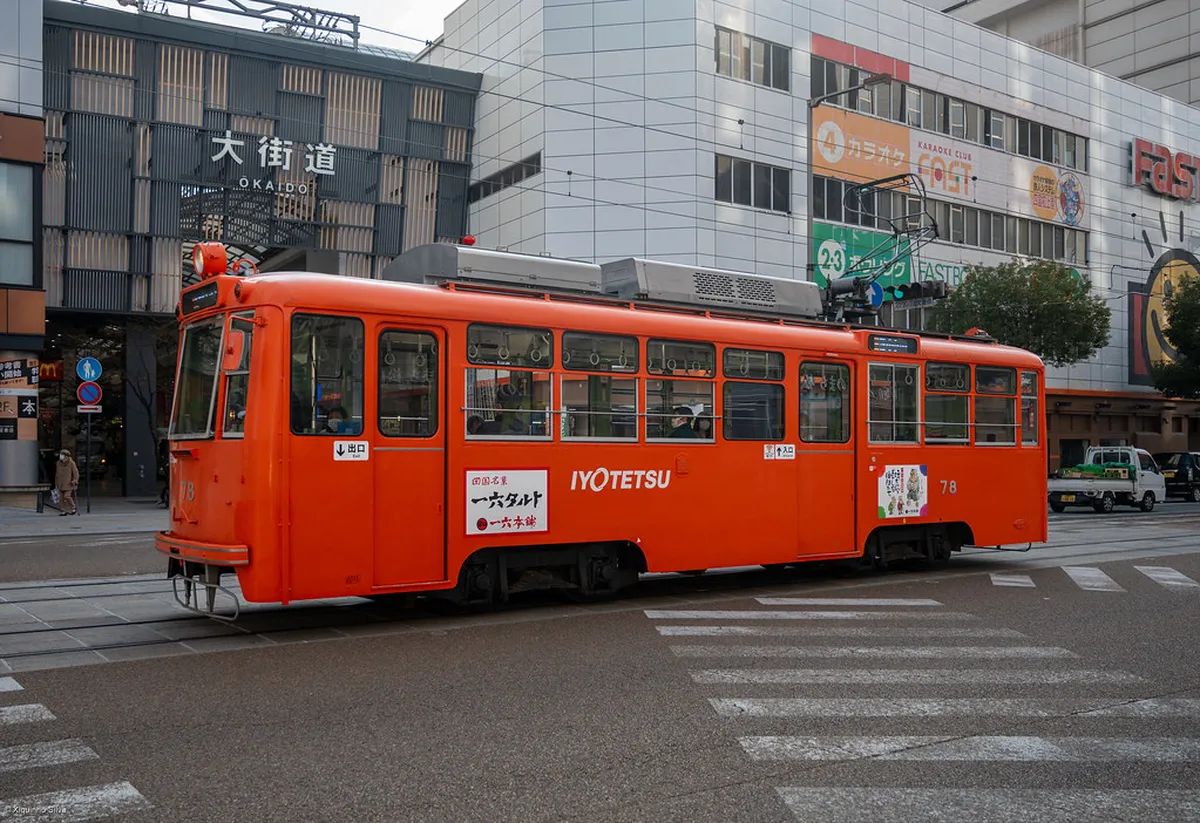
- Souvenir shopping: head to Okaido Shopping Arcade for boxed taruto and jam that travel well.
- Half day or more: add a picking farm, since most sit outside the central train network.
- Do not expect Ehime Taruto to be a crunchy Western tart. It is a soft sponge roll filled with citrus bean paste.
- Confirm the last train or bus back from rural farms before you go. Minami Shikoku Farm and Okano Farm both sit outside the central train network.
- Do not assume every mikan tastes the same. Sweetness and acidity shift by variety and by month, so a January Iyokan and a March Setoka taste different.
- Treat juice taps as a paid experience. Most run on a coin-box, self-serve system rather than a free sample.
- Carry coins and small bills. Juice taps and farm honesty stalls are often not set up for cards.
Frequently Asked Questions
What is Ehime Taruto, and is it actually a tart?
Ehime Taruto is a rolled sponge cake, not a crusted Western-style tart. Bakers spread it with citrus-infused bean paste, roll it like a Swiss roll, and slice it into rounds. Rokujiya is one of the shops known for it in both Dogo and Okaido.
Is mikan juice from the tap actually free?
No, most taps run on a coin-box system, so treat it as a small paid tasting rather than a free sample. Prices generally fall within the ¥300 to ¥1,000 range that covers most Matsuyama mikan desserts. Some tourist-facing taps at the airport charge per cup, while souvenir shops may offer a short flight of varieties.
When is the best time to visit for mikan picking?
Mikan picking generally runs from mid-October through March, though exact windows vary by farm and variety. Minami Shikoku Farm's season runs mid-October to late November, while Okano Farm stays open October through March. Book by phone or online where required, since some farms like Tomoura Garden need three days' notice.
How much time should you plan for a mikan dessert crawl in Matsuyama?
Two hours is enough to cover the Dogo Onsen station area on foot, sampling gelato, taruto, and a tap juice along the way. Add a half day if you also want to visit a picking farm outside the city. Okaido and Gintengai work well as a second stop for souvenirs before you leave.
Do mikan desserts vary by season the way fresh fruit does?
Yes, dessert menus often follow the harvest. Setoka and Kanpei show up on winter menus. Kiyomi and Kawachi Bankan appear in spring. Greenhouse Unshu Mikan keeps soft serve and juice supplied through summer and autumn.
What's the difference between Iyokan and Setoka?
Iyokan is a large, sharp, juicy citrus in season January through March. Setoka is smaller, thin-skinned, and more fragrant, running February through early April. Dessert shops often switch between the two as their bean-paste and gelato flavor base depending on the month.
Can you find mikan desserts outside mikan season?
Yes, greenhouse-grown Unshu Mikan keeps soft serve, gelato, and juice taps stocked from late spring through autumn. Field-grown winter varieties like Setoka and Kanpei disappear once their season ends. Wagashi shops swap in whatever citrus is currently in harvest.
Are mikan desserts available at Matsuyama Airport?
Yes, novelty juice taps are available at Matsuyama Airport, making a quick citrus sample possible on arrival or departure. Selection is more limited than in Dogo Onsen or Okaido, so treat the airport tap as a bonus rather than the main stop.
Free guide: Japan's Hidden Gems
12 under-the-radar places beyond Tokyo & Kyoto — with the best season to visit each and a local tip you won't find in the guidebooks.
You might also like


Continue reading
More guides you'll find useful


